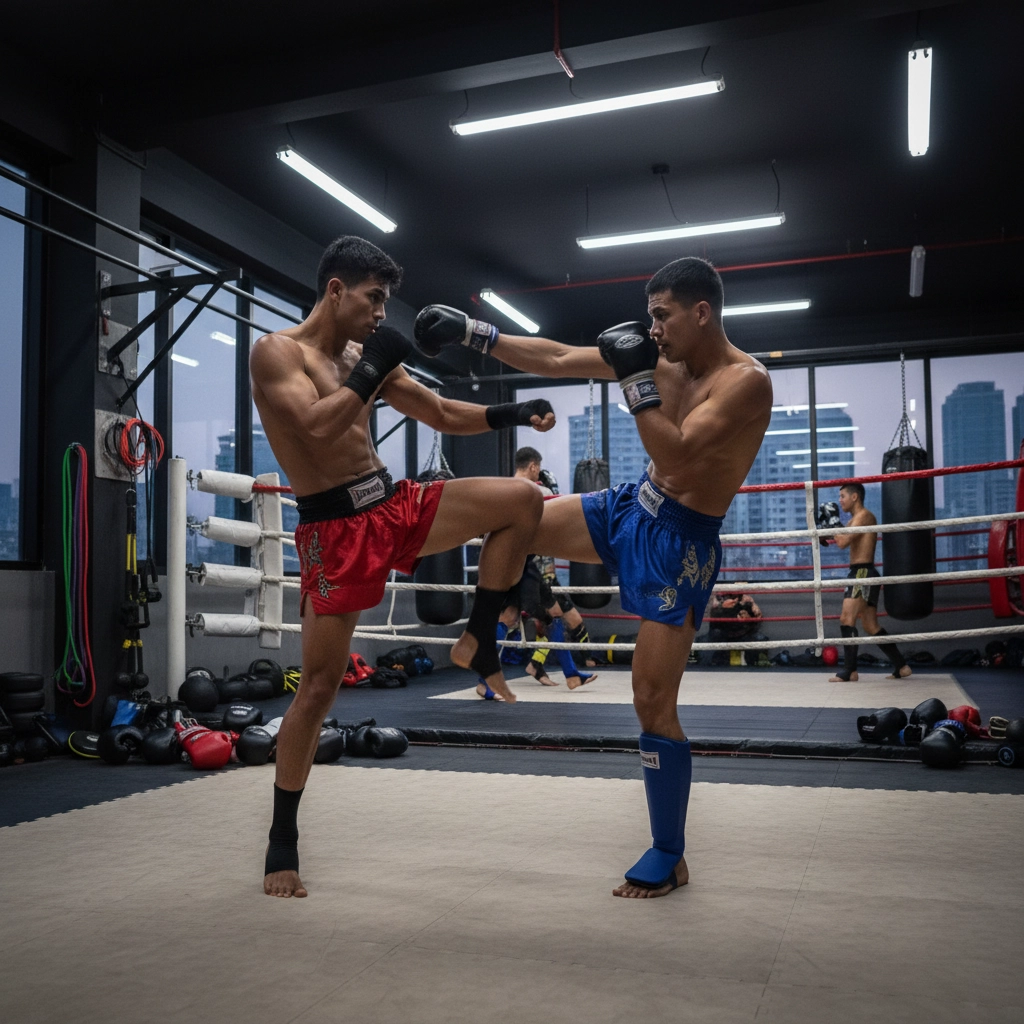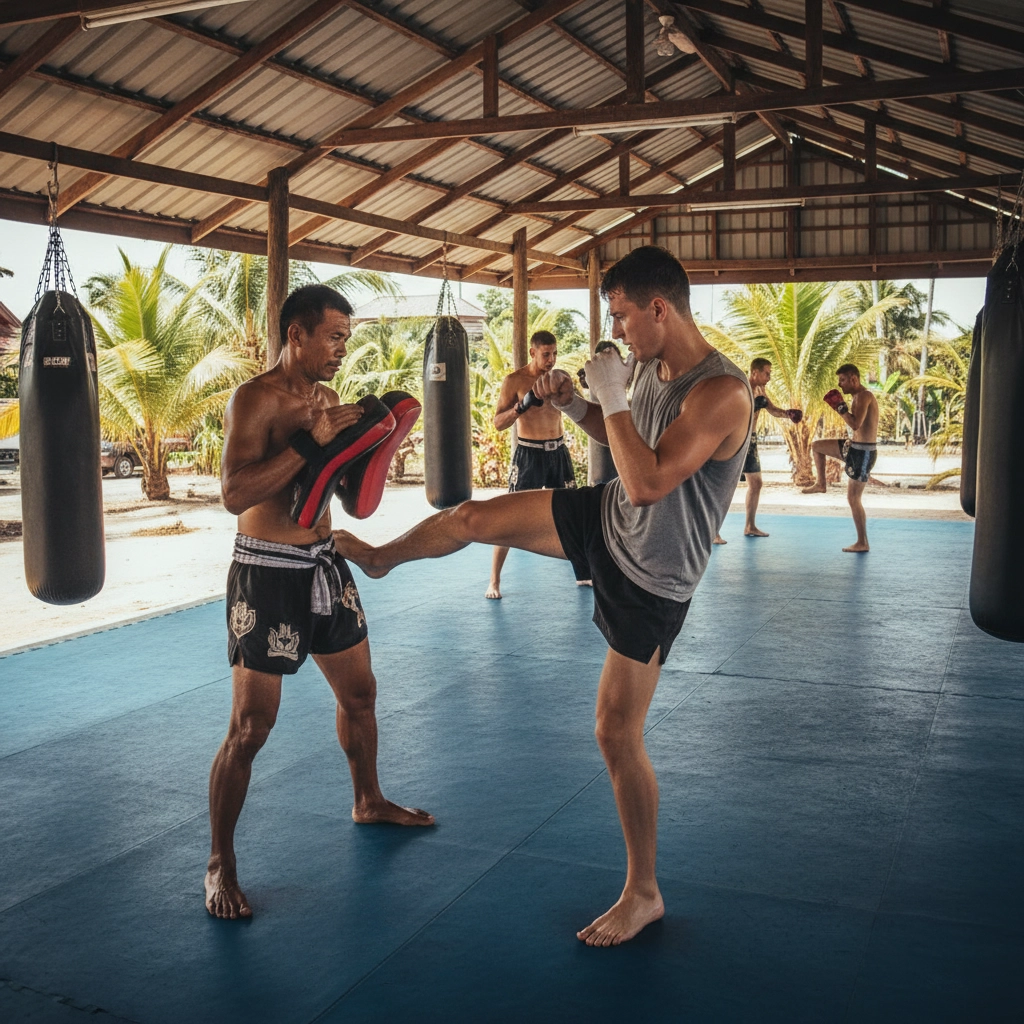
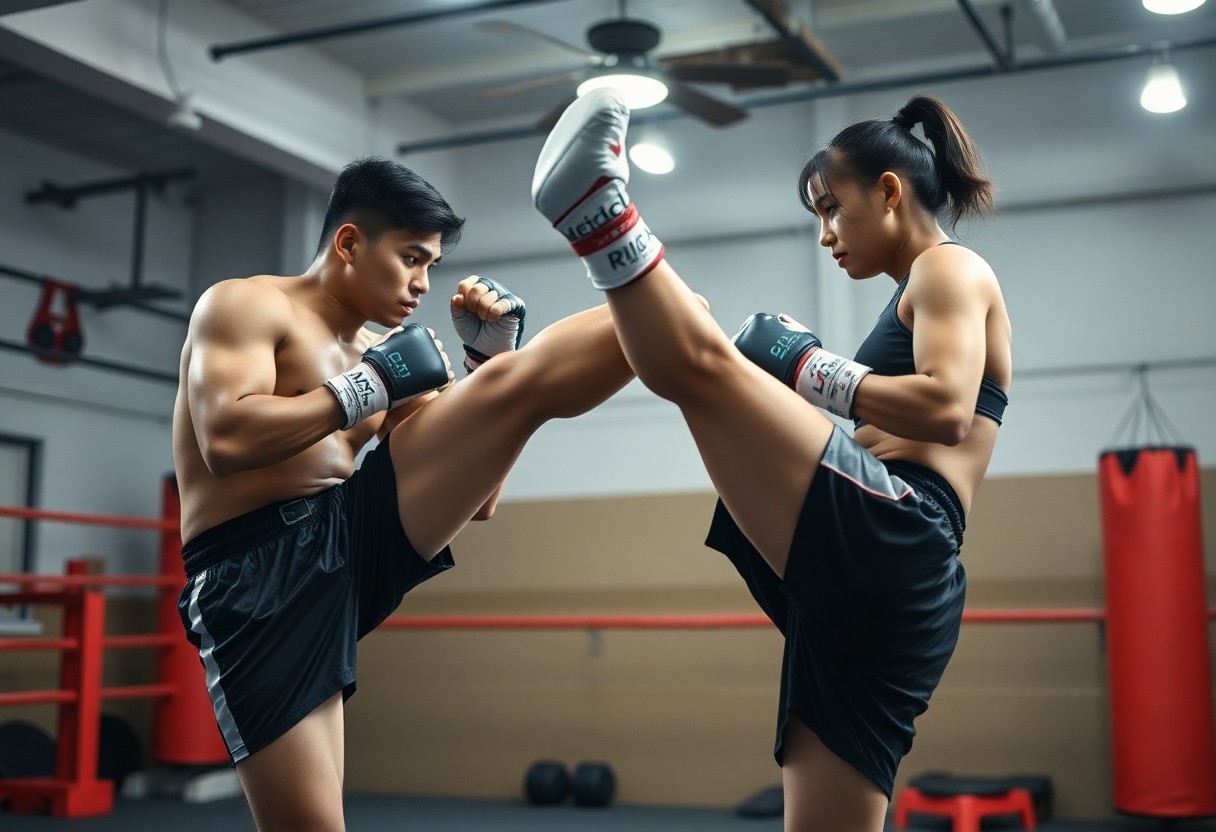
Fitness enthusiasts can greatly benefit from incorporating Muay Thai kicks into their workouts, as they enhance overall athletic performance by developing strength, speed, and flexibility. These powerful techniques not only provide an intense cardiovascular workout but also improve core stability and balance. Practicing Muay Thai kicks helps to build a solid foundation for self-defense while stimulating muscle growth and enhancing agility, making it an effective choice for anyone looking to elevate their fitness levels. Additionally, proper training techniques ensure that participants remain safe and injury-free.
Types of Muay Thai Kicks
Understanding the different types of Muay Thai kicks is necessary for effective training. Each kick targets specific muscle groups and enhances overall performance. Here’s a breakdown of key kicks:
| Kick Type | Focus |
|---|---|
| Roundhouse Kick | Power and precision |
| Teep (Push Kick) | Distance management |
| Side Kick | Impact and balance |
| Back Kick | Rear defense |
| High Kick | Flexibility and reach |
Roundhouse Kick
The roundhouse kick, or “swinging kick,” is an iconic Muay Thai technique that involves striking with the shin. Executed from a side stance, this kick delivers impact through rotational energy, providing immense power and speed. Proper leg positioning and hip rotation are key to mastering this kick.
Teep (Push Kick)
Known as a defensive maneuver, the teep-or “push kick”-maintains distance while disrupting opponents. It utilizes the ball of the foot to push them away, creating space for further attacks. This technique combines strength with strategic placement to control the pace of a fight.
The teep is not just an offensive kick but also a vital defensive tool. By effectively pushing back an opponent, it allows for counterattacks while preventing incoming strikes. Training the teep emphasizes flexibility and timing, making it necessary for beginners and advanced fighters alike. Its versatility can turn the tide in a sparring match, providing both offense and defense in one movement.
Side Kick
The side kick functions as an impactful tool in Muay Thai, delivering power through a lateral motion. By extending the leg with the heel pushed outward, this kick can incapacitate an opponent while also maintaining balance. Proper technique is vital to maximizing its effectiveness.
Executing the side kick requires excellent balance and coordination. It is effective for targeting the torso and legs, often catching opponents off-guard. Training this kick enhances hip flexibility and strengthens stabilizing muscles, contributing significantly to overall kickboxing strength and agility.
Back Kick
The back kick is a unique maneuver characterized by a reverse thrust, delivering power through the heel. This kick is often used for defensive purposes, striking opponents who close in too quickly. Mastery of the back kick relies on speed and precision to ensure that strikes land effectively.
Incorporating the back kick into your regime enhances not only striking power but also provides an element of surprise. This kick is beneficial for countering attacks from behind, allowing fighters to pivot quickly while maintaining their stance. The back kick also aids in developing core strength and facilitating explosive movements, necessary components of any dynamic striking art.
Tips for Effective Kick Training
To maximize your kick training outcomes, focus on *cadence*, *power*, and *precision*. Start by practicing regularly to develop muscle memory and improve *technique*. Consider incorporating drills that target your balance, such as standing on one leg while executing kicks. Additionally, maintain a progressive approach by gradually increasing *intensity* and *speed*. Use a mirror or partner to provide real-time feedback. After adhering to these tips, you’ll notice significant enhancements in your overall kick performance.
Proper Stance and Alignment
Achieving an effective kick begins with your *stance* and *alignment*. Position yourself with feet shoulder-width apart, ensuring the weight is evenly distributed. Keep your knees slightly bent and your hips squared towards your target. This alignment not only maximizes *power* but also minimizes the risk of injury. Regularly check your stance to ensure you are set up correctly before unleashing your kicks.
Engaging Core and Hips
Activating the *core* and *hips* is necessary for generating explosive kicks. Your core stabilizes your body, allowing for better *power transfer* from the ground up. Focusing on hip rotation enhances your kick’s reach and delivers a more forceful strike. By incorporating exercises like plank variations and hip flexor stretches, you can strengthen these crucial areas for improved kick execution.
Engaging the core and hips during kicks amplifies your performance significantly. The core acts as a *bridge*, facilitating energy transfer and maintaining balance, while properly utilized hips allow for added swing momentum. Activities such as medicine ball rotations and hip mobility drills can enhance your engagement, resulting in more efficient and impactful kicks. Properly practicing this integration not only elevates your technique but also safeguards against injuries by fostering stability and control.
Step-by-Step Guide to Executing Kicks
| Step | Description |
|---|---|
| 1. | Begin in a proper stance, feet shoulder-width apart and knees slightly bent. |
| 2. | Pivot on the supporting foot while lifting the knee of the kicking leg. |
| 3. | Extend the leg, striking with the shin while keeping your core engaged. |
| 4. | Recoil the leg back to the starting position and return to your stance. |
| 5. | Practice fluidity and balance throughout each repetition. |
Basic Mechanics of a Roundhouse Kick
Aroundhouse kicks are powerful strikes that require proper body mechanics. Start by positioning your feet properly-your lead foot should be pointed slightly outward while the rear foot pivots. As you lift your knee, ensure your hips rotate for maximum power. The striking surface is typically the lower part of your shin, so keep that targeted and aim for consistent contact. It’s vital to balance strength and control to effectively execute this dynamic kick.
Drills for Practicing Kicks
Incorporating specific drills can significantly enhance your kick execution. Shadow boxing helps in visualizing and improving form, focusing on your technique and speed without resistance. Use bags for impact training; incorporating both heavy and Thai pads allows you to refine your power and accuracy. Partner drills can also assist in real-time feedback, which is invaluable for correcting technique.
For effective drills, combine shadow boxing with heavy bag workouts. Start with light shadow boxing to warm up and focus on positioning and form. Gradually progress to kicking the heavy bag, aiming for consistent impact while maintaining balance. Incorporating partner drills, where one holds a Thai pad for target practice, can enhance accuracy and timing. Aim for at least 3 rounds of 3 minutes each to build endurance and reinforce muscle memory, establishing a comprehensive workout routine.
Factors Influencing Kick Performance
Performance in Muay Thai kicks can be significantly influenced by various factors, ranging from physical attributes to training methodologies. Key elements include strength, flexibility, and speed, which contribute to the overall effectiveness of each kick. Additionally, technique, body mechanics, and mental focus play vital roles as well. Understanding these factors helps identify areas for improvement and enhances overall kicking performance. Perceiving these influences will guide practitioners in tailoring their training for optimal results.
Strength Training
Developing strength is necessary for delivering powerful kicks. Exercises such as squats, deadlifts, and lunges target the muscles involved in kicking. Integrating resistance training into your regimen not only builds muscle but also enhances stability and control during strikes. Gradually increasing weight while maintaining form will yield the best results in kicking power.
Flexibility and Mobility
Improving flexibility is vital for achieving a full range of motion during kicks. Regular stretching routines, including dynamic and static stretches, help enhance muscle elasticity. This increased flexibility not only allows for higher kicks but also reduces the risk of injuries during training.
Dedicated flexibility training should focus on the hip flexors, hamstrings, and quadriceps, as these muscle groups are crucial for effective kicking. Incorporating yoga or Pilates can further enhance mobility, supporting better technique and enabling a more fluid kicking motion. Stretching after workouts is particularly beneficial for muscle recovery and long-term flexibility gains.
Speed Development
Maximizing speed during kicks is integral for effective striking in Muay Thai. Plyometric exercises like box jumps and speed drills improve muscle response time, allowing for quicker kicks. Additionally, practicing quick repetitions of kicking techniques will reinforce muscle memory and enhance overall kick speed.
Incorporating speed training into your routine helps develop explosive power, enabling kicks to land with precision and less reaction time from opponents. Speed can be further enhanced through shadow boxing and focus mitt drills, emphasizing fast, clean execution. Tracking progress with timed drills can reveal improvements over time, motivating further development in kick speed.
Pros and Cons of Using Kicks for Fitness
| Pros | Cons |
|---|---|
| Builds strength in legs and core. | Risk of injury without proper technique. |
| Enhances cardiovascular endurance. | May require a learning curve for beginners. |
| Improves balance and coordination. | Potential for muscle strain. |
| Increases flexibility in hips and legs. | Limited focus on upper body strength. |
| Provides a full-body workout. | Access to facilities or classes may be restricted. |
| Boosts mental discipline and focus. | Intensity may deter some participants. |
| Facilitates weight loss. | Persistent soreness in the early stages. |
| Offers an enjoyable way to exercise. | Difficulty measuring progress objectively. |
| Can be adapted for different fitness levels. | Requires regular practice to see significant gains. |
Benefits for Overall Fitness
Incorporating kicks into your fitness regimen provides a multitude of benefits, including enhanced cardiovascular fitness, improved muscle tone, and increased flexibility. Regular practice can help burn calories effectively, contributing to weight loss and overall body composition improvement. Additionally, the dynamic movements involved in kicking enhances coordination and builds core strength, which are important for athletic performance and day-to-day activities.
Potential Risks and Limitations
While there are numerous advantages to using kicks for fitness, potential risks should be taken into account. Improper technique can lead to injuries, such as sprains or strains, particularly in the knees, ankles, and hips. Beginners may find the movements challenging without guidance, heightening the likelihood of mishap. Furthermore, individuals with pre-existing conditions or those who are heavily out of shape may face limitations in their ability to perform these exercises safely.
In addition to initial difficulties, ongoing training should always include adequate warm-up and cool-down routines to minimize soreness and prevent injury. Monitoring one’s form is important; even experienced practitioners can develop poor habits that lead to chronic issues. It’s also important to listen to your body-if pain occurs, seeking the advice of a professional instructor or trainer can help mitigate risks. Overall, awareness and proper education can ensure a safer, more effective Muay Thai kicking experience.
Conclusion
From above, it is evident that incorporating Muay Thai kicks into a fitness regimen can significantly enhance strength, speed, and flexibility. By consistently practicing these techniques, individuals can develop powerful lower body muscles, improve agility, and increase overall range of motion. Structured training not only boosts physical performance but also fosters mental resilience. Emphasizing proper technique and gradual progression ensures safe and effective results. Ultimately, embracing Muay Thai kicking techniques can lead to a more dynamic and fulfilling fitness journey.
FAQ
Q: How do Muay Thai kicks contribute to building strength?
A: Muay Thai kicks engage multiple muscle groups, including the legs, core, and hips. By practicing various kicking techniques consistently, you develop greater muscle strength and endurance. This is achieved through repetitive training, where the effort required to perform kicks helps to enhance overall lower body power and stability.
Q: What techniques can improve kick speed in Muay Thai?
A: To enhance kick speed, focus on drills that emphasize explosive movements, such as practicing with a heavy bag or speed bag. Incorporating plyometric exercises, like jump squats and box jumps, can also increase muscle response time. Regularly refining your technique through shadow training and partner drills will help establish quicker, more efficient kicks.
Q: How can I increase flexibility for better Muay Thai kicks?
A: Improved flexibility can be achieved through dedicated stretching routines that focus on the hip flexors, quadriceps, and hamstrings. Dynamic stretching before workouts increases blood flow and prepares the muscles for action, while static stretching after training helps with recovery. Additionally, participating in yoga can complement your training by enhancing flexibility and promoting balance.
Recommended Posts