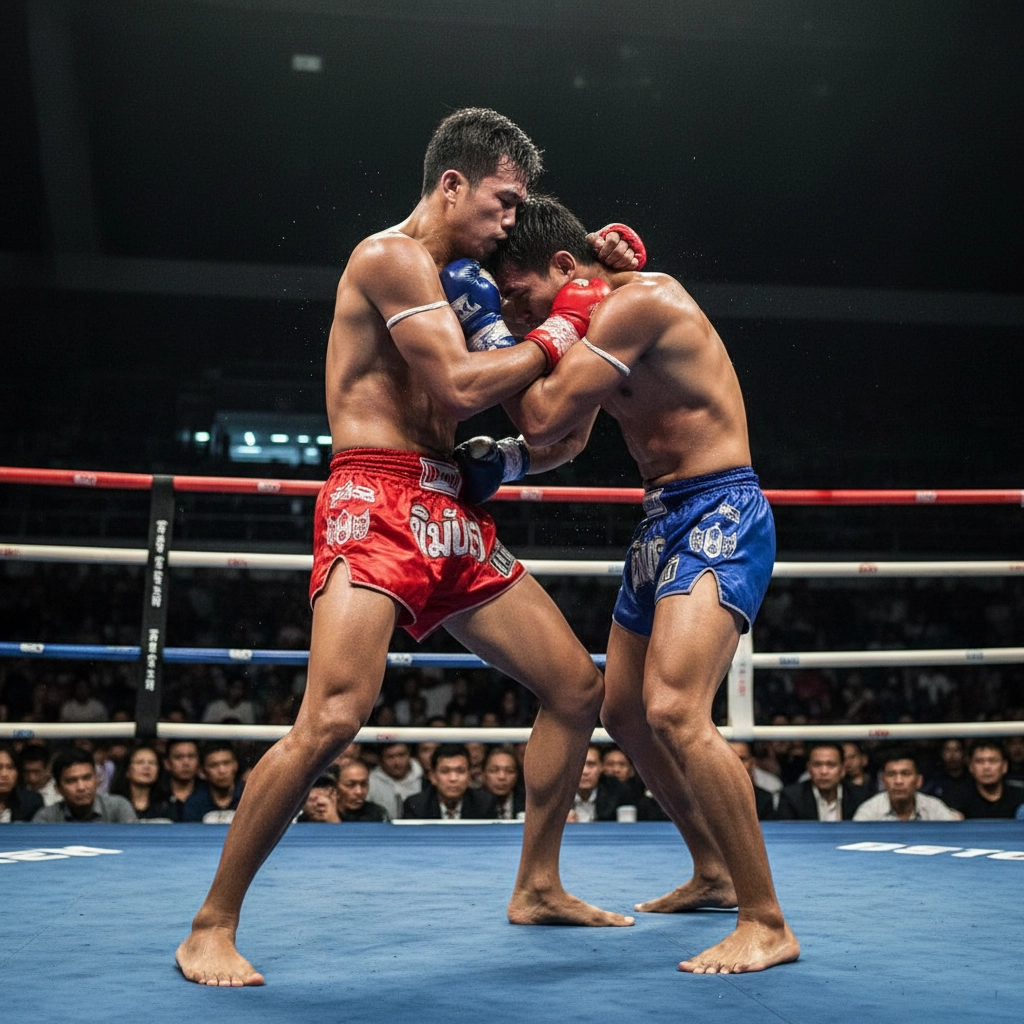

Many practitioners underestimate defense; this guide teaches the seven imperatives to keep you competitive and safe in the ring. Learn precise block and parry mechanics, effective teep and clinch escapes, dominant elbow and knee defenses, timing and angle work for reliable counters, and footwork patterns that reduce risk while creating offensive opportunities, all presented with practical drills to build confidence and fight-saving instincts.
Understanding Defensive Moves
Defensive moves in Muay Thai rely on timing, distance and structure: typical human reaction windows are around 200-300 ms, so training focuses on shortening decision time and improving muscle memory. Drills that emphasize frame, angle change, and hip rotation-like repeated shin checks and parry-to-counter combos-build resilience; elite camps often program 200-500 reps per week on specific defenses to make responses automatic under pressure.
Types of Defensive Moves in Muay Thai
Common defenses include high and mid blocks to protect the head and ribs, parries that redirect strikes, leg checks to neutralize kicks, evasive footwork and hip sidesteps, plus the clinch to control distance and deliver knees. Any effective defense must be drilled progressively-start at 30-40% intensity, progress to 3-5 partner rounds at near-sparring speed, and integrate counters to convert defense into offense.
- Blocking – absorb or redirect straight punches and kicks with bone alignment.
- Parrying – use small redirections to open counter windows.
- Leg check – lift and rotate shin to deflect low kicks and preserve mobility.
- Evasion – footwork and hip movement to avoid replays and reset range.
- Clinch – control posture, limit strikes, and create knee opportunities.
| High Block | Shield the head; practice 200-300 ms drill speed and tuck chin to reduce concussion risk. |
| Parry | Redirect jab to create a 0.2-0.5s counter window; pair with straight counters for scoring. |
| Leg Check | Turn hip, raise shin to meet kick; drill 50-100 reps per leg twice weekly to harden bone and timing. |
| Evasion/Footwork | Small lateral steps and pivots disrupt opponent rhythm; combine with 3-round footwork-only sparring. |
| Clinch | Control head and hips to neutralize punches; practice entries and releases for 5-8 minutes per round. |
Importance of Defensive Techniques
Solid defense reduces the number of clean strikes absorbed, preserves energy over 5-round fights and lowers injury risk; fighters who master checks and clinch control often extend careers and win on consistency rather than flash. Coaches commonly allocate 20-30% of weekly training to defensive drills because improved defense directly increases offensive opportunities and fight IQ.
More specifically, integrating defense with counters raises scoring efficiency: box-to-kick transitions after a parry create high-percentage attacks, and consistent leg-checking limits opponent mobility, reducing their power by disrupting base. Training should blend isolated reps (100-300 per session) with live situational rounds to transfer skills into competition settings.
Tips for Effective Defense
Tightening timing and posture reduces damage: keep the chin tucked, hands high and shoulders rolled to absorb strikes while exploiting the typical 200-300 ms human reaction window; practice 10-minute rounds of single-technique defense and 50 parries per side to build reflexes. Perceiving feints and rhythm shifts lets you choose counter, evasion or clinch work instead of passive blocking.
- Distance management: maintain 1-2 m vs kicks, 0.5-1 m for clinch entries
- Timing: drill 200-300 ms reaction drills, mirror partner’s tempo
- Parry & slip: 3-step chains ending with a counter
- Clinching: control posture, break base within 2-4 seconds
Key Principles of Defensive Strategy
Prioritize distance, angle and economy of motion: step 30-45° offline to nullify linear power, use short lateral hops to reset, and prefer slips/parries that create counter windows. Train with timed drills-30 seconds attack, 30 seconds defense-to ingrain transitions; combine footwork, guard and clinch responses so defense becomes a generating tool, not just damage mitigation.
Common Mistakes to Avoid
Dropping the lead hand after a kick, overcommitting to single blocks, and staying flat-footed invite counters; leaving the chin exposed during counters is especially dangerous and often ends rounds. Reset your guard within 0.5-1 second after exchanges and avoid telegraphing movement with wide wind-ups.
More detail: novices often rely on static blocking-raising both hands vertically-which saps mobility and opens the rib cage to body shots; instead, use angled forearms and active footwork. In sparring, force yourself to use three defensive options per attack (step, parry, clinch) to break predictable patterns and reduce susceptibility to combinations and feints, protecting the head and liver simultaneously.
Step-by-Step Guide to Defensive Techniques
| Technique | Quick Drill Description |
| The Cover | Frame up high, tuck chin and drive forearms to absorb straight punches; practice 3 rounds of 2-minute mitt drills with partner throwing 1-2 combos to build timing and impact tolerance. |
| The Slip | Rotate hips 15-30° off the center line while shifting weight to the lead or rear foot; perform 4 sets of 50 reps slipping jabs to develop timing and counter angles. |
| The Parry | Tap the opponent’s glove across its path using wrist snap to redirect force; use 2-minute partner rounds focusing on parry-to-counter within 0.5-1 second. |
| The Check | Lift the shin and rotate knee outward to meet roundhouse kicks at mid-shin; drill 3 sets of 20 checks per leg to condition the blocking leg and limit damage. |
The Cover
Use a tight high guard: forearms vertical, elbows tucked to protect ribs, and the rear hand shielding the temple; in sparring, match the guard against 1-2 punch sequences and absorb hits with the forearms to preserve head position while setting up immediate counters.
The Slip
Slip by dropping the shoulder and rotating the torso 15-30° off line to make straight punches graze past you; pair slips with a lateral step and practice against jab-heavy pads to sharpen timing and create openings for counters like the straight right.
To deepen the slip, integrate rhythm drills-slip every other beat of a 2-minute metronome at 90-100 BPM, then add mock counters: after 25 clean slips, throw a straight or hook to condition the chain of evasion-to-offense and improve reaction time.
The Parry
Parry with the lead or rear hand using a short, sharp wrist motion to redirect incoming punches, keeping your gloves close to your face; execute parry-to-counter drills with a partner feeding single jabs at 60-80% intensity to develop crisp, reliable deflections.
For advanced parries, practice timing vs. feints and combination setups: parry the jab, step inside on the second beat, and throw a counter hook-repeat in 3-minute rounds to ingrain the one-two parry-counter rhythm used by top fighters.
The Check
Raise the knee and rotate the hip so the shin meets the opponent’s roundhouse at mid-shin level; perform alternating-leg checks in sets of 20 with a heavy bag or partner to condition the bone and practice immediate recovery for counters.
Improve checks by drilling read-and-react scenarios: have a partner vary kick height (low to high) over 60 seconds, forcing you to choose between step-back, catch, or check-this builds decision speed and reduces exposure to powerful leg kicks.
Factors Influencing Defensive Effectiveness
Several interdependent elements determine how well a defense works in a clinch or ring: timing, distance, speed, reaction time, and conditioning. Elite fighters sustain reactive windows of about 150-200 ms, and stamina dropoffs after round three can reduce defensive sharpness by ~20% in controlled studies. Footwork and visual focus also alter success rates against low kicks and elbows. Perceiving setups early lets you bias all the other factors toward defense.
- Timing – reading rhythm, countering the jab/roundhouse
- Distance – optimal spacing (1-1.5 arm lengths) to negate hooks and knees
- Speed – faster limbs shorten reaction windows and enable interceptions
- Reaction Time – elite range ~150-200 ms; training can reduce variability
- Footwork & Conditioning – maintain angles, recovery, and defensive output over rounds
Timing and Distance
Managing distance converts defense into offense; keeping roughly 1-1.5 arm lengths neutralizes most hooks and knees while closing to the clinch cuts time for long punches. Use the jab and feints to probe-coaches report that a well-timed feint can change an opponent’s launch angle by 20-30% in partner drills. Angle off 45 degrees after a parry to create immediate counter windows and force inefficient follow-ups.
Speed and Reaction
Reaction capacity dictates whether a block, slip, or catch arrives in time-training with a reaction ball, light timers, or unpredictable mitt sequences can shave 20-50 ms off response times. Shortening neural response toward ~150 ms turns passive defense into interceptive counters like the catch-and-return; include 2-3 weekly high-intensity reaction sets of 2-4 minutes to preserve gains.
Drills that fuse perceptual cues with movement yield the biggest improvements: randomized pad patterns, coach “flash” strikes, and light-based timers force decision-making under stress. Elite camps often run 6×30s reactive mitt intervals where coaches vary strike type and timing-fighters typically cut response variability by 15-25% in four weeks. Pair these with explosive work (e.g., plyometrics, 3 sets of 6-8) to convert neural speed into tangible defensive motion.
Pros and Cons of Each Defensive Move
Each defensive option carries trade-offs depending on range, opponent and timing; human reaction windows near 200-300 ms mean some moves are better for immediate threats while others buy positional advantage. Below is a concise breakdown by technique showing practical benefits and the most common risks to gauge when to use each in sparring or competition.
Pros and Cons by Defensive Move
| Pros | Cons |
|---|---|
| Cover: Simple, protects head and absorbs many straight strikes; easy to teach and execute under stress. | Can leave you open to body shots, elbows and counters if held too long; causes shoulder fatigue in later rounds. |
| Parry: Redirects force, creates immediate counter opportunities; minimal energy cost when timed well. | Requires precise timing and angle; mistimed parries often lead to leaving the centerline exposed for counters. |
| Block: Versatile for kicks and punches; reliable for beginners and in close range. | Blocks transfer impact to limbs, increasing risk of injury (e.g., shin damage on low kicks) and can slow mobility. |
| Slip: Creates angles for counters and avoids impact entirely; excellent for conserving energy and scoring. | Missed slips can result in being off-balance; vulnerable to follow-up body kicks or feints if overcommitted. |
| Bob & Weave: Effective vs. heavy looping hooks; sets up powerful counters from inside range. | Demands timing and neck/core strength; poor execution risks being trapped against the ropes or taken down in clinch-prone rulesets. |
| Check (Leg Kick): Neutralizes low kicks and preserves base; can deter repeated leg attacks. | Repeated checking leads to shin pain and fatigue; improper angle still allows torque to pass through, inflicting damage. |
| Clinch: Controls opponent, stops strikes and creates knees/elbow opportunities; great for clinch-savvy fighters. | Energy-intensive, can sap cardio and leave you exposed to dirty boxing or referee separations that break your rhythm. |
Advantages of Effective Defense
Effective defense reduces absorbed strikes, prolongs a fighter’s competitive lifespan and increases scoring chances via counterattacks; fighters who prioritize defense-like Saenchai with his footwork and evasions-often outlast opponents while maintaining output. By exploiting the 200-300 ms reaction window, a well-timed parry or slip converts defense directly into offense, improving round control and conserving energy for late-round surges.
Potential Drawbacks of Defensive Techniques
Overreliance on any single technique creates predictable patterns that savvy opponents exploit; for example, constant covering invites body shots and elbows, while frequent checking accumulates shin fatigue and reduces kicking power. Defensive habits can also limit offensive rhythm and lower strike volume if not balanced with proactive counters.
Training must address these downsides: mix drills to simulate counters, condition shoulders and shins to handle absorbed force, and practice transitions (cover→parry→counter) so defense becomes dynamic. Additionally, track sparring metrics-such as absorbed strikes per round-and adjust strategy when defensive choices correlate with increased cardio drain or decreased scoring outputs.
Summing up
Presently, mastering the seven imperative defensive moves-parry, block, check, evasion, clinch control, framing, and counter timing-builds a resilient Muay Thai foundation. Consistent drilling refines instincts, enhances distance management, and reduces injury risk, while integrating defense with counterattacks elevates strategic effectiveness. Prioritize progressive practice and situational sparring to internalize these techniques under pressure.
FAQ
Q: What are the seven defensive moves every Muay Thai practitioner should know and when should each be used?
A: The seven imperative defensive moves are: 1) High guard/cover – hold forearms tight to protect the head and temples against straight punches, hooks and knees at close range; use when under sustained punching pressure or when closing distance. 2) Parry – deflect a straight punch with a quick push of the glove or forearm to open a countering window; best versus telegraphed jabs and crosses. 3) Slip – move the head off the centerline to make a straight punch miss while staying in range to counter; ideal against jabs and crosses. 4) Bob-and-weave (roll) – drop and circle under a hook to evade and come out on the opponent’s blind side; use versus looping hooks and overhand strikes. 5) Leg check/catch – lift and harden the shin to block low kicks or firmly catch and return kicks; deploy against leg kicks and roundhouse attacks. 6) Clinch and control – secure neck and arm to smother strikes, control posture and deliver knees; apply in infighting or when the opponent closes range. 7) Footwork and angling – step off the line, pivot or circle to negate attacks and create counter angles; use constantly to avoid being trapped and to steer exchanges. Each move has situational advantages; effective defense is selecting the right response to the incoming strike and your distance from the opponent.
Q: How should I train these defensive moves to build reliable timing and technique?
A: Train progressively and with variety: start slow and technical, then increase speed and resistance. Drills: shadowbox focusing solely on slips, parries and pivots; use a slip line or marker to keep head movement precise; mitt work with a partner who alternates jab/cross/hook to practice parry-to-counter and slip-to-counter timing; heavy-bag drills to practice high guard and bob-and-weave while maintaining balance; controlled partner leg-kick drills to practice checking and returning kicks; clinch rounds with gradual pressure to drill control, knee placement and escapes. Progressions: 1) drill single defenses in isolation, 2) combine defense into counters (parry+cross, slip+hook), 3) add unpredictability (partner varies strikes), 4) apply in light sparring. Common mistakes and fixes: flinching or dropping your hands – keep elbows tight and chin tucked; over-committing movement – use small, efficient motions; letting weight get on heels when slipping – keep weight balanced and on the balls of the feet; telegraphing parries or slips – stay relaxed and reactive. Build reps, practice both sides, and include conditioning (shins, neck, core) so defensive actions remain effective under fatigue.
Q: How do I integrate these defenses into sparring and real-fight strategy without freezing or becoming overly passive?
A: Use a layered and proactive approach: 1) set defensive intent for each sparring round (e.g., “this round I will only slip and counter”) to force repetition under pressure; 2) combine defense with immediate offense – every parry or slip should be followed by a simple counter (straight, low kick, elbow) to prevent passivity; 3) use footwork to reset and control distance after defensive moves so you’re not trapped on the ropes; 4) read opponent patterns and pick defenses that exploit them (if they jab frequently, prioritize parries and slips; if they rely on kicks, prioritize checks and catching); 5) chain defenses – slip into a clinch or slip then pivot to angle off and counter – to turn defense into control. Sparring tips: keep intensity controlled while focusing on defensive goals, review footage to spot recurring vulnerabilities, and condition for the defensive actions you use most (neck strength for rolling, calf/shin conditioning for checking). Consistent application of small, purposeful defensive actions will increase confidence and reduce freezing under pressure.
Recommended Posts