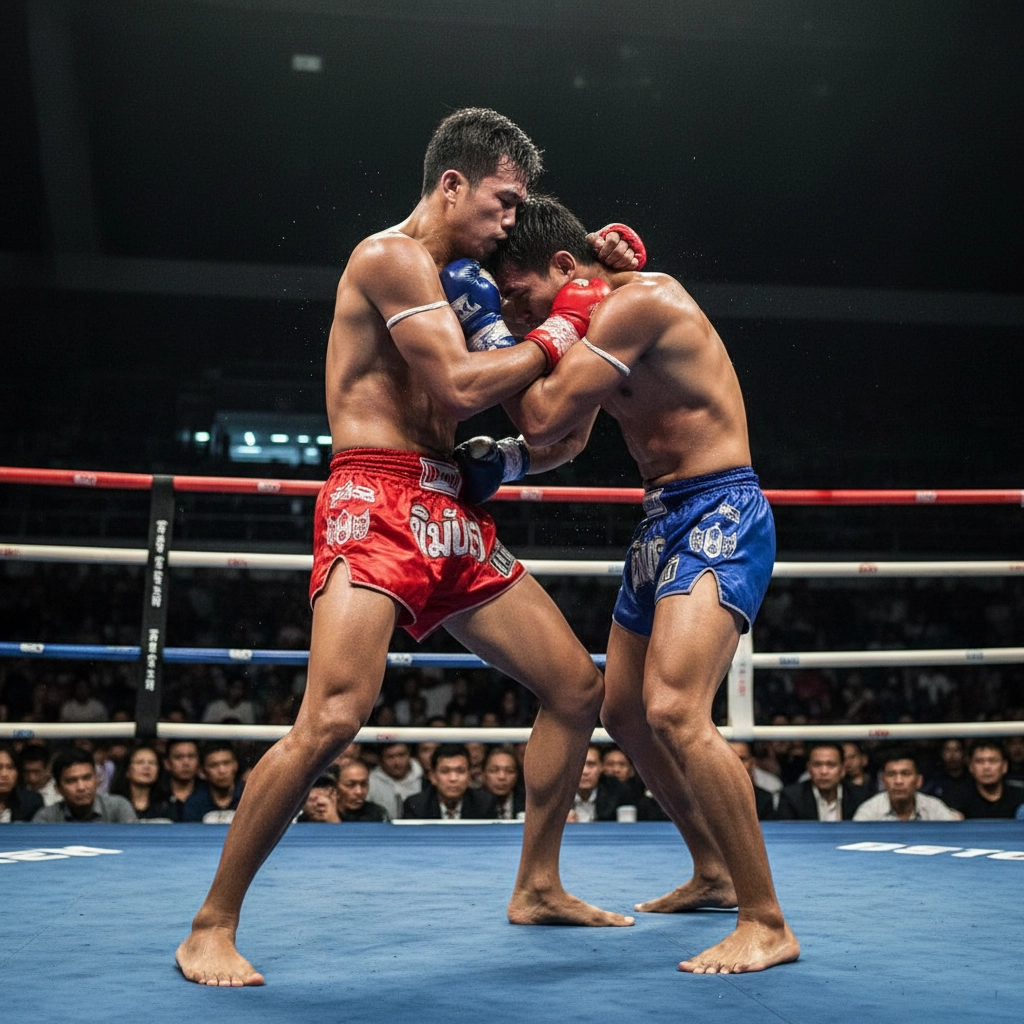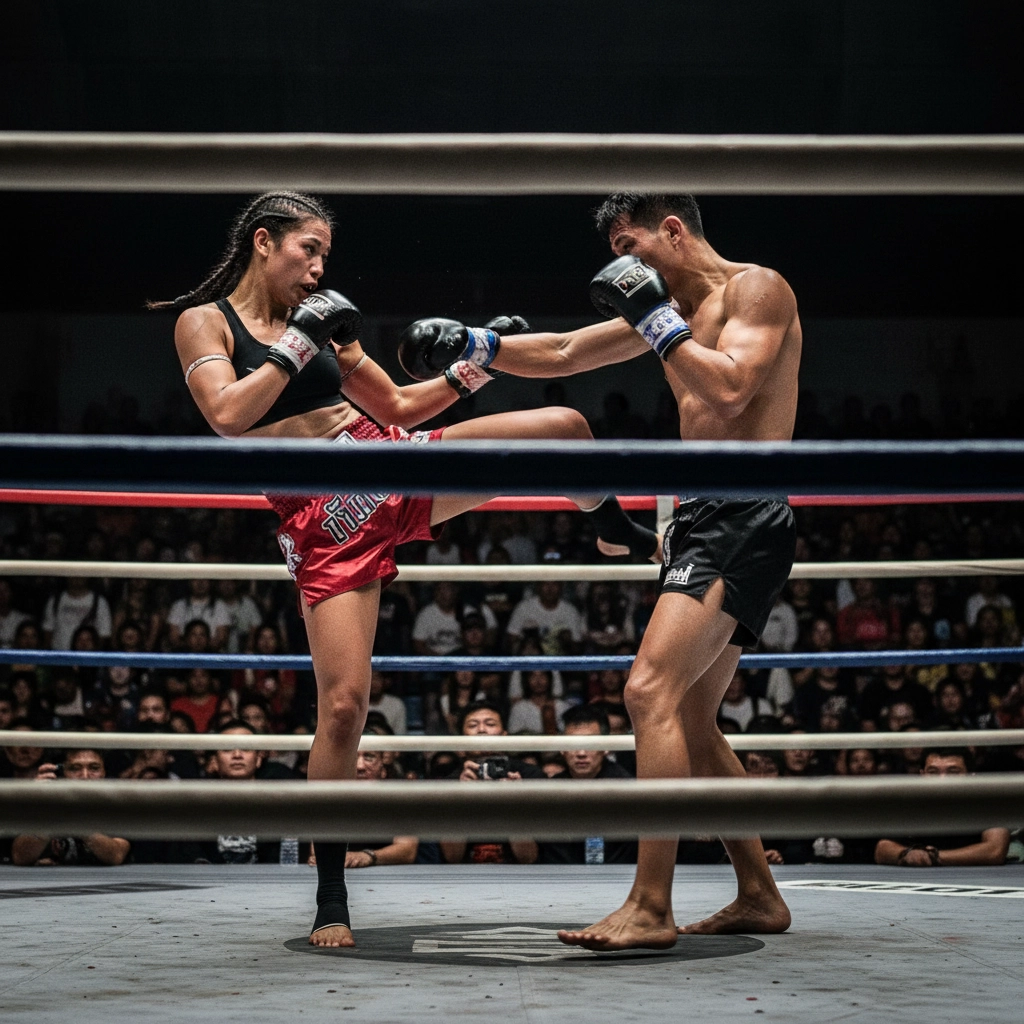
There’s a methodical path to creating an offensive Muay Thai style that overwhelms opponents: develop pressure through precise combinations, sharpen timing and counters, and condition your body for sustained output. This guide breaks down drill progressions, tactical setups, and recovery protocols for all levels, emphasizing powerful kicks, clinch control, and relentless pacing to convert skill into dominance in the ring.
Understanding Muay Thai Offense
Offense in Muay Thai demands relentless layering: set up a teep to measure distance, follow with a 1-2 to open the guard, then finish with a roundhouse or elbow when the window appears; elite fighters string 5-8 strikes into high-percentage sequences under pressure. Train specific entries, drill timing at 50-70% speed, and simulate wear-down rounds to develop sustainable output and devastating moments of finish.
Types of Offensive Techniques
Stand-and-trade striking favors the roundhouse and straight punches for tempo control, while close-range work relies on elbows, knees and the clinch to score and damage; long-range tools like the teep and feints reset range and break rhythm. After using feints and angle changes to create a 20-30% larger target area, force openings with combinations that mix head, body and legs.
- Roundhouse – power to body and head, 45° hip turn maximizes force
- Teep – distance control and set-up, ideal for off-balancing
- Elbow – short-range damage, cuts and fight-ending potential
- Knee – clinch play and midline destruction
- Punch combinations – create gaps and set timing
| Technique | When to Use / Tip |
|---|---|
| Teep | Use as a range probe and counter to southpaw switches; push off to create angles |
| Roundhouse | Throw after a jab or body shot; aim 30-40% higher against fatigued opponents |
| Elbow | Deploy in tight clinch exchanges or after slipping inside the punch line |
| Knee (clinch) | Control head position, break posture, then deliver 2-4 knees per clinch sequence |
| Punch Combos | Use 2-4 strike combos mixing levels to mask the finishing strike |
Key Factors for a Successful Offense
High-output offense pairs pressure with smart energy management: aim for 80-90 strikes per 3-minute round at advanced levels, but keep power distribution-50% body, 30% head, 20% legs. Varying angles and maintaining superior timing collapse defenses faster than brute force. Assume that consistent drills on mitts and partner resistance translate directly to fight performance.
- Pressure – controlled forward movement to pin opponents
- Timing – intercept and counter with 0.2-0.4s reactions
- Angles – create 30-60° pivots to bypass guard
- Combinations – mix levels and tools to open lanes
- Recovery – active breathing between bursts to sustain pace
Depth comes from measurable habits: record sparring outputs, note successful entry rates (aim for 40-60% landed per planned sequence), and analyze rounds to spot declines after round two; coaches track punch/kick counts and damage indicators to optimize tactics. Build thresholds-practice five 3-minute rounds at target output, then simulate fatigue scenarios to preserve power and decision-making under duress. Assume that adapting these metrics into weekly cycles accelerates progression.
- Output tracking – quantify strikes per round to set benchmarks
- Entry success – monitor how often setups land the intended strike
- Fatigue drills – simulate rounds 3-5 to train consistency
- Video review – identify pattern breakdowns and fix them
- Power maintenance – preserve finishing force through conditioning
Step-by-Step Guide to Building Your Offense
| Phase | Action & Examples |
|---|---|
| Foundations | Daily 15-20 minutes shadowboxing, 5 rounds of 3-minute pad work, focus on stance, weight transfer and hip rotation; drill 50 repetitive teeps and 100 roundhouses per week to ingrain motor patterns. |
| Power & Timing | Use heavy bag intervals: 6 x 3-minute rounds at 80-90% effort with 1-minute rest, emphasize explosive hip snap on kicks and snap-through on punches; test timing with delayed counters on mitts. |
| Combinations & Setups | Build 6 core combos (e.g., 1-2-teeps, jab-cross-lowkick, clinch-elbow), practice each for 3 sets of 10 reps, add feint to first strike to create openings; record and adjust cadence. |
| Sparring & Live Drills | Implement 3 weekly sparring rounds: one technical (60%), one pressure (80%), one positional (angle-focused). Track success rate per round to measure progress. |
Developing Your Striking Technique
Refine mechanics by isolating components: 10 minutes of single-strike shadow work for hip rotation, 3 sets of 30 weighted slow kicks to groove extension, then 5 mitt rounds to fuse speed and precision; emphasize full weight transfer and consistent foot pivot to convert technique into power.
Incorporating Angles and Movement
Train acute off-line movement-practice 45° step-pivots after every jab, use lateral shuffles to create openings and avoid returns, and drill 3 rounds of movement-only sparring focusing on exit steps; strong angles turn neutral exchanges into high-percentage counters.
Drill specifics: perform ladder or cone drills for 5 minutes, then do partner-feed drills-attacker throws predictable combos while defender executes a 45° step and a counter for 3-minute rounds (3 sets). Emulate Saenchai-style side-steps to exploit the opponent’s momentum; aim for 50 successful angled counters per week to build instinctive off-line responses and reduce incoming damage.
Tips for Fighters at Every Level
- Technique – alignment, weight transfer, clean contact
- Pressure – distance control with feints and step-ins
- Timing – drill rhythm and counters to disrupt opponents
Assume that integrating 3 technical sessions, 2 sparring days, and targeted strength work weekly builds a relentless Muay Thai offense.
Beginners: Fundamentals of Offense
Train a balanced stance, basic strikes (jab, cross, teep, roundhouse) and simple 2-3 strike combos; do 10-minute pad circuits 3×/week, begin controlled sparring after 6-8 weeks, condition shins progressively, and prioritize range, balance, and sustainable volume to establish reliable offensive mechanics.
Intermediate and Advanced: Enhancing Your Game
Develop 3-5 strike chains, mix feints with power shots, incorporate switch-stance entries and clinch transitions; use 30s-on/30s-off anaerobic intervals, film sessions for tactical tweaks, and periodize training with 2 high-intensity days to maintain a relentless Muay Thai offense.
Analyze opponent tendencies via video (track lead-hand drops >60%), prioritize leg-kick accumulation (20-40 kicks per round) to impair mobility, refine clinch entries with repetitive partner drills (30 reps), and replicate fight tempo using 5-round simulated sparring at regulated intensity; study Buakaw for timing and Saenchai for angle creation.
- Progressive resistance drills: partner pads with increasing force each round.
- Film metrics: log strikes landed per round, lead-hand drops, and clinch wins.
- Specific sparring protocols: 3 rounds technical, 2 rounds situational, 1 round full pace.
- Conditioning sets: 8×30s all-out intervals with 30s rest between efforts.
Advanced Drill Breakdown
| Drill | Purpose / Protocol |
|---|---|
| Leg-kick accumulation | 20-40 kicks per round to reduce opponent mobility; alternate legs every 3-5 strikes |
| Clinch entry sequences | 30 reps each side: entry, control, off-balancing, quick knee bursts |
| Feint-to-power combos | 3-5 strike chains emphasizing feint then 70-90% power finish, 4 rounds |
| Anaerobic intervals | 8×30s all-out striking/shuttle runs with 30s rest to mirror fight energy systems |
Pros and Cons of Different Offensive Strategies
Pros vs Cons by Strategy
| Pressure/High-Volume | Pro: Overwhelms opponents with continuous attacks, increases scoring opportunities. Con: Higher risk of gassing and vulnerability to counters when stamina drops. |
| Counter-Striking | Pro: Maximizes efficiency and power on fewer shots; great for fighters with fast reads. Con: Requires elite timing (0.2-0.5s) and leaves little margin for error. |
| Technical/Tactical | Pro: Controls rounds via feints, angles and point scoring; conserves energy. Con: Can be out-pressured by aggressive opponents and looks passive to judges if overused. |
| Clinch-Heavy | Pro: Dominates close range, delivers knees and sweeps for big damage. Con: Demands high grip strength and risks fouls or tiring the neck and arms. |
| Kick-Focused | Pro: Long-range scoring and leg damage (low kicks reduce opponent mobility). Con: Exposes balance; counters and catch-kicks can lead to takedowns or sweeps. |
| Punch-Oriented/Power | Pro: Can produce early finishes and deter opponents. Con: Predictability and telegraphing increase susceptibility to counters and fatigue. |
| Feint-Based/Deceptive | Pro: Creates openings, improves strike accuracy and timing. Con: Overuse reduces effectiveness; requires subtlety and high fight IQ to implement consistently. |
| Balanced Hybrid | Pro: Adapts to opponents-mixes pressure, counters and clinch to exploit weaknesses. Con: Complex to train; poor execution can muddy identity and waste rounds. |
Aggressive vs. Tactical Approach
Aggressive fighters like Buakaw style push pace with high-volume combinations to break rhythm, while tactical fighters akin to Saenchai use feints and angles to score efficiently. Aggression wins rounds by control and damage; tactical approaches win by minimizing risk and targeting openings. Effective coaching blends both: plan bursts of pressure for rounds 1-2 and shift to tactical countering when stamina or judge reads demand it.
Timing and Distance Management
Control distance-punch range ~0-1 m, teep/mid-kick ~1-2.5 m, long kicks 1.5-3 m-and use movement to force opponents into your preferred zone. Elite timing windows sit around 0.2-0.5 seconds for intercepting strikes; practicing that split-second read converts feints into counters and distances into scoring opportunities.
Drill specifics build that control: use cones at 1 m and 2.5 m to train teep entry, perform partner timing drills where attacker throws a single feint every 6-8 seconds, and shadowbox with a metronome at 60-80 BPM to sync cadence. Emphasize closing from 2.5 m to clinch in two explosive steps, and train recovery angles after each strike to maintain dominant distance.
Training Drills to Enhance Offensive Skills
Partner Drills
Use Thai pads, mitts and clinch partners in structured blocks: 3-5 rounds of 3 minutes alternating heavy power work with light technical rounds. Start with 2-minute combination chains (jab-hook-low kick) then add a timed clinch entry where the receiver must escape and counter with two knees. Include reactive drills-partner feints then throws a random strike so the attacker practices timing, distance control and immediate counters under pressure.
Shadow Boxing Techniques
Shadow box with intention: film 3 rounds of 3 minutes-round one for footwork, round two for head movement and angles, round three for full combos and finishing strikes. Vary pace using 30-second bursts of maximum speed to simulate flurries, then 45 seconds of controlled precision to ingrain structure. Visualize an opponent’s guard and gaps, and practice exploding from openings with a counter low kick or knee.
For more depth, add specific drills: shadow against a southpaw for one round, then against a taller opponent the next. Use resistance bands for one-minute segments to train hip rotation and power transfer, and analyze footage at 60 fps to spot small technical leaks. Cycle these elements weekly-focus on two technical targets per session to build reliable offensive habits.
Common Mistakes to Avoid
Overextension, sloppy defense, telegraphing, and predictable footwork turn offense into vulnerability; amateurs often throw power kicks without a reset and get countered by elbows or teeps, while pros who ignore clinch control lose rounds on the inside. Fixes include tightening combos to 2-3 strikes, keeping a recovery anchor with the rear foot, and drilling situational sparring to convert aggression into controlled pressure.
Overcommitting on Attacks
Throwing full-body commits-like a low-hip roundhouse or a lunging cross-leaves you off-balance and open to sweeps, counters, and elbow shots; Saenchai-style pivots and retracting kicks cut that exposure. Use a 1-2 reset, keep at least one passing foot ready to recover, and practice stopping a strike at 50% range so you can retract within a step instead of finishing wide.
Neglecting Defense
Dropping the guard to land punches or overfocusing on offense invites cut, clinch damage, and late-round fatigue; most stoppages start when the chin or temple is exposed. Maintain a high, tight guard, use vertex head movement, and mix defensive drills into every session to make protection as automatic as your jab.
Train defense with purpose: run 2-3 three-minute rounds per session solely on parry-slip-counter timing, add 5-minute clinch-escape rep sets, and use partner mitts to simulate counters after every offensive combo. Track progress by noting how often you recover to a balanced stance within one step; reducing recovery time by even half a second cuts counter opportunities and preserves offensive momentum.
To wrap up
Summing up, building a relentless Muay Thai offense blends solid fundamentals, progressive conditioning, precise combinations, timing, and range management; apply consistent drilling, strategic sparring, and recovery plans from beginner to pro levels so pressure, accuracy, and fight IQ advance together, enabling fighters at every stage to dominate exchanges and adapt under fire.
FAQ
Q: How do I build a solid offensive foundation in Muay Thai so my attacks become relentless rather than sporadic?
A: Start with a compact, balanced stance and efficient footwork that allow forward pressure without overcommitting. Drill the core weapons daily: jab, cross, teep, lead and rear leg roundhouse, elbow and knee in short, repeatable combinations (3-5 strikes). Integrate defense into offense-use parries, low checks and pivots between bursts so you can keep attacking without getting countered. Train chaining: strike, immediately follow with a different level (head to body or kick to elbow) to break timing. Padwork should emphasize tempo control (sustained 30-60 second rounds of continuous combinations), partner mitt drills for reactive counters, and heavy bag sessions focusing on volume and accuracy. Track progress by increasing consecutive strikes per engagement and shrinking recovery between bursts.
Q: What drills and training progression should fighters at beginner, intermediate, and advanced levels use to develop a relentless offense?
A: Beginners: build technical consistency-shadowbox focusing on mechanics, basic pad rounds (3-4 x 2-3 minutes) emphasizing simple 2-3 strike combos, bag work for power and conditioning, and low-intensity partner drills practicing entry and exit. Intermediate: add pressure drills (one fighter must close distance and land X strikes before retreating), situational sparring (e.g., limited to clinch-and-knees or teep-and-kick rounds), timed continuous exchanges (5 x 3 minutes), and conditioning circuits (HIIT sprints, plyometrics). Advanced: specialize in chaining, feinting, and tempo manipulation-longer high-intensity pad rounds simulating fight pace, live sparring with specific offensive goals, clinch dominance sessions, and study opponents to craft multi-layered attacks. Across all levels, include trigger-response drills (partner signals to attack), progressive overload in volume/intensity, and video review to refine patterns.
Q: How can I keep pressure and offense sustainable through later rounds without gassing out or losing technique?
A: Optimize energy by prioritizing efficient strikes (shorter retraction, hip-driven kicks) and mixing high-expenditure attacks with economy strikes (teeps, straight punches). Train aerobic base (30-60 minute steady sessions, cycling or running) and anaerobic capacity (interval sprints, 30-90 second all-out intervals) so rounds mimic fight demands. Practice breathing under load-exhale on impact and relax non-striking muscles between exchanges. Use tactical pauses: clinch to reset, throw a teep to create space then re-engage, or change tempo to force opponent reaction while you recover. Technical sparring that enforces correct form under fatigue preserves accuracy. Monitor nutrition and recovery (sleep, hydration, simple carbs pre-session) to maintain high-intensity output across rounds.
Recommended Posts