Why mastering the Muay Thai clinch gives you a decisive advantage
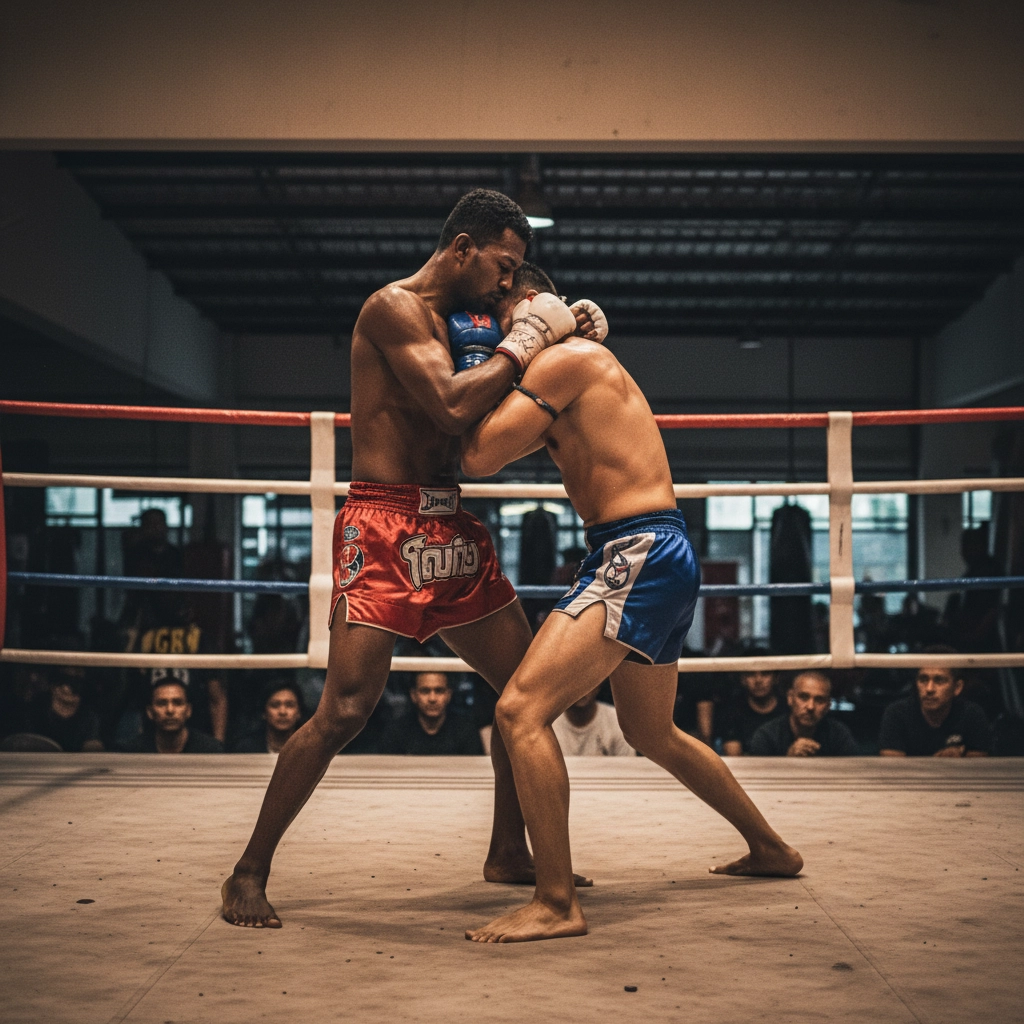
The clinch is more than a scramble against the ropes — it’s a strategic zone where you can neutralize strikes, control rhythm, and score with knees and throws. When you take the center of the clinch, you direct the pace of the fight: you can sap an opponent’s energy, create openings for powerful knees, and transition into throws or breaks. Learning the fundamentals early ensures you avoid common pitfalls like losing position or exposing your neck and face to counterattacks.
How the clinch changes the dynamics of a fight
- Control over distance: In close range, your ability to manage head and arm position dictates whether you or your opponent lands effective strikes.
- Offensive options: The clinch opens direct paths for knees to the body and head, as well as sweeps and trips that change the fight’s momentum.
- Defensive advantages: Proper clinch posture reduces the impact of incoming strikes and prevents the opponent from isolating your limbs.
Master basic clinch control: posture, grips, and foot positioning
Before you attempt advanced throws or grinder-style knees, you must establish solid fundamentals. This section walks you through the essential elements: why posture matters, which grips give you leverage, and how foot placement supports balance and offensive movement. Practicing these reliably lets you transition smoothly into offensive techniques without losing control.
Posture and head placement
- Chest and shoulder alignment: Keep your chest engaged and your shoulders slightly forward to prevent being pulled off balance.
- Head positioning: Use your forehead or temple against your opponent’s head to control their posture; avoid turning your chin outward where it becomes a target.
- Spine and hips: Maintain a neutral spine and bend slightly at the knees and hips so you can generate power through your legs rather than your lower back.
Effective grips and hand frames
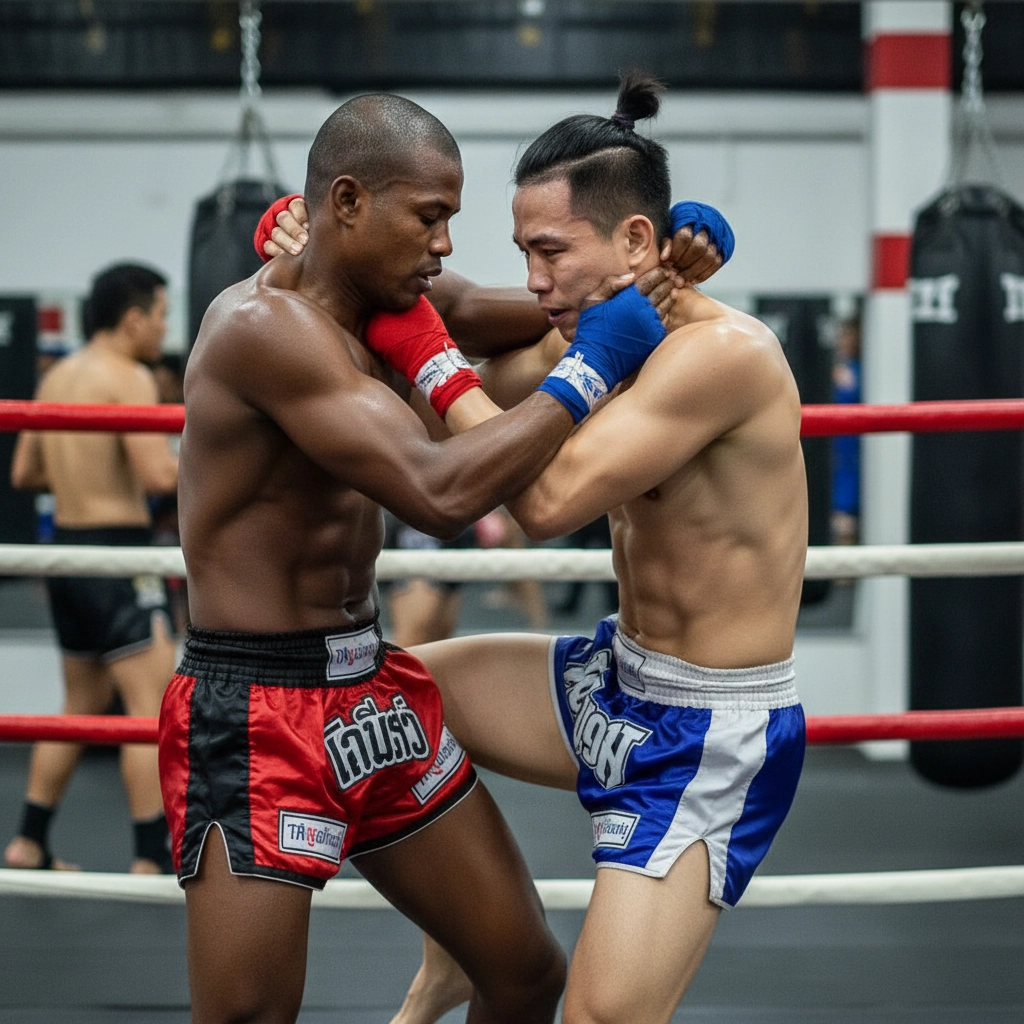
There are several grips you’ll use repeatedly. The double collar tie (both hands behind the opponent’s head) is textbook for controlling posture and setting knees. The single collar tie combined with a pummel to the inside under the opponent’s arm gives you rotational leverage for throws. Frames — holding the opponent’s upper arm or bicep with a stiff arm — create space when you need to break contact or set up a knee.
- Double collar tie: High control, best for knees and head pressure.
- Single collar with inside arm: Useful for off-balancing and initiating trips.
- Underhook vs. overhook: Underhooks provide lift and control; overhooks can neutralize the opponent’s underhook if timed properly.
Footwork underpins every clinch action: stay wide enough to base your weight, keep one foot slightly forward for drive, and be ready to step or pivot to disrupt your opponent’s balance. With these basics in place, you’ll be ready to learn specific knee sequences and the entry points for simple throws in the next section.
High-percentage knee sequences and timing
Once you’ve secured a dominant collar tie or double clinch, your first priority is to make your knees count. Effective knee work isn’t about wild flailing — it’s about rhythm, off‑balancing, and finishing the motion with hip drive. Train these basic sequences until they become reactive rather than deliberate.
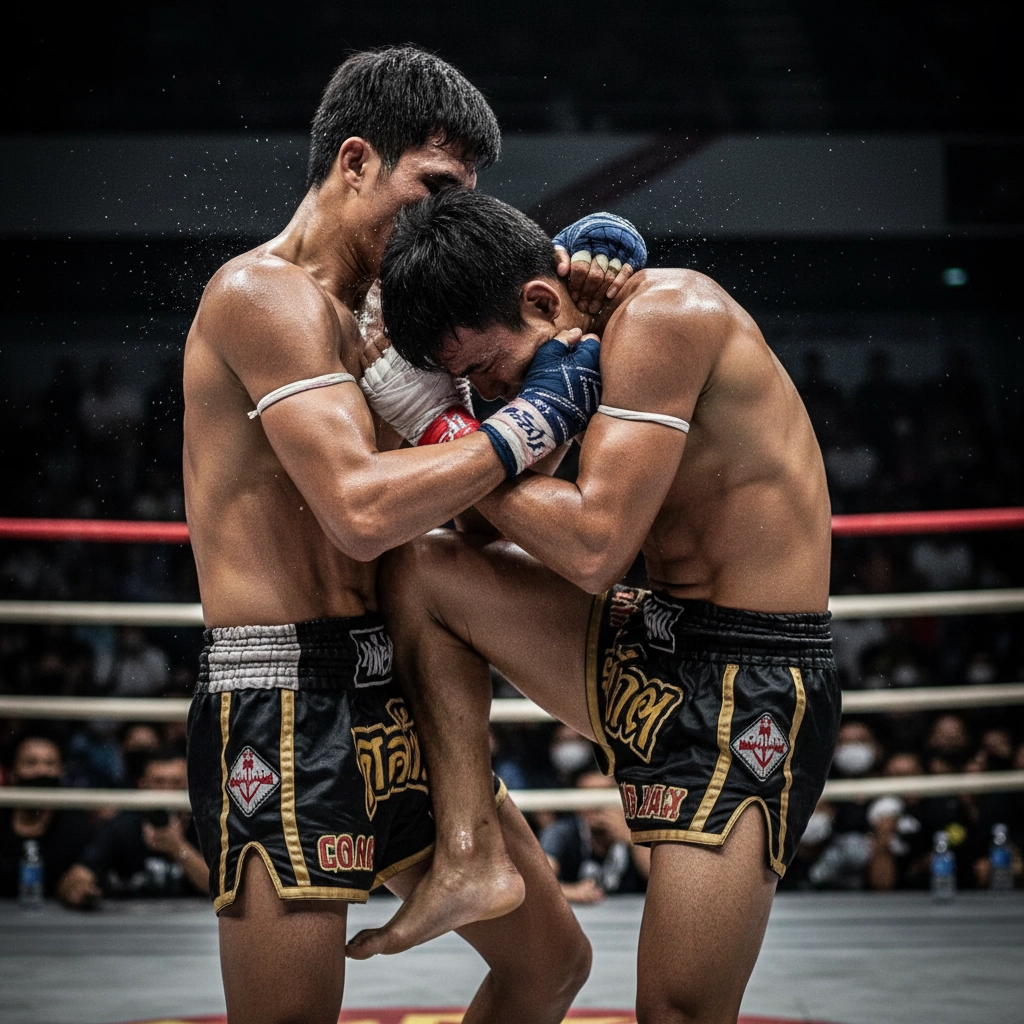
- Single knee to body, pull-down to head: Step one foot slightly forward, drive your hip into the knee to the ribs, then immediately pull the opponent’s head down with your collar tie and snap a short, upward knee to the sternum or solar plexus. The pull creates vertical space for a harder head knee.
- Alternate grinder knees: Maintain chest pressure, alternate knees with short, explosive thrusts, using your hips to generate power rather than just your thigh. Keep your head glued to theirs so each knee disrupts their breathing and posture.
- Switch knee (timing off a reaction): If the opponent turns or circles, switch your base and throw a rear knee to the body or head. The switch adds momentum — practice the pivot so you don’t lose your clinch grip.
Key technical reminders: exhale sharply on impact to tighten your core; keep your head positioned to prevent counters; and use small, repeated pulls on the head to create openings rather than one big yank that telegraphs your next strike. Drill knees in combination with hand control and foot pivots so your strikes are always supported by structure.
Simple throws and sweeps: entries and mechanics
Muay Thai throws aren’t wrestling takedowns; they are short, explosive movements that unbalance an opponent and create follow-up strikes. Focus on basic, high-success options you can perform from the collar tie and single-underhook positions.
- Inside trip (reap): From a single collar tie and inside arm control, step your near foot across the opponent’s near foot, drop your hips, rotate your torso, and hook the back of their ankle or calf with your rear leg while pulling their head down. The combined hip rotation and leg reap brings them off their base.
- Hip toss/turning throw: Secure a strong collar tie, get an underhook with the opposite arm, step your lead foot wide, rotate your hips into them, and use your underhook to lift as you pivot and reap the far foot. Drive the head down to finish the throw.
- Foot sweep off a knee: Use a short knee to the body to force weight backward, then step in and sweep the near foot with the instep while pulling the upper body forward—simple and low risk.
Common mistakes: overcommitting with your arms without hip rotation, failing to control the opponent’s head during the throw, and lifting with your back instead of using leg drive. Practice entries slowly, then increase speed and resistance.
Defensive clinch techniques and safe escapes
Offense wins rounds, but escapes keep you safe and let you reset. A handful of defensive actions will prevent you from being controlled or thrown indefinitely.
- Hand fighting and pummeling: Constantly fight for inside hand placement. If you lose ties, pummel under the opponent’s arms to regain an underhook or break the collar tie.
- Framing and creating space: Drive a stiff arm into their bicep or shoulder, step back on your lead foot and create enough space to reestablish distance or land a teep. Frames are your immediate breathing room.
- Spin out and step off: If their weight is centered forward, turn your hips and step your trailing foot outside their lead foot, spinning your body free while maintaining a hand on their head to control any follow-up.
- Counter throw defense: Widen your base, drop your hips, step your outside foot back to block reaps, and clamp down on their hips when you feel a rotational lift.
Train escapes under progressive resistance: static holds, slow partner attempts, then live clinch rounds with limited throws. Always prioritize safety—tap early during training and practice controlled break techniques before adding power.
Training the clinch: next steps and practical guidance
Turn technique into habit by following a steady, progressive training plan: start with solo mobility and hip-drive drills, move to cooperative partner pummeling and controlled knee sequences, then add resistance and live clinch rounds with clear safety rules. Record sessions when possible, work with a coach to correct subtle posture or grip errors, and prioritize short, focused repetitions over long, sloppy rounds. For broader context on Muay Thai rules and practice, learn more about Muay Thai.
Keep safety front of mind—both yours and your partner’s. Use progressive resistance, practice breakfalls and escapes, and agree on tapping protocols before any full-speed clinch work. Over time, consistent, mindful drilling will make clinch control, knees, and throws reliable tools rather than occasional techniques.
Frequently Asked Questions
How often should I practice clinch drills to see real improvement?
Aim for 2–3 dedicated clinch sessions per week in addition to regular striking and conditioning. Short, frequent drills (10–20 minutes each) focusing on pummeling, collar ties, and knee sequences yield faster progress than infrequent, long sessions. Integrate live clinch rounds slowly—start cooperative, then increase resistance as technique holds up.
Are throws and sweeps allowed in Muay Thai competition?
Yes—many throws, trips, and sweeps are permitted in Muay Thai when executed from clinch positions; however, rules vary by organization and event. Slams and wrestling-style takedowns that endanger the opponent may be restricted. Always check the specific rules of the competition you’re entering.
What’s the safest way to practice clinch throws with a partner?
Drill throws progressively: begin with slow entries and cooperative partners, emphasize head control and hip rotation, and practice controlled breakfalls on the receiving end. Use protective gear, establish tapping rules, and only add speed and power once both partners demonstrate consistent technique and control under less resistance.
Recommended Posts