There’s a unique blend of skill and strength in mastering Muay Thai kicks, and enhancing your balance and power is key to executing them effectively. This guide will explore into the imperative techniques and drills that can elevate your kicking game, focusing on footwork, body positioning, and strategic drills. By honing these aspects, you not only increase your striking ability but also minimize the risk of injury, ensuring a safer training experience. Embrace these insights to become a formidable presence in the ring.
Types of Muay Thai Kicks
In Muay Thai, a variety of kicks serve different purposes, enhancing both offensive and defensive strategies. Understanding their distinct applications is vital for any practitioner. Here are the primary types of kicks:
- Roundhouse Kick
- Teep Kick
- Side Kick
- Knees
- Front Kick
| Type | Description |
| Roundhouse Kick | Delivered with the shin, targeting various levels. |
| Teep Kick | Forward thrust kick used for maintaining distance. |
| Side Kick | Powerful lateral kick executed with precision. |
| Knees | Close-range strikes ideal for clinching. |
| Front Kick | A straightforward kick targeting the opponent’s torso. |
Roundhouse Kick
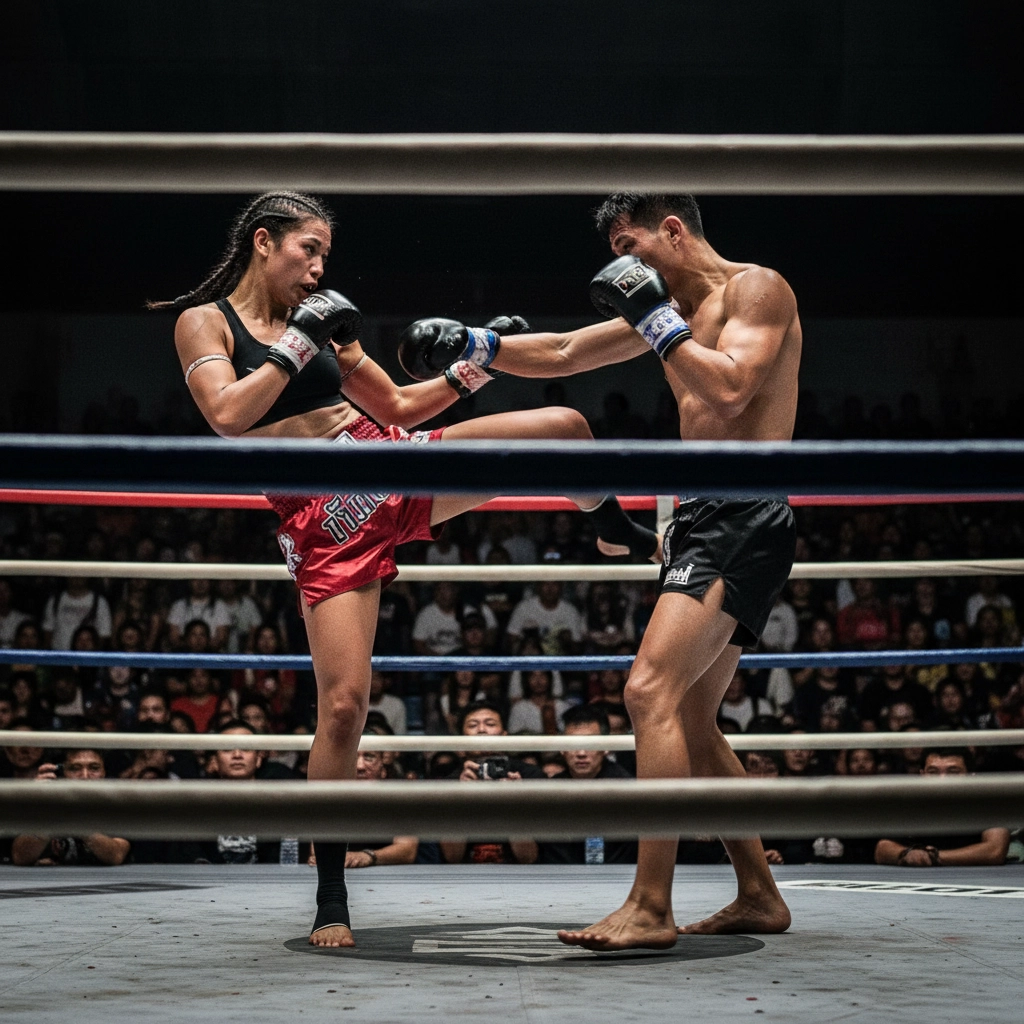
The roundhouse kick is executed by pivoting on the supporting foot and swinging the other leg in a circular motion. This powerful strike targets the opponent’s head, torso, or legs, making it versatile in any situation.
Teep Kick
The teep kick, also known as the push kick, serves as a fundamental tool in Muay Thai. It utilizes the heel to strike the opponent, often aimed at the mid-section. This kick creates distance and disrupts the opponent’s rhythm.
Understanding the application of the teep kick can significantly enhance your defensive and offensive capabilities. It’s particularly effective in countering aggressive opponents, as it keeps them at bay and allows you to control the distance. By practicing the timing and precision of the teep, you can create opportunities for follow-up attacks or evade incoming strikes.
Side Kick
The side kick is a lateral kick that delivers power directly to the opponent, focusing on precision to fulfill its role. It’s often employed to break an opponent’s balance or to target vulnerable areas.
Executing the side kick requires proper technique, involving a pivot and a drive from the hip. When connected, its force can incapacitate an opponent momentarily. This kick’s effectiveness is heightened when used in conjunction with other techniques, providing openings for follow-up strikes.
Knees
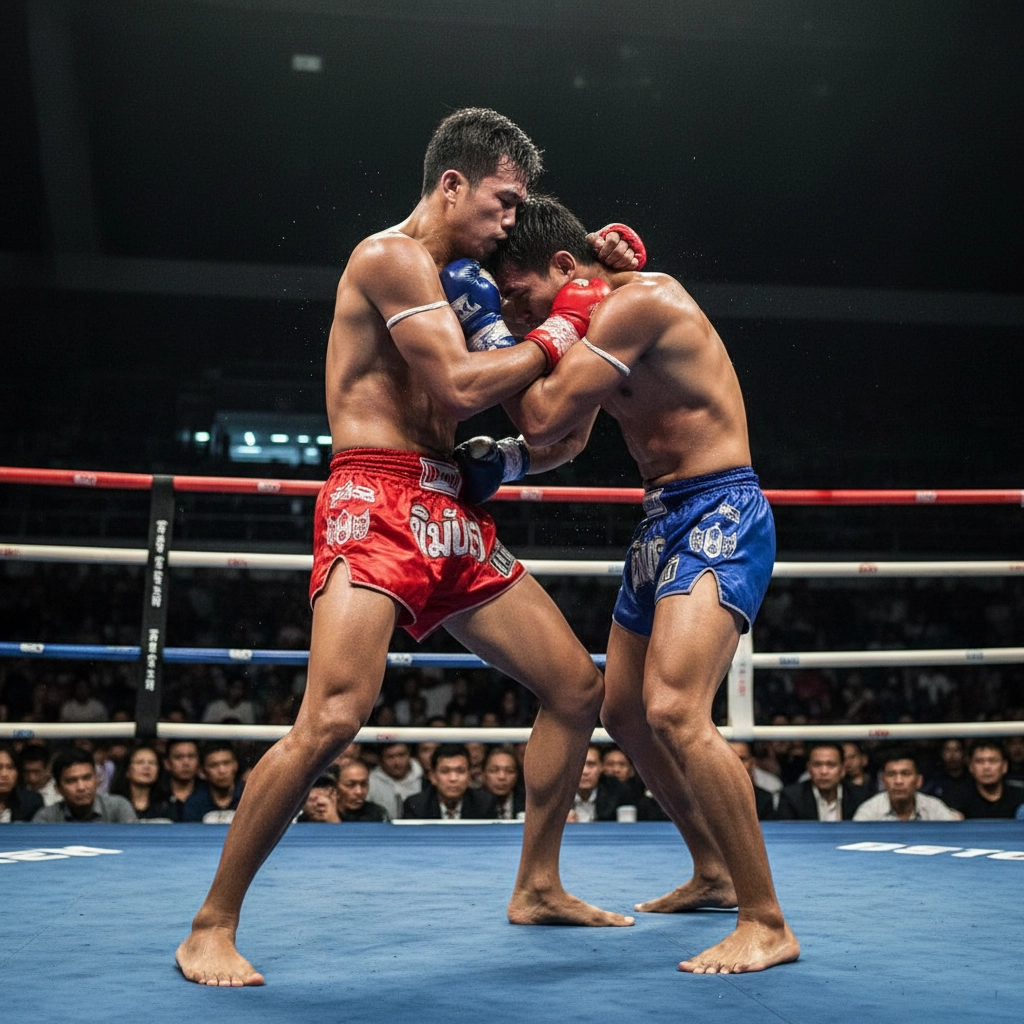
Knees are powerful tools in close-range fighting, ideal for counter-attacks during clinch scenarios. They can target the head or body, delivering significant damage.
Incorporating knee strikes into your arsenal can turn the tide of a fight, especially when combined with clinching techniques. These strikes can quickly sap the energy of your opponent, making them an excellent choice during exchanges in close quarters. Practicing the angle and timing of your knees will enhance their effectiveness and your overall game.
Factors Affecting Balance and Power
To enhance your Muay Thai kicks, understanding the various factors affecting balance and power is necessary. These elements include stance, footwork, core strength, and flexibility. A proper combination of these factors leads to more effective and powerful strikes. Any improvement in these areas can significantly elevate your performance.
Stance and Footwork
Your stance and footwork form the foundation of balance in Muay Thai. A stable stance allows for better weight distribution, while agile footwork ensures you can pivot and shift as needed. Practicing different stances, like orthodox or southpaw, can enhance your adaptability in the ring.
Core Strength
Building core strength is vital for generating power in your kicks. A strong core stabilizes your body during striking, providing the necessary base from which to launch powerful kicks. Incorporating exercises like planks and medicine ball twists can significantly improve your core’s effectiveness.
Targeting the core fosters not only greater kicking power but also enhances balance and control. Engaging the abdominal muscles allows for better force transfer through the legs during kicks, enabling fighters to execute higher and more forceful strikes. Regularly training the core through dynamic movements will lead to noticeable improvements in your overall Muay Thai performance.
Flexibility
Flexibility plays a key role in executing high and powerful kicks. Increased flexibility allows for a broader range of motion, enabling fighters to deliver kicks that are not only more effective but also safer. Regular stretching routines can improve flexibility, thereby enhancing overall striking capability.
Moreover, enhanced flexibility prevents injuries and supports recovery after intense training. Incorporating yoga or dynamic stretching post-workout can lead to remarkably better kicking technique and fluidity. As flexibility improves, the ability to perform a wide variety of kicks with different angles increases, taking your performance to the next level.
Step-by-Step Techniques to Improve Kicks
| Technique | Description |
|---|---|
| Proper Stance | Maintain a fighting stance for stability. Feet shoulder-width apart with weight balanced. |
| Hip Rotation | Engage your hips during the kick for added momentum and power. |
| Follow-Through | Ensure a full extension and retraction of your leg for effective impact. |
| Targeting | Focus on specific targets to enhance accuracy and precision. |
Drills for Balance
To develop solid balance during kicks, incorporate drills that challenge your stability. Techniques like balance beam exercises, one-legged squats, and using wobble boards enhance proprioception. Regular practice of these drills allows for better weight distribution and grounding, which is imperative for powerful and effective kicks.
Drills for Power
Enhancing the power of your kicks requires targeted drills that engage your core, legs, and hips. Incorporating resistance bands during practice can significantly build strength and explosiveness. Pairing heavy bag work with plyometric exercises, like jump squats, contributes to increased leg power over time.
To further increase kick power, focus on explosive movements. Exercises like kettlebell swings and medicine ball throws simulate the explosive nature of a kick. A dynamic warm-up, followed by high-intensity kick drills against pads or bags, reinforces speed and strength in your striking. Regularly tracking progress through measurable outcomes, such as kick strength on a bag, promotes consistent improvement and motivates practitioners to push boundaries.
Tips for Mastering Muay Thai Kicks
To enhance your Muay Thai kicks, focus on refining your stance and ensuring stability throughout the movement. Engage your core for better control and power. Practice consistently, concentrating on form and technique. Incorporate strength training for your legs and hips to build explosive force. Lastly, utilize the feedback from training partners or coaches to identify areas for improvement. This will ensure a more impactful striking strategy.
- Stance: Maintain a balanced and ready position.
- Core engagement: Use your core to drive power.
- Leg strength: Develop strength for more explosive kicks.
- Feedback: Listen to coaches and peers for refinements.
Breathing and Timing
Proper breathing is crucial for synchronized movements in Muay Thai kicks. Inhale deeply before executing the kick to create a stable base and exhale forcefully upon impact to release energy. Timing your breath with the kick ensures optimal power and control. Practicing this rhythm will enhance your overall striking performance.
Visualization Techniques
Employing visualization techniques can significantly accelerate skill development in Muay Thai. Mentally rehearsing your kicks allows you to focus on perfecting the mechanics and execution of each strike. Picture yourself in a match, performing ideal kicks against an opponent-this mental practice sharpens your reflexes and confidence when you hit the gym.
Visualization not only creates a mental roadmap for executing Muay Thai kicks, but it also conditions your mind for success. Studies show that mental rehearsal can enhance muscle memory and improve performance by solidifying neural connections involved in kick execution. Use techniques such as guided imagery to visualize the exact angles of your kick and the feel of impact to enhance your skills. By regularly dedicating time to this practice, you can significantly bolster both technique and confidence in the ring.
Pros and Cons of Different Kicking Styles
| Style | Pros | Cons |
|---|---|---|
| Roundhouse Kick | High power and versatility | Risk of losing balance if executed poorly |
| Teep Kick | Excellent distance control | Limited power compared to other kicks |
| Side Kick | Effective for lateral movement | Requires precise timing and positioning |
| Back Kick | Surprise element and strong impact | Can be telegraphed easily |
| Low Kick | Targets opponents’ legs for damage | May leave upper body exposed |
| Jump Kick | High visual impact and surprise | Increased risk of injury |
| Roundhouse Kick (to the body) | Great for weakening opponents | May not generate a knockout |
| Spinning Hook Kick | High probability of causing knockouts | Great technical skill required |
| Elbow Kick | Unpredictable and close range | Less effective against longer reach opponents |
| Knees | Powerful in clinch situations | Requires the right closeness to be effective |
Advantages of Roundhouse Kicks
Roundhouse kicks are a staple in Muay Thai for a reason, primarily due to their high power and versatility. They can target various areas, including the head and body, making them effective for decisive strikes. The circular motion generates momentum, amplifying the force of the kick. Additionally, when executed properly, they allow for seamless transitions between offensive and defensive maneuvers.
Disadvantages of Teep Kicks
While teep kicks are valuable for maintaining distance, they often lack the impact found in more powerful kicks like the roundhouse. The emphasis on control can lead to less energy and power, making them less effective in terms of causing direct damage. Moreover, relying too heavily on teeps may limit overall striking variety and create predictability.
Further complications arise when teep kicks are overused, as their efficacy depends on timing and positioning. Bad execution can lead to vulnerabilities, leaving the practitioner open to counterattacks. For instance, if a fighter throws a teep while off-balance, it can lead to awkward positioning, making them susceptible to a swift kick or punch. Balancing this technique with more powerful strikes is imperative for a well-rounded Muay Thai strategy.
Common Mistakes and How to Avoid Them
Identifying and correcting common mistakes is vital for improvement in Muay Thai kicks. Many practitioners struggle with various aspects that hinder their performance. By focusing on key errors and implementing proper techniques, fighters can enhance their balance and power effectively.
Poor Technique
Poor technique often manifests as incorrect foot placement or a lack of hip rotation, which significantly reduces the effectiveness of kicks. When a fighter fails to pivot adequately on the standing foot, it compromises both balance and power delivery. Practicing under the guidance of a skilled trainer can help refine these aspects.
Lack of Consistency
Inconsistent training leads to an inability to execute kicks reliably under pressure. Regular practice is vital to develop muscle memory, ensuring kicks become more instinctual during sparring or competition. Discipline in training schedules creates a stronger foundation for skill enhancement.
Inconsistency can stem from various factors, including fluctuating training schedules or a lack of structured routines. For instance, training only sporadically or skipping sessions results in degradation of skills, making it difficult to perform at peak levels. To combat this, creating a weekly training plan with dedicated time for kick refinement will help maintain steady progress. Year-round commitment, even in off-seasons, ensures that balance and power improve continuously. Regular drills, paired with physical conditioning, enhance both confidence and execution during high-pressure situations.
Conclusion
To wrap up, refining your technique in Muay Thai kicks is vital for enhancing both balance and power. Focus on your stance, footwork, and body mechanics to achieve optimal results. Regular practice and targeted drills can significantly improve your kicking efficiency. By paying attention to these elements, you’ll not only increase your striking effectiveness but also build a solid foundation for more advanced techniques. Commitment to mastering these skills will positively impact your overall performance in the ring.
FAQ
Q: How can I improve my balance while performing Muay Thai kicks?
A: To enhance balance during kicks, focus on stabilizing exercises such as single-leg stands, balance boards, and yoga. Practicing kicks slowly and gradually increasing speed helps develop muscle memory, which contributes to better balance. Additionally, incorporating footwork drills can improve overall stability, making kicks more controlled.
Q: What techniques can boost the power of my kicks in Muay Thai?
A: To increase kick power, emphasize leg strength through exercises like squats and lunges. Proper technique is vital; ensure you’re pivoting on your standing foot and generating power from your hips. Drilling against pads or heavy bags allows for feedback on impact, helping to refine your technique while amplifying your strength.
Q: Are there specific drills to practice for enhancing both balance and power in kicks?
A: Yes, integrating combination drills that include kicks, footwork, and defensive movements can significantly improve both balance and power. The use of shadow boxing with an emphasis on technique and rhythm also helps. Partner drills that involve breaking balance through light contact can enhance your ability to maintain stability while delivering powerful strikes.
Recommended Posts