Why Muay Thai winner betting requires sport-specific knowledge
When you bet on a Muay Thai winner, you’re not just picking a name on a card — you’re predicting the outcome of a combat sport with distinct rules, pacing, and cultural practices. Unlike boxing or MMA, Muay Thai emphasizes clinch work, elbows, knees, and rhythm across rounds. That means stylistic matchups, conditioning, and traditional Thai scoring can have a bigger influence on decisions than raw punch volume.
To be consistently successful you need to understand how fights are structured, what counts as a legal winning method, and how bookmakers treat unusual outcomes like draws, no contests, and cancellations. The rest of this part explains the core rules and common market types so you can make informed winner bets.
Core rules that determine how a winner is declared
Fight duration and scoring formats
Rules vary by promotion and venue. Professional Muay Thai bouts are commonly 3 x 3-minute rounds in international shows, while many traditional Thai stadium fights and title contests use 5 x 3-minute rounds. Rounds and scoring method matter because they change pace and strategy — some fighters aim to dominate later rounds in a longer fight.
How judges score and how that affects winners
Muay Thai scoring prioritizes effective striking, impact, ring control, and damage rather than sheer volume. In practice this can lead to rounds being awarded for cleaner, harder strikes and successful clinch control. Judges award victories by unanimous decision, split decision, or majority decision; these outcomes will settle your winner bets differently depending on bookmaker rules.
Other ways a bout ends and bookmaker implications
- Knockout (KO) and Technical Knockout (TKO): outright victories that typically settle winner bets immediately.
- Corner retirement (RTD): when a corner stops the fight between rounds; most bookmakers treat RTD as a TKO win for settlement.
- Disqualification (DQ): the guilty fighter loses; check whether your sportsbook treats DQ as a valid settlement for winner bets.
- No contest or cancelled fights: many sportsbooks void bets and return stakes, but rules differ — always confirm the house policy.
- Draws: some books void moneyline bets on a draw, others offer a specific draw market — review how ties are handled before staking.
Common winner bet types and practical settlement rules
Moneyline / Match winner
The simplest and most common market: you pick which fighter wins. Odds reflect bookie assessment and market money. Understand implied probability and line movement so you can identify value.
Method-specific winner bets
Many sportsbooks let you bet on a specific method — for example, fighter A to win by knockout. These bets pay better but are settled only if that method occurs; a decision win will usually result in a losing bet even if your fighter wins by points.
Round and prop variants that change risk
Round betting (predicting the exact round of the finish) and “win within X rounds” markets are popular but require you to understand conditioning and tempo. Props like “fighter to win by decision” hinge on how judges score, so research judges and promotion tendencies.
With these foundational rules and markets in mind, the next section will show you how to read lines, interpret momentum during fight week, and build a staking plan that suits Muay Thai’s unique dynamics.
How to read lines and interpret fight-week signals
Odds are not just numbers — they are a running commentary on what the market knows (and assumes). Start by comparing prices across multiple sportsbooks to identify the market consensus and any outliers. Calculate implied probabilities (1 / decimal odds) to see where bookmakers’ margins sit; big differences between books can signal either an inefficiency you can exploit or a reaction to late information.
During fight week pay attention to these practical signals:
- Line movement: late shortening of an underdog often indicates positive inside news (injury to favorite, weight-cut trouble, or corner changes). Conversely, last-minute favorite shortening can be steam from sharps or public money after weigh-ins.
- Social-media and camp intel: training clips, photos from camp, and comments from trainers can reveal conditioning or undisclosed injuries. Treat these as clues — verify with multiple sources before staking big.
- Weigh-ins and medicals: a visibly drained fighter or one who misses weight is a practical red flag. A corner’s post-weigh-in behavior (calm vs frantic) is telling for game-planning and recovery.
- Promotion and venue tendencies: some judges reward aggression; others value technical clinch control. Historical scoring at the same stadium helps predict decision-heavy outcomes.
Use these signals to adjust perceived value. If your assessment of a fighter’s chance differs materially from the market-implied probability, you may have a bet worth placing — but only after accounting for bookmaker margin and potential news flow that could reverse the move.
Staking plans and bankroll management tailored to Muay Thai
Muay Thai’s volatility — frequent KOs, short-notice replacements, and regional rule differences — demands disciplined bankroll management. Choose a staking method that reflects both your confidence and the sport’s variance.
Practical models:
- Flat units: stake a small, fixed percentage of your bankroll (1–2%) per standard pick. This limits ruin from streaks and is easy to follow.
- Confidence-weighted units: assign 1–5 units depending on your edge. Reserve higher units for spots backed by strong fight-week intel or quantitative edges (e.g., historical matchup advantages).
- Kelly-lite: use a fractional Kelly (e.g., 10–25% of the Kelly recommendation) if you can estimate your edge. This maximizes growth while controlling risk, but requires honest win-rate/probability estimates.
Further tips: separate bankrolls for props/live bets and pre-fight moneylines, track every wager to measure ROI by market type, and reduce unit size for first-time bets on promotions or judges you don’t know. Above all, accept that variance will be high — disciplined sizing keeps a good run from disappearing after a few unpredictable KOs.
Live-betting strategies: reading momentum inside the cage
Live markets offer the most value for bettors who can interpret in-fight dynamics. Quick, observable factors often move live lines faster than pre-fight analysis can adjust:
- Cardio and output: a fighter who looks winded in round one after an easy early pace is a live candidate to fade for later-round outcomes.
- Damage and cuts: visible cuts or swelling that impair vision are strong signals for late-fight betting or taking a short-priced opponent.
- Clinch dominance: sustained clinch control often leads to late-round scoring advantages — live markets will lag on translating that to decision odds.
- Corner communication: if a corner starts signaling caution or wrapping hands between rounds, be wary of TKO/RTD risk.
Keep stakes smaller in-play due to rapid line swings and use bookmakers with low latency and reliable live streams. Avoid emotional cash-outs; instead, pinpoint clear momentum shifts and act decisively when the live price offers a quantifiable edge.
Putting the plan into action
Knowledge is only useful when it becomes habit. Create simple pre-bet and in-play routines you can repeat every fight night so decisions are fast, unemotional and evidence-based. Keep your checklist short, measurable and realistic — that’s how good strategies survive losing streaks and compound gains over time.
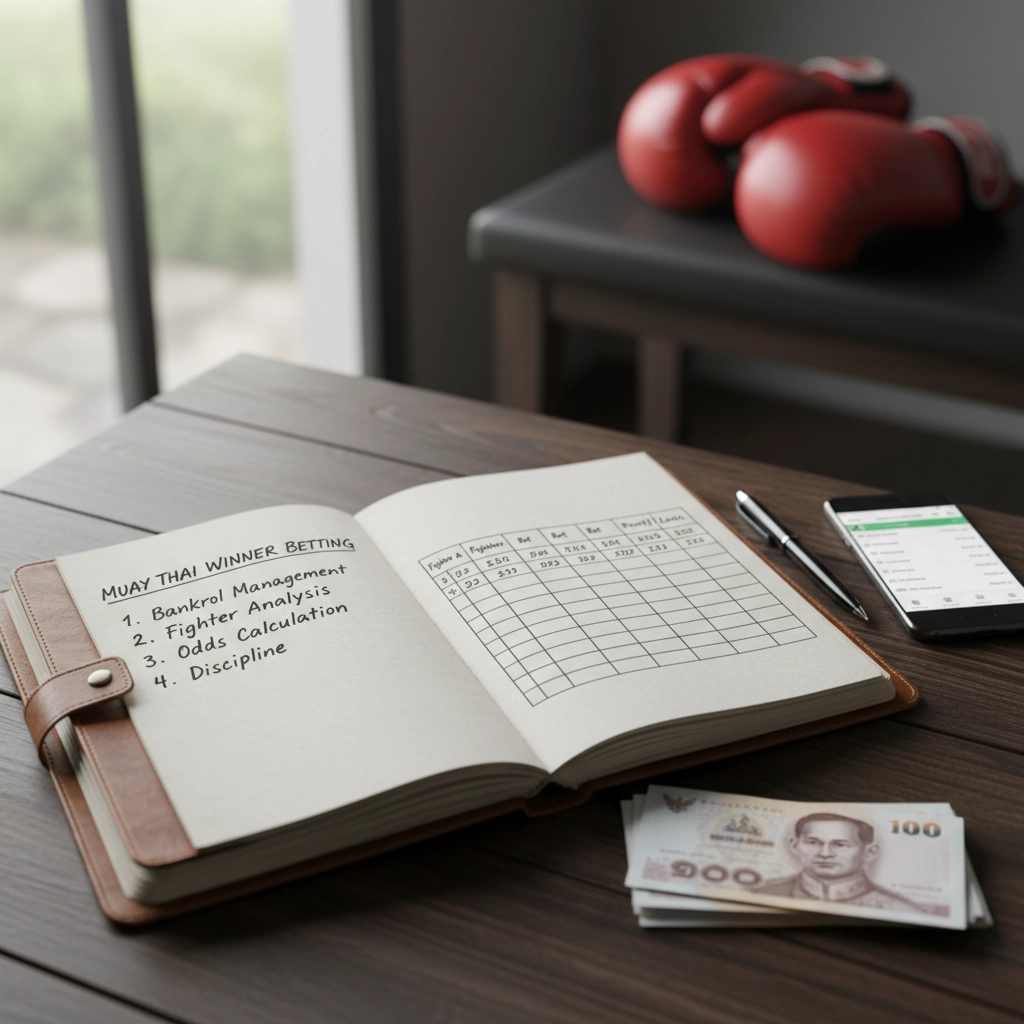
- Pre-bet routine: compare prices across at least two books, calculate implied probabilities, confirm any fight-week intel (weigh-ins, camp updates, medicals), set stake size according to your staking plan, and place the bet only when the market price satisfies your value threshold.
- In-play routine: use a low-latency stream, watch for cardio, visible damage, clinch control and corner signals; bet small and fast on clear momentum shifts; and be prepared to accept that lines can reverse quickly.
- Record and review: log every wager (market, odds, stake, outcome, and your rationale). Review monthly to identify strengths, leaks and judges/promotions you should avoid or target.
- Risk controls: cap exposure per event, never chase losses, and separate bankrolls for pre-fight and live bets. If you need a refresher on official rules or scoring nuances that affect betting, consult the sport’s governing guidance such as the IFMA rules and regulations.
Turn your edge into discipline: small, consistent advantages and disciplined sizing beat big hunches with poor risk control. Keep learning, stay humble with your estimates, and treat the process — not short-term results — as the performance metric.
Frequently Asked Questions
How do I convert odds into implied probability?
For decimal odds, divide 1 by the decimal price (1 / decimal odds) to get the implied probability. For example, 2.50 decimal odds imply a 40% chance (1 / 2.50 = 0.40). Remember bookmakers include a margin, so adjust your edge estimates accordingly.
Which staking method is best for Muay Thai betting?
There’s no one-size-fits-all. Flat units are safest for high variance; confidence-weighted units let you scale with conviction; and a fractional Kelly is suitable if you can honestly estimate your edge. The right choice depends on your bankroll, risk tolerance and skill at estimating true probabilities.
Are live bets generally more profitable than pre-fight bets?
Live betting can offer value because markets react slower to in-fight dynamics, but it also exposes you to faster swings, shorter decision windows and bookies’ latency. Live edges require reliable streams, smaller stakes and quick judgment; pre-fight markets reward better pre-event research and line shopping.
Recommended Posts