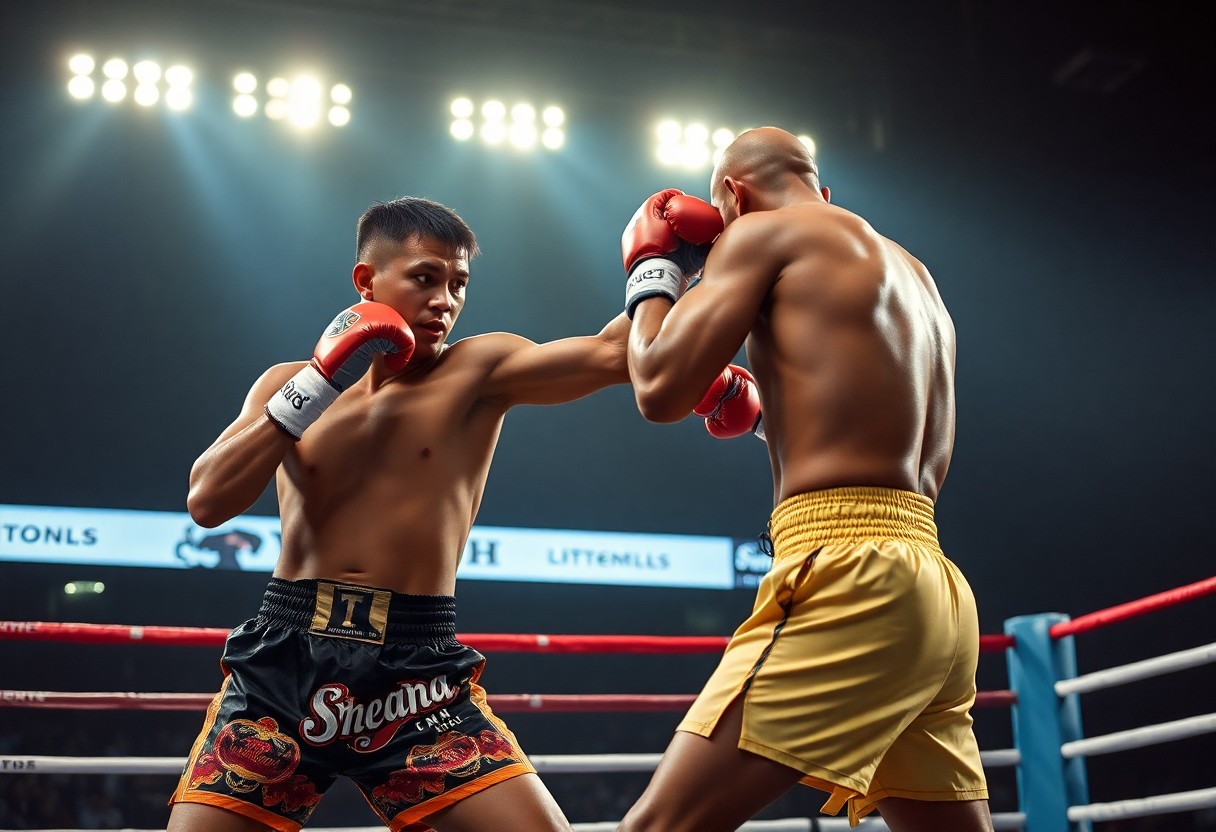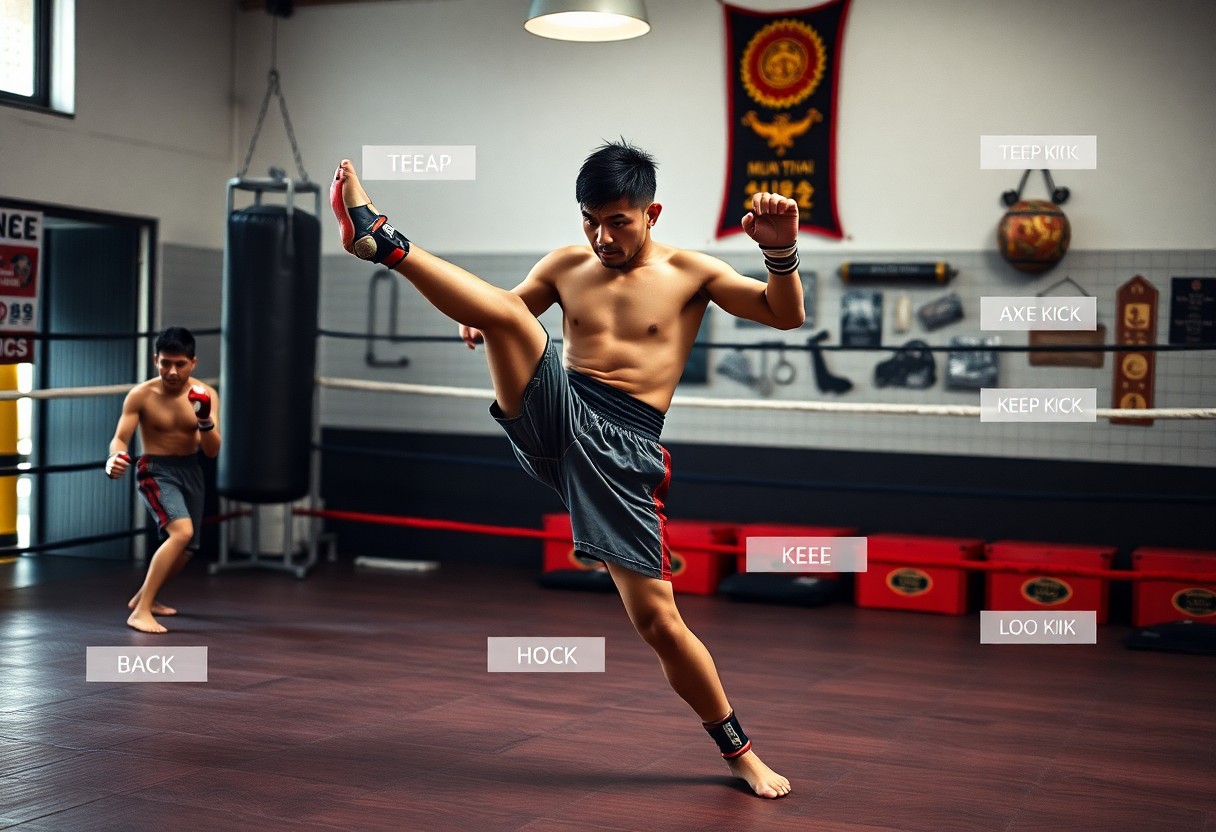

You should focus on establishing a high guard, active head movement, and disciplined footwork to limit openings and absorb strikes safely; practice drills that reinforce distance control and timing, and be aware that improper defense can lead to cuts, concussions, and joint injuries. Train with progressive contact, proper protective gear, and coaching to build confidence, durability, and technical precision while minimizing risk.
Understanding Muay Thai Defense
Good defense blends posture, timing and proactive choices: maintain a high guard, use active head movement, control distance with footwork, and employ the clinch when opponents close range. Train habits with 3-5 minute rounds of specific drills (e.g., 100 parries, 2‑minute slip ladders) to build reflexes and reduce damage from power shots.
Types of Defensive Techniques
Blocks, parries, evasive footwork, head slips and the clinch form the core toolkit; each reduces specific threats-high guards absorb hooks, parries redirect straight punches, and slips avoid counters. Practice timing with partner drills and pads to convert defense into counters. Recognizing which technique suits your range and opponent speeds up practical improvement.
- High guard – protects against hooks and crosses
- Parry – redirects straight punches to create counters
- Head slip – avoids punches while keeping you in range
- Footwork – controls distance and angles
- Clinch – neutralizes strikes and creates knee opportunities
| High guard | Absorbs hooks/crosses; keep elbows tight to protect ribs |
| Parry | Short redirection of straights; follow with immediate counters |
| Head slip | Small lateral movement to avoid headshots; risk if overcommitted |
| Footwork | Step off-line to create angles; use 1-2 quick steps, then reset |
| Clinch | Control posture, stall combos, deliver knees; practice pummeling |
Key Factors to Consider in Defense
Assess opponent range, striking patterns and your own conditioning; shorter fighters may favor the clinch, taller ones rely on angled footwork. Drill defensive responses in sets (e.g., 30 reps per technique, 3 rounds) to make them automatic. This builds sustainable defense under fatigue.
- Range – choose clinch vs. long kicks
- Timing – practice reaction windows (0.2-0.5s)
- Conditioning – fatigue erodes defense
- Technique volume – repeat 30-100 reps per session
Focus on measurable adjustments: keep a 60/40 weight split for mobility, tuck the chin behind the lead shoulder to reduce knockout risk, and log progress with video-reviewing 3 rounds per week identifies patterns to fix. This forces objective improvement and reduces repeated mistakes.
- Stance balance – 60/40 for mobility vs power
- Chin tuck – lowers head target profile
- Video review – analyze 3 rounds weekly
- Progressive sparring – increase intensity by 10% per week
Step-by-Step Defense Strategies
| Focus | Action |
| Progression |
Start each session with stance and guard for 3-minute rounds, then isolate footwork, head movement, and checks in separate drills; drill each element for 5-10 minutes to build reliable habits. Maintain a high guard to mitigate head strikes and practice controlled sparring at 50-60% intensity to prioritize safety while sharpening timing. |
Basic Defensive Moves
| Move | Tip |
| Shield block |
Use forearms to absorb punches, tuck the chin and keep elbows tight to protect ribs; drill 3 sets of 1-minute solo blocking to groove the posture. |
| Leg check |
Turn the shin into the incoming kick and plant the support foot; practice 50 checks per leg weekly to reduce leg damage. |
| Slip & roll |
Move the head off the centerline, returning with a counter; combine slips with immediate counters to train defense that creates offense. |
Advanced Techniques for Improved Safety
| Technique | Benefit |
| Angle change |
Step off the line to nullify power shots and open counter opportunities; use 45° pivots after blocks to reset position. |
| Teep defense |
Catch or deflect the teep, then immediately counter with a low kick or jab to punish a committed strike. |
| Active clinch |
Frame and control posture to limit knees; drill 2-minute clinch exchanges focusing on posture and escapes. |
- Drill angle pivots for 5 minutes per round to make linear attacks miss.
- Practice teep catches with partner at 50% intensity, 3 sets of 10 reps each leg.
- Record clinch rounds and correct posture errors-12 minutes total per session.
| Drill | Protocol |
| Angle pivots | 5 min rounds, focus on foot placement and hip rotation. |
| Teep catch | 3×10 reps per side at submaximal power. |
| Clinch posture | 2×2-minute controlled clinches with emphasis on frames. |
When advancing these techniques, integrate them into conditioned sparring: allocate one round to only angle defense, another to teep counters, and a third to clinch work. Track improvement by counting successful defensive resets per round; aim for a 30-50% increase in clean escapes over four weeks. Emphasize frame maintenance and immediate counters to reduce exposure to knees and elbows, keeping practice intensity controlled to avoid unnecessary injury.
- Set measurable goals: escapes per round, successful counters, leg-check ratio.
- Use video feedback weekly to correct posture and timing errors.
- Increase intensity gradually: add 10% intensity every two weeks if technique remains solid.
| Metric | Target |
| Successful escapes | +30-50% in 4 weeks |
| Teep counter accuracy | 70% success rate in drill |
| Intensity progression | +10% every 2 weeks |
Tips for Staying Safe While Striking
Keep a compact guard, use angled footwork to control distance, and check kicks with the shin to lower impact-consistent shin conditioning can reduce soft-tissue injuries noticeably. Drill 3-minute rounds with defensive goals to simulate fatigue and test reactions under pressure. After reviewing training footage, adjust your stance and close openings that allowed counters.
- Guard: chin tucked, elbows in, forearms ready to block straight punches.
- Distance: use the jab to measure and maintain 1-2 kicking ranges depending on opponent reach.
- Clinch: control posture and hips before striking; leaving posture allows dangerous knees.
- Conditioning: 3-minute rounds, 1-minute rest; limit full power in drills to train defense safely.
Avoiding Common Mistakes
Throwing wide, single power shots without resetting your guard invites counters-novices who overcommit are frequently countered in sparring. Favor 2-3 strike combinations, step offline after hooks, and keep the rear hand high after kicks. Use controlled-intensity sparring (about 50% power) to practice timing and reduce injury risk while reinforcing correct mechanics.
Practicing Situational Awareness
Work drills that force you to read cues: react to a clipped leg kick within 0.5-1.0 seconds, follow hip rotation for incoming kicks, and spot shoulder dips as telegraphs for hooks. Run 3-minute scenario rounds where your partner begins with an advantage; your task is to escape, re-establish distance, and land one safe strike, tracking success rates session-to-session.
Use measurable repetition: partner feints 10 times and aim for an 8/10 correct defensive response, practice peripheral-vision catches from 120° angles while maintaining guard, and perform 20 clinch-escape reps focusing on hip control. Prioritize spotting telegraphs-weight shifts and shoulder turns give ~0.5s to react-so you can avoid headkicks and knees, both high-risk targets.
Pros and Cons of Different Defensive Approaches
Different defensive styles trade coverage, mobility, and energy use depending on range and opponent. High guard excels versus straight punches but often leaves the body exposed; active head movement nullifies jabs yet can be vulnerable to low kicks; clinch control reduces mid-range strikes while burning grip strength over 30-60 seconds. Focus on pairing techniques-e.g., footwork plus parry-to cover weaknesses and limit openings for counters like uppercuts or checked kicks.
Pros and Cons Breakdown
| High Guard | Pros: Strong protection against hooks/crosses; easy to maintain for 3-minute rounds. Cons: Leaves ribs and liver more exposed; poor against body kicks. |
| Low/Phased Guard | Pros: Better sightlines and counter opportunities; conserves energy. Cons: Increased risk of head strikes from fast combinations. |
| Active Head Movement (slips/rolls) | Pros: Creates angles for counters and reduces punch impact. Cons: Vulnerable to leg kicks and stiff counters if timing is off. |
| Parry/Deflect | Pros: Redirects power and opens immediate counters. Cons: Requires precise timing; mistimed parries invite straight shots. |
| Check/Catch Kicks | Pros: Neutralizes roundhouse damage and preserves mobility. Cons: Mistimed checks can lead to takedowns or sweep counters. |
| Clinch | Pros: Stops volume striking and creates knees/short elbows. Cons: High energy cost; referee separations shorten control time. |
| Footwork & Evasion | Pros: Controls distance and reduces damage taken over a round. Cons: Requires high aerobic capacity; poor lateral steps invite cornering. |
| Blocking (forearms/elbows) | Pros: Immediate protection for short exchanges. Cons: Repeated blocks transmit impact to arms and can fatigue hands by round 2-3. |
Strengths of Specific Techniques
High guard reliably blunts straight punches and is ideal for beginners learning range control; practicing it for 3×3-minute rounds builds muscle memory. Slips and rolls create offensive angles allowing counters like a quick teep or cross, while a properly timed kick check removes immediate leg damage and preserves mobility-train checks in 20-30 rep sets to ingrain timing.
Potential Drawbacks to Acknowledge
Relying solely on one defensive style creates predictable openings: a permanent high guard invites body work, constant head movement can be caught by low kicks, and excessive clinching drains energy in later rounds. Balance defenses with footwork and selective counters to avoid becoming one-dimensional against experienced opponents.
In sparring, these drawbacks appear quickly: fighters who overuse parries often get clipped by uppercuts, and those who overcommit to the clinch lose scoring opportunities while gasping by round three. Address these weaknesses with targeted drills-30-second clinch exchanges, 10-rep check sets, and partner timing drills-to convert weaknesses into situational strengths.
Integrating Defense into Your Training
Weave defense into every session by dedicating 20-30% of striking time to protective work: alternate 2‑minute rounds focused on footwork and guard, 3×2‑minute partner drills for counters, and 10‑minute solo sessions for timing. Emphasize measurable goals – e.g., complete 100 parries per side per week – to build reflexes and lower the chance of sustaining a dangerous blow during live exchanges.
Drilling Defensive Techniques
Use specific drills like slip‑and‑counter (3×2‑minute rounds), partner mitt sequences with 10 random strikes per set, and repetitive catch‑and‑return for low kicks to protect the knee. Train with light shin conditioning and shadowbox while exaggerating head movement; this creates motor patterns so you instinctively block, parry, or angle off when under pressure.
Sparring with a Focus on Safety
Begin sparring at 40-60% intensity wearing headgear, mouthguard, and shin guards, limiting sessions to 4-6 rounds of 2-3 minutes. Coaches should enforce clear rules: no full‑power head strikes for novices, immediate stoppage on taps, and controlled clinch time to prevent reckless knee and elbow exchanges.
For example, many beginner programs use a three‑week progression: Week 1 – technical sparring 3×2‑min at 40% with gear; Week 2 – introduce situational rounds at 50% and brief clinch work; Week 3 – increase to 60% intensity as defense improves. Track incidents and reduce intensity if more than one significant strike lands per session; prioritize drills that recreate common scenarios (teep vs. rush, low kick entries) so safety habits transfer to live work.
Final Words
Following this foundational guidance, practice consistent drills to build a defensive reflex: maintain a tight guard, use angled footwork, check kicks, employ head movement, and control distance. Train with progressive contact, wear proper protective gear, and drill clinch escapes and counters under coach supervision. Prioritize simple, repeatable techniques and situational sparring to develop safe striking habits and reduce injury risk.
FAQ
Q: How should a beginner protect themselves while throwing strikes?
A: Maintain a compact guard with your hands up and elbows tucked to protect chin and ribs; keep your chin down and eyes on the opponent. Use the lead hand to control distance with jabs and teeps while the rear hand protects the head during power shots. Move your head off the centerline by slipping, rolling, and angling after strikes to reduce incoming counters. Keep weight balanced on the balls of your feet so you can retreat, step, or pivot quickly rather than overcommitting on a strike.
Q: Which defensive techniques should beginners drill first?
A: Start with basic blocks and checks: forearm blocks for punches, elbow/high guard for knees and body shots, and shin checks for round kicks. Add simple evasions-slips, small pivots, back-steps and lateral movement-to create angles and avoid attacks without sacrificing position. Practice these skills slowly in shadowboxing, on pads, and in controlled partner drills, then progress to light sparring focused only on defense-to-counter sequences. Repetition at low intensity builds instinctive responses that translate under pressure.
Q: What precautions keep you safe during sparring while improving striking defense?
A: Communicate intensity and objectives with your partner and coach before each round; agree on contact level and which techniques are off-limits. Use proper protective gear-mouthguard, groin guard, shin guards, headgear if recommended-and ensure gloves and wraps are in good condition. Keep rounds short, avoid sparring when exhausted, and focus on technique rather than power; stop immediately if you feel unsafe or injured. Use positional or flow sparring drills to develop defense in a controlled environment and get coach feedback to correct risky habits.
Recommended Posts