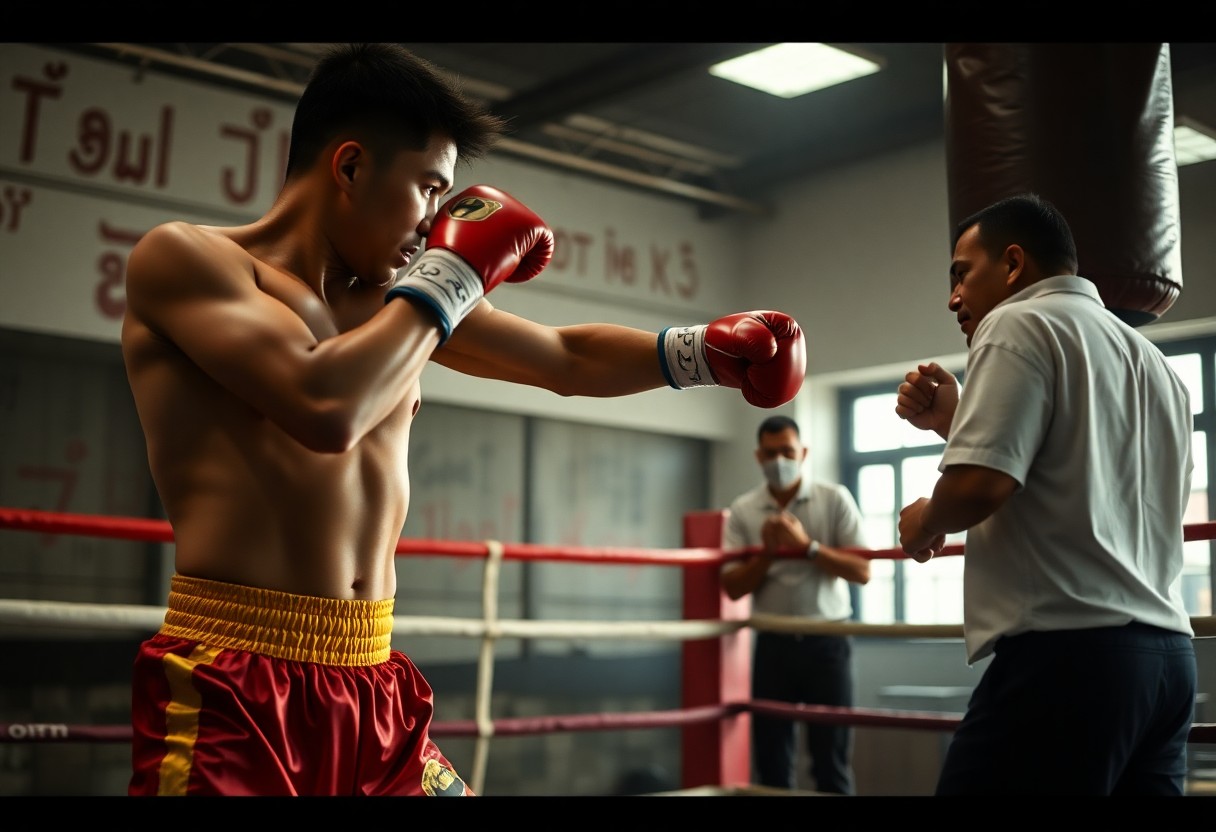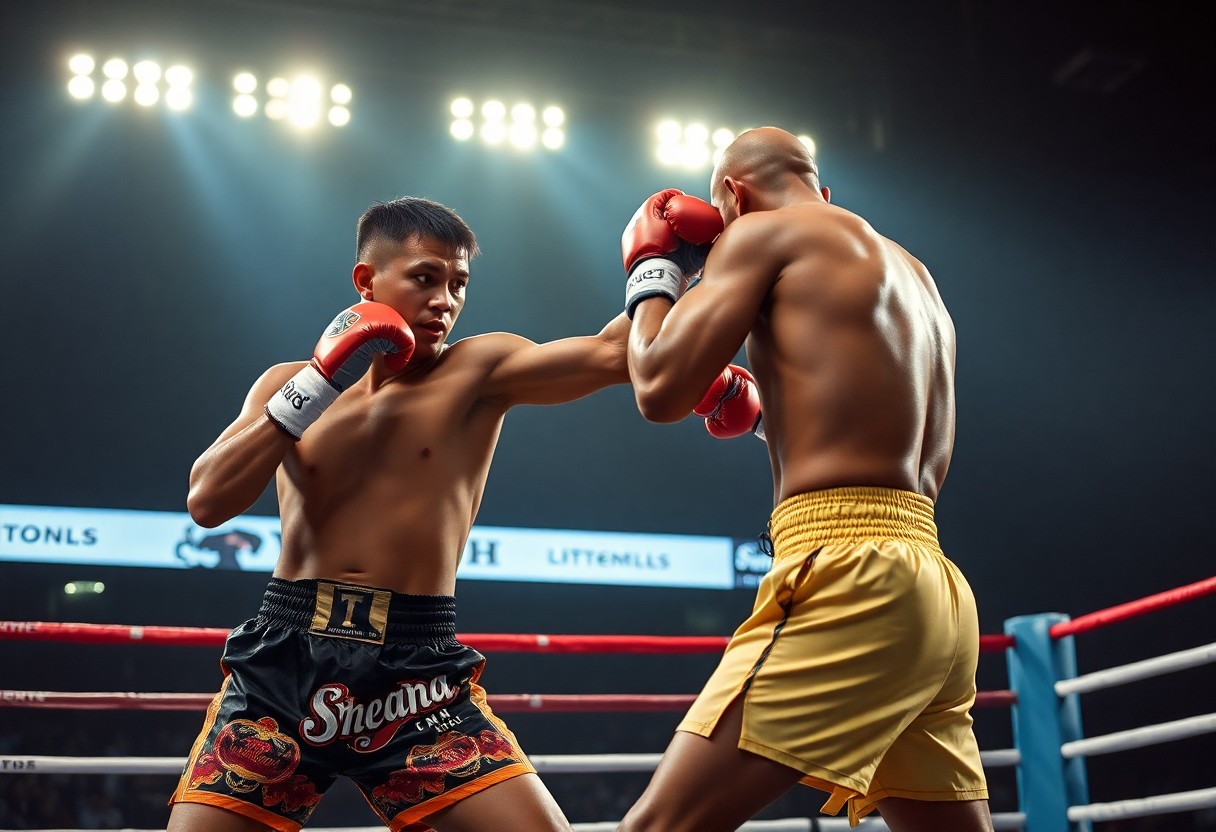
There’s a distinct difference between Muay Thai kicks and those found in other martial arts, making them a powerful aspect of combat sports. Known for their effectiveness and versatility, Muay Thai incorporates not just kicks but also elbows, knees, and clinch work, giving practitioners a comprehensive striking arsenal. In contrast, other martial arts may emphasize different striking techniques, impacting both their style and application in real fights. This guide explores these differences, highlighting what makes Muay Thai kicks uniquely effective in self-defense and competitive arenas.
Types of Kicks in Muay Thai
Muay Thai features various types of kicks, each designed for unique attacking and defensive strategies. These kicks showcase the art’s versatility and efficiency, making them effective in both striking and clinching situations. Below is a breakdown of the primary kick types:
| Kick Type | Description |
| Roundhouse Kick | A powerful kick delivered from the side, utilizing hip rotation. |
| Straight Kick | Direct front kick focusing on speed and impact. |
| Side Kick | A lateral kick aimed at the opponent’s body or head. |
| Knee Strike | A devastating upward strike using the knee. |
| Teep Kick | A thrusting kick used for distance management. |
Thou will find that each kick serves a powerful function in a fighter’s arsenal.
Roundhouse Kicks
The Roundhouse Kick is one of the most recognizable moves in Muay Thai, employing powerful hip rotation for maximum impact. Delivered with the shin, it can target the opponent’s head, body, or legs with devastating force. Precision and timing are vital; as a well-executed roundhouse can significantly damage the opponent.
Straight Kicks
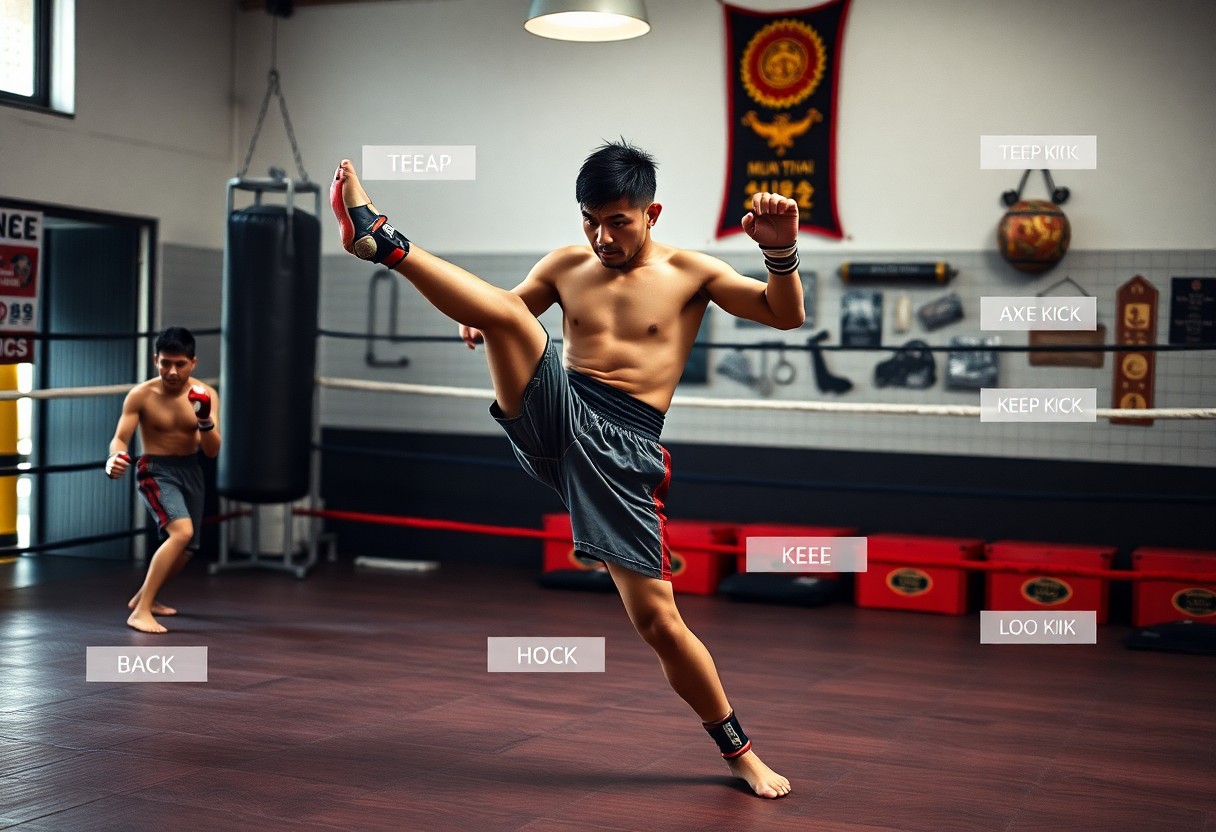
Straight Kicks, or Teep, are effective for maintaining distance and disrupting an opponent’s rhythm. This kick involves extending the leg directly towards the target, utilizing the ball of the foot for striking. They excel in creating space and can also serve as a defensive measure.
Fighter mastery of the straight kick can lead to increased control over the ring, often creating openings for further attacks or countering an opponent’s advances.
Side Kicks
The Side Kick is a unique strike aimed to create distance or incapacitate the opponent. By pivoting the supporting foot and chambering the knee, the kick delivers force against the opponent’s ribs or head. Timing and accuracy are key to ensuring its effectiveness.
Integrating side kicks into a fighter’s routine allows for versatility in striking, often catching opponents off guard, opening them to further combinations and gaining tactical advantages in fights.
Knee Strikes
Knee Strikes in Muay Thai can significantly impact an opponent during clinch scenarios. By driving the knee upward, strikers can target the abdomen or head with remarkable force. They are invaluable for inflicting damage at close range and can disable opponents quickly.
A fighter’s ability to incorporate knee strikes seamlessly into their strategy not only enhances their offensive capabilities but also establishes dominance in clinches, ultimately contributing to a more aggressive fighting style.
Types of Strikes in Other Martial Arts
Each martial art encompasses distinct striking techniques that highlight its foundational principles. Understanding the variety allows for deeper insights into their applications:
- Karate – Emphasizes linear punches and powerful, fast strikes.
- Taekwondo – Focuses on high, spinning, and jumping kicks for agility and speed.
- Boxing – Concentrates on effective punches, footwork, and defensive maneuvers.
- Capoeira – Implements dance-like movements with kicks and dodges integrated into offense.
- Kickboxing – Blends punches and kicks, offering a comprehensive striking approach.
After examining these techniques, it’s evident that each martial art brings something unique to the table when it comes to striking.
Karate Strikes
Karate strikes typically consist of fast, linear punches and powerful kicks. Practitioners use impact techniques like the front kick and roundhouse kick to target vital points effectively. Many strikes are executed with precision to maximize power while maintaining agility.
Taekwondo Kicks
Taekwondo highlights high and dynamic kicking techniques. Kicks such as the head-level axe kick and spinning back kick emphasize speed and precision, making practitioners exceptionally agile in their movements. The versatility of these kicks allows for varied attack angles and styles.
These kicks are fundamental in Taekwondo’s competitive sparring, showcasing athletes’ ability to perform impressive aerial techniques. The front snap kick is particularly noted for its speed and effectiveness in point fighting, while the side kick demonstrates tremendous power when aimed at an opponent’s midsection.
Boxing Punches
Boxing is primarily characterized by its effective use of punches, including jabs, crosses, hooks, and uppercuts. These strikes are designed to maximize knockout potential while allowing for quick defensive movements, making boxing a highly strategic martial art.
The jab often serves as a quick setup for more powerful punches, allowing boxers to control distance effectively. Punching combinations can overwhelm opponents, using speed and technique to create openings. Punch accuracy and timing are paramount, as they dictate the effectiveness of each strike in a competitive setting.
Comparisons of Techniques
| Muay Thai | Other Martial Arts |
|---|---|
| Utilizes elbows and knees for close-range strikes. | Primarily focuses on punches and kicks, with fewer options for clinch striking. |
| Involves a stance that centers around powerful, pivoting strikes. | Varies greatly; some prioritize agility over power. |
| Strong emphasis on body conditioning to absorb and deliver impact. | Body conditioning techniques differ widely, often less focused on striking power. |
Range and Impact
Muay Thai kicks are renowned for their long range and devastating impact, making them effective for both offense and defense. Unlike many other martial arts, Muay Thai strikes like the roundhouse can inflict significant damage due to their delivery from a close to mid-range. This enables fighters to use their kicks to control distance while maximizing power to incapacitate opponents swiftly.
Speed and Precision
Speed and precision are defining characteristics of Muay Thai kicks, allowing practitioners to deliver strikes rapidly with intense accuracy. The swift execution of techniques, combined with an understanding of timing and distance, gives Muay Thai fighters an edge in both striking and counter-striking situations.
In Muay Thai, training focuses heavily on enhancing speed and developing precision through repeated drills. Fighters often practice combinations to enhance their ability to strike effectively in rapid succession, ensuring their movement is both fluid and sharp. A well-timed kick not only reaches its target quickly but also delivers maximum force, outpacing slower striking styles often found in other martial arts.
Mobility and Stance
Mobility in Muay Thai is characterized by a stable yet adaptable stance that enables quick responses. Fighters maintain a solid foundation, allowing for powerful kicks while remaining nimble enough to evade incoming attacks. This balance between mobility and stability is necessary for executing effective combinations.
The stance in Muay Thai promotes a low center of gravity, facilitating easier movement in any direction. This configuration allows practitioners to switch between offensive and defensive maneuvers fluidly, which is less common in other martial arts that may emphasize a more rigid structure. As a result, Muay Thai fighters can maintain pressure and control during exchanges, making their mobility a potent weapon in a dynamic fight environment.
Tips for Mastering Muay Thai Kicks
To become proficient in Muay Thai kicks, focus on technique, practice consistency, and implement feedback from instructors. Essential tips include working on your balance, ensuring proper stance, and using your hips for power. Engage in drills that enhance muscle memory and refine precision. Additionally, enhancing your reaction time with sparring can significantly improve your striking capabilities. Knowing these fundamentals can elevate your skill and effectiveness in the ring.
Footwork Fundamentals
In Muay Thai, solid footwork is key to executing kicks effectively. Staying light on your feet allows quick adjustments and helps in setting up strikes. Good footwork creates angles for attack, minimizing exposure to counterattacks while maximizing your power delivery. Practicing lateral movements and pivots enhances your overall game, creating opportunities for offensive and defensive maneuvers.
Conditioning Exercises
Building stamina and strength through targeted conditioning exercises is vital for Muay Thai practitioners. Exercises such as running, plyometrics, and strength training improve your kicking power and endurance. Incorporate high-intensity interval training (HIIT) to build cardiovascular fitness vital for maintaining energy levels during intense training sessions or fights.
Effective conditioning workouts should combine aerobic and anaerobic exercises, helping you endure long rounds while maintaining peak performance. For instance, kettlebell swings enhance core strength, while sprints build explosive speed, crucial for quick kicks. Tailoring your conditioning routine to include sport-specific drills can significantly enhance your overall fighting capabilities.
Shadow Boxing Techniques
Utilizing shadow boxing techniques is an excellent way to refine your Muay Thai kicks. This practice allows you to visualize your techniques in action, helping improve timing, rhythm, and fluidity. Focus on combining kicks with your punches, ensuring proper form while moving through your combinations.
Shadow boxing offers opportunities to analyze your movements and adjust techniques without the pressure of sparring. By incorporating mirrors or video recordings, you can assess your stance, balance, and precision, leading to more effective striking. This routine bolsters confidence and enhances your overall fighting skill set.
Step-by-Step Guide to Executing a Muay Thai Kick
| Step | Description |
| 1. Proper Stance Setup | Establish a solid base for executing kicks effectively. |
| 2. Execution of the Kick | Follow through with the kicking motion for maximum impact. |
| 3. Follow-Through | Complete the movement to maintain balance and readiness. |
Proper Stance Setup
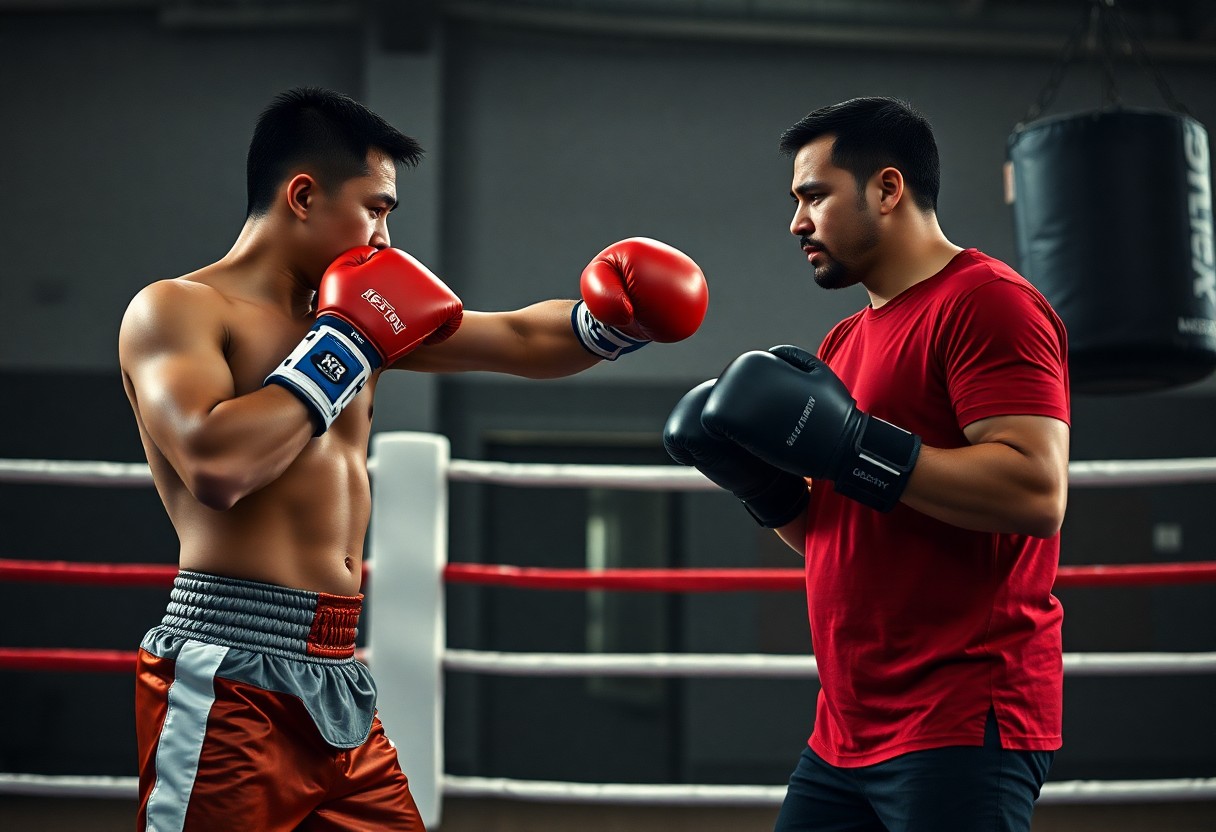
Begin in a comfortable stance, feet shoulder-width apart with weight evenly distributed. Your lead foot should point forward while the rear foot is slightly turned out for stability. Bend your knees slightly to allow swift movement. Ensure your hands are up to protect your face, providing both offense and defense simultaneously.
Execution of the Kick
Initiate the kick by pivoting on your supporting foot, rotating your hips forward, and using your lead leg to strike the target. Drive your knee upward to generate power before extending your leg. The striking area should be the shin or foot, focusing on precision.
During execution, maintain a strong core to transfer power effectively. As you pivot, visualize your target and align your body through the kick. Engage your leg muscles and maintain balance to optimize the impact. Proper range and timing are vital to ensure your kick lands at the desired target while keeping an opponent off guard.
Follow-Through
After making contact, allow your leg to extend fully and continue the motion in a fluid manner. This helps dissipate any energy from the kick, maintaining stability and balance. A strong follow-through positions you for immediate re-engagement or defense.
The follow-through is vital as it ensures your kick does not leave you vulnerable. By continuing the motion, you avoid tilting your body forward or backward, which could lead to counterattacks. Staying composed allows for rapid transitions to subsequent techniques or defense, keeping you ready for any encounter.
Factors Influencing Kick Effectiveness
Multiple elements contribute to the success of a kick in Muay Thai compared to other striking arts, including body mechanics, timing and distance, and opponent’s defense. Mastery of these components can enhance a kick’s impact and reliability in real combat situations. This enables practitioners to better adapt to various fighting styles and maintain an advantage.
- Body mechanics
- Timing and distance
- Opponent’s defense
Body Mechanics
Effective Muay Thai kicks rely heavily on proper body mechanics, which involve alignment, balance, and strength transfer. A well-executed kick uses the hips, core, and legs in unison to generate power and precision. The rotational aspects help create acceleration, making the kick both impactful and technically sound.
Timing and Distance
In striking arts, the concepts of timing and distance are pivotal. Understanding when to execute a kick and recognizing the optimal range to strike can significantly increase a fighter’s effectiveness. Precise timing can allow a fighter to exploit openings and avoid counter-attacks, optimizing the chance for successful strikes.
For example, a fighter may wait for their opponent to commit to a movement before launching a kick, capitalizing on the opponent’s vulnerability. Practicing footwork and distance management drills enhances these skills, allowing practitioners to gauge when to engage effectively while minimizing their exposure to counter-attacks.
Opponent’s Defense
Consideration of the opponent’s defense is vital in determining the effectiveness of a kick. A skilled opponent may employ various techniques, such as blocking or parrying, which can neutralize your strike before it lands. Understanding your opponent’s tendencies allows for the development of countermeasures that exploit their defensive flaws.
For instance, if an opponent consistently adopts a high guard, targeting the body or employing oblique kicks can bypass their defenses. Incorporating this awareness into training sessions will enhance adaptability in various fighting scenarios, ultimately leading to a more effective arsenal of kicks.
Pros and Cons of Muay Thai Kicks vs. Other Strikes
| Pros | Cons |
|---|---|
| High power delivery through hip rotation. | Requires extensive training to master technique. |
| Effective for both offensive and defensive maneuvers. | Can lead to injury if techniques are practiced improperly. |
| Utilizes various parts of the body, increasing versatility. | Resting period after high-intensity kicks is necessary for recovery. |
| High clinch efficiency enhances close-range combat. | Less effective against submissions compared to grappling arts. |
| Strong emphasis on conditioning and endurance. | May require adaptation for mixed martial arts competition. |
Advantages of Muay Thai Kicks
Muay Thai kicks are renowned for their power, versatility, and effectiveness. The technique engages multiple muscle groups, optimizing striking force through body alignment and momentum. Additionally, being able to strike with the shin, knee, and foot significantly broadens a fighter’s striking arsenal, enhancing their ability in various combat situations. The rigorous training regime inherently builds core strength and endurance, which contribute to overall combat performance.
Disadvantages of Muay Thai Kicks
Despite their advantages, Muay Thai kicks also present specific challenges. The risk of injury is notable due to the high-impact nature and required precision of the strikes. New practitioners may find it difficult to execute kicks effectively and could face setbacks without proper guidance. Additionally, such technique-focused training may divert attention from other combat aspects, like grappling, which are vital in mixed martial arts.
Injuries sustained from improperly executed kicks can range from minor bruises to severe injuries, such as fractures. This risk underscores the importance of appropriate training and conditioning. Moreover, the reliance on striking techniques may limit a fighter’s efficacy during ground combat, making it necessary for Muay Thai practitioners to integrate supplementary styles to achieve a well-rounded skill set. The time commitment to mastering Muay Thai kicking techniques can also hinder progression in other martial arts disciplines, which may focus more on varied strike approaches or submissions.
Conclusion
Following this exploration of Muay Thai kicks in comparison to other martial arts strikes, it is evident that Muay Thai’s emphasis on power, versatility, and integration of elbow and knee strikes sets it distinctly apart. The technical precision and conditioning required for effective kicks in Muay Thai contribute to its effectiveness in both sport and self-defense. Understanding these differences allows practitioners to appreciate the unique attributes each martial art offers, ultimately enhancing their overall combat skills.
FAQ
Q: What makes Muay Thai kicks different from those in karate?
A: Muay Thai kicks utilize the shin to strike, offering more power and versatility compared to karate’s focus on foot strikes. The angles and mechanics of Muay Thai kicks allow for effective low, mid, and high strikes, while karate often emphasizes precision and speed in its kicks.
Q: How do the techniques of Muay Thai compare with traditional boxing strikes?
A: Muay Thai incorporates a broader range of striking techniques, including elbows and knees, while boxing focuses primarily on punches. The use of kicks in Muay Thai adds to the overall striking strategy, allowing for varied attack options and defensive mechanisms not present in traditional boxing.
Q: In what ways do Muay Thai kicks enhance overall combat effectiveness compared to kickboxing?
A: Muay Thai kicks are characterized by their emphasis on power generated from the hips and the use of the shin, which can deliver devastating strikes. In contrast, kickboxing tends to prioritize speed and combinations. The inclusion of clinching techniques in Muay Thai also offers additional control and striking opportunities not typically found in kickboxing.
Recommended Posts