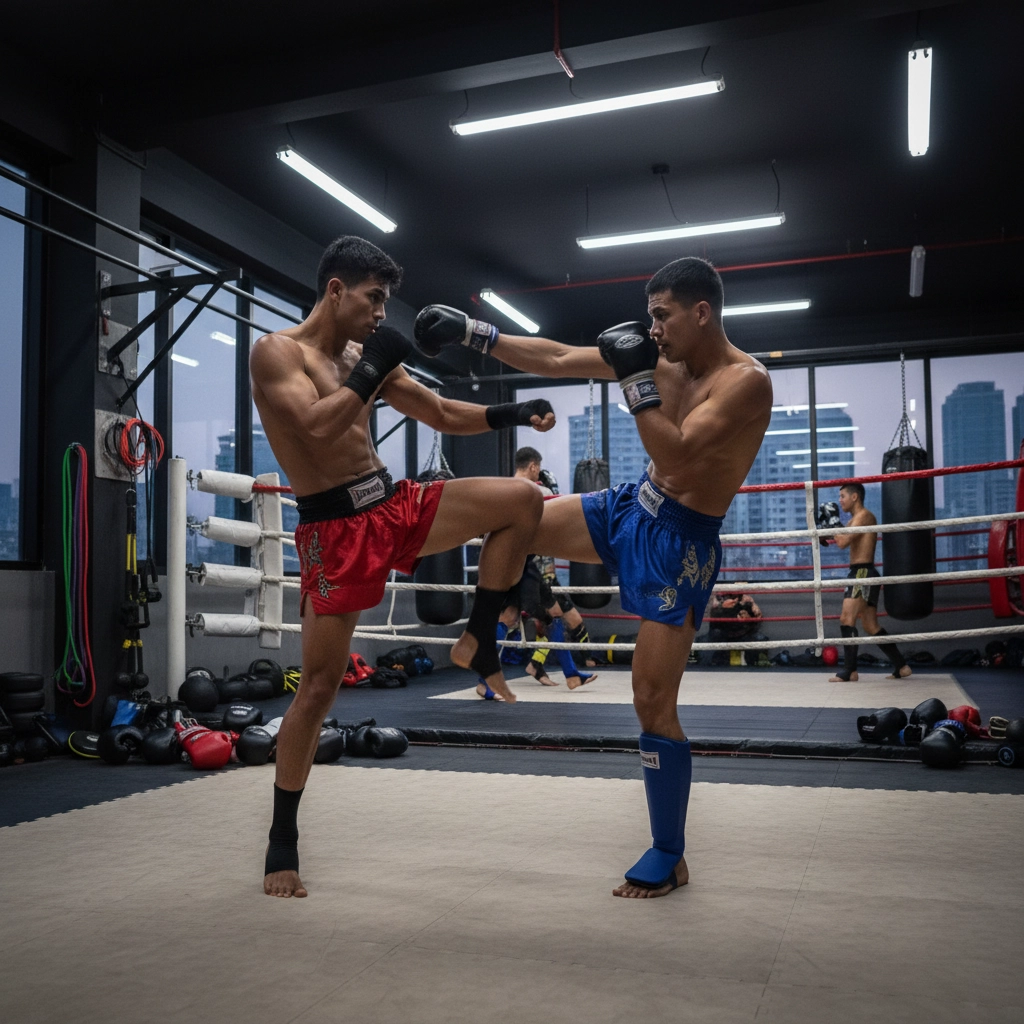

MuayThai timing transforms reactive blocks into proactive counters; this guide breaks down the biomechanics, distance reading, and rhythm training needed to master timing. Learn drills to develop split-second anticipation, how to safely neutralize attacks while minimizing damage, and methods for redirecting power into immediate counters to control exchanges and reduce injury risk.
Understanding Counter-Defense
Converting defense into immediate offense hinges on reading cues and compressing response times: average simple reaction is ~200-250 ms, while elite Muay Thai athletes often react within 150-200 ms. Effective counter-defense blends range control, feint recognition and body alignment to protect the head and hips; a missed timing can expose you to a follow-up knee or sweep – dangerous.
Types of Counter-Defense Techniques
Parry-and-return, slip-to-counter, catch-and-sweep and check-then-clinch are the operational categories most often drilled. For instance, a timed parry can open a 100-200 ms window for a straight counter; catching a roundhouse and immediately sweeping the supporting leg wins position in many amateur bouts. After consistent partner drilling with varied tempos timing begins to hard-code into reflex.
- Parry – redirect punches to create openings
- Slip – evade laterally and counter with a straight
- Catch – trap a kick and reply with a sweep
- Block – absorb then counter with clinch or elbow
| Parry | Redirects strikes, creates 100-200 ms window for a straight counter |
| Slip | Shifts head off line, opens angle for cross or hook |
| Catch & Sweep | Secures kick, destabilizes opponent to score a sweep |
| Block | Absorbs energy, sets up clinch or counter-elbow |
| Check & Counter | Deflects leg attack then responds with teep or low kick |
Factors Influencing Timing
Timing is governed by distance, opponent rhythm and physiological state: a 10-20 cm reach difference alters decision windows, and fatigue pushed above 160-180 bpm slows reactions by measurable margins. Visual pattern recognition and anticipatory cues shift the usable counter window from ~200 ms to near 150 ms for prepared fighters. This shapes which drills and sparring tempos you prioritize.
- Distance – reach and range control shift timing needs
- Rhythm – cadence, feints and tempo breaks
- Conditioning – fatigue reduces reaction speed
- Perception – vision, cues and pattern recognition
Practical training tweaks include interrupted pad rounds (3 x 30s efforts with randomized 5-10s cues), reaction-light drills and tempo variability sessions; athletes reporting a 10-20% faster decision speed after 6-8 weeks of focused work. Coaches often quantify progress with reaction tests and sparring success rates-elite amateurs show higher counter conversion when under 200 ms decision windows. This is why periodized reaction training is built into weekly plans.
- Tempo drills – interrupted pad rounds to vary cadence
- Randomized cues – coach calls or lights to force unpredictable responses
- Reaction testing – measurable progress via timing metrics
Step-by-Step Guide to Perfecting Your Counter-Defense
Step-by-Step Breakdown
| Step | Action |
|---|---|
| Read | Scan stance and weight shift in 150-250 ms; watch shoulder and hip rotation as primary telegraphs. |
| Intercept | Use a short parry or frame to redirect line of attack, aiming to alter opponent trajectory by at least 30°. |
| Counter | Exploit openings with a fast, compact response (e.g., 1-2 punch or low kick), initiating within 100-300 ms after interception. |
| Recover | Reset distance and guard in 1-2 seconds to avoid overcommitment and expose fewer counters. |
Building Your Reaction Time
Train reaction windows with drills: 3 sessions/week of 15-25 minutes using light-timers, strobe glasses, and tennis-ball drop drills; measure progress with a reaction app and aim to shave 20-50 ms in 6-8 weeks. Combine with explosive plyometrics (6-8 reps, 3 sets) to convert sensory gains into motor speed.
Practicing with a Partner
Start with controlled partner drills: 3×2 minute mirror rounds focusing on parry-and-counter, then introduce randomized cues and progressive intensity. Emphasize timing and distance; high-intensity sparring is dangerous if safety protocols are ignored, so use gloves and mouthguards.
Progression matters: begin slow with predictable cues (partner feeds jab every 4-6 seconds) and log successful counters per round, targeting 8-12 clean counters before increasing speed. Next, remove cues and have partner vary attack types and angles-include body shots, low kicks and feints-so you practice recognition under pressure. Film sessions to spot split-second errors, and alternate roles so both fighter and feeder learn adjustments; maintain protective gear and keep rounds focused on quality, not volume.
Tips for Enhancing Your Counter-Defense
Small, precise tweaks to stance and cue recognition can shave 20-50 ms off your response; studies show simple visual reaction averages 200-250 ms while choice reactions sit around 300-400 ms, so targeted drills accelerate counter-defense and sharpen timing. Pair metronome shadow rounds with quantified video feedback and you’ll see measurable change in 4-6 weeks. The integration of technical drills, strength work and cognitive training yields the fastest gains in Muay Thai.
- Metronome shadowboxing – 3 rounds of 3 minutes forcing counters on audible clicks to embed rhythmic timing.
- Partner cue drills – 200 randomized openings weekly to lower choice reaction time and improve pattern reading.
- Plyometrics & sprints – 6×30s sprints with 90s rest and box jumps 3×8 for explosive hip drive to convert defense into power.
- Video analysis – 10 minutes post-session to tag 2 recurring opponent cues per round for deliberate practice.
- Neck & balance work – 3×10 neck-harness sets and single-leg stability drills to protect during counters (danger: avoid heavy neck loading without supervision).
Mental Preparedness
Use fatigued decision drills: 3×10-minute reactive tasks after sparring, plus 30 minutes weekly of opponent-pattern study, to simulate real-fight cognitive load; visualization for 5-10 minutes pre-session improves anticipatory timing and can reduce choice reaction by ~30-50 ms, making counter-defense more automatic under pressure.
Physical Conditioning
Emphasize explosive strength and neck resilience with 3 weekly sessions: heavy compounds 3-5 sets of 3-6 reps, box jumps 3×8, and medicine ball rotational throws 3×10 to directly transfer force into counters and improve measurable outputs like vertical jump and 10 m sprint times.
An example 8-week block: Weeks 1-4 focus on strength (squats 5×5, Romanian deadlifts 4×6, sled pushes 6×20m), Weeks 5-8 shift to power (trap bar jumps 4×6, med-ball throws 5×5, 6×30s sprints); increase load 2.5-5% weekly, test vertical jump and 10 m sprint every 3 weeks, and prioritize full recovery to sustain Muay Thai performance gains.
Pros and Cons of Various Counter-Defense Strategies
Different counter-defenses trade off speed, risk, and scoring potential; for example, a well-timed parry can create a 150-250 ms window to counter, while a check absorbs up to 60-80% of low-kick force but demands strong tibia conditioning. Below is a compact comparison to guide technique selection based on tempo, injury risk, and scoring priorities.
| Pros | Cons |
|---|---|
| Parry/redirect opens immediate counters, low energy cost, fast recovery (~0.2s). | Requires precise timing (150-250 ms); vulnerable to feints and double-strikes. |
| Slip/dip creates clear counter angles and preserves movement economy. | Leaves torso exposed if misjudged; higher risk vs. hooks and spinning attacks. |
| Block/absorb simple to learn, effective vs. predictable strikes. | Transfers force to arms/shoulders; increases fatigue and risk of cumulative damage. |
| Leg check stops low kicks and preserves mobility; reduces damage by ~60%. | Needs bone conditioning; misplaced check can result in shin fractures or trips. |
| Catch + counter-kick yields high scoring potential and can end combinations. | Catching a kick ties you up and risks balance loss; slow recovery if counter fails. |
| Clinch control neutralizes strikes and allows knees/throws in scoring clinch work. | Energy-intensive (high lactic demand); referee separation may limit effectiveness. |
| Sweep/trip reverses positioning and scores points when timed after kicks. | Timing-dependent and risky vs. experienced opponents who counterbalance well. |
| Angling/shoulder roll reduces impact and creates counter-shot lanes. | Requires high-level head movement and timing; poor roll invites uppercuts. |
Advantages of Different Techniques
Parries and slips maximize counter speed and scoring: parry-to-cross combos can increase strike accuracy by ~15-20% in sparring, while checks protect mobility and lower long-term leg damage. Clinch tactics convert defense into offensive knees or throws, and catches provide decisive counter-kick opportunities when opponents overcommit.
Potential Drawbacks to Consider
Some defenses raise injury or fatigue risks: blocking heavy kicks repeatedly strains shoulders, improper checks risk tibia fractures, and clinch-heavy strategies spike heart rate and lactic accumulation, reducing later-round sharpness. Judges also favor visible counters, so passive absorbs can lose on points.
Fatigue compounds timing errors-studies in combat sports show reaction time slows by roughly 10-15% after two intense rounds-so practice under simulated pressure: progressive-resistance drills, variable-speed pad work, and situational sparring reduce misreads and mitigate those drawbacks.
Common Mistakes to Avoid in Counter-Defense
Overcommitting to Attacks
Throwing 100% into a roundhouse, teep or cross often creates a 0.5-1.0 second recovery window your opponent exploits; hips planted or weight fully forward mean you can’t reset or slip, inviting straight counters, clinch grabs or leg checks. Use short, 30-50% power probes to test timing, and avoid telegraphing by keeping hands neutral-fighters who overcommit lose balance and get countered far more frequently in sparring and competition.
Neglecting Footwork
Standing square or backing straight up removes angles and makes you a stationary target; failing to pivot 30-45° or to step laterally 30-50 cm turns counters from a defensive tool into a liability. Good footwork converts defense into immediate offense, while poor distance management increases susceptibility to straight punches and combination traps.
Train specific drills: five 3-minute rounds of shadowboxing with a goal of executing 10 pivots per round, cone drills with 40 cm lateral steps, and partner drills where you must pivot after every block. Integrate 1-minute footwork-only intervals into warm-ups and count successful angle changes-practical repetition builds the automatic responses that prevent being cornered.
Real-Life Applications and Drills
Translate timing theory straight into practice by structuring sessions around measurable windows: run 3×3 minute rounds focusing only on counters, use 30-60 second technical drills, and time reactions with a stopwatch to shave off 0.1-0.3 seconds. Coaches should log success rates per round (target >60% clean counters) and progressively shrink opponent cue allowances so athletes operate inside real fight tempo under fatigue.
Sparring Scenarios
Start with constrained sparring: one partner throws a preset sequence of 10 strikes at 5-8 second intervals while the other practices specific counters, then swap. Scale intensity from 50% to 85% over three rounds, and add rule-sets-only counters score, or two-counter combinations required-to force decision-making under pressure. Emphasize head movement and guard; leaving the temple exposed is extremely dangerous.
Solo Training Exercises
Use solo tools to build timing precision: shadowbox to a metronome (60-90 BPM) aiming to counter on the second beat, hit the double-end bag for 3×3-minute intervals to train rebound timing, and spend 10-15 minutes with a reaction ball for unpredictable stimulus-response work. Film runs at 120 fps to analyze 0.1-0.3 second lag and track progressive improvement.
Drill structure matters: perform three phases-(1) feint-only shadowboxing for 3 minutes, (2) slip-to-counter sequences on the double-end bag for 3×3-minute rounds, (3) high-intensity reaction-ball bursts (6 rounds × 30s). Cycle these with 30-60 second rests and log hit accuracy; aim to reduce average response time by 0.1 second every two weeks.
Conclusion
Hence mastering the science of timing elevates counter-defense in Muay Thai from instinct to strategy; by honing rhythm, distance awareness, recognition of openings, and progressive sparring you convert split-second reads into decisive counters, producing consistent, low-risk responses that win exchanges and build long-term ring intelligence.
FAQ
Q: What does “timing” mean in Muay Thai and how does it enhance counter-defense?
A: Timing is the ability to synchronize your defensive action and counterattack with an opponent’s attack window – reading cues (weight shift, shoulder rotation, hip turn), judging distance, and triggering movement within the opponent’s attack latency. Good timing shortens reaction distance and increases efficiency: for example, slipping a jab and delivering a cross while the opponent’s weight is committed, or catching a roundhouse and sweeping before they regain balance. Physiological limits matter (simple visual reaction averages ~200-250 ms), so training focuses on reducing decision time and motor latency via pre-activation, rhythm drills, and pattern recognition. Effective drills: metronome-guided shadowboxing to internalize tempo, double-end and reflex-ball work to sharpen visual tracking, partner pad sequences with varied entry speeds, and live controlled sparring where you only counter when the partner attacks.
Q: What common timing errors do fighters make and how can they be corrected?
A: Common errors: reacting late (too slow to read or move), overcommitting (wide, slow counters that leave you exposed), telegraphing counters (tensing or shifting weight before striking), poor distance management (out of range or too close), and freezing under pressure. Corrections: train progressive speed (start slow, increase tempo), drill trigger-based counters (only respond to a specific cue such as hip rotation or front foot step), practice minimalistic counters to reduce travel time (parry-and-return, slip-and-pivot), use randomized partner drills to break predictability, and include light-contact sparring to reduce freezing. Specific exercises: partner throws predictable cue then randomizes speed; two-person reaction rounds where one fighter only attacks and the other only counters; reaction-light or app drills to quantify and decrease latency.
Q: How should I structure sessions and long-term progression to perfect counter-timing?
A: Session template: 1) Warm-up and dynamic mobility (8-10 min). 2) Rhythm/shadow work with metronome (8-12 min) – start slow, raise BPM. 3) Technical pad work (3-5 rounds of 3 min) focusing on one counter per round with progressive speed. 4) Reaction-specific drills (10-15 min): double-end, reflex lights, catch-and-return. 5) Controlled sparring (3-6 rounds) with rules that prioritize counters and limit offensive variety. 6) Conditioning and cooldown (10-15 min). Weekly progression: Weeks 1-2 build rhythm, visual tracking, and single-counter mechanics; Weeks 3-4 add partner randomness and increase tempo; Weeks 5-8 integrate fatigue, variable sparring, and situational drills (e.g., countering leg kicks, clinch exits). Track progress with video review and a simple hit/miss log or reaction-time app; aim to reduce latency and increase counter-success percentage before increasing complexity or intensity.
Recommended Posts