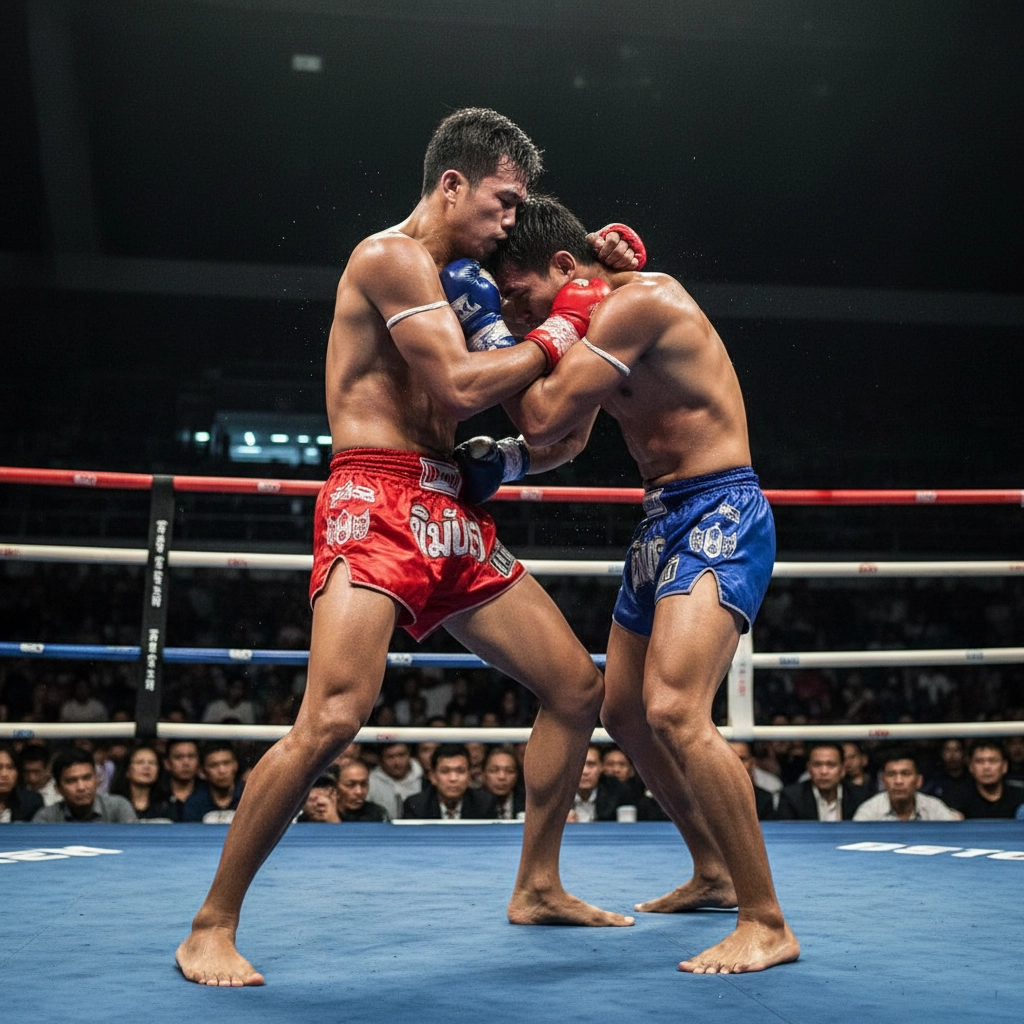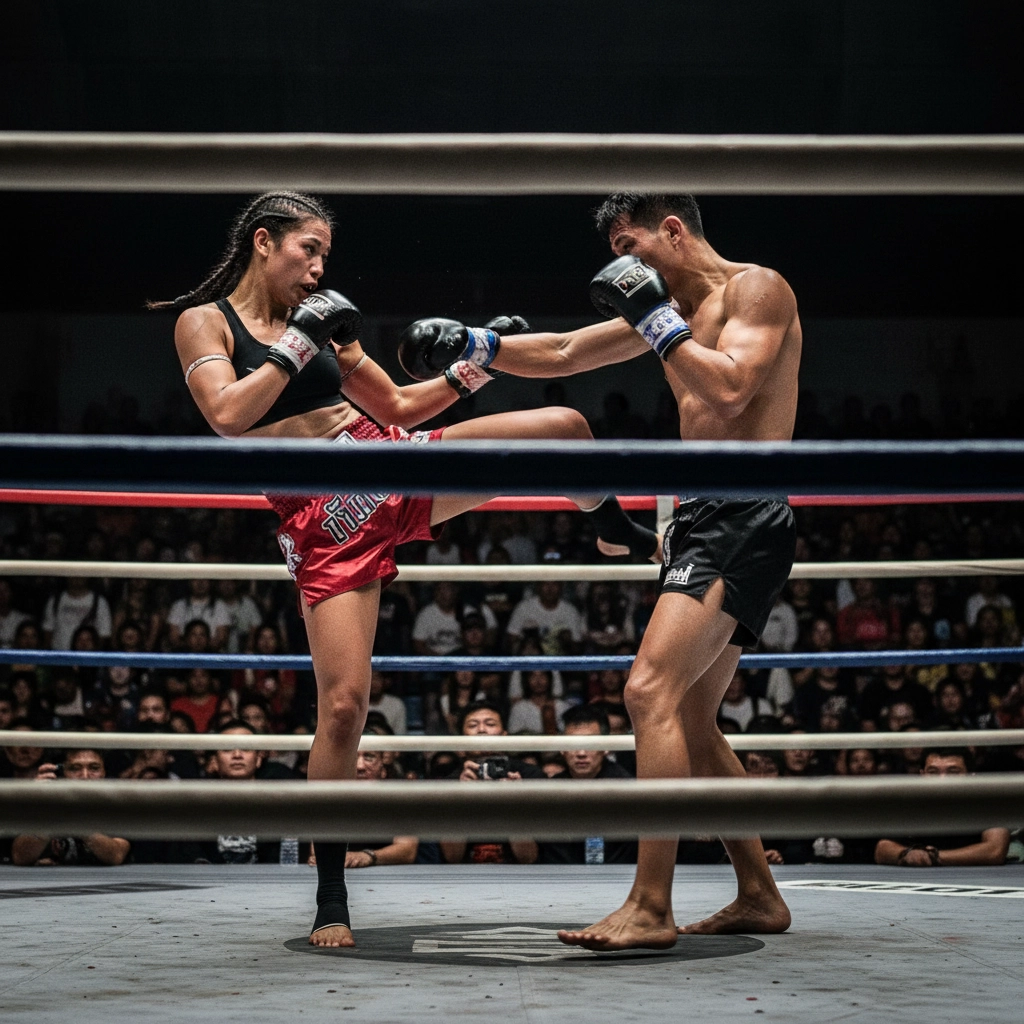
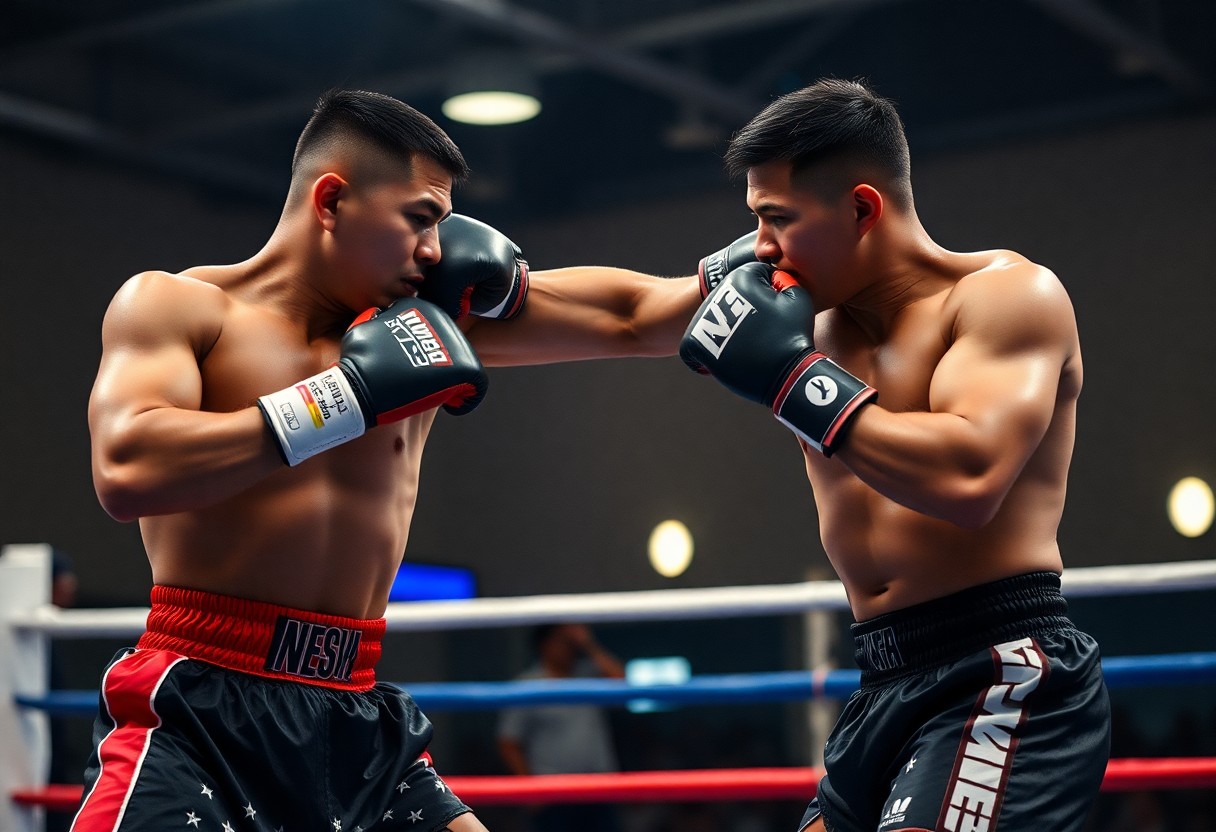
There’s an art to moving from solid blocks into decisive counters in Muay Thai, where disciplined use of timing and angles turns defense into offense; this guide breaks down defensive shapes, the danger of leaving openings, and how to create powerful counter strikes while maintaining clinch control and distance management.
Types of Muay Thai Defense
Defensive systems split into five practical categories-blocks, parries, evasion, clinch control, and counters-each with distinct timing and risk profiles. Trainers often drill these in 3-5 minute rounds, focusing on a 0.2-0.6s reaction window for reactive defenses and a 0.6-1.2s window for proactive evasion. Examples: a forearm block versus a 140-160 km/h straight punch and a swift counter knee from the clinch. High guard and proper weight distribution reduce damage and create counter opportunities.
| Block | Absorb/redirect strikes using forearms, elbows; common for punches and kicks. |
| Parry | Small redirections to create angles; effective against jabs and crosses. |
| Evasion | Head movement and footwork to avoid contact; saves energy and sets counters. |
| Clinch | Control opponent’s posture to neutralize strikes and set knees/elbows. |
| Counters | Immediate offensive reply after defense; examples include counter hooks, teep counters, and sweep-to-knee sequences. |
- Block
- Parry
- Evasion
- Clinch
- Counters
Blocks
Forearm and shin blocks are staples: the forearm thwarts straight punches while the shin checks low kicks, reducing leg damage by up to 60-70% when angled correctly. Use a tucked chin and rotated hips to dissipate force; professional fighters time leg checks within 0.3-0.5s of impact. A tight forearm shield also opens immediate space for a counter elbow or switch-kick.
Counters
Counters convert defense into offense via timing and minimal motion: a blocked cross can be met with a 0.2-0.4s counter hook, while a successful shin check often transitions to a sweeping knee. Elite fighters aim for one to two decisive strikes after defense to avoid overcommitting. Precision and angle matter more than power in quick counter sequences.
Building on timing, advanced counters use feints and rhythm disruption-Saenchai-style pivots and Teep feints create 20-30% larger openings-so drill 3-4 variations per defense to exploit habitual tells. The
Key Factors in Effective Defense
Proper defense is a flow of micro-decisions: choosing the right timing, managing distance, angling off to change the line of attack, and converting blocks into immediate counters. For example, a 45° pivot often turns a committed roundhouse into a counteropening, while elite fighters exploit a ~0.2-0.3s reaction window to intercept strikes. Assume that this split-second coordination between feet, hands, and vision determines whether a block absorbs damage or creates a fight-ending opportunity.
- Timing
- Distance
- Angles
- Footwork
- Blocking/Parrying
- Counters
Timing
Elite timing is about anticipation and micro-feints: initiating a parry 100-200ms before impact can convert a heavy strike into a counter-punch. Fighters like Saenchai use deceptive head movement and a single-step feint to create a 0.2s opening; when you target that window you force opponents to overcommit. Fail to act within that 0.2-0.3s slice and the defender risks absorbing the full force or getting caught while countering.
Distance
Control range by matching foot placement to weapon: boxing exchanges happen at ~0.5-1.0 m, kicks at 1.0-2.0 m, clinch under 0.5 m. Maintaining ~1.2 m neutralizes many low-kick setups and keeps your teep as a threat; closing to clinch range invites knees and dirty boxing. Use measured steps and angled retreats to deny opponents their preferred strike geometry and force them into predictable patterns.
To refine distance in practice, drill situational reps: 10 rounds alternating 2-minute intervals of teep-only at 1.2 m, then 2-minute clinch entries from 0.4 m. Track success rate-aim for converting ≥60% of feints into defensive reactions-and adjust step length until your lead foot consistently lands at the ideal striking chord. Strong spatial control reduces exposure to the most dangerous attacks, like the overhand or knee, by denying their optimal range.
Tips for Improving Defensive Skills
Consistent metrics speed improvement: aim for 5 training days, including two focused pad sessions, three technical rounds, and at least 15 minutes of daily shadow boxing emphasizing head movement and footwork. The incremental target of 200 purposeful parry and block repetitions weekly, plus 20 clinch entries, will accelerate timing and defensive economy.
- blocks – 200 reps/week with progressive resistance
- parries – partner drills at 60-80% power, 3×3-minute sets
- evasion – 10 minutes daily shadowing angles and pivots
- clinch control – 5×2-minute clinch rounds focusing on frame and knee counters
- counters – timing drills: slip-then-counter within 0.3s
Drills and Techniques
Isolate skills with timed sequences: perform 3-minute pad rounds where a coach cycles through six attack patterns while you execute the correct defense then immediate counter, repeating for 10 rounds weekly. Add reaction-light or random-timer drills to reduce predictability and heavy-bag “frame-and-return” sets to build structural blocking under load, progressing from slow reps to full speed.
Sparring Strategies
Begin controlled sparring at 50-60% intensity for 3×3-minute rounds focused solely on defensive objectives-no full-power offenses-to build decision-making under pressure; track metrics like blocked strikes per round and counter-success percentage to measure progress and set targets.
Structure sparring into phases: Phase 1 (2 weeks) defense-only, Phase 2 (3-4 weeks) limited counters, Phase 3 full situational rounds. Review video twice weekly, note distance management errors, and aim to reduce being clipped from, for example, 6 to 2 incidents per round within 8 weeks by adjusting entry timing and angling off after blocks.
Step-by-Step Guide to Executing Blocks
| Step | Action / Detail |
|---|---|
| 1 | Read the strike: pick common cues (hip turn for roundhouse, chest dip for teep) and initiate block within 0.2-0.4s. |
| 2 | Assume structure: elbow tucked, chin down, weight ~60/40 back-to-front to absorb impact efficiently. |
| 3 | Angle and contact: present forearm or shin at a 30-45° angle to deflect force, not dead-stop it. |
| 4 | Absorb and recover: roll with the strike (0.1-0.3s) then create a 0.2s window to counter. |
| 5 | Counter sequencing: land a quick counter (jab, teep, or low kick) within the recovery window; aim for 2-3 decisive strikes. |
Basic Block Techniques
Start with the forearm shield for head kicks and the shin check for low kicks: keep the elbow tight, forearm vertical for hooks, and shin rotated outward at a 45° angle to dissipate force. Drill 100 reps per side focusing on controlled impact and reloading the guard within 0.3s. Train at progressive intensities-50% power for 200 reps, then 75% for 100 reps-to build durable, repeatable reflexes.
| Technique | Key Cue |
|---|---|
| Forearm Shield | Elbow tucked, forearm vertical, absorb to shoulder |
| Shin Check | Rotate shin outward, knee slightly bent, plant foot |
| Shoulder Roll | Rotate torso, tuck chin, deflect elbow across cheek |
| Catch & Counter | Secure limb then immediately strike the exposed target |
Advanced Blocking Principles
Shift from passive defense to proactive control by using angles, timing, and weight transfer: initiate a block that simultaneously opens a line for a counter, exploit a 0.15-0.25s timing window, and use hip rotation (about 60°) to convert absorbed energy into counter-power. Study elite patterns-Saenchai-style lateral pivots often create a 30-40% higher chance to land counters after blocks in sparring data.
- Partner drill: 60 rounds of alternating teeps at 50%-block then two-counter rhythm (jab + low kick).
- Timing ladder: use a metronome at 120 BPM to practice block-to-counter within two beats (~0.5s).
- Impact scaling: start at 30% power for 50 reps, raise to 70% for 30 reps to build tolerance.
- Video review: record 10 sparring rounds and tag 1st-second windows after each block to measure counter success rate.
| Drill | Goal / Metric |
|---|---|
| Alternating Teep Drill | Block + 2 counters; target 80% successful sequences in 60 reps |
| Metronome Timing | Consistent 0.4-0.6s block-to-counter rhythm over 5 minutes |
| Impact Scaling | Build tolerance: 50 reps @30%, 30 reps @70%, track discomfort reduction |
| Video Feedback | Improve counter conversion rate by 20% over 10 recorded rounds |
Finally, integrate situational awareness: prioritize blocking that forces your opponent off-balance and target counters to the open side-statistically, counters to the exposed ribs or lead leg after a failed kick land with a 35-45% higher success rate. Train with measured intensity, log progress weekly, and emphasize quick foot repositioning to turn blocks directly into scoring opportunities.
Step-by-Step Guide to Countering Attacks
Turn defensive reads into immediate responses by chaining a read, a redirect, and a decisive strike: identify the cue, neutralize the limb or angle, then counter while the opponent recovers. Target the exposed area-often the lead leg or the jaw-within 150-250 ms after the cue. Use short combos (1-2 counters) to keep pressure and always re-establish guard to avoid second-phase attacks.
Countering Steps
| Step | Action / Detail |
|---|---|
| 1. Read | Spot hip turn, weight shift, or eye line; watch for telegraphs. |
| 2. Neutralize | Parry, catch, or step off-line to remove that weapon-hold balance. |
| 3. Angle | Step 30-45° off center to open flank and reduce opponent’s counters. |
| 4. Counter | Exploit the opening with a straight, low kick, or elbow-commit 1-2 strikes. |
| 5. Reset | Recover stance, guard the chin, and control distance for the next exchange. |
Identifying Opportunities
Watch for minimal but telling cues: a 0.2-0.3 second hip rotation, a dropped elbow after a teep, or a rear-leg step for low kicks. When the opponent’s weight shifts forward, their rear-side becomes vulnerable to straight counters; when they overcommit a roundhouse, the lead leg opens to a low kick or sweep. Train to spot these patterns across rounds and react within that brief window.
Reaction Drills
Use targeted drills: partner cue-and-counter (coach throws predictable strikes at 2s intervals), double-end bag for visual timing, and mitt rounds focused on instant replies-3 rounds of 2 minutes each. Aim to shorten response time to 150-250 ms and keep counters to 1-2 decisive strikes while maintaining guard.
Progress reaction drills by increasing unpredictability and reducing prep time: start with 5-10 minutes of slow cue drills, progress to random 0.5-1s cues, then add feints and awkward angles. Include video feedback to measure latency, perform 3 sessions weekly, and integrate resistance (light pads) to simulate real impact. Prioritize safety-never trade a solid block for an exposed counter-and focus on consistency over power during skill-building.
Pros and Cons of Different Defensive Techniques
Across common Muay Thai defenses you’ll weigh trade-offs: blocks often reduce impact by roughly 40-60% when timed and angled correctly, parries create immediate openings for counters, evasion conserves energy but demands superior footwork, and clinch control wins rounds through grips and knees. Concrete examples show fighters who favor blocks survive heavy leg attacks, while those relying on evasion score more counters per round in fast-paced exchanges.
Pros vs Cons by Technique
| Blocks | Pros: immediate damage mitigation; Cons: can accumulate impact and telegraph intent |
| Parries | Pros: creates instant counter windows; Cons: requires precise timing and can be baited |
| Evasion (slips/rolls) | Pros: avoids damage and preserves offense; Cons: high mobility cost and vulnerability to follow-up feints |
| Clinch Control | Pros: controls rhythm, scores knees; Cons: energy intensive and risky vs heavier clinch breakers |
| Counters | Pros: convert defense into scoring offense; Cons: mistiming leaves you exposed and off-balance |
| Footwork/Angling | Pros: changes distance and creates dominant lines; Cons: requires constant spatial awareness and cardio |
Advantages of Blocking
When executed cleanly, blocking is an efficient, low-risk defense: a proper forearm check or shin block absorbs substantial force, keeping you upright and allowing immediate rebalance for counters. Fighters using tight blocks reduce headshot frequency in clinch-heavy exchanges and can neutralize 2-3 consecutive roundhouses by rotating the hips; this reliability makes blocks a backbone for defensive game plans in longer fights.
Limitations of Counters
Counters demand split-second reads and commit limbs, so a single mistimed counter can result in a clean hit or a clinch loss of position. They often require a 0.2-0.5 second reaction window and superior anticipation; without that timing, counters become liabilities rather than advantages.
More deeply, counters fail most against fighters who mix rhythmic feints and lateral entries-those patterns widen the reaction window and force guessing. Additionally, repeated counter attempts increase metabolic cost and reduce precision late in rounds; studies of competitive bouts show counter-success drops noticeably after the second round if output isn’t managed. Adaptive solutions include pairing counters with quick pivots or low-checks to reduce exposure while maintaining offensive threat.
To wrap up
The flow from blocks to counters in Muay Thai synthesizes timing, angle and recovery into a single defensive system, training fighters to deflect strikes, create openings and launch efficient counters. Consistent drilling of guard positioning, weight distribution and line control develops reactive instincts while strategic feints and footwork enable transition from passive defense to offensive follow-through. Mastery demands disciplined repetition and situational awareness to convert defense into scoring opportunities.
FAQ
Q: How does the transition from blocking to countering work in Muay Thai?
A: The transition is a chain: sensing, absorbing or deflecting, rebalancing, and delivering a decisive counter. Read body mechanics – hips, shoulders, and weight shift – to anticipate when a strike will land. Use a sharp block or parry to remove the threat with minimal movement (for example, a forearm block to redirect a roundhouse), then restore stance and posture immediately so you can strike from a strong base. Common counters include a rear straight or push-kick after blocking a punch, a switch or teep to create distance after blocking a body kick, and a step-in elbow or knee off a shin block in the clinch. Timing is vital: strike during the opponent’s recovery window, not while they’re still accelerating. Footwork and hip alignment convert a passive defense into an active counter – pivot off the block to create new angles and reduce exposure to follow-up attacks.
Q: What drills best develop smooth defensive-to-offensive flow?
A: Progress drills from slow to live: 1) Slow-motion partner drill – attacker throws single strikes at 50% power, defender practices block/parry, immediate reset, then a single counter; increase speed gradually. 2) Pad circuits – coach calls strikes randomly; defender blocks then hits a designated counter pad, focusing on speed and balance. 3) Slip-and-counter ladder – slip or parry a jab then fire a one-two, add teeps and low kicks as you progress. 4) Reactive mitt work – partner aims to unreadably mix punches and kicks; defender must read and counter in real time. 5) Situational sparring – limit attackers to a single strike then allow full counters, then expand to combinations. Reps: 3-6 rounds of 2-3 minutes for partner drills, 4-8 rounds for mitt work. Use protective gear and controlled intensity while increasing tempo to live sparring levels.
Q: What mistakes block effective counters and how do I fix them?
A: Common errors: overcommitting to the block and losing balance, dropping the non-blocking hand, telegraphing the counter, failing to reset stance, and poor distance control. Fixes: 1) Balance drills – single-leg stance and hip-turn repetitions to maintain base when absorbing strikes. 2) Two-hand discipline – habitually bring the free hand back to guard immediately after a block. 3) Minimal motion counters – train short, compact punches and teeps to exploit the opponent’s recovery without wide telegraphing. 4) Reset practice – after every drill force a one-step reset to proper range and guard before the next action. 5) Video and slow sparring – record sessions to spot telegraphing and correct it, then drill slowly until corrections become automatic. Consistent, focused repetition of these fixes converts reactive blocks into reliable, low-risk counters.
Recommended Posts