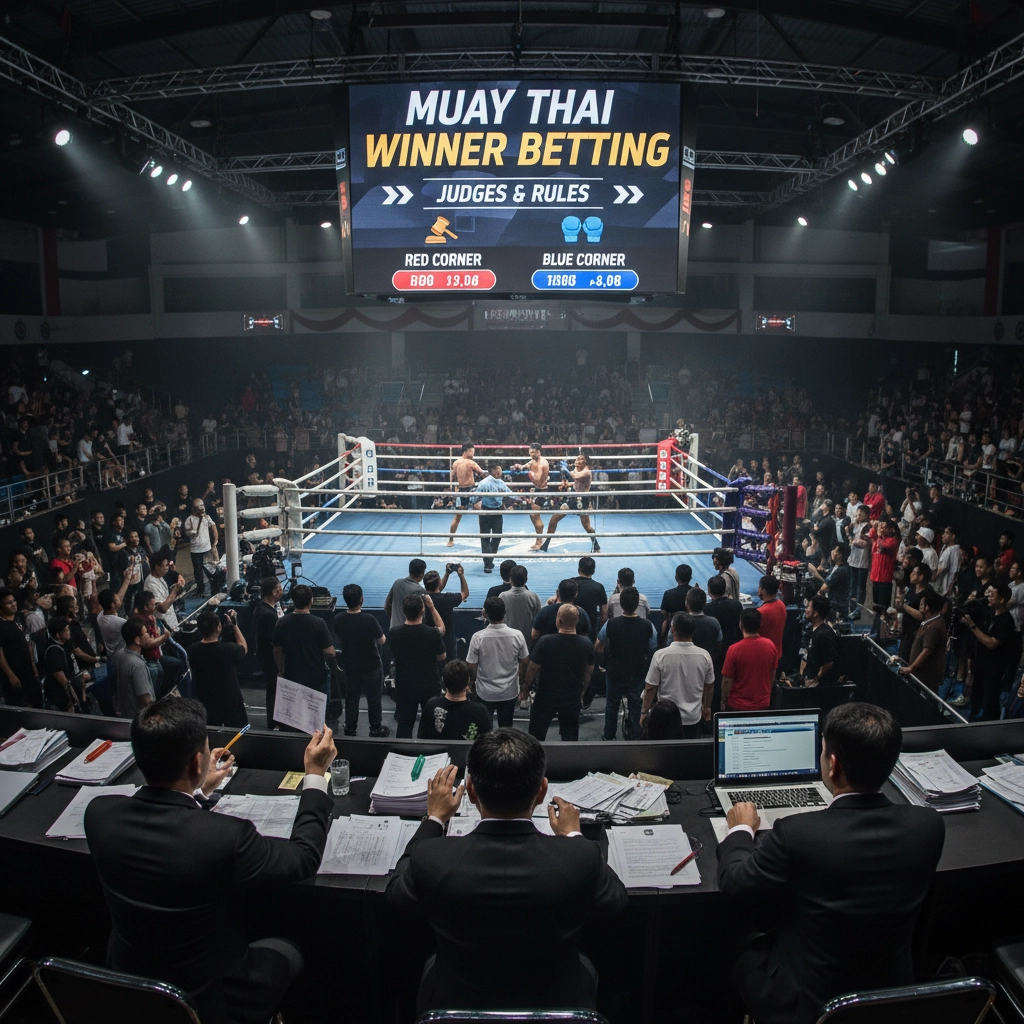

Why disciplined risk management is essential when you bet on Muay Thai winners
Muay Thai is fast, violent, and often unpredictable. Unlike team sports, single-elimination fights hinge on split-second changes — a cut, a knockdown, or a late surge can reverse an outcome in seconds. Because of that intrinsic volatility, you need rules that protect your capital and keep emotion out of decision-making. If you treat betting like investing rather than gambling, you reduce the chance of catastrophic losses and increase the probability that your edge (if you have one) compounds over time.
When you follow a structured approach, you avoid two common pitfalls: staking too much when you feel confident, and chasing losses after a bad run. Both behaviors shrink long-term profitability and amplify stress. The guidance below lays out foundational rules you can apply before you move on to more advanced tactics like model-based odds comparison or in-play hedging.
Core rules to protect your bankroll and limit downside
1. Define a clear bankroll and never exceed it
Start by isolating a bankroll that you can afford to lose without impacting daily life. Treat this as a trading account: it should have a balance you won’t touch for non-betting reasons. Once set, all staking decisions derive from that amount so you maintain consistent risk exposure across bets and time.
2. Cap single-bet risk as a percentage of bankroll
Risk a fixed percentage of your bankroll on any single bet — common ranges are 0.5% to 2%. Smaller percentages reduce variance and protect you during losing streaks. For example, with a $1,000 bankroll, a 1% limit means you never risk more than $10 on one fight. This makes recovery from downswings manageable.
3. Use a staking plan and stick to it
Choose a staking method that fits your temperament:
- Flat staking: bet the same amount each time (best for beginners and when edge is uncertain).
- Percentage staking: bet a set percent of current bankroll (adapts to wins/losses; common for disciplined growth).
- Scaled staking: increase or decrease stakes by fixed steps based on confidence tiers, but keep caps.
4. Set stop-loss and profit targets
Decide in advance how much of your bankroll you’re willing to lose in a session or week (stop-loss) and what profit level should trigger a pause (take-profit). These rules prevent emotional escalation and lock in gains. For live betting, use tighter intra-session limits because volatility increases.
These foundational rules reduce the chance that a single upset blows your account and create a consistent framework for learning which markets and fighters you understand best. In the next section, you’ll learn how to size bets precisely, incorporate confidence into stake adjustments, and apply practical tracking methods to measure your edge over time.
How to size bets precisely: using math without losing common sense
Sizing is where theory meets real money. Two practical frameworks sit well with disciplined Muay Thai bettors: a simple unit system tied to bankroll percentage, and a value-driven Kelly approach used conservatively.
– Unit system (practical): convert your single-bet cap into “units.” If your bankroll is $2,000 and you cap single-bet risk at 1%, one unit = $20. Flat staking is 1 unit; higher-confidence plays might be 2–3 units but never exceed your single-bet cap. This keeps stakes simple, transparent, and easy to rebalance as the bankroll changes.
– Fractional Kelly (value-based): if you quantify an edge — for example, you estimate Fighter A has a 50% chance to win and the book offers decimal 2.50 (implied 40%) — you can calculate Kelly to find the optimal fraction. Simplified: edge = (yourProb × odds) − 1; Kelly fraction = edge / (odds − 1). In that example edge = 0.5×2.5 − 1 = 0.25; Kelly = 0.25 / 1.5 ≈ 16.7% of bankroll. That number is rarely practical in combat sports because variance is high. Use fractional Kelly (1/4 or 1/8 Kelly) and always observe your pre-set single-bet cap. So 1/4 Kelly here would be ~4.2% — still large for Muay Thai — so reduce further to your 0.5–2% rule or split into multiple correlated bets.
Key rules when applying sizing:
– Never let a mathematical output override your volatility limits. Cap stakes by percentage of bankroll.
– Adjust sizing for market type: pre-match favorites often justify smaller stakes than tactical, research-backed underdogs.
– For live bets or short lines, reduce size due to increased informational and execution risk.
Track, review, and adapt: the data-driven discipline
Good sizing only works if you measure outcomes and learn from them. Create a simple, consistent tracking system that you update after every bet. Minimum fields: date, event, fighter(s), market, stake, odds (decimal), implied probability, your estimated probability, expected value (EV), result, profit/loss, and a short note on rationale.
Useful metrics to calculate weekly/monthly:
– ROI = Net profit / Total stakes. Tells you efficiency across volume.
– Yield/Win rate = Profits per unit staked and percent of winning bets.
– Average odds and average stake — see if you’re biasing toward favorites or longshots.
– Maximum drawdown — tracks the worst losing run and helps validate stop-loss levels.
– EV per bet — average (yourProb×odds − 1) across wagers; if EV is persistently positive but P&L is negative, check execution (odds shopping/timeliness).
Go beyond numbers: review qualitative patterns. Are losses clustered by venue, referee, weight cut issues, fight style matchups, or certain promoters? Log the key reasons you placed each bet and re-evaluate them after losses. This exposes cognitive biases (recency bias, overconfidence, sympathy for fighters) faster than aggregate stats.
Finally, set regular review intervals. Weekly snapshots catch tactical mistakes; monthly reviews reveal whether your edge is real and whether staking rules need tightening. Small samples are noisy — give patterns time to emerge but be willing to pivot if repeated mistakes or negative expectancy become apparent.
Putting the rules into practice
Discipline is the bridge between strategy and sustainable results. Turn the rules into routine: set firm pre-match limits, automate stake calculations where possible, and enforce your stop-loss and review cadence even when a streak tempts you to deviate. Treat each bet as data — not vindication — and separate the act of betting from the emotion of the result. Small, consistent improvements in sizing, tracking, and market selection compound far more reliably than occasional big wins.
- Set a single-bet cap and convert it into units; update unit size as bankroll changes.
- Use fractional Kelly only if you can justify your probability estimates; otherwise favor conservative flat staking.
- Shop odds and reduce size on live or short-line bets to account for execution risk.
- Log every wager, run weekly and monthly reviews, and investigate qualitative loss patterns.
Keep learning and iterating — a clear process and controlled sizing will preserve capital and expose whether your edge is real. For a concise primer on the mathematical sizing tool discussed earlier, see Kelly Criterion explained.
Frequently Asked Questions
How much of my bankroll should I risk on a single Muay Thai bet?
Most disciplined bettors risk between 0.5% and 2% of bankroll per single bet. Use the lower end for high-variance markets or when your edge estimate is uncertain. Combine this cap with unit staking so you have a straightforward rule to follow during emotional swings.
When is it appropriate to use Kelly sizing instead of a flat unit system?
Kelly is appropriate when you can reliably quantify an edge and have sufficient experience validating your probability estimates. Even then, use fractional Kelly (commonly 1/4 or 1/8 Kelly) and never ignore your single-bet cap; in combat sports the variance often makes pure Kelly staking impractical without aggressive downscaling.
What metrics should I track to tell if my betting approach is working?
Track ROI, average odds, win rate, EV per bet, and maximum drawdown. Also monitor average stake and how often you hit your single-bet cap. Combine these with qualitative notes (referees, weight cuts, styles) and perform weekly tactical checks and monthly expectancy reviews to decide whether to refine or pause the strategy.
Recommended Posts