What differences in Muay Thai rules you must understand before placing a winner bet
When you bet on a Muay Thai winner, you’re not just backing two fighters — you’re wagering against a rule set that shapes how fights are scored, stopped, and ruled a no-contest. Unlike boxing or MMA, Muay Thai emphasizes clinch work, elbows, and countable knockdowns that can swing a decision. If you skip rule awareness, you’ll misread odds, misinterpret live action, and risk avoidable losses.
This section explains the core elements of Muay Thai rules that directly affect winner markets so you can spot bets that actually reflect possible outcomes.
How match duration, rounds, and stoppages affect winner outcomes
- Round structure: Professional Muay Thai typically uses five 3-minute rounds (especially in Thailand) but many international cards use three rounds. You must check the bout length because short fights favor fast starters while longer fights reward fighters with cardio and pacing.
- TKO and KO rules: A knockout (KO) ends the fight immediately, producing a clear winner. Technical knockouts (TKOs) can come from referee stoppage, doctor stoppage, or corner retirement. Some promotions have stricter medical stoppage protocols that increase TKO frequency—this changes the value of bettors who lean on durable fighters.
- No-contest and disqualification: Illegal strikes (for example, some promotions limit elbow use or have stricter fouls) can lead to disqualification or no-contest rulings, voiding many types of bets. You should confirm which fouls are enforced on each card.
Scoring nuances: why judges’ criteria change who’s declared the winner
Muay Thai scoring prioritizes different elements than other striking sports. Judges look at effective technique (clean strikes with impact), dominance in the clinch, balance, and ring generalship. Importantly, a fighter who lands many light strikes may lose to one or two heavy, decisive techniques. When you bet on a decision, you should factor in how judges historically favor aggression, damage, and the clinch.
- Rounds vs. cumulative scoring: Some judges score round-by-round; others consider overall dominance. Know which system the promotion uses because a slow but dominant finisher can be undervalued under round-by-round scoring.
- Knockdowns vs. volume: A single clean knockdown can overturn a higher strike count. That makes underdogs with one-punch power more valuable than raw strike statistics suggest.
- Home-country judging bias: In regional cards, local fighters sometimes receive favorable close decisions. Factor location into your value assessments.
With these rule-based factors in mind, you’ll avoid the most basic misreads that cost bettors money. Next, you’ll learn common betting mistakes that come from misunderstanding promotions, markets, and live betting dynamics, and how to correct them.
Promotion-specific rules and market quirks that quietly shift bettor edge
Different promotions don’t just change the rules on paper — they change how markets are priced and which outcomes are likeliest. Failing to treat each card as its own ecosystem is a top source of losing bets. Below are the specific promotion factors that should alter how you stake and where you look for value.
- Rule-sheet differences: Some promotions limit elbows, alter clinch time, or use cumulative scoring. That shifts the value between power punchers and clinch specialists. Always read the card’s rule sheet before placing a winner or prop bet.
- Round count and prop pricing: Three-round cards produce far more early finishes (fighters go for broke). Promotions that primarily run three rounds will typically have shorter price spreads for KOs/TKOs than five-round shows. Adjust your KO/decision prop exposure accordingly.
- Referee and judging style by promotion: Certain organizations employ more interventionist referees or lenient clinch rules. If a promotion’s refs historically stop fights earlier, fighters with good recovery will be overrated; conversely, promotions that let fights run favor fighters with strong recovery and cardio.
- Market depth and liquidity: Smaller promotions often have shallow markets and wider vig (higher bookmaker margins). Odds can swing more drastically on small wagers. In thin markets, avoid large stakes or use exchanges where possible to get better pricing.
- Late replacements and card changes: Regional shows frequently have last-minute swaps. Bookmakers will adjust lines quickly — sometimes overreacting. If you can assess the stylistic matchup fast, you can find value; if not, step away until lines stabilize.
Practical checks: bookmark rule sheets, track how a promotion’s lines react historically, and set smaller stakes on thin markets. That discipline saves bankrolls more than a dozen “intuition” bets.
Live-betting mistakes: timing traps, momentum illusions, and referee effects
Live markets are seductive because they move fast and feel fair — what you see is what you bet on. But live betting in Muay Thai has unique traps: momentum can be deceptive, referees change outcomes faster than odds reflect, and cash-out mechanisms can erode value. Here are the live-betting mistakes bettors make most often.
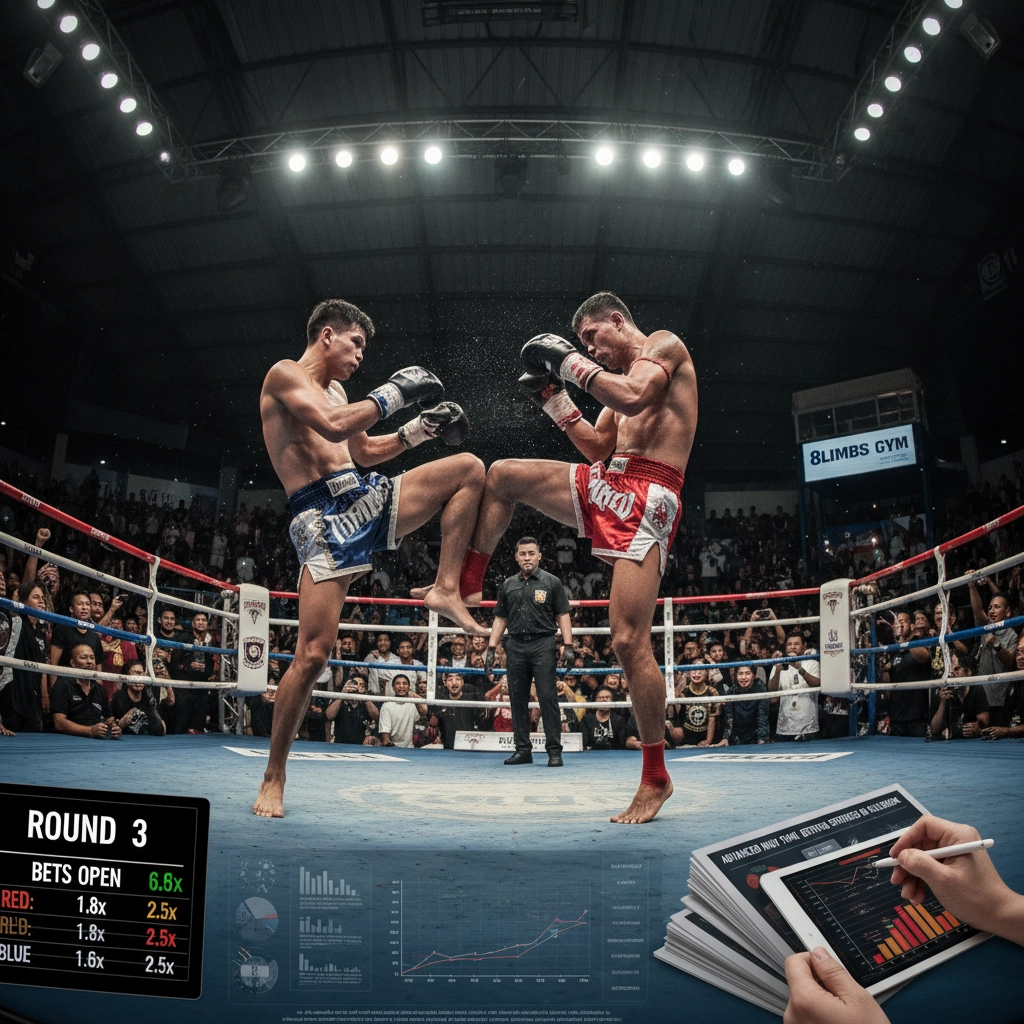
- Chasing momentum: A single big round or knockdown moves prices dramatically. But Muay Thai scoring can reset the narrative — one heavy clinch exchange next round can swing judges back. Avoid overreacting to one round unless you’ve accounted for fight length and stamina.
- Miscalculating referee tendencies live: Referees who stop early (or late) make certain in-round bets far more or less valuable. If you know a ref’s history of early stoppages, live KO/TKO odds should be weighted differently.
- Cashing out too quickly: Cash-out offers factor in bookmaker risk, not just your edge. Taking the cash-out because an offer looks safe can be profitable occasionally, but habitually accepting reduced value will drain bankroll growth.
- Poor time management and latency: Live odds change in seconds. If you bet from a delayed stream or an app with poor execution, you’ll consistently get worse prices than the market snapshot you’re reacting to. Use reliable feeds and set small, predefined stake sizes for live plays.
- Emotional overtrading: Live action triggers more bets. The mistake isn’t making smart live bets — it’s making too many. Set a limit on live bets per fight and stick to predefined entry rules (e.g., only bet after two full rounds or after a clear tactical shift).
Live betting can be lucrative, but only if you combine rapid, accurate assessment of referee/promotion behavior with disciplined stake sizing and a refusal to chase ephemeral momentum. These are the practical rule-based habits that separate consistent winners from costly thrill-seekers.
Putting the rules to work at the betting window
Rules, promotion quirks, and live-market behavior aren’t abstract details — they are the levers that change edge in real-time. Before you place another winner or prop, lock in a pre-bet routine: confirm the card’s rule sheet, check referee and judging history for the event, verify round count, and decide in advance whether a live swing will trigger a bet. Treat each fight as a small experiment: stake conservatively, record the outcome, and iterate.
- Make one-line checks mandatory (rule sheet, round count, referee) before any bet.
- Prefer exchanges or deeper books for thin-market cards to reduce vig and slippage.
- When live betting, limit plays per fight and avoid cash-outs unless forced by risk limits.
For quick reference on rule differences across major bodies, consult the official guidance such as the Muaythai official rules. Consistency in process beats lucky intuition — apply the rules, keep discipline, and let the markets reward patience.
Frequently Asked Questions
How do promotion-specific rules change which fighter I should back?
Promotion rules can favor different skill sets: limited elbows or altered clinch time benefits strikers over clinch specialists, shorter round counts increase early-finish likelihood, and certain judging criteria reward aggression or technique. Always check the promotion’s rule sheet and weigh fighters’ styles against those specific rules before betting.
What’s the single biggest live-betting mistake to avoid in Muay Thai?
Chasing momentum after one dramatic round is the most common error. Muay Thai scoring and refereeing can reverse perceived dominance quickly, so avoid reacting to a single event unless you’ve factored stamina, round structure, and the referee’s stoppage tendencies into your decision.
When is it acceptable to bet on thin-market regional cards?
Only if you can either (a) get significantly better odds through faster assessment or an exchange, or (b) limit your stake because of higher bookmaker margins and volatility. If you can’t quickly assess late replacements or stylistic matchups, it’s better to sit out until lines stabilize.
Recommended Posts