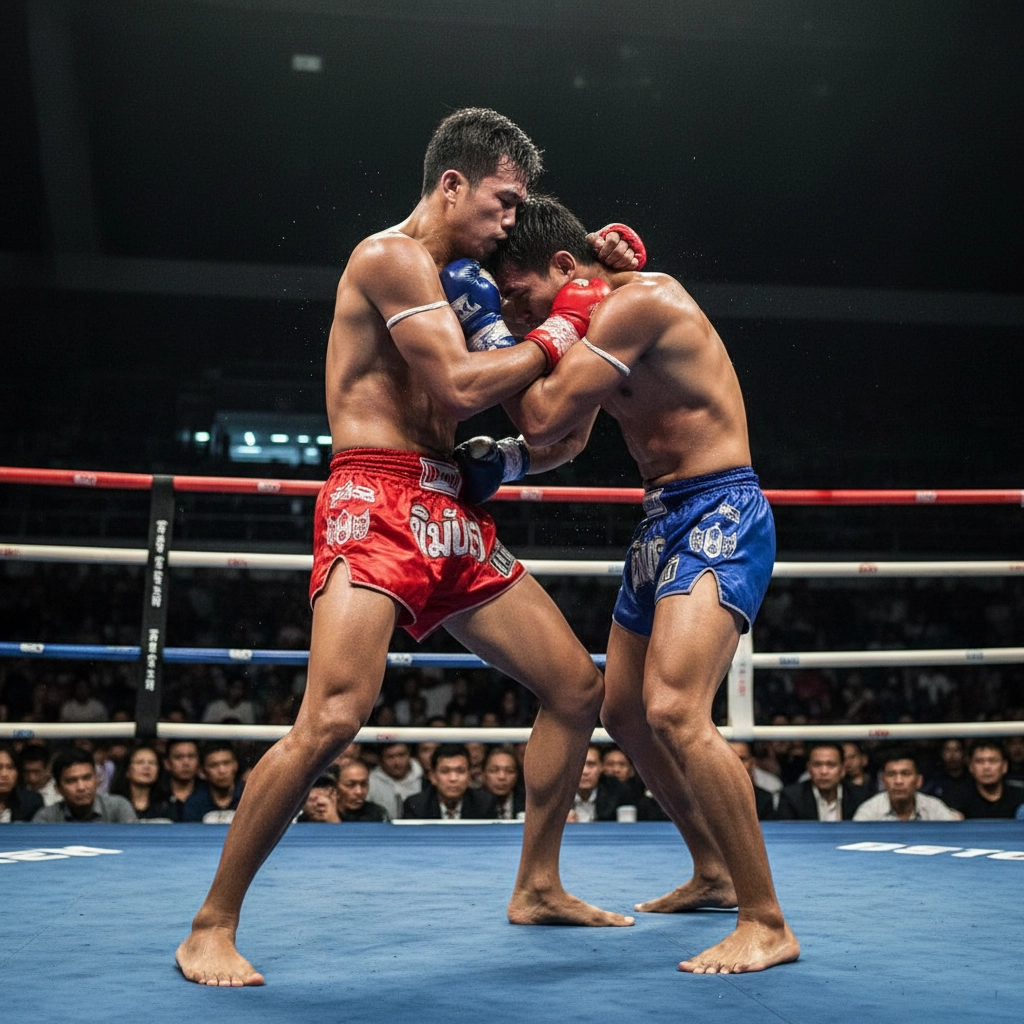

Why starting with the jab and elbow builds a strong Muay Thai base
When you begin practicing Muay Thai, the fastest gains come from mastering a few high-impact tools. The jab and the elbow serve different tactical roles: the jab controls distance, rhythm, and setups; the elbow delivers short-range damage and abrupt disruption. Focusing on these two strikes early helps you develop balance, timing, and defensive awareness that translate across kicks, knees, and clinch work.
Before you throw strikes, you need a reliable stance and guard. These fundamentals let you deliver force efficiently and recover quickly.
Stance, weight distribution, and guard for effective striking
- Stance: Keep your feet roughly shoulder-width apart, with the lead foot angled slightly inward and the rear foot providing drive. Your hips should be square enough to step forward or pivot quickly.
- Weight distribution: Maintain about 55/45 on the rear leg for mobility and power generation. Light, responsive weight lets you jab without overcommitting and explode into elbows when range closes.
- Guard: Lead hand up around eye level to parry and zap the jab; rear hand protecting the chin and ready to fire the straight. Elbows sit naturally tucked, helping to block and counter close strikes.
- Head and chin: Tuck your chin and keep your eyes on the opponent’s shoulders—this reduces target area and improves reaction time.
Jab mechanics, common errors, and practical drills
The jab in Muay Thai serves as a probing and rhythmic tool. Because you’ll also use it to set up kicks and elbows, your jab should be fast, compact, and recoverable.
How to throw a technically sound jab
- Snap the lead hand straight out, rotating the shoulder slightly to protect the chin as the arm extends.
- Push off the rear foot to add reach and snap; avoid lunging forward—the jab should return quickly to guard.
- Extend the arm fully but not locked; retract sharply to maintain defense.
Solo drills to improve speed and timing
- Shadow jab (3 rounds, 2–3 minutes): Visualize an opponent and throw single jabs, double jabs, and jab-then-step-back sequences. Focus on quick return and breathing.
- Target pad routine (with partner or coach): 10 sets of 3 jabs to a pad, emphasizing crisp impact and vertical alignment of the fist.
- Jab ladder: 1–2–3–2–1 pattern increasing and decreasing tempo to build control under changing rhythms.
Short-range elbow fundamentals and introductory drills
Elbows are close-quarters weapons: short, powerful, and excellent for cutting or breaking an opponent’s rhythm. Because elbows happen at intimate distance, you must practice body mechanics and safety.
- Elbow mechanics: Rotate your hips and lead shoulder into the strike; keep the arm compact and the elbow point firm.
- Safety tip: Practice on pads or with a partner wearing protective gloves until you master accuracy and control.
- Drill — elbow tapping: From clinch range, perform alternating lead and rear horizontal elbows to a heavy pad, focusing on hip rotation and immediate guard recovery.
With a solid grasp of stance, jab technique, and the basic elbow mechanics above, you’re ready to start combining these strikes into flowing sequences and partnered drills that train timing and defense. In the next section, you’ll learn progressive partner combinations and specific drills that link jab setups to elbow finishes.

Partner combinations: jab setups to elbow finishes
Start simple and layer complexity. The goal is to use the jab to manipulate distance, create an opening, and then close the gap with a compact elbow. Work these progressions with pads, then mitts, then light partner contact.
– Basic combo (pad drill — 3 rounds, 2 minutes)
1. Lead jab to the face (1), retract to guard.
2. Step off the line with a small forward step (planting the lead foot), drive a short horizontal elbow (E).
3. Coach holds Thai pads: 3 sets of 10 reps. Focus: crisp jab, immediate step, hip snap into the elbow, fast guard recovery.
– Timing ladder (mitts — 4 rounds, 2 minutes)
1. Partner throws a light body feint or hand tap (simulated entry).
2. Throw a single jab on the reaction, then a lead upper-elbow (upward or diagonal) before the partner completes their step.
3. Increase tempo: slow-to-fast-to-slow pattern to develop reactive cadence.
– Double-jab into pivot-elbow (partner/pad — 4 sets of 8)
1. Throw 1–2 (single jab then jab again while angling), then pivot off the lead foot 30–45 degrees while launching the elbow across the new angle.
2. This creates cutting angles and avoids straight-line counters. Emphasize a compact pivot and pulling the rear shoulder through.
Coaching notes:
– Keep the elbow short — think of the strike as an extension of the shoulder/hip rotation, not an arm swing.
– Use the jab to create a predictable rhythm (jab, jab) then break it with an off-rhythm elbow. Variability makes the elbow harder to read.
– Safety: partners should wear elbow pads and face protection when transitioning to live contact. Stop if hits become uncontrolled.
Defense, counters, and clinch entries when bridging distance
A jab-to-elbow game only works if you can manage incoming strikes and exploit openings. Train both reactions and planned entries.
– Parry-to-elbow drill (partner — 3 rounds, 90 seconds)
1. Partner throws a jab. Parry with the lead hand to the outside, immediately step offline and return a lead elbow to the head or temple pad.
2. This builds the reflex to convert defense into offense. Work both sides and mix parry directions.
– Slip-and-close (flow drill — 4 rounds, 2 minutes)
1. Slip inside the partner’s jab (slip right if you’re southpaw against an orthodox jab), circle off-line and step in with a short elbow.
2. Add a rear hand frame to create the clinch after the elbow—use it to control posture and transition to knees.
– Clinch-entry sequencing (partner/pads — 3 rounds, 2–3 minutes)
1. Jab to establish range, then step inside with a short elbow and immediately secure a double palm on the neck to pull into clinch.
2. Practice breaking posture (pull down and turn the head) and throwing a single knee before releasing back to striking range.
Common corrections:
– Don’t overcommit on the jab; keep mobility to recover or pivot.
– When entering for elbows, chop the distance with a small committed step — lunging invites counters.
– Maintain the rear hand guarding the chin during transitions.
These partner drills teach you to chain probing jabs into decisive elbows, while keeping defense and clinch options ready—key skills for practical Muay Thai exchanges.
Putting it into practice
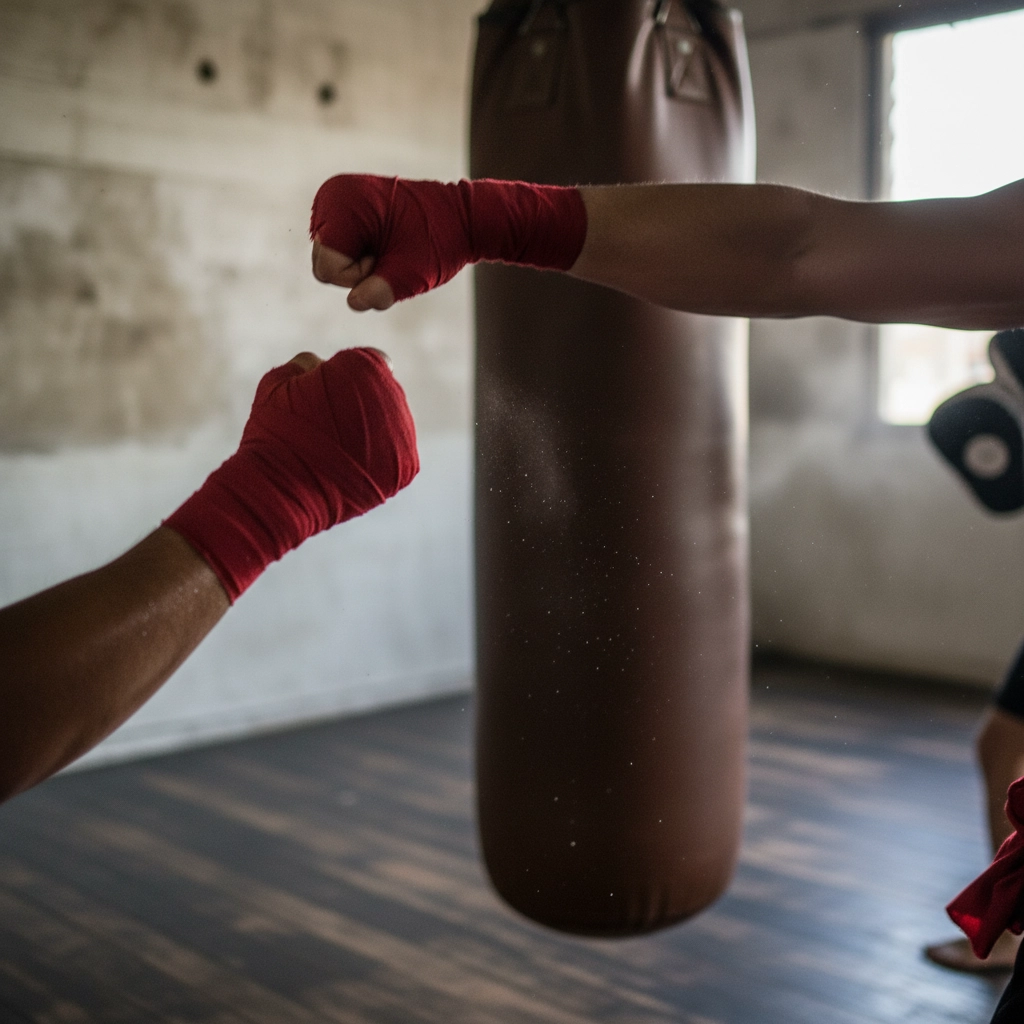
Keep your training deliberate: drill slowly to ingrain mechanics, then add tempo, resistance, and decision-making. Prioritize safety—use pads and protective gear, especially when introducing elbows—and ask a coach for feedback to correct habits early. Track small goals (cleaner jabs, tighter elbow snaps, smoother clinch entries) and build them into short, repeatable routines you can do several times a week. When in doubt, slow down technique and speed up intention; consistent, mindful practice creates durable skill more reliably than sporadic hard sessions. For broader context on Muay Thai history and rules, see Muay Thai on Wikipedia.
Frequently Asked Questions
How often should a beginner practice jab and elbow drills?
A practical schedule is 2–4 focused sessions per week, with each session including technique work (shadowboxing, pad drills) and one partner drill. Short daily touch-ups (5–10 minutes of shadowing or jab ladders) help maintain motor patterns without overtraining.
Are elbows safe to train with partners?
Yes—if you follow safety protocols. Use heavy pads, elbow pads, and controlled contact when learning. Keep strikes deliberate and progressively increase intensity under a coach’s supervision; uncontrolled elbow sparring should be avoided for beginners.
Can I use elbows in sparring as a beginner?
Most gyms limit or prohibit elbows in early sparring for safety. Introduce elbows in pad work and controlled partner drills first, then only use them in sparring when your coach judges your accuracy, timing, and defensive recovery to be reliable.
Recommended Posts