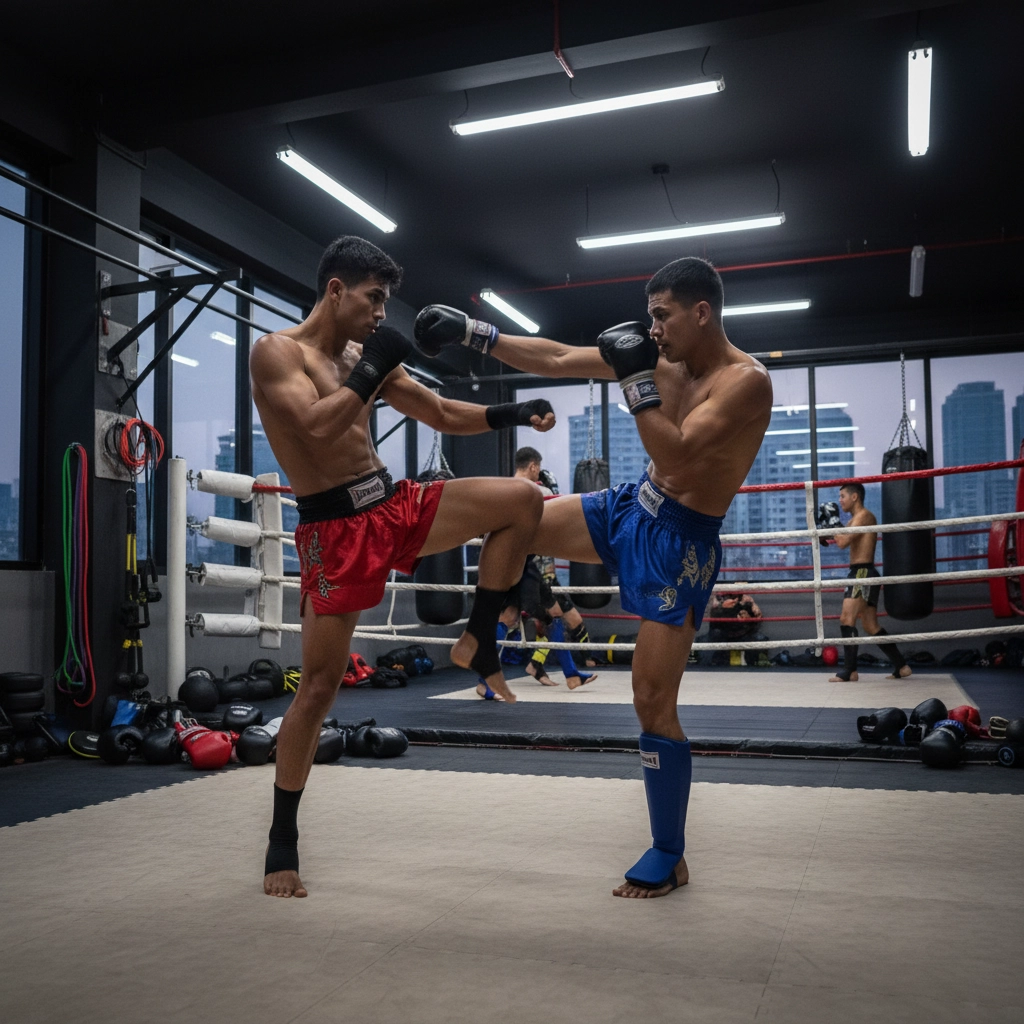

Elevating Your Game: Why Advanced Combinations Separate Pros from Competitors
As a pro-level Muay Thai practitioner, you already know the basics—jab, cross, teep, roundhouse. What distinguishes elite fighters is the way they weave techniques together into fluid, context-driven sequences that manipulate balance, timing, and decision-making. In this section you’ll examine the tactical aims behind advanced combos so you can design sequences that create openings, exploit weak reactions, and control the tempo of the fight.
What high-level combos are designed to achieve
- Force a positional mistake—push an opponent out of stance or balance so a follow-up strike lands cleaner.
- Create predictable reactions—condition a guard or head movement so you can counter-exploit it.
- Control range and rhythm—use combinations to march an opponent into your optimal striking distance.
- Mask intent—combine feints and rhythm changes so single strikes are indistinguishable until impact.
When you build combos with these aims in mind, each strike is not just an attempt to score; it’s a means to a larger tactical end.
Fundamental Pillars: Timing, Range, and Body Mechanics for Combo Efficiency
Before you memorize elaborate sequences, you must internalize the pillars that make combos effective. This isn’t about learning flashy moves—it’s about making them reliable under pressure. Below are the core elements you should drill until they’re instinctive.
Timing and rhythm
Your timing dictates when a combo becomes usable. Work on three timing dimensions:
- Reactive timing—responding to opponent actions with immediate counters.
- Proactive timing—initiating rhythm changes to draw a planned reaction.
- Interruptive timing—using a short, sharp strike to break opponent momentum and insert a follow-up.
Range control and transitions
Advanced combos often move through multiple ranges: long (teep), mid (punches), and close (clinch/elbow). Practice smooth transitions so you can chain a long-range push into mid-range strikes without telegraphing. Focus on:
- Step-off adjustments—tiny pivots or steps that alter angle and create new attack lines.
- Weight distribution—shifting your base to generate power into the next strike while remaining defensively sound.
- Entry and exit frames—how you enter a pocket and how you exit to prevent counters.
Body mechanics and efficiency
Efficiency reduces telegraphing and conserves energy. Keep upper-body movement economical, use hip rotation to generate power, and chain breath with motion so each strike flows naturally into the next. Drills that combine shadowboxing with resisted bands or light partner pressure will hone these mechanics quickly.
With these tactical pillars clear, you’ll be ready to examine specific high-level combination templates, drill progressions, and partner drills that translate principles into fight-ready sequences.
Advanced Combination Templates and How to Customize Them
Elite fighters don’t memorize isolated combos; they build templates with interchangeable parts that adapt to opponent tendencies. Below are compact, high-level templates with the tactical aim for each and simple variations you can plug in during rounds.
- Range breaker (push → riposte → close): Teep to chest (create distance/reaction) → rear cross to the head as they reset → step-in lead clinch knee or elbow. Purpose: force a defensive reset then punish the predictable forward step. Variations: swap the teep for a low kick to force a lower guard, or follow the cross with a rear uppercut if they drop their lead elbow.
- Rhythm shift ladder (feint → double-level → finish): Soft jab feint → lead hook to body → immediate lead hook to head (same-hand double) → rear low kick. Purpose: change rhythm and target level to open the guard. Variations: replace the double hook with hook-elbow for closer range or add a pivot to the outside after the body shot to create a different angle for the low kick.
- Angle exploitation chain (entry → off-axis → trap): Step-and-turn teep (off-line entry) → rear low kick to back leg → pivot outside into lead elbow or short roundhouse to head. Purpose: use footwork to deny a squared-front defense and land strikes on the blind side. Variations: if the opponent counters the low kick with a check, flow into a switch kick or immediate clinch entry.
- Counter-trap combo (block → bait → counter): Check a roundhouse → lean out slightly to bait a straight → counter with double jab cross → clinch/knees. Purpose: convert defensive actions into offensive momentum. Variations: replace the double jab with a rear uppercut if they habitually overcommit with the straight.
Each template is a framework: decide beforehand which variations you’ll use based on opponent posture and common reactions. Drill the primary and two backups so you can flow without thinking in a fight.

Progressive Drill Structure to Internalize Complex Sequences
Turn templates into instincts through staged repetition. Use the following progression for each combo until the sequence is second nature under increasing pressure:
- Shadow and visualize (3–5 minutes): Slow, exaggerated mechanics. Focus on weight shifts, hip rotation, and breathing. Visualize opponent reactions and your backup option.
- Solo technical sets (4 rounds × 2 minutes): Shadow at fight pace, then add light resistance bands or ankle weights for the exit/entry footwork. Keep rests short (30–45s) to simulate fatigue decision-making.
- Padwork with progressive feedback (6–8 rounds × 2 minutes): Start slow—execute the template, coach calls a reaction. Increase speed and add random reactions from the pad holder so you must choose the correct variation on the fly.
- Controlled live drilling (6 rounds × 3 minutes): Partner provides moderate resistance and a single live variable (e.g., “always counters the teep with a cross”). You must adapt within the template without full-power strikes.
- Full sparring integration (3–5 rounds × 3–5 minutes): Use limited rules for a round (e.g., only use the template when you start a sequence) to test under real pressure.
Track progress by success rate: aim for 70–80% clean execution in technical drills before escalating intensity. If success drops below 50% under pressure, deconstruct the sequence and return to earlier stages.

Partner Drills to Test, Harden, and Read Opponent Reactions
Partner work should simulate the decision-making environment of a fight. These drills focus on conditioning your reads and making the template reliable when the opponent is unpredictable.
- Reaction ladder: Partner calls one of three preset defenses (block high, step off, counter straight). Execute the corresponding variation from your template. 5 rounds × 2 minutes, rotate roles.
- Resistance-to-Reward: Partner increases resistance each minute; when you successfully land the final strike twice in a row, partner eases and allows a fast sequence. Builds patience and timing.
- Boss-and-Underling: One partner is the “boss” who dictates small, realistic reactions (slips, clinch attempts). The attacker cycles through templates, aiming to force the boss into a specific position—this trains anticipation and finishing instincts.
Use video feedback to watch subtle tells: shoulder drop, weight bias, or breath rhythm. The best pros read these micro-reveals and swap variations instantly—train the eye as much as the limb.
Translating Training into Performance
At the pro level, progress comes from deliberate cycles of practice, live testing, and adjustment. Treat each template as an experiment: set a hypothesis about when it should work, collect objective feedback during padwork and sparring, then refine the entry or backup options. Prioritize consistency over complexity—execute fewer templates reliably rather than many imperfectly. When you step into the ring, rely on the templates that have repeatedly produced the desired reaction in sparring; those are your highest-percentage tools.
Finally, cultivate a training culture that values measured escalation: slow technical repetition, progressive resistance, and then controlled application under pressure. For supplemental technical breakdowns and video examples that align with this methodical approach, see advanced Muay Thai drilling resources.
Frequently Asked Questions
How often should I practice these advanced combination templates?
Practice them multiple times per week within the progressive structure outlined: technical repetitions early in the week, padwork midweek, and controlled sparring later. Aim for quality over quantity—sessions where you hit the target success rate (70–80% clean execution) are more valuable than high-volume sloppy reps.
How do I decide which variation to use mid-combo against a live opponent?
Look for micro-tells—weight shift, guard drop, breath timing, or a habitual counter. Choose the variation you drilled for that specific tell. If uncertain, default to the highest-percentage option you’ve practiced under pressure (usually the one that maintains range and allows a safe exit).
Are elbows and clinch finishes safe to integrate during full sparring?
Yes, but only with graduated intensity and clear sparring rules. Start with light-contact clinch and elbow entries in controlled drills, then increase force as partners demonstrate controlled defense. Use protective gear and agree on limits (e.g., no full-power downward elbows) until both partners are ready for higher intensity.
Recommended Posts