
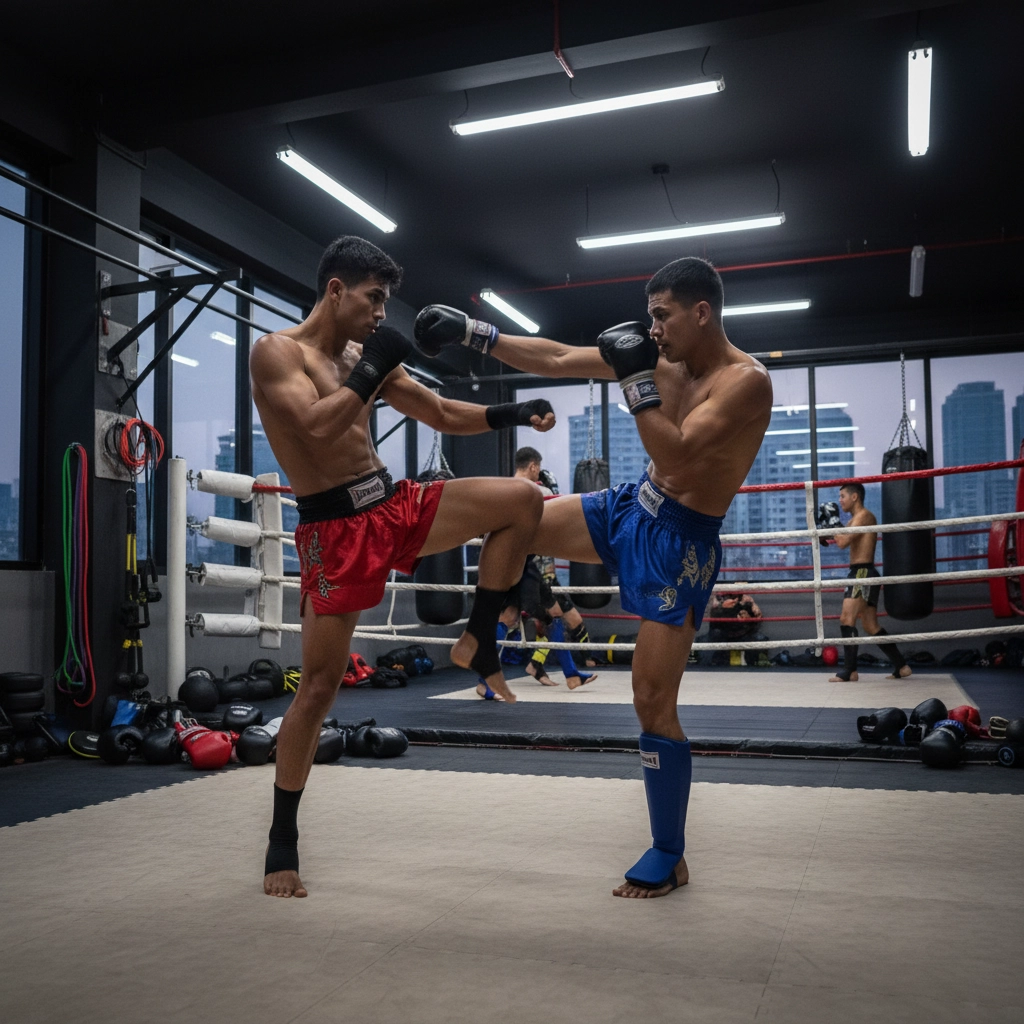
Why mastering advanced Muay Thai combinations changes how you spar
You already know basic punches, kicks, knees, and elbows — now you need to string them together so they become weapons under pressure. Advanced combos are not just longer sequences; they are tactical tools that control distance, break rhythm, and create openings. When you practice them with the right principles, your sparring becomes less reactive and more proactive: you dictate exchanges, manage tempo, and force opponents into predictable responses you can exploit.
Key principles that make combos effective in live exchanges
Before drilling specific sequences, internalize three non-negotiable principles that will govern how you build and apply combos in sparring.
- Range management: Every strike has an optimal range. Mix long (teep, straight kick), mid (cross, inside leg kick), and short (elbow, clinch knee) tools so you can close or create space as the sequence demands.
- Timing and rhythm breaks: Use feints, level changes, and rhythm disruptions (double-pause, speed-ups) to make your opponent commit prematurely or freeze. The best combos hide a rhythm change that lands the decisive technique.
- Defensive chaining: Combine offense with defense—frame, switch, or clinch after a high-risk strike. A well-chosen guard or foot pivot should be integrated into the combo, not tacked on afterward.
Refine stance, footwork, and guard for combo efficiency
Your stance and footwork are the engine behind any reliable combo. If you lose balance, cover, or angle, an otherwise high-percentage combination becomes a liability.
- Micro-adjustments: Learn to make small shuffles and pivots rather than large, telegraphed steps. Small adjustments preserve balance and allow immediate counters.
- Weight distribution: Keep a bias toward the lead foot when launching front kicks and jabs; load the rear when coiling for heavy crosses and round kicks. Switching weight quickly is what converts single strikes into fluid combos.
- Active guard: Your guard should be mobile—use the forearms to parry and the elbows to protect the ribs during exchanges. Integrate counters into the guard movement (e.g., parry to hook or block to step into a knee).
Initial advanced combos to practice and their sparring uses
Start with short sequences that emphasize the principles above. These are not exhaustive but form a practical foundation:
- Feint jab — rear cross — teep to the thigh: breaks rhythm then punishes step-in.
- Inside leg kick — switch step cross — lead elbow: mixes range and closes to the clinch.
- Body kick — clinch pull — knee cluster: uses a long strike to set up short-range dominance.
Drill each combo at three speeds: technical (slow), tempo (moderate), and live (sparring-intensity). Focus on maintaining guard and balance through the entire sequence, and always end the drill with a defensive position or clinch to simulate a real exchange.
Next, you’ll break down progressive drilling methods, specific counter-responses to common defensive reactions, and example sparring rounds that show how to apply these combinations under pressure.
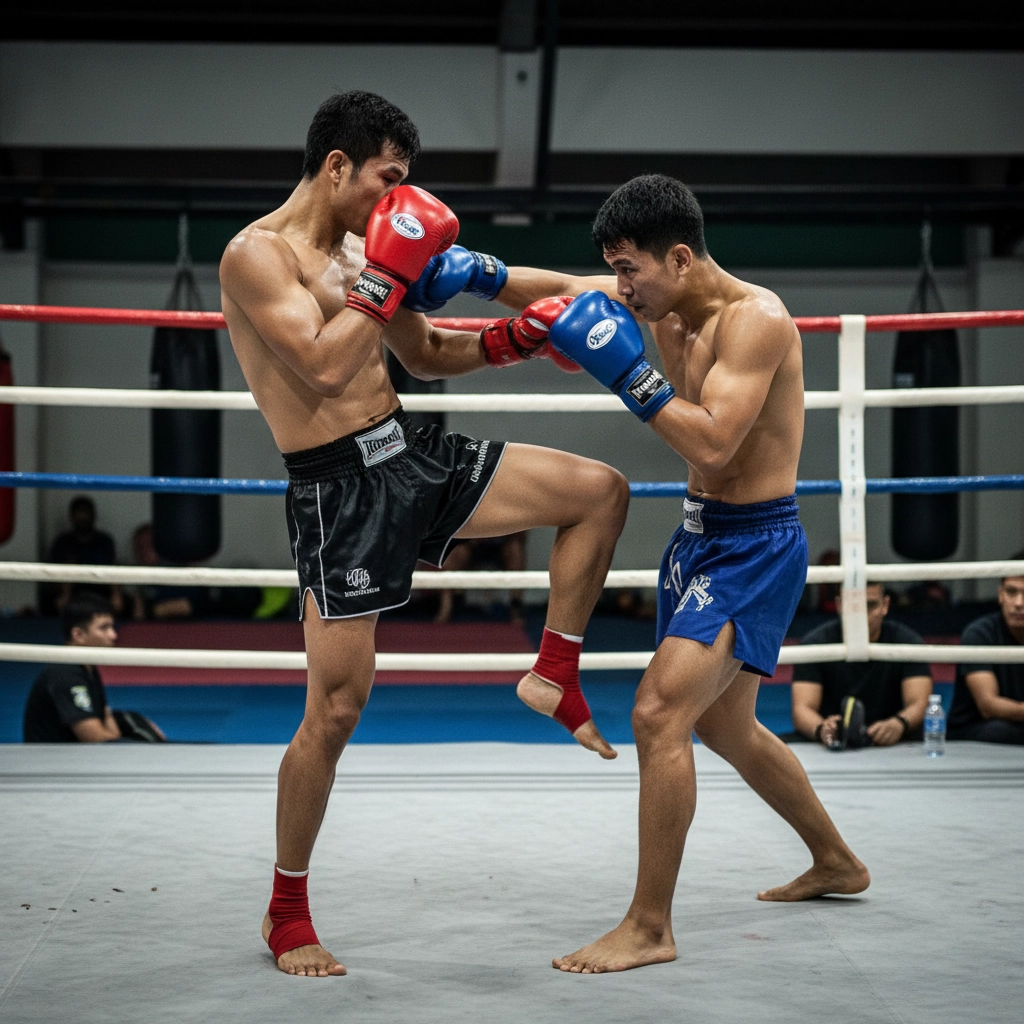
Progressive drilling: building combos from mechanics to controlled chaos
Progression matters. Move deliberately from single-technique perfection through constrained partner drills into free sparring where the combo must survive unpredictability. A reliable four-stage progression keeps learning anchored and ensures techniques transfer under pressure.
- Stage 1 — Isolated mechanics: Break the combo into pieces and rehearse each element in slow shadowboxing. Focus on hip rotation for kicks, snap and return on jabs, and the exact foot pivot for angle changes. Repeat until the movement is unconscious.
- Stage 2 — Partner rhythm and pads: Execute the combo on pads at technical speed. The holder varies timing slightly so you learn to absorb small rhythm changes without breaking structure. Emphasize finishing positions—guard up or clinch—after each rep.
- Stage 3 — Progressive resistance: Now drill with a partner offering increasing resistance. Start with compliant defenses (catching light), advance to active blocking, then to slips and counters. Your job is to read and adapt the combo mid-flight: if the opponent slips, follow with the pivot-elbow; if they block, transition to the teep to reset.
- Stage 4 — Constraint sparring (goal-oriented): Use 2–3 minute rounds with specific objectives: “use only lead-body kicks and clinch entries” or “score with rear kicks after a feint.” Constraints force creative application and expose weak links in your combos.
Counters to common defensive reactions and how to embed them into combos
Most opponents defend in repeatable ways. Learn the most efficient counters and weave them into the middle or end of your sequences so you can convert defense into opportunity.
- High guard / shell-up: If they wall up, change levels and attack the legs and body. Example: jab — cross — double feint — inside low kick to the lead leg — chop to the body. The feint resets the guard height; the leg-body combo opens the ribs.
- Back-step / distance reset: When they step out, punish with a fast long-range tool. Example: push-teep on the retreat — follow immediately with a rear low kick to land while they recover. A delayed teep (two beats) acts as both a stop and bait.
- Parry and counter-punch: If your opponent is an aggressive parrier, incorporate feint-to-parry breakers: feint jab — switch cross — lead hook over the parry. The switch adds weight and angles the hook over their hand.
- Leg catch or block: If they catch kicks, exit to the clinch or throw a rear kick to the body instead. Example: roundhouse to body — anticipate catch — pull hip back, step through, clinch and knee. Drill timing to make the catch your trigger for entry.
Structured sparring rounds to ingrain combos under pressure
Practice combos in sparring rounds with clear goals. Below are three sample rounds that simulate common fight scenarios and force combo adaptation.
- Round A — Range control (3 x 2 min): Only teeps, jabs, and rear low kicks allowed. Objective: establish range and score with a rear kick after a feint or jab. Focus points: teep timing, weight bias, and quick recovery guard.
- Round B — Break the shell (3 x 2 min): Opponents may only defend with a high guard. Use body/leg level changes and short elbows. Objective: land at least two successful level-change combos per round. Focus: feints, precision, and finishing with an inside elbow.
- Round C — Clinch transition (4 x 2 min): Start at mid range; if a clinch is achieved, the clincher scores bonus points for clean knees and exits. Objective: convert a mid-range combo into a clinch entry twice per round. Focus: timing the pull, hip control, and privacy of knees.
Score each round not just by strikes landed but by how often you achieved the stated objective. This metric drives purposeful practice and quickly reveals which combos survive real-time adaptation and which need further refinement.

Bringing combos into your weekly plan
Turn the concepts into habit by embedding short, focused sessions into your weekly routine. Prioritize quality over quantity: a few well-structured drills will outpace hours of unfocused sparring.
- 2 technical sessions (30–45 min): isolated mechanics and pad work for 3–5 advanced combos.
- 1 progressive-resistance session (30–40 min): partner drills moving through Stages 2–3 from slow to reactive.
- 2 controlled sparring rounds (3–4 x 2 min): use the constraint rounds model—one for range, one for clinch entries.
- Daily micro-practice (5–10 min): shadowbox one combo at three speeds and rehearse guard transitions.
Final training notes
Consistency, measured exposure to pressure, and honest feedback are what convert advanced combos into dependable weapons. Respect recovery and partner safety as you push intensity; purposeful repetition under realistic conditions builds the neural patterns that make split-second decisions automatic. For reference on rules and safety considerations when applying these techniques in competition, see Muay Thai fundamentals and rules.
Frequently Asked Questions
How often should I test a new combo in sparring?
Introduce a new combo first in technical and pad sessions for several reps across at least two workouts. Then test it in constrained sparring (goal-oriented rounds) for 2–3 sessions before using it in full-intensity sparring. This progression helps you identify timing, defensive gaps, and necessary counters without compromising safety.
What’s the best way to prevent telegraphing when chaining strikes?
Reduce telegraphing by minimizing large preparatory movements (big weight shifts or wide pulls), using feints and rhythm changes, and practicing micro-adjustments of footwork. Drill the combo slowly to remove extra motion, then add feints and tempo shifts so the decisive strike is disguised within the flow.
How do I choose which counters to embed into a combo?
Pick counters based on the most common defensive responses you face in sparring. If partners frequently shell up, embed level changes and body strikes; if they back-step, add a teep or rear low kick as a bait-and-punish. Use progressive-resistance drills to confirm the counter works under realistic reactions before committing to it in live rounds.
Recommended Posts