
How to approach a Muay Thai fight like an analyst
You watch a fight and want to know why one fighter wins. To analyze effectively, you need a clear framework that turns instinct into evidence. Start by observing measurable elements: distance management, strike selection, clinch control, and momentum shifts. When you break a bout down into these categories, patterns emerge that reveal which strategies actually create openings and score points in the ring.
Use rounds and timestamps to organize your review. Note key sequences, record successful techniques, and mark moments where the tempo changes. As you do this, ask targeted questions: Who dictated range? Who forced the opponent to react? Which exchanges led to visible damage or a change in confidence? This focused approach keeps your analysis objective rather than impressionistic.
Identifying the fundamental elements that lead to wins
Distance, timing, and rhythm
Distance control determines what techniques are available to you. If you control long range, you can set kicks and teeps; if you close the gap, elbows and knees become viable. Watch which fighter consistently places the other in their preferred range. Timing and rhythm amplify technique — a well-timed counter will often neutralize superior power.
- Teep and push-kick usage: Notice how teeps reset the opponent or create openings for follow-up combinations.
- Step-in timing: Track moments when a fighter deliberately alters cadence to land a decisive strike.
- Feints and baiting: Count successful feints that provoke defensive errors or reveal tendencies.
Clinching, control, and scoring in close quarters
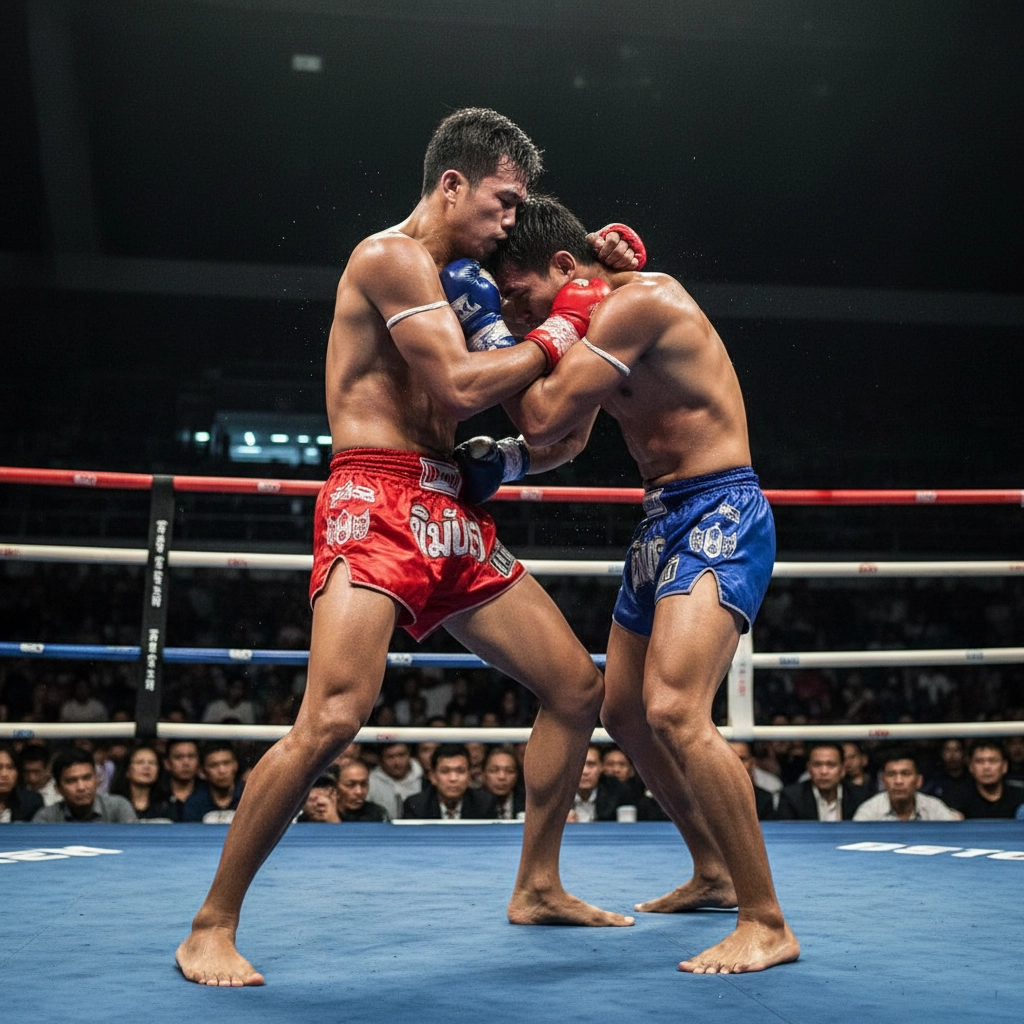
The clinch is more than a place for knees — it’s a scoring mechanism and a way to control the opponent’s energy. When you analyze clinch sequences, look for who initiates grips, who dictates head position, and who scores knees without ceding dominant posture. Also track turnovers and sweeps: a successful off-balancing maneuver not only scores but breaks momentum.
- Grip initiation: Identify successful entries to the clinch and whether they follow a strike or are set up by a feint.
- Knee placement: Note whether knees land to the body, ribs, or head and how they affect the opponent’s posture.
- Dominance duration: Measure how long one fighter controls the clinch and whether they force refereeing breaks.
Defense, counters, and damage management
Defense wins rounds as often as offense. Observe which defensive tools are used — blocks, parries, head movement, or footwork — and which counters these defenses create. Effective fighters turn defense into offense by immediately exploiting the opponent’s recovery window.
- Successful counters per round: Tally counters that change momentum.
- Recovery after damage: Watch how quickly a fighter regains composure and adjusts tactics.
- Energy conservation: Note when a fighter intentionally reduces output to maintain control late in rounds.
With these basics in hand — methodical note-taking, focus on distance/clinching/defense, and counting successful sequences — you create an evidence-based map of a fight. Next, you’ll apply this framework to specific technical categories, dissecting kicks, punches, elbows, knees, and transitions to show how individual techniques convert into winning strategies.

Breaking down strikes: how individual techniques create openings
Once you’ve categorized rounds and timestamps, inspect strikes as building blocks rather than isolated events. For each technique, record its immediate purpose (score, disrupt, damage, or set-up) and its effect on the opponent’s posture and choices. Ask: did the strike create space, force a guard change, or provoke a predictable counter?
- Kicks: Note location (low, body, high), chambering and hip rotation, and follow-up options. A low kick that pins weight on the lead leg raises the probability of a subsequent teep or inside knee — track the conversion rate from low-kick to high-score action.
- Teep and push-kicks: Measure their reset value. Count how often a teep produces a step back, opens the guard, or sets up a clinch entry within three seconds.
- Punches: Track jab usage as a range-finder versus an attack tool. A consistent jab that forces the rear hand up often creates space for hooks; tally successful jab-hook sequences and their scoring outcomes.
- Elbows and short-range strikes: These are high-risk, high-reward. Log entries into elbow range (what preceded them), whether head position was secured, and visible damage (cuts, blood, wobble) within the same round.
Quantify technique effectiveness: landing percentage, subsequent opponent reaction (step back, clinch, counter), and whether a single strike led to a chain that scored more points or visibly altered momentum. This reveals which strikes are consistently game-changing versus those that merely register on the scorecard.
Transitions and setup chains: turning single strikes into sustained control
Winning fighters string techniques into predictable patterns that create opportunities. Isolate these chains and measure their efficiency: how many strikes per successful transition? How often does a combination end in the desired outcome (clinching, knockdown, ring control)?
- Chain length: Count average strikes before achieving the objective. Short, efficient chains (2–3 strikes) often indicate superior timing; longer chains may show volume strategy but lower conversion.
- Level change and angle: Track whether level changes (body to head) or lateral movement increased landing rates. An opponent who circles into a hook or knee repeatedly signals exploitable lateral tendencies.
- Strike-to-clinch conversion: Log how many strikes immediately precede a successful clinch entry. A high conversion suggests the fighter intentionally funnels opponents to close quarters.
- Reset vs. pressure: Identify when a fighter chooses to reset distance (teep, lateral step) rather than press — and which choice correlates with winning more rounds.
These metrics expose the structural logic behind combinations and show whether a fighter’s offense is reactive volume or proactive control.
Damage accumulation and psychological shifts in the bout
Beyond single strikes and chains, pay attention to the cumulative effects that change the fight’s psychology. Small advantages compound: a repeatedly checked kick that bruises the calf, a persistent body attack that shortens the opponent’s breath, or a late-round surge that forces defensive walls.
- Visible decline markers: Note guard drop frequency, slower footwork, heavier breathing, and missed timing. Timestamp when these first appear to map deterioration over rounds.
- Scoring vs. intimidation: Differentiate between points-scoring strikes and those that alter willingness to engage (e.g., a hard knee that makes the opponent avoid clinch). Both matter, but the latter often determines fight trajectory.
- Momentum windows: Record runs of consecutive offensive seconds and whether they culminate in a stoppage or sustained control. Longer windows correlate strongly with judges’ perceptions of dominance.
By tracking both physical damage and behavioral shifts, you convert subjective impressions into objective indicators of who’s actually winning and why. This sets the stage for applying concrete metrics to judge efficacy in the final part of your analysis.
Putting analysis into practice
Turn your notes into a training roadmap. After a structured review (one watch for flow, another to tag timestamps and techniques), translate patterns into specific drills: recreate successful chain entries, practice counters that repeatedly shifted momentum, and condition the lead leg if low kicks consistently changed balance. Use a simple log or spreadsheet to record metrics you tracked — successful counters per round, strike-to-clinch conversion, clinch dominance duration — and compare across fights to spot trends.
Share findings with a coach or training partner and build short, focused sessions that address the exact transitions or weaknesses you identified. Regularly re-review the same fighter or opponent to test whether adjustments create measurable change in subsequent bouts or sparring. For official rules and scoring context that can inform how you weight different metrics, consult IFMA resources.
Analysis is iterative: small, consistent improvements in how you set up, convert, and defend will compound. Use the framework as a living checklist rather than a final verdict — update it as fighters evolve and new patterns emerge.
Frequently Asked Questions
How many times should I watch a fight to analyze it effectively?
Plan multiple passes: first for overall flow and momentum, second to timestamp notable sequences and categorize by distance/technique, and a third to quantify metrics (landed percentage, counters, strike-to-clinch conversions). Additional passes focus on slow-motion review of key exchanges or clinch mechanics.
Which metrics tend to predict who wins a Muay Thai fight?
No single metric guarantees victory, but certain measurable indicators strongly correlate with winning: consistent distance control (forcing the opponent into less-preferred range), higher successful counter rate, clinch dominance duration with effective knees/turnovers, and clear damage accumulation that alters the opponent’s behavior. Combine several metrics rather than relying on one.
How can fighters or coaches use this analysis to improve training sessions?
Identify recurrent openings and failures, then design drills that replicate the exact setups and responses. For example, if low kicks lead to teep opportunities, drill low-kick follow-ups and balance recovery. If opponents drop their guard after jabs, practice jab-hook conversion under pressure. Track progress by re-analyzing sparring or fights to see if your targeted metrics move in the desired direction.
Recommended Posts