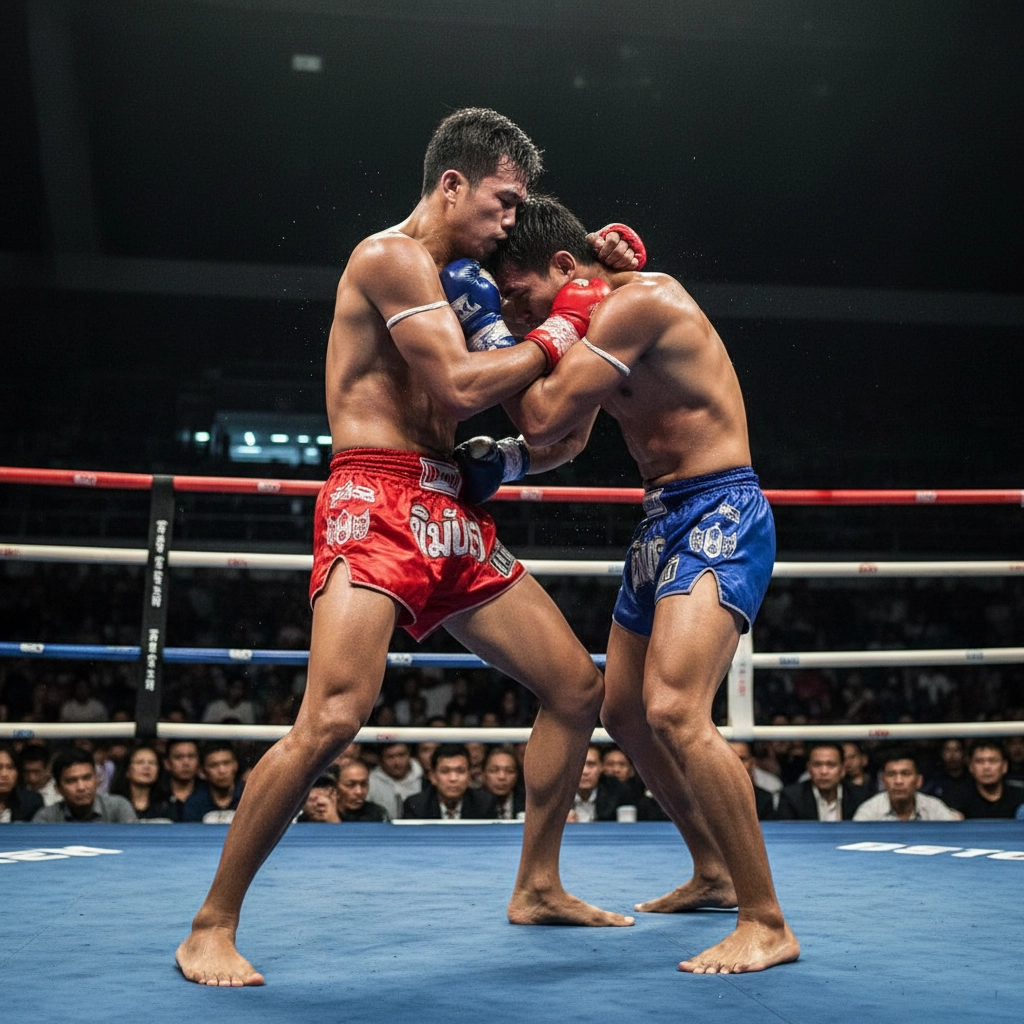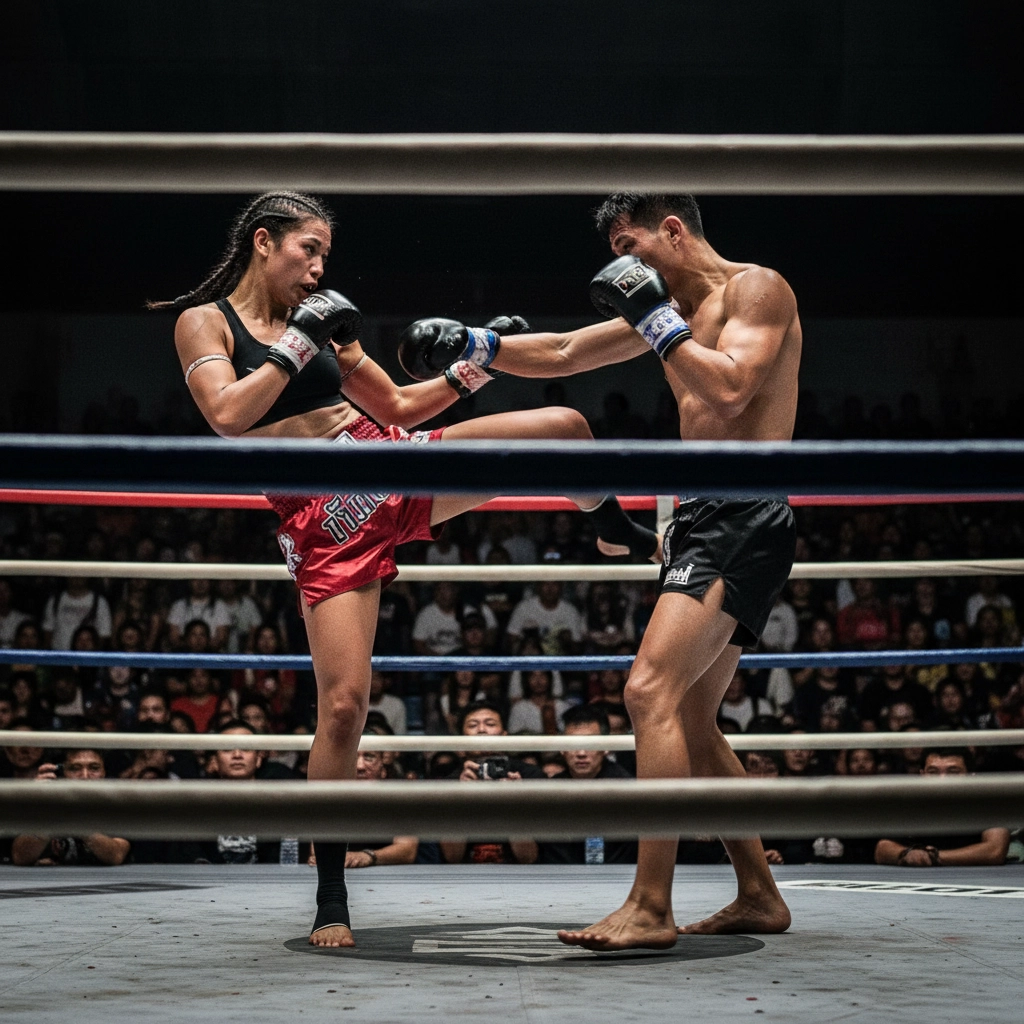

Transform Your Striking: Why Power and Precision Are Non-Negotiable
As a striker, you already know that raw power without accuracy is wasted energy, and pinpoint accuracy without force can fail to change the fight. In Muay Thai, the most effective strikes combine hip-driven force, correct alignment, and deliberate target selection. This section explains why developing both attributes together makes your techniques reliable under pressure and how you should think about training them.
- Power comes from structure and transfer of momentum — not just arm or leg strength.
- Precision is the product of balance, timing, and consistent visual focus on targets.
- Training should prioritize repetition of correct mechanics before adding speed or resistance.
Build the Mechanical Foundation: Stance, Balance, and Hip Drive
Before you attempt to increase force or tighten accuracy, lock in the mechanical basics that allow both to happen. The following sub-sections break down the key components you must practice until they become reflexive.
Stance and Weight Distribution
Your stance is the platform for everything. If your base is unstable, your strikes will scatter and lose power. Practice these cues:
- Keep a slightly staggered stance: feet roughly shoulder-width with the rear foot turned out slightly for hip rotation.
- Distribute weight roughly 55/45 (rear/front) to allow rapid hip drive and checks without collapsing forward.
- Maintain a slight bend in the knees and a vertical spine to transfer force through your hips rather than your lower back.
Hip Rotation and Torso Alignment
Power in Muay Thai largely originates from the hips. Learn to generate torque by rotating your hips and aligning your torso toward the target.
- Think of your strike as a chain: feet → hips → core → shoulder/leg. Each link must move sequentially.
- For kicks and teeps, snap the hips over the supporting leg while turning the standing foot to open the hip socket.
- For punches, lead the rotation from the rear hip followed by a controlled push from the legs and a tight core snap.
Balance, Visual Focus, and Breathing
Precision depends on where you place your eyes, how you control your center of gravity, and when you exhale. Integrate these simple habits:
- Keep your eyes on a small target area (temple, ribcage, solar plexus) rather than the whole opponent.
- Practice single-strike balance holds to ensure you can recover immediately after committing to a strike.
- Exhale sharply on impact to stabilize your core and increase tension at the moment of contact.
With these mechanical building blocks in place, you’re ready to translate them into specific strikes and progressive drills that enhance measurable power and pinpoint accuracy in live training.
Convert Mechanics into Strikes: High-Impact Techniques and Cues
Now that your stance, hip drive and visual focus are consistent, turn those mechanics into reliable, fight-ready strikes. Below are the highest-return techniques for strikers, with concise mechanical cues and a rehearsal progression you can follow for each.
Rear straight (cross)
– Cues: Drive the rear hip forward, push off the ball of the rear foot, keep the elbow tight and the rear shoulder rotating over the target. Snap the shoulder back immediately after impact to protect and reset.
– Contact: Aim for the bridge of the nose, temple or sternum depending on range.
– Progression: shadow (slow, focus on hip → shoulder sequence) → technical mitt work (spot the target) → heavy bag (full power, check follow-through) → controlled partner sparring.
Lead hook
– Cues: Rotate the front knee and hip simultaneously, keep a 90° elbow, pivot on the lead foot and keep the chin tucked. Use the torso like a coil rather than whipping the arm.
– Contact: Temple or jawline for knockout potential, ribs for body shots.
– Progression: slow shadow with pause at impact → pad circuits emphasizing hip snap → body-on-body clinching with short range hooks → timed hook-only rounds on the bag.
Roundhouse kick
– Cues: Snap the hips over the standing leg, rotate the supporting foot fully, strike with the shin (not the toes), and snap the leg back to guard. Use the arms to counterbalance and maintain head position.
– Contact: Shins to thigh or ribs; lower kick to calf for structure work, mid-high for damage.
– Progression: controlled chambering drills → Thai pad rounds with torso targets → heavy bag repetitions focusing on displacement rather than volume → partner checks and live infight use.
Teep (front push kick)
– Cues: Push from the hips with the heel/ball of the foot, keep the spine neutral, and extend through the hips rather than collapsing the torso forward. Eyes lock on a precise target (solar plexus, hip).
– Contact: Midsection for distance control, thigh to disrupt balance.
– Progression: target teep on pads → moving target teeps (step back/forward) → power teeps on bag → teep followed by immediate defensive recovery.
Elbows and knees (short-range power)
– Cues: Short, compact motion; use the torso rotation for elbows and the hip drive for knees. Clinch entries should focus on posture and hip positioning to transfer force.
– Progression: pad-only elbow drills (angles and timing) → short-range bag work for knees → clinch partner drills with controlled power.
Always practice each strike through the same chain: feet → hips → core → limb, then immediate recovery. Rehearse slowly first, then add speed, then increase resistance.
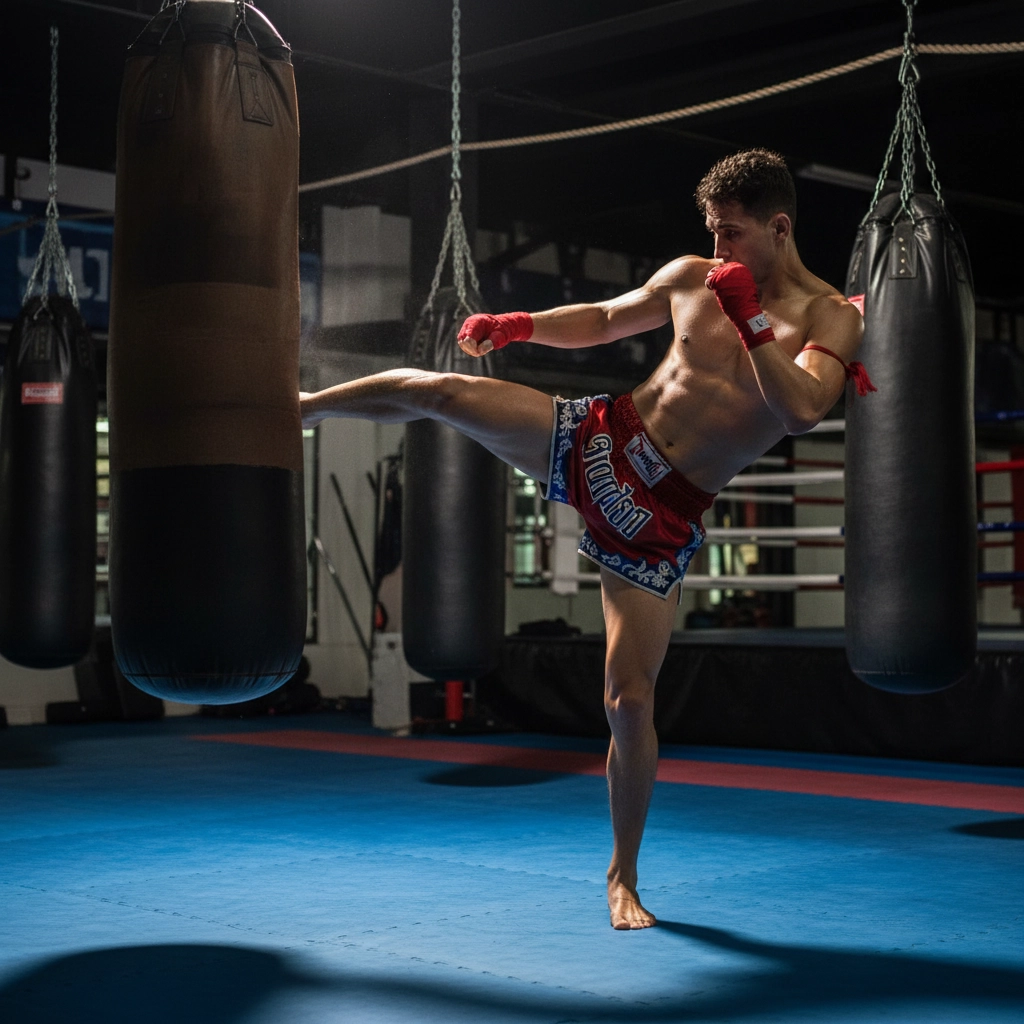
Progressive Drills and Training Protocols to Quantify Power and Accuracy
Training should be progressive and measurable. Use the drills below to isolate improvements in force and precision and to track progress week-to-week.
Precision-focused drills
– Target-dot work: stick small adhesive dots to a heavy bag at specific heights. Hit 20 dots in a row with designated strikes. Increase difficulty by decreasing dot size or adding movement.
– Mitt “one-shot” rounds: partner calls one target and one strike; you must hit it within 2–3 seconds. Track hit percentage across rounds.
Power-focused drills
– Bag displacement sets: record how far or how many swings it takes to move the bag a set distance. Aim to reduce swings or increase displacement per strike.
– Medicine-ball rotational throws: 3–5 sets of 6–8 explosive throws to train hip torque.
– Plyometric lunges and clap-push presses: develop explosive leg drive and core transfer.
Combined protocols
– Tempo ladders: 1 strike slow (perfect mechanics), 2 at 75% speed, 3 at full speed/power — repeat for 4–6 rounds.
– One-strike rounds: each round you may only throw one pre-selected strike; focus on maximal hip drive and absolute precision then recover and repeat.
– Spot-and-reward pad drill: coach spots a 10–20cm target; you get 1 point for hitting target, 0 for miss — play to 20. Forces accuracy under fatigue.
Partner/sparring progression
– Controlled accuracy sparring: light contact, score only clean, precise strikes.
– Limited-power rounds: impose a power cap for early rounds, gradually increase intensity as accuracy holds.
– Video review: film at 60–120 fps to analyze hip rotation, contact point and recovery. Track percent of clean hits per session.
Programming tips
– Frequency: 2–3 focused sessions/week for power drills, interspersed with technical sessions.
– Sets/reps: heavy-bag power sets of 6–12 strikes × 4–6 rounds; precision drills in shorter, high-focus bouts (30–90 seconds).
– Measure: log hit percentage, bag displacement, med-ball distance; use numbers to guide progression.
These structured drills convert mechanical proficiency into measurable power and pinpoint accuracy you can rely on under pressure.
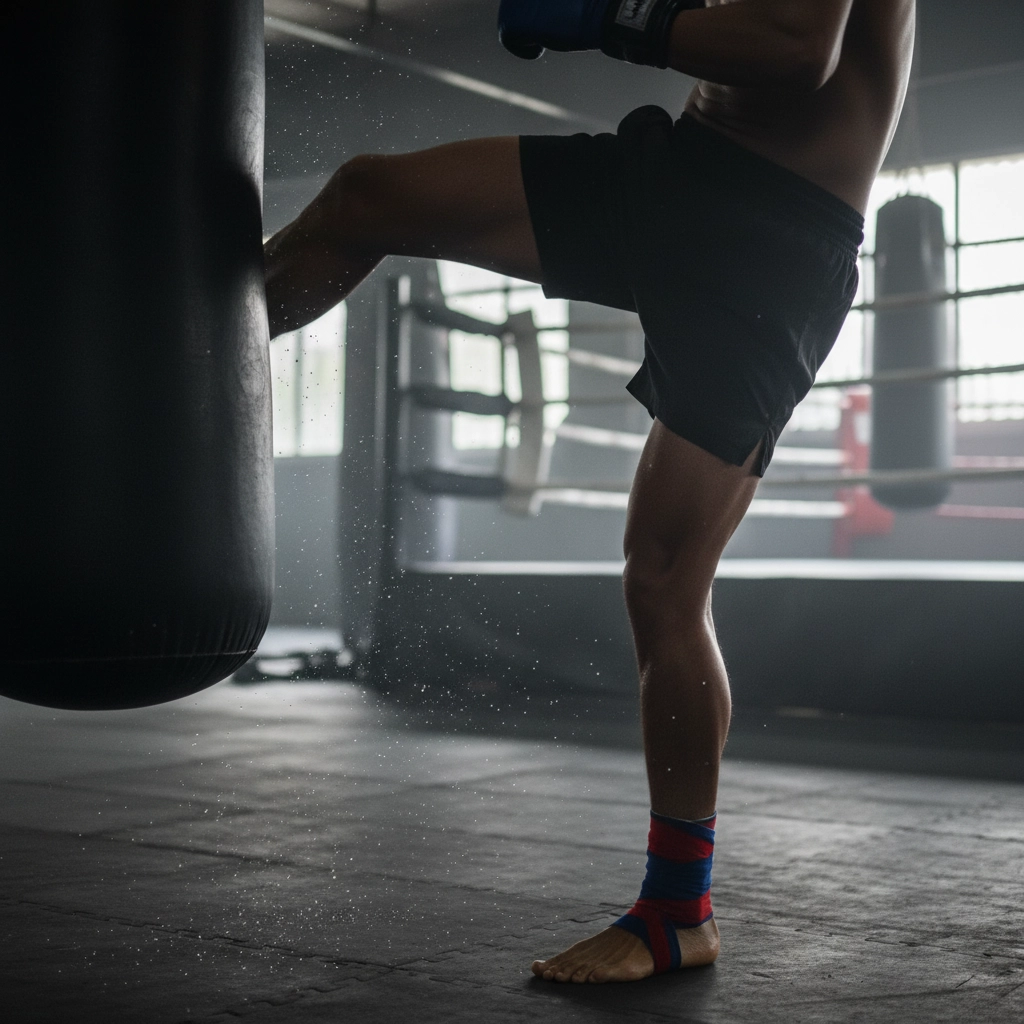
Putting It Into Practice
- Schedule short, focused sessions (30–60 minutes) that alternate power-focused work and precision drills rather than trying to do both intensely every session.
- Use the progression model: slow technical rehearsal → controlled pad work → heavy-bag power sets → live, limited-scope sparring to reinforce transfers under stress.
- Measure one or two metrics (hit percentage, bag displacement, med-ball distance) every week to make small, objective improvements.
- Film a session monthly to check hip drive, contact points, and recovery; small visual cues often reveal big gains.
- Prioritize recovery—sleep, mobility, and load management—so you can train explosive mechanics repeatedly without breaking down.
Final Notes on Progress
Progress in power and precision is cumulative: consistent, focused practice and honest measurement beat sporadic extremes. Keep your priorities clear in each session, protect technique when adding intensity, and treat setbacks as data for adjustment rather than failure. For background on Muay Thai fundamentals and training culture, see Muay Thai basics.
Frequently Asked Questions
How often should I prioritize power drills versus precision work?
A practical split is 2–3 power-focused sessions per week and 2–3 precision/technical sessions, depending on recovery and goals. If you must choose, emphasize precision early in a training cycle so mechanics are solid before increasing load.
What’s the safest way to add power without losing accuracy?
Increase intensity gradually after you can perform the technique perfectly at low speed. Use tempo ladders and one-strike rounds to force maximal effort while maintaining a clear contact point and immediate recovery. Always keep filmed checkpoints to ensure technique hasn’t degraded.
Which metrics give the best feedback for improvement?
Simple, repeatable measures work best: hit percentage on target-dot drills, bag displacement per set, and med-ball rotational distance. Combine one objective metric with a subjective technical checklist (hip rotation, contact point, recovery) for balanced feedback.
Recommended Posts