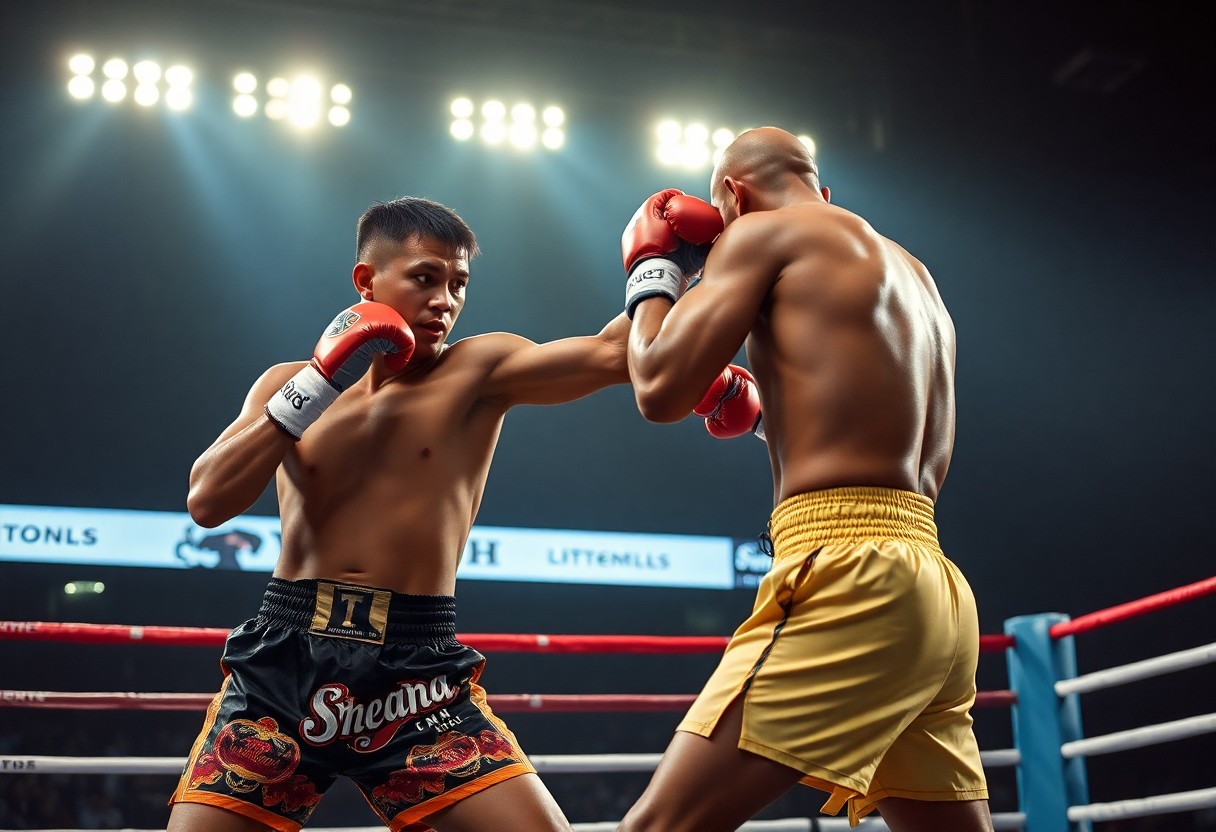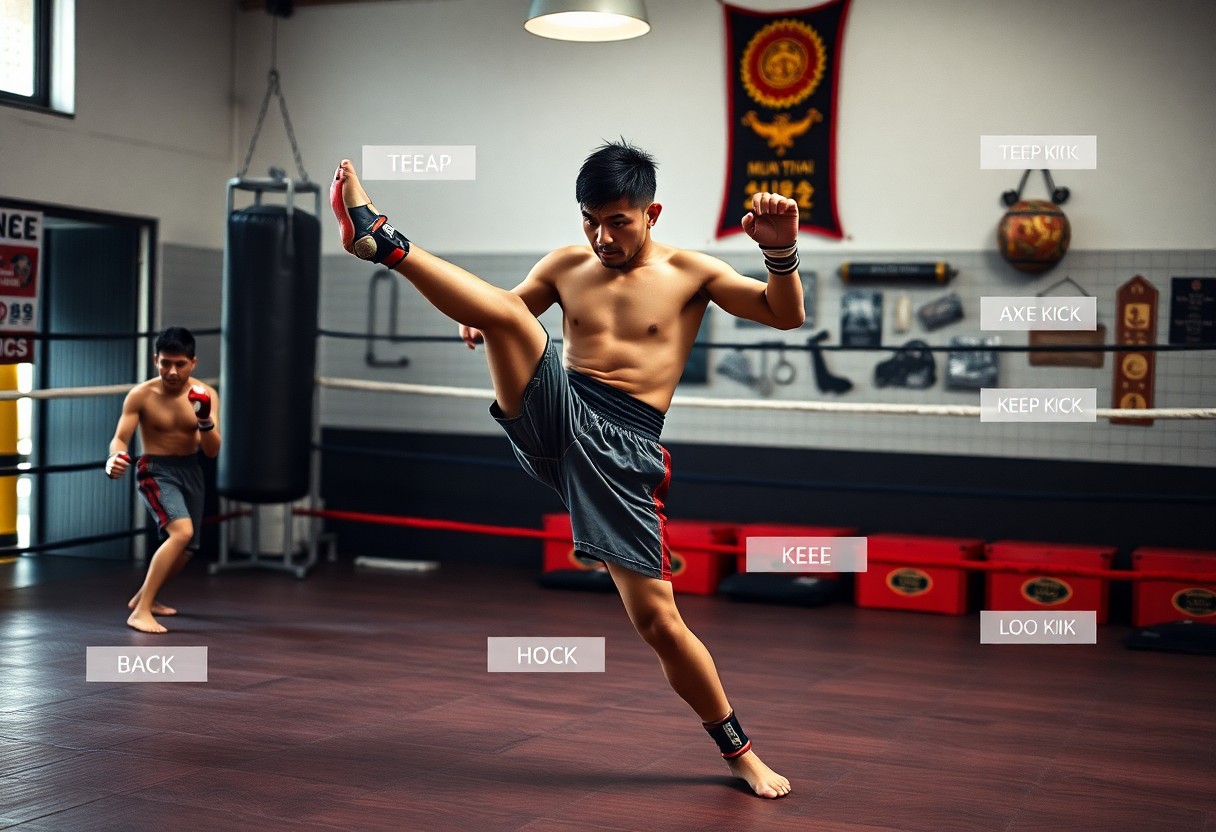
Over centuries Muay Thai has refined a systematic attacking playbook; this guide breaks down punches, kicks, knees and elbows, the most dangerous weapons in close range, plus clinch control and rhythm to build powerful, precise striking. You’ll learn setups, combinations, distancing and counters with an authoritative emphasis on technique, timing and conditioning to turn fundamentals into fight-winning tools.
Types of Attacks in Muay Thai
Muay Thai attacks split into punches, kicks, knees, elbows and clinch work; fighters layer these into sequences of 3-5 strikes to create openings. Jabs and crosses manage range, roundhouse kicks deliver the most hip-driven power, teeps control distance, knees dominate the clinch, and elbows inflict cuts and stoppages. Trainers commonly drill combinations at 2-3 minute intervals to simulate rounds.
- Punches
- Kicks
- Knees
- Elbows
- Clinch
| Punches | Range control and setups; jab-cross-hook combos; effective at 0.5-1.5 m |
| Kicks | Roundhouse for power, teep for distance; kicks dominate mid-range (1-3 m) |
| Knees | Short-range (0-1 m) damage to body/head from clinch or long-range flying knees |
| Elbows | Very short range (0-0.5 m); horizontal, upward, downward and spinning variants cause cuts |
| Clinch | Controls posture for knees, trips and elbow entries; dominant in rounds 2-4 when fatigue sets in |
Strikes
Punches and kicks form the backbone of offensive rhythm: jabs set up a power cross or roundhouse, while the teep interrupts momentum and scores points. Fighters commonly throw 3-5 strike chains-for example jab, teep, roundhouse-to mix levels; coaches emphasize hip rotation for kicks and shoulder mechanics for punches to maximize force and reduce injury. Pad rounds of 5-8 sets mimic fight tempo.
Elbow Techniques
Elbows operate at the tightest ranges and include horizontal (sok tad), diagonal, uppercut (sok ngad) and spinning versions; each targets soft tissue to open cuts-often resulting in referee stoppages in stadium bouts. Effective use occurs inside 0-1 m and relies on angle, timing, and clinch control; trainers drill 10-20 reps per set to ingrain short-distance timing and head placement.
More detail: clinicians note that a well-placed downward elbow across the brow creates lacerations within milliseconds, and fighters from Thailand routinely use the elbow as a fight-finishing tool-Saenchai and Samart demonstrated how a single angled elbow can change bout momentum. Drills include clinch-to-elbow sequences, angled pad work, and situational defense to avoid counters while committing to a close-range strike.
Perceiving distance, guard posture and opponent fatigue lets you decide between long-range teeps and short-range elbow or knee attacks.
Tips for Effective Attacking
Blend feints, level changes and rhythm breaks to open seams; probe with a jab at 1-2 m, follow with a teep from 1.5-2.5 m, and close to clinch inside <0.5 m. Train 0.2-0.4 s reaction windows using partner drills and timed shadow rounds, then escalate from probes to committed strikes once the opponent commits. Perceiving subtle weight shifts and breathing patterns converts setups into clean, high-rate attacks.
- Timing – split-second entries and counters
- Distance – map ranges for each weapon
- Feints – create 0.2-0.6 s openings
- Targeting – head, liver, legs, chin
- Power transfer – hip rotation and weight shift
Timing and Distance
Master entry speed: a typical reaction window is 0.2-0.4 s, so step-slide adjustments of 0.2-0.3 s win fights. Keep the jab at 1-2 m, teep and long kicks at 1.5-2.5 m, while the clinch lives inside <0.5 m. For example, after a blocked jab wait ~0.25 s to angle-step and counter with a low kick or straight cross to exploit recoil.
Targeting and Accuracy
Prioritize hits that change momentum: the chin and temple can produce short-term KO effects, while body shots to the liver sap energy and breathing quickly. Use tight, single-target drills-aim for consistent contact on a 6 cm mitt zone to build repeatable accuracy under pressure.
Practical drills: perform 3 rounds of 3-minute pad work-Round 1 single-shot accuracy (aiming for 8/10 hits), Round 2 three-strike combos to designated zones, Round 3 mobility and target-switching with cones at 45° angles. Add elbow-on-rotation drills to rehearse short-range accuracy and clinch-to-elbow transitions, tracking hit percentages each session for measurable progress.
Step-by-Step Guide to Key Techniques
| Technique | Key Focus |
|---|---|
| Executing Jabs and Crosses | Use the jab as a range-finder and tempo setter; snap the 1 then drive the 2 with ~45° hip rotation and a 60-70% weight transfer to maximize power and maintain guard. |
| Mastering Elbow Strikes | Operate at 0-0.5 m range, employ horizontal, diagonal, upward and spinning elbows from clinch and open positions to cut the eyebrow or jaw; emphasize short chambering and rotational torque. |
Executing Jabs and Crosses
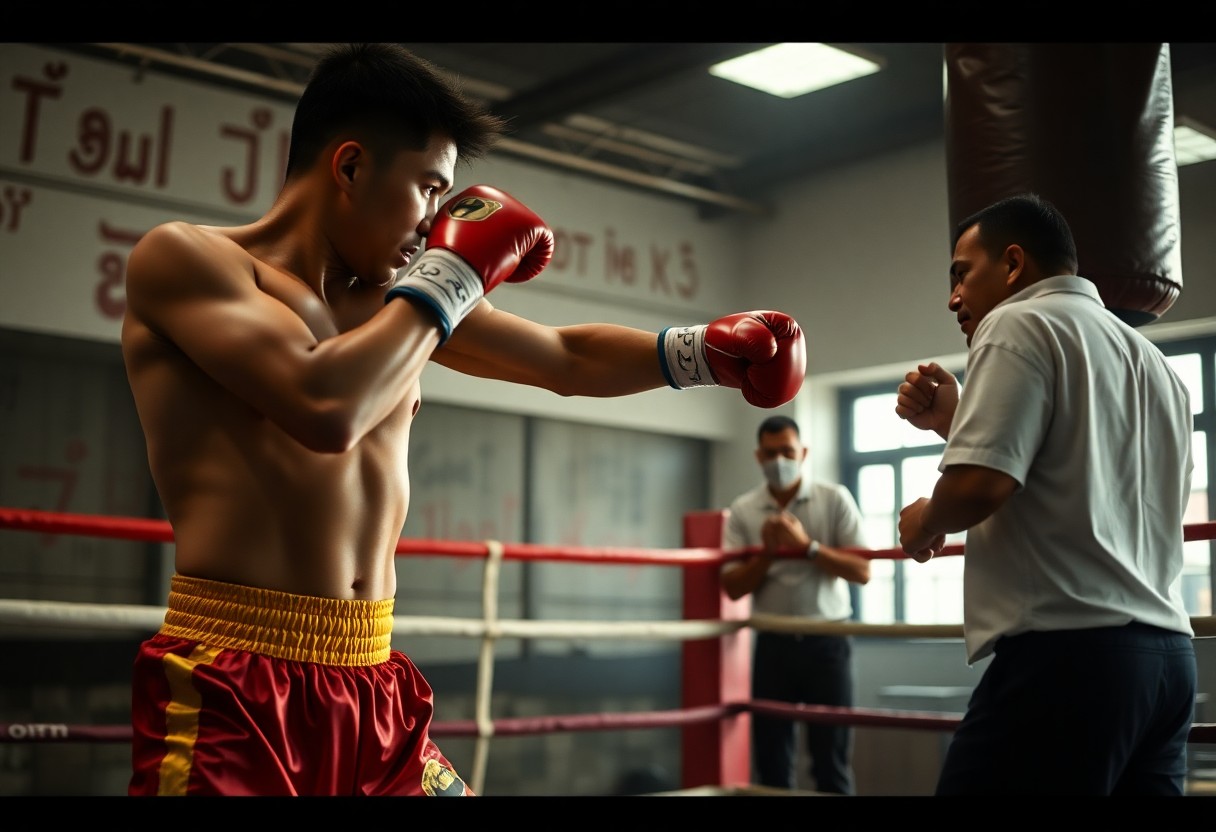
Start the jab as a quick snap to the opponent’s face to disrupt timing, then flow into the cross (1-2) with a 45° hip turn and 60-70% bodyweight driven through the rear foot; drill 3-minute rounds of pad work focusing on immediate hand retraction, 10 reps of single jabs followed by 10 reps of power crosses, and use the jab to set up level changes or liver shots when the opponent over-commits.
Mastering Elbow Strikes
Train elbows from inside clinch and close-range exchanges: use short, compact chambers, lead with the elbow’s point on a 30-45° diagonal to the eyebrow or jaw, and practice combinations like clinch elbow ×2 then a knee to create openings; emphasize impact timing over wild swings to exploit cuts and knockdowns.
For deeper development, isolate elbow mechanics: perform 3 sets of 10 repetitive horizontal elbows on the heavy bag focusing on hip rotation and shoulder elevation, then drill clinch-to-elbow sequences with a partner for 2-minute rounds at 70% intensity. Measure distance by a gloved-fist gap of 10-20 cm to ensure correct range, and incorporate angled foot pivots to add rotational torque-this increases tip velocity and fight-ending potential while keeping your guard tight.
Factors Influencing Attack Choices
Range, timing, rule set and an opponent’s tendencies determine which techniques win exchanges: at long range the teep and low kicks dominate, at mid-range combinations and counters shine, and in close the clinch with knees or short elbows decides. Fight clock and fatigue alter risk tolerance-after two hard rounds most fighters tighten up defense and favor single, high-percentage strikes. Any top fighter adapts attacks to these shifting variables in real time.
- Range
- Timing
- Opponent’s style
- Fatigue
- Rule set
- Ring position
Opponent’s Style
Aggressive pressure fighters leave windows for counters-short hooks and low kicks exploit forward momentum-while evasive technicians force entries via feints and angles; southpaws change lead-foot dynamics and open different lines. For example, against a brawler you should time a counter within a 200-300ms reaction window after their committed strike, and versus a counter-striker prioritize setup feints and level changes to create openings for elbow or knee attacks.
Combat Scenario
Time remaining, round number and whether you lead on the scorecard shape aggression: with 30-60 seconds left and trailing, expect increased risk-taking-throw high-impact, high-reward techniques like spinning elbows or clinch bursts; if ahead, favor distance management and ring control to preserve advantage. Positioning against the ropes versus center changes which attacks land clean and which get countered.
In practical terms, treat each 3-minute round as a mini-game: early round two or three-setups build accumulative damage, middle rounds are for momentum, and final minute tactics often decide judges. Fighters often increase clinch work by 20-40% in late-round scrambles to score knees and limit opponent counters; prioritize short, damaging sequences-single explosive strikes followed by immediate reset-to maximize scoring while minimizing exposure to counters.
Pros and Cons of Different Attacking Techniques
| Pros | Cons |
|---|---|
| Speed: Punches and jabs let you score and disrupt rhythm quickly. | Speed trade-off: Faster strikes often deliver less single-strike damage. |
| Range: Teeps and roundhouses control distance and target legs, body, head. | Range exposure: Long kicks can be caught or countered by entries. |
| Power: Rear roundhouse and knees generate high torque for fight-ending damage. | Telegraphing: Powerful strikes often require setup, giving opponents time to react. |
| Versatility: Combinations mix punches, kicks, knees for scoring across rings. | Complexity: Multi-strike combos increase error risk and energy drain. |
| Damage type: Elbows cause cuts and stoppages with very short travel. | Range limitation: Elbows demand close clinch range to be effective. |
| Energy efficiency: Quick jabs and teeps conserve stamina across 5 rounds. | Stamina cost: Repeated heavy kicks and clinch knees tax aerobic and anaerobic systems. |
| Control: Clinch strikes (knees/elbows) dominate tempo and scoring in stadium rules. | Risk of counters: Entering the clinch can expose you to trips, sweeps, and counters. |
| Scoring clarity: Clean, visible strikes (body kicks, knockdowns) win judges’ rounds. | Injury risk: Using elbows increases the chance of cuts that stop fights unpredictably. |
| Adaptability: Strikes translate to MMA or self-defence with minor adjustments. | Rule limits: Some competitions restrict elbows or clinch time, limiting options. |
Advantages of Strikes
Punches, kicks and knees together create a layered threat: jabs set tempo, the rear roundhouse delivers high torque to the thigh or liver, and knees from the clinch can cause deep damage. Fighters who mix 1-2 combinations with low kicks often outscore opponents on activity while conserving energy; for instance, effective body kicks in stadium scoring frequently swing rounds in favor of the attacker. Range control, speed, and measurable scoring impact make strikes the backbone of offensive strategy.
Disadvantages of Elbow Techniques
Elbows excel at causing cuts and stoppages due to their short, sharp impact, but they require close proximity and precise timing; missed elbows leave you exposed to counters or clinch reversals. While a well-placed elbow can end a fight instantly, their reliance on tight space and angles makes them less reliable for sustained pressure compared with punches or teeps. High laceration potential is both an asset and a liability.
Training-wise, elbows demand drilling of range management and clinch entries: many stoppages in Thai stadiums trace to a single clean elbow that opens a cut within 2-3 rounds. Rule context matters-fighters using elbows in full Muay Thai gloves (often 8-10 oz) see more superficial lacerations than in MMA gloves, but the risk of a fight-ending cut remains significant. Defensive counters (scissors sweeps, shoulder checks) escalate when elbow attempts become predictable, so integrate feints and angle changes to protect against returns.
Training Drills to Enhance Attack Skills
Integrate structured rounds and targeted drills to convert technique into fight-ready offense: run 3-5 minute rounds (3-6 sets) focused on specific weapons, alternate power rounds with technical rounds, and add 2-3 minute recovery drills for timing. Use metrics-punch rate, kick velocity, clinch duration-to track progress. Elite gyms often prescribe 8-10 pad rounds per week for power development and 15-20 minutes daily of mobility work to maintain hip rotation for kicks and knees.
Partner Drills
Rotate partners for 3-minute pad sequences emphasizing combinations (e.g., jab-cross-teep, left hook-elbow-knee) with 30s rest and 3-5 sets each side; incorporate cue-based drills where the holder calls “slip” or “counter” to train reactive attacks. Add light clinch entries for 1-minute intervals, working short elbows and knees, and perform controlled sparring at 50-60% intensity to hone timing without excessive risk of cuts or injuries from full-contact elbows.
Shadow Boxing
Use 3-5 minute shadow rounds to rehearse movement patterns, focus on footwork, hip rotation, and angle creation; visualize a southpaw or orthodox opponent and run specific sequences-10 repetitions of long-range teeps followed by 5 explosive clinch entries-and keep sessions to 15-20 minutes to avoid overtraining. Record at least one round weekly to analyze guard position and strike mechanics.
For deeper gains, perform shadow boxing in front of a mirror and record video at 60 fps to spot micro-errors in weight distribution and hip rotation (aim for ~45° pivot on roundhouse). Combine slow-motion reps for technical drilling and fast 20-30s bursts to mimic fight tempo; adding a 2-5 kg vest for 2-3 rounds per week builds endurance while preserving form. Emphasize visualization of counters and maintain a high guard to protect against imagined elbows.
Conclusion
Considering all points, “From Jabs To Elbows – The Complete Muay Thai Attacking Arsenal Explained” synthesizes strikes, range, timing, and clinch work into a structured progression that builds technical precision and tactical awareness. Emphasizing progressive drills, pairing, and fight-simulation, it equips practitioners to apply combinations, set-ups, and finishing tools reliably under pressure while minimizing exposure and enhancing ring IQ.
FAQ
Q: What topics and techniques does “From Jabs To Elbows – The Complete Muay Thai Attacking Arsenal Explained” cover?
A: The course/book breaks down the full offensive spectrum of Muay Thai: boxing strikes (jab, cross, hook, uppercut), kicks (teep, roundhouse, wheel), knees, elbows, clinch entries and control, setups, counters and combination sequencing. It explains mechanics (hip rotation, weight transfer, angle creation), timing and range management, and includes progressive drills, pad and partner work, and scenario-based applications for both standing and clinch exchanges.
Q: Who should use this resource and how is the material structured for different skill levels?
A: Content is designed for beginners through advanced practitioners with modular progression: fundamentals and drills for novices, technical refinements and advanced combinations for intermediates, and fight-ready tactics and timing for advanced students. Each module offers drill progressions, coaching cues, and suggested training frequencies; typical recommendations include daily technical practice, 2-3 pad sessions per week, and gradual contact sparring as competency increases. Required equipment is minimal (gloves, shin guards, mouthguard, focus mitts or pads) and conditioning requirements are outlined so coaches can scale intensity safely.
Q: How do I apply the attacking arsenal in sparring or competition and avoid common mistakes?
A: Emphasize range, disguise, and cadence: use feints, change rhythms, and set up strikes from multiple angles to prevent telegraphing; combine long tools (teep, jab) with close-range weapons (knees, elbows) and clinch transitions. Common errors covered include overcommitting, dropping the non-striking hand, poor hip mechanics, and predictable patterns; the resource offers corrective drills (shadowboxing with focus on retraction, pad sequences emphasizing hip drive, progressive-contact sparring, and clinch positional drills). It also details warm-ups, load management, and conditioning protocols to reduce injury risk while building usable power and durability.
Recommended Posts