Why Muay Thai is a practical choice for real-world self-defense
You train Muay Thai not just to look impressive in the ring, but to develop reliable, hard-hitting skills that transfer to unpredictable environments. Muay Thai emphasizes powerful strikes with fists, elbows, knees, and shins, plus clinch control and balance — all elements that increase your options when you need to create space, escape, or incapacitate an aggressor quickly. Unlike sport-focused systems that rely heavily on rules, Muay Thai’s fundamentals translate well to short, decisive encounters where simplicity and effectiveness matter.
Core principles you should adopt immediately
Before drilling techniques, you must internalize a few practical principles. These shape how you use Muay Thai in self-defense and help you make better decisions under stress.
- Safety first: Your primary objective is to create a safe exit. Techniques are tools to buy time to retreat, call for help, or get behind cover — not to prolong a fight.
- Use compact, reliable strikes: Favor quick, low-telegraphing strikes (straight punches, low kicks, elbows) that work in confined spaces and against unexpected attacks.
- Balance and base over power: Keep a stable stance so you can move, absorb, or counter. Losing balance is the fastest way to lose control of an encounter.
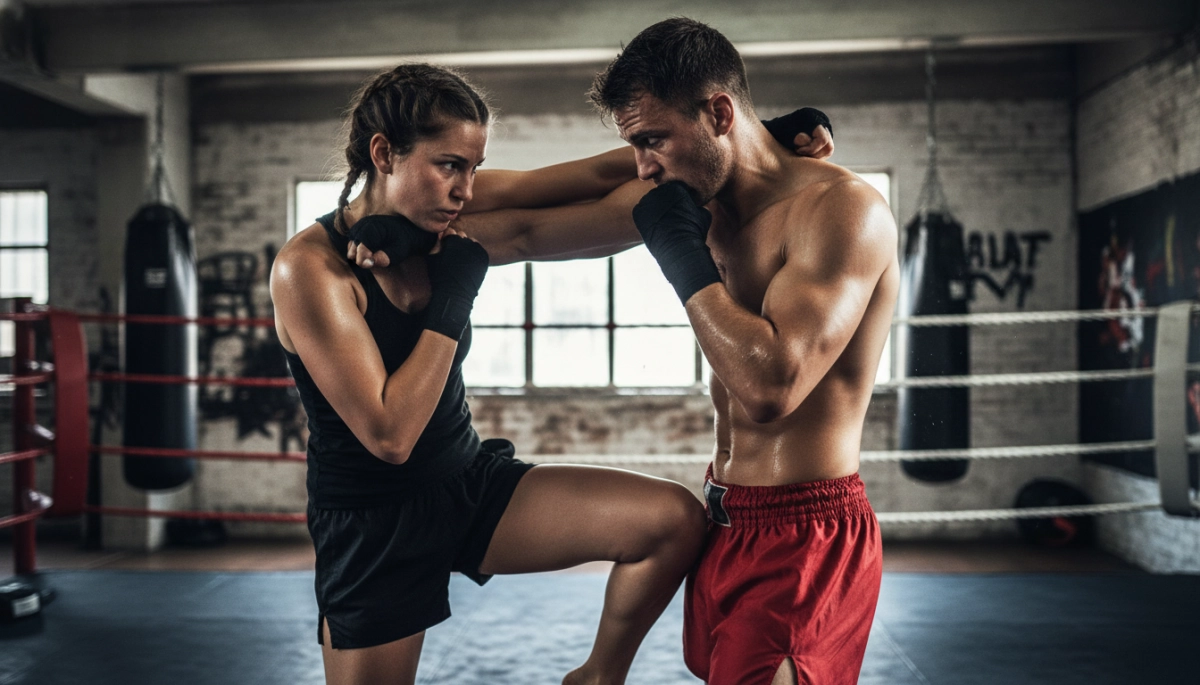
- Clinching as control: The clinch isn’t just for scoring points — it’s a tool to control an opponent’s posture, create openings for knees or elbow strikes, and push them away to escape.
- Awareness and avoidance: Combine technique with situational awareness. The best use of Muay Thai is often preventing an escalation in the first place.
Essential techniques to prioritize during early training
You don’t need to master every Muay Thai combination to be effective. Focus on a small set of high-value skills that are simple to learn and reliable under stress:
- Basic stance and footwork: Practice a compact stance that protects your head and allows quick angles. Step with purpose, maintain weight distribution for balance, and rehearse moving backward, laterally, and off the line of attack.
- Straight punches: The jab and cross are your fastest tools for creating distance and disrupting an attack. Drill short, accurate punches aimed to the chest or chin rather than long, committed swings.
- Low kicks and shin checks: A well-placed low kick to the thigh slows an aggressor and gives you space. Learn to check incoming kicks with your shin to protect yourself without sacrificing mobility.
- Elbows and short knees: In close quarters, elbows and short, driven knees are high-impact and hard to block. Practice tight, horizontal elbow strikes and upward knees from the clinch.
- Simple clinch control: Focus on posture fixes (breaking an opponent’s posture), frame-and-push escapes, and short strikes from the clinch rather than complex throws.
What to train next
Once you can perform these basics reliably, the next step is training them under stress — partner drills, scenario-based practice, and controlled sparring that mimic common street situations. In the next section you’ll learn specific drills and stress-training methods to ensure those techniques work when it matters most.
Drills and stress-training methods to make techniques reliable
Muscle memory and decision-making under pressure come from deliberate, progressive drills — not endless, unfocused repetition. Structure your sessions so each drill increases realism while protecting safety:
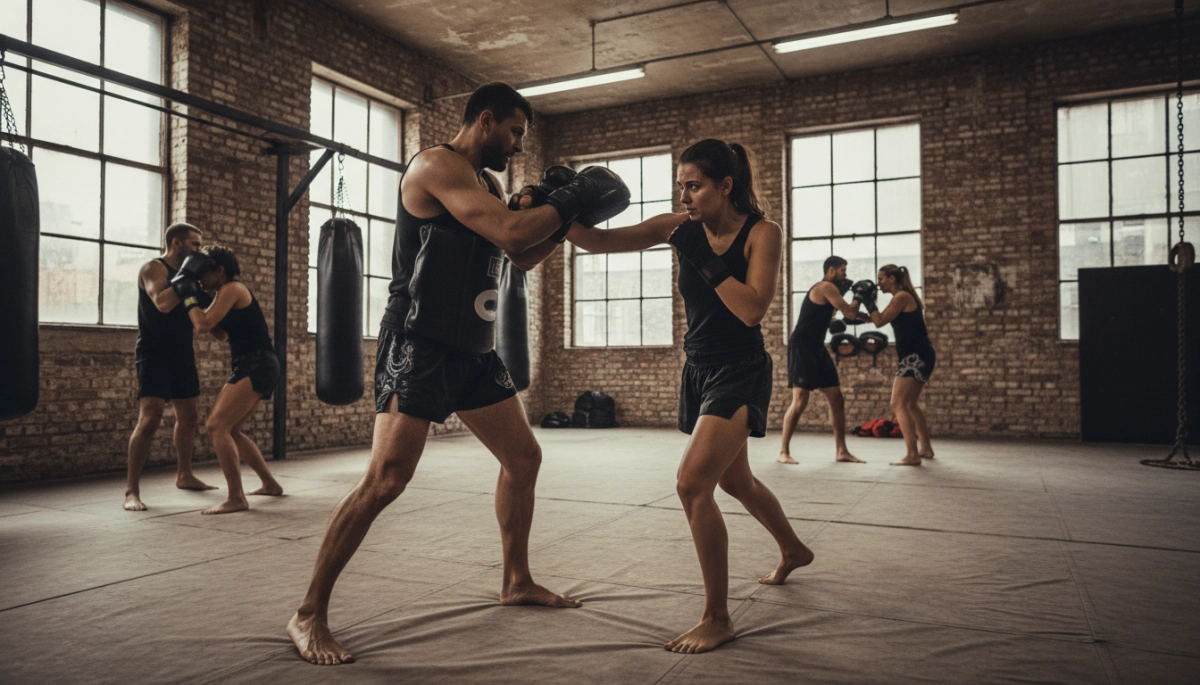
- Technical repetition (low intensity): Break down strikes, checks, clinch frames and escapes with a partner holding pads or light resistance. Focus on accuracy, compact mechanics, balance and breathing. Short sets (5–10 reps) with feedback are more useful than high-volume sloppy reps.
- Progressive resistance: Move from cooperative partners to increasing resistance: start with predetermined responses, then add randomness (partner mixes in feints, grabs, or sudden pressure). This trains timing and reading body language.
- Controlled sparring/situation sparring: Use limited-rules rounds that mimic common threats — e.g., clinch-only sessions, close-quarters non-kicking rounds, or rounds where one person starts grabbed. Keep intensity measured and stop if technique breaks down.
- Scenario drills with stressors: Add stressors that simulate real encounters: multiple attackers, reduced lighting, or having to exit through a narrow doorway while defending. Time pressure and decision-making (you must get to a safe zone) reinforce the goal of escape over prolonged fighting.
- Shock and pain tolerance conditioning (safely): Train tolerance to discomfort through controlled contact on pads and light sparring; this reduces flinch reactions. Always use appropriate protective gear and a coach to prevent injury.
Aim for short, intense coaching blocks rather than marathon sessions. Three focused sessions per week with one scenario-focused day will yield reliable carryover faster than unfocused training.
Adapting Muay Thai techniques to common real‑world scenarios
Technique selection and application change depending on the environment and threat. Here are practical adjustments for frequent street situations:
- Confined spaces (cars, doorways, elevators): Eliminate long swings. Use tight elbows, short knees, and compact straight punches. Step to angles only when a clear exit is available; often a shove, clinch posture fix and short knee are enough to create the gap to escape.
- Grabs and clothing holds: Prioritize base and posture. Drop your center of gravity, control the attacker’s limbs with frames, use elbows and short knees to create pain and loosen the grip, then break and exit. Avoid protracted grappling unless escape is blocked.
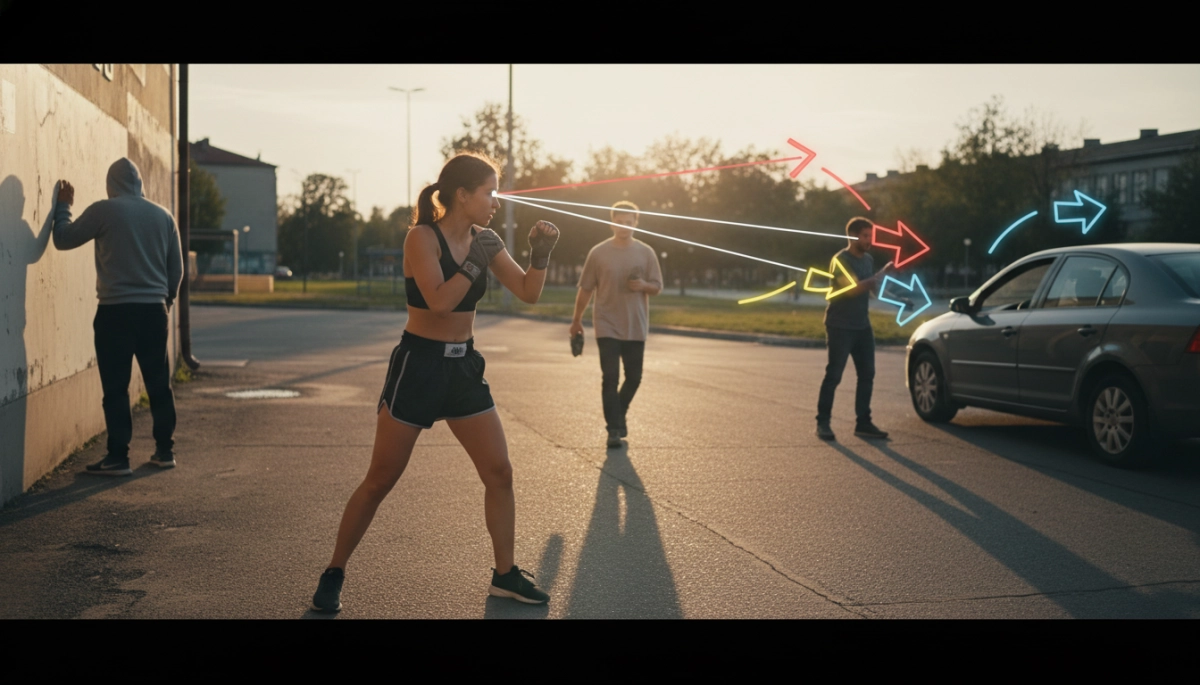
- Multiple attackers: Your priority is getting away. Use low kicks and pushes to create a path, keep moving, and use your environment (cars, walls, crowds) to limit attackers’ angles. Never try to dominate all opponents with combinations intended for single-opponent ring fighting.
- Weapon threats: De-escalate and comply when necessary. If escape is possible, prioritize fleeing. Muay Thai can help create distance but is not a primary solution against edged or firearm threats.
Choosing partners, gear, and progressions for realistic training
Training realistically requires the right people and equipment. Work with partners who respect safety and escalation; a qualified coach should oversee scenario work. Recommended gear includes gloves, shin guards, mouthguards, headgear for sparring, and body pads for clinch and elbow work. Use small, frequent progressions — technique, then resistance, then controlled aggression, then scenario — and debrief after each session to reinforce lessons learned. That structure speeds adaptation so your Muay Thai skills become dependable when you need them most.
Putting Muay Thai into Practice Safely
Training for self-defense is as much about mindset, responsibility, and preparation as it is about technique. Commit to consistent, realistic practice with partners and coaches who prioritize safety and clear objectives. Always consider legal and ethical consequences before using force — your goal should be to escape and seek help, not to escalate a situation.
Prioritize injury prevention: good warm-ups, appropriate protective gear, and honest communication with training partners keep your skills available when you need them. If you’re new or moving into scenario-based work, find a qualified instructor and gradually increase intensity. For help locating reputable programs and certified coaches, start with recognized organizations such as find certified Muay Thai coaches.
Finally, build habits that transfer outside the gym: situational awareness, avoidance strategies, and simple, compact responses that get you to safety quickly. Maintain humility and continuously reassess techniques and decisions — effective self-defense is practical, proportionate, and intended to end the encounter as soon as possible.
Key Takeaways
- Focus on compact, reliable techniques and clinch control to create space and escape safely.
- Train progressively with realistic drills, quality partners, and protective gear to ensure techniques work under stress.
- Prioritize avoidance, legal responsibility, and de-escalation—use force only as a last resort to secure your exit.