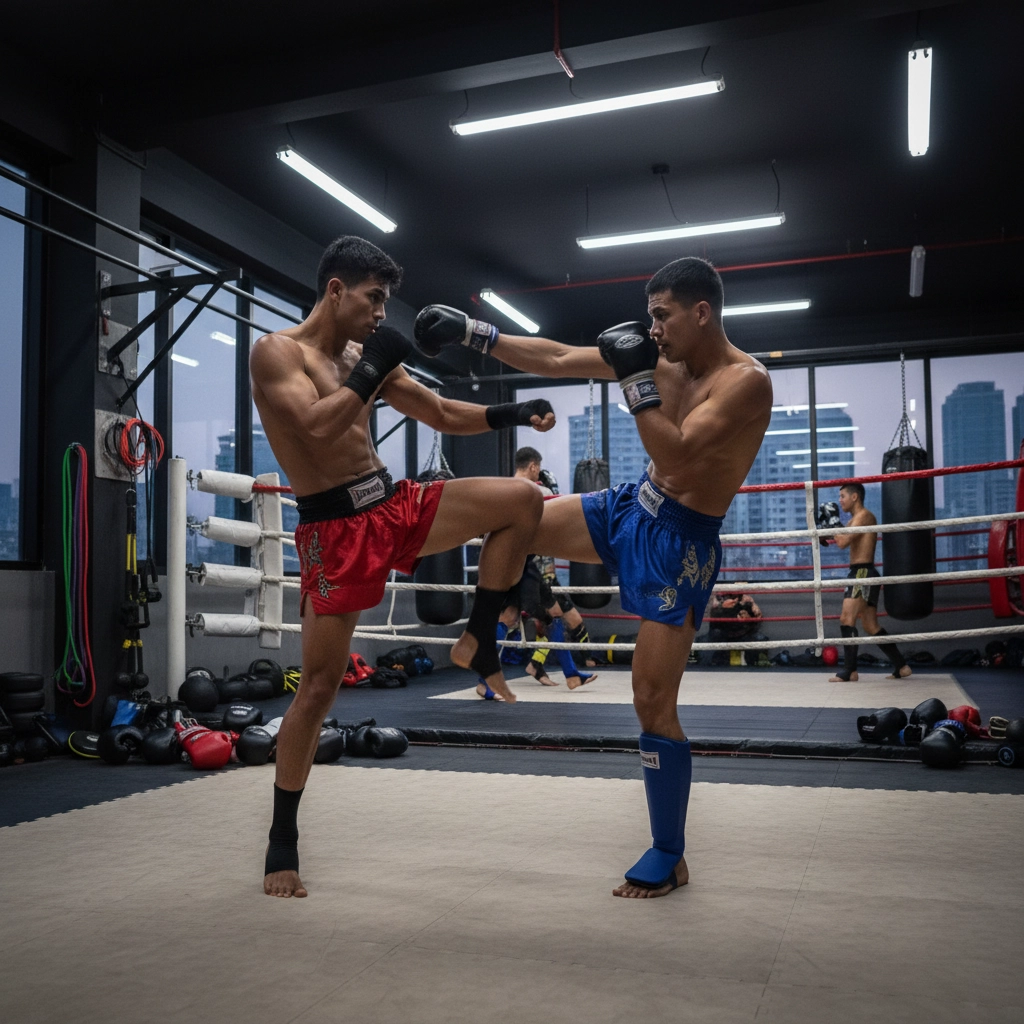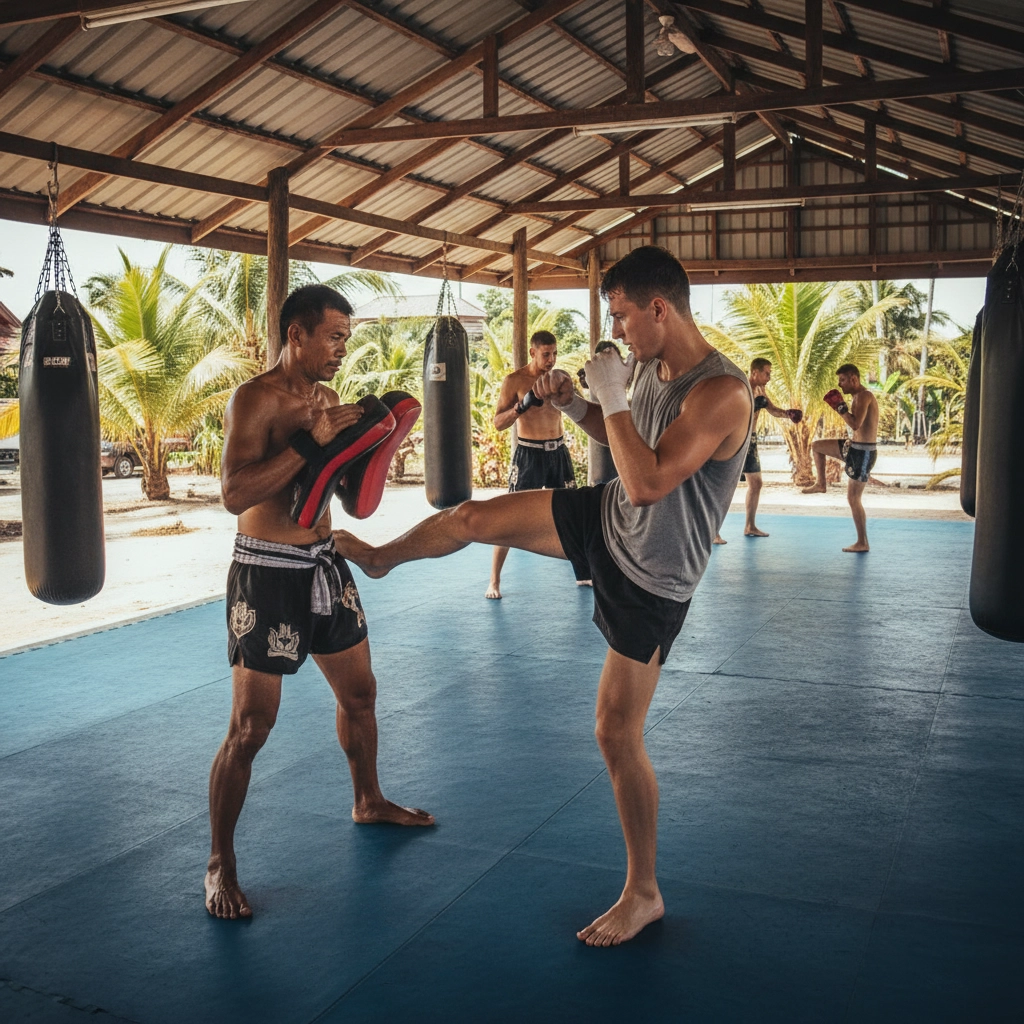
There’s a disciplined balance of timing, range, and explosive power that defines an effective Muay Thai attack; combining sharp footwork, precise hip rotation, and a tight guard produces devastating strikes while angle control and clinch mastery limit counter opportunities. Drilling setups, feints, and transitions build consistency, and prioritizing impact mechanics plus defensive structure turns offense into a sustainable advantage.
Types of Muay Thai Attacks
Attacks split into four primary categories-long-range kicks for distance control, mid-range punches and combinations to open defenses, close-range knees and elbows for damage, and the clinch for control and sweeps. Fighters often chain a 2-3 punch combo into a teep or roundhouse to exploit guard shifts; effective sequences use timing, angle and feints. The mix of timing, accuracy and power creates decisive openings.
- Punches
- Kicks
- Knees
- Elbows
- Clinch
| Attack Type | Primary Purpose |
|---|---|
| Punches | Set rhythm, probe guard, create openings for heavier strikes |
| Kicks | Control range, damage legs/body/head and disrupt balance |
| Knees | Close-range power in the clinch or from a clinch break |
| Elbows | Short-range cuts and stagger; high stoppage potential |
| Clinch | Control posture, off-balance opponents and score knees/sweeps |
Striking Techniques
Striking emphasizes combination structure: a jab to gauge distance, a cross to breach the guard, then a kick or elbow as a finish-common pro patterns include 2-4 strike bursts with rapid resets. Use the rear leg for torque on roundhouses and the lead hand for feints; practice 1,000+ pad reps per technique to internalize timing. Speed, precision and proper hip rotation determine strike effectiveness.
Clinch Techniques
Clinch work centers on the plum (double collar tie), pummeling to obtain underhooks, and off-balancing for knees or sweeps; elite fighters control the head to limit breathing and strike output. Apply short, angled knees to the ribs and sternum while maintaining top posture, and rotate hips to amplify force. Dominant clinch control often turns rounds in your favor.
More detail: secure the double collar tie with the forearms close to the opponent’s jaw, then pummel aggressively-win the inside arm for underhook leverage, step the outside foot to create torque, and use a foot hook or hip bump to execute a sweep; combine a 1-2 knee sequence to the body followed by a lateral sweep for high-percentage results. Position, hand placement and incremental pressure separate successful clinchers from passive ones.
Step-by-Step Guide to Executing Attacks
Begin by locking your stance and assessing range (0-3 m for elbows/knees, 3-5 m for kicks); then time a feint to create openings, plant the lead foot to generate torque, and deliver strikes with hip rotation and relaxed shoulders. For example: jab to gauge, rear roundhouse at 60-80% power to the thigh, then clinch and drive a knee. Maintain guard and reset within 1-2 seconds.
Attack Phases
| Phase | Action |
| Setup | Footwork, feints, jab to measure distance |
| Entry | Explosive step, hip turn, target selection |
| Finish | Follow-up strike or clinch, immediate recovery |
Basic Offensive Moves
Use the jab-cross (1-2) to probe and off-balance: jab at 50-70% to draw a reaction, then commit the cross with full hip drive. Add a lead teep to control distance, a rear low kick to destabilize the leg, and short elbows inside the 1-2 m range to cut angles quickly.
- Jab: snap to eyes or chest, reset guard.
- Cross: pivot rear foot, rotate hips, exhale on impact.
- Teep: push from the ball of the foot to maintain space.
- Low kick: chamber, swing through the thigh with hip rotation.
Basic Moves Breakdown
| Move | Key Tip |
| Jab | Short, fast, use to measure and disrupt rhythm |
| Cross | Pivot rear foot, hit with hip torque |
| Teep | Extend from hips to create 2-3 m space |
| Low Kick | Target lead thigh, return to stance quickly |
Advanced Combinations
Chain 3-6 strikes combining levels: for instance, jab, cross, lead body hook, rear low kick, then rotate 45° and finish with a short elbow or clinch knee. Exploit the opponent’s reactions by alternating head-body targets and using angles to bypass their guard.
- Mix levels: head-body-leg to open the guard.
- Use the switch-step to add speed and unexpected power.
- Finish with a clinch entry when the opponent drops hands.
Advanced Combos Breakdown
| Combination | Purpose |
| 1-2-3-Low Kick | Create openings, destabilize base |
| Teep-Overhand-Knee | Control distance then exploit retreat |
| Switch Kick-Elbow | Surprise power and close-range damage |
Train combinations at 70% intensity for 5-8 reps per combo, 3 sets, focusing on smooth transitions and hip mechanics. Emphasize timing drills with a partner: 2-minute rounds alternating attack and defense. Note that close-range elbows and knees carry higher injury risk, so drill them with controlled resistance before full contact.
Factors Influencing Attack Effectiveness
Success depends on multiple, interacting variables: fighter reach, stance, conditioning, and the chosen technique’s biomechanics. Small differences-like 10 cm reach or 2 kg mass-change optimal strike selection and power transfer. Coaches track openings as timing windows measured in milliseconds, while distance dictates whether to employ a teep, roundhouse, or elbow. Assume that tactics must adapt instantly when any of these metrics shift.
- Timing
- Distance
- Balance
- Power
- Accuracy
- Opponent’s Style
Timing and Distance
Precision emerges from syncing strikes to openings: elite fighters exploit the 150-250 ms reaction window and use feints to create 100-200 ms gaps. At 0-0.5 m favor elbows and knees; 1-2.5 m suits roundhouses and teeps; beyond 2.5 m rely on low kicks and footwork. Drill with partner timing sets of 3-5 second entries to sharpen both entry and exit mechanics.
Opponent’s Style and Strategy
Against a pressure fighter, prioritize lateral movement and counters; versus a counter-striker, use staged probes and high-volume feints to open the guard. Southpaws change angles-target the lead thigh with right low kicks. Facing a clinch specialist requires early low kicks to the base and quick pivots to avoid sustained knee exchanges.
Study fight tape and quantify tendencies: if an opponent initiates clinch more than twice per round, emphasize low kicks and off-balances to disrupt entries. Employ 5×2-minute situational rounds-round one control distance, round two bait counters, round three clinch escapes-to ingrain adaptations. Against high-guard boxers, land angled knees and a sequence of three body kicks to drop the guard and create head openings.
Tips for Enhancing Your Attack
Prioritize synced timing and sharp footwork, training with a metronome or partner to tighten reaction windows to 0.2-0.3s; focus hip rotation for power generation (up to 60% of strike force) while keeping a compact guard. Practice 3-5 strike combinations and measure accuracy via rep counts (500+ combos/week). Thou schedule 5 weekly pad sessions, 3 focused sparring rounds, and daily 10-minute shadowboxing for retention.
- Timing: metronome drills at 60-90 bpm
- Footwork: 5-minute ladder drills per session
- Combination: 3-5 strike sets, 500 reps/week
- Power: hip-rotation and resistance-band drills
- Conditioning: 5 rounds of 3-minute intervals, 2x/week
Training Drills
Structure sessions with intervals: 6×3-minute heavy-bag rounds for power, then 4×2-minute technical rounds for precision. Implement partner drills: 50 reps each of slip-and-counter (3-second feint then inside leg kick) and catch-and-return teep sequences. Add 5 minutes of ladder/agility work to create angles, and record reps/rests to track progress.
Mental Preparation
Visualize 10 minutes daily, rehearsing 30-second attacking sequences and counters against specific defenses; use box breathing (4-4-4) pre-round to reduce arousal and perform pressure sparring twice weekly to simulate stress. Review footage to identify 2-3 opponent tendencies per session and set one measurable mental goal, such as sustaining composure for 90% of rounds.
Deepen preparation with measurable practices: log perceived stress and weekly HRV, aiming to lower pre-round heart rate by 8-12 bpm via paced breathing. Simulate adversity-start sparring rounds with a points deficit or restricted vision for 2 rounds-to force adaptive decision-making under fatigue. Adopt a fixed pre-session ritual (specific warm-up, cue word, 3-minute visualization) to anchor focus when competition intensity rises.
Pros and Cons of Different Attack Strategies
Strategy Pros vs Cons
| Pros | Cons |
|---|---|
| Single power strike: can finish a bout quickly when timed correctly. | Leaves you exposed if it misses; recovery window often allows a counter. |
| Quick single strikes (jab/teep): low energy cost, disrupts opponent rhythm. | Limited damage per hit; requires high volume to score consistently. |
| Short combinations (2-4 strikes): increases chance to break guard and score. | Patterns become predictable if repeated; defense can anticipate. |
| Long-range combos (teep + straight punches): maintain distance and control pace. | Power drops on longer sequences; timing becomes more complex. |
| Clinch-heavy attacks: dominant control and repeated knee damage. | High energy drain and vulnerability to strong clinch breakers. |
| Counter-attacking: efficient, exploits opponent mistakes for high-percentage strikes. | Demands elite timing and defense; risky against unpredictable pressure fighters. |
| Pressure-oriented offense: forces opponent errors and accumulates damage. | Significant cardio cost; leaves openings for well-timed counters. |
| Feint-based entries: creates openings with minimal energy expenditure. | Losess effectiveness when overused; telegraphed feints become liabilities. |
Aggressive vs. Defensive Approaches
Aggressive fighters maintain forward pressure, often landing higher strike volume and forcing exchanges; examples show pressure strategies generate more scoring chances per round but demand superior conditioning. Defensive specialists rely on counters, footwork, and timing to convert openings into high-value strikes; this approach reduces wasted energy and can exploit overcommitted opponents, yet it requires exceptional reaction timing and stamina to capitalize consistently.
Single Attack vs. Combination Attacks
Single attacks like a stepping knee or spinning elbow can produce stoppages when they land clean, offering high payoff from one commitment, while combinations-typically 2-4 strikes such as jab-cross-low kick-spread risk and open more lanes to the target; both need setup, and the choice hinges on distance, opponent tendencies, and your recovery speed.
Drill-wise, practice both: alternate 3 x 3-minute rounds focusing one round on single decisive strikes (timing and load transfer) and one on 2-4 strike combinations to build pattern recognition and transition speed; use controlled sparring to measure success rates and adjust whether you prioritize power per strike or land-rate through chains.
Common Mistakes to Avoid
Frequent errors like telegraphing, poor weight distribution, and ignoring recovery windows derail otherwise sound offense. Fighters who overreach their range or drop their guard after a flurry give trained counters-such as a straight counter or clinch entry-with high probability of a hard counterstrike or sweep. Drill distance control and quick re-chambering to convert risky attacks into consistent scoring opportunities.
Overcommitting to Strikes
Throwing 100% power on every technique often sacrifices balance and timing; a fully extended roundhouse or committed cross can take roughly 0.4-0.7 seconds to recover, enough for a skilled opponent to counter with a straight or a leg sweep. Use probing strikes at 30-50% to establish range, keep weight centered over your base, and pivot back immediately to prevent exposure.
Neglecting Defense
Dropping hands, failing to check kicks, or ignoring head movement invites damage and reduces fight longevity; many knockouts follow a missed offensive exchange where the attacker’s chin is exposed. Prioritize active defense-tight guard, timely shin checks, and micro-adjustments in footwork-to turn defense into counter opportunities and maintain a durable fight plan.
Improve defense with structured drills: allocate 3-to-1 defensive-to-offensive rounds in padwork, practice 3-minute shadowbox rounds focusing solely on slips and parries, and spar at 50% intensity for 4 rounds emphasizing recovery and guard discipline. Partner drills where you purposely absorb a feint and counter teach timing; video-review sessions pinpoint recurring lapses like leaving the temple open or failing to re-chamber kicks, enabling targeted corrections.
Final Words
Considering all points, mastery of stance, timing, balance, precise technique, footwork and range forms the foundation of an effective Muay Thai attack; integrate defense, angles and combinations with conditioned power and mental focus, then drill progressively through pads, bag work and sparring to develop consistency, economy of motion and finishing instincts.
FAQ
Q: What mechanical principles create maximum power and efficiency in Muay Thai strikes?
A: Power comes from a coordinated kinetic chain: push off the ground with the feet, rotate the hips, drive the torso, and extend the limb. For punches that means weight transfer from rear to lead foot, hip rotation and shoulder drive with a compact retraction. For kicks the supporting foot pivots, the hips rotate into the strike, the shin or instep is chambered and extended, and the strike is delivered with a snapping or grinding motion depending on target. Knees are powered by driving the hips forward and pulling the opponent into the strike; elbows rely on short, tight rotation and use of the torso rather than arm strength. Efficient technique maintains a stable base and guard, minimizes telegraphing (no long windups), and uses relaxed muscles until the final explosive moment to preserve speed and stamina.
Q: How do range, footwork, and angle control combine to make an attack effective?
A: An effective attack matches weapon to range: teeps and jabs control long range, roundhouses and body kicks dominate mid range, clinch work and knees operate up close. Footwork creates or closes those ranges-small shuffles to measure, decisive steps to enter, pivots to cut angles and avoid straight counters. Angle control off the line turns a simple push or feint into an opening: step slightly offline after a push or jab, then throw a kick or hook from the new angle so the opponent’s guard and weight are compromised. Maintain stance balance and proper base width so you can attack, recover, or pivot immediately. Use the lead hand/foot to probe distance and the teep to reset range; combine lateral movement with diagonal steps to unbalance the opponent rather than relying on straight-ahead force.
Q: What principles should guide combinations, timing, and setups so strikes create openings rather than just exchange blows?
A: Build combinations with purpose: set up the next weapon by changing level, tempo, or target. Use jabs/feints to elicit a predictable reaction, then exploit that reaction with a different plane (head to body), or with an angle change. Vary rhythm-double-time a jab, slow a teep-so the opponent’s timing breaks down. Chain strikes from long to short (teep or jab into a low kick or step-in hook) or short to clinch (elbow or knee into a clinch entry). Use defensive actions as off-ramps into offense: parry then counter, catch a kick and immediately step inside for knees, or slip and pivot to create a rear-leg roundhouse opportunity. Keep combinations economical: compact chambering and immediate retraction reduces exposure and increases the chance the next strike lands cleanly.
Recommended Posts