Why building reliable basic strikes is the fastest path to Muay Thai progress
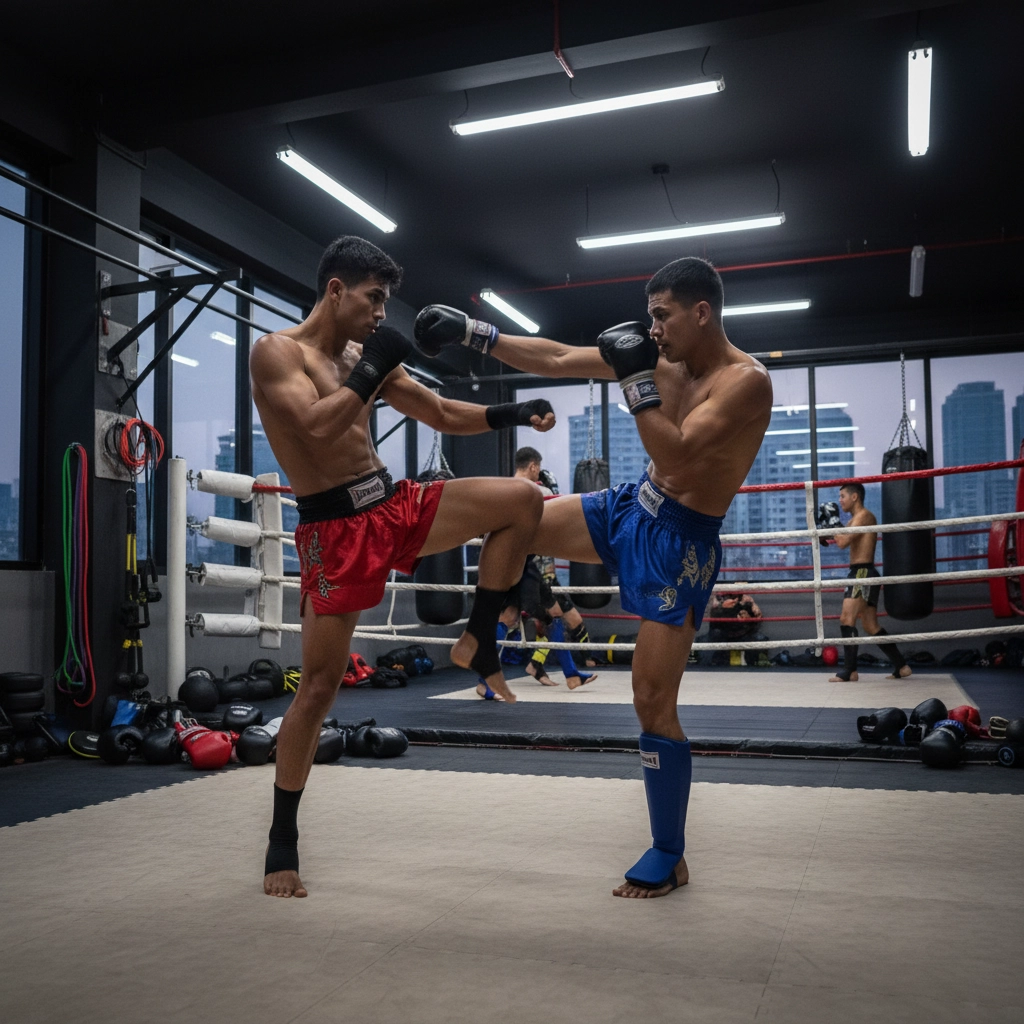
Before you chase complex combinations or fight-specific strategies, you need strikes that are consistent, efficient, and repeatable under pressure. In Muay Thai, basic strikes—your jab, cross, push kick (teep), and straight knee—form the backbone of offense and defense. When you practice them with intention, you develop timing, balance, hip rotation, and range control that transfer directly into sparring and pad work. This section teaches you the mechanical essentials and beginner-friendly drills that make those strikes dependable.
How to set up a stable stance and generate power from the ground up
Stance alignment and weight distribution
Your stance is the engine for every strike. Stand roughly shoulder-width apart with your lead foot pointing slightly inward and your rear foot at a 30–45 degree angle. Keep 50–60% of your weight on the balls of your feet so you can move and push off quickly. Maintain a slight bend in the knees and keep your hips square enough to protect the midline while allowing rotation. Hands should guard the face: lead hand at cheek level and rear hand by the chin to protect against counters.
Generating power: ground, hips, shoulders
Power in Muay Thai comes from a chain: feet → hips → torso → shoulders → fist/foot. Practice transferring weight from your rear foot to your lead foot (and vice versa) while rotating the hips. For punches, your rear heel will pivot outward as you rotate the hips and shoulders into the strike. For teeps and knees, drive through the supporting foot and extend the hip explosively. Focus on short, coordinated movements rather than wild swinging; precision beats wasted energy.
Basic strikes and beginner drills to build accuracy and timing
Jab and cross: mechanics and repetition drills
The jab sets range and disrupts your opponent’s rhythm; the cross finishes with rear power. Drill these with purpose:
- Shadowboxing, 3-minute rounds: emphasize hip rotation for cross and quick snap for the jab; keep hands high.
- Heavy bag reps, 4–6 sets of 10 jabs then 10 crosses: focus on weight transfer and controlled retraction of the hand.
- Partner mitt drill: jab-cross at moderate speed, gradually increasing tempo while keeping guard up after each strike.
Teep (push kick) and straight knee: range and balance drills
The teep controls distance; the knee punishes close range. Introduce these with stability-first progressions:
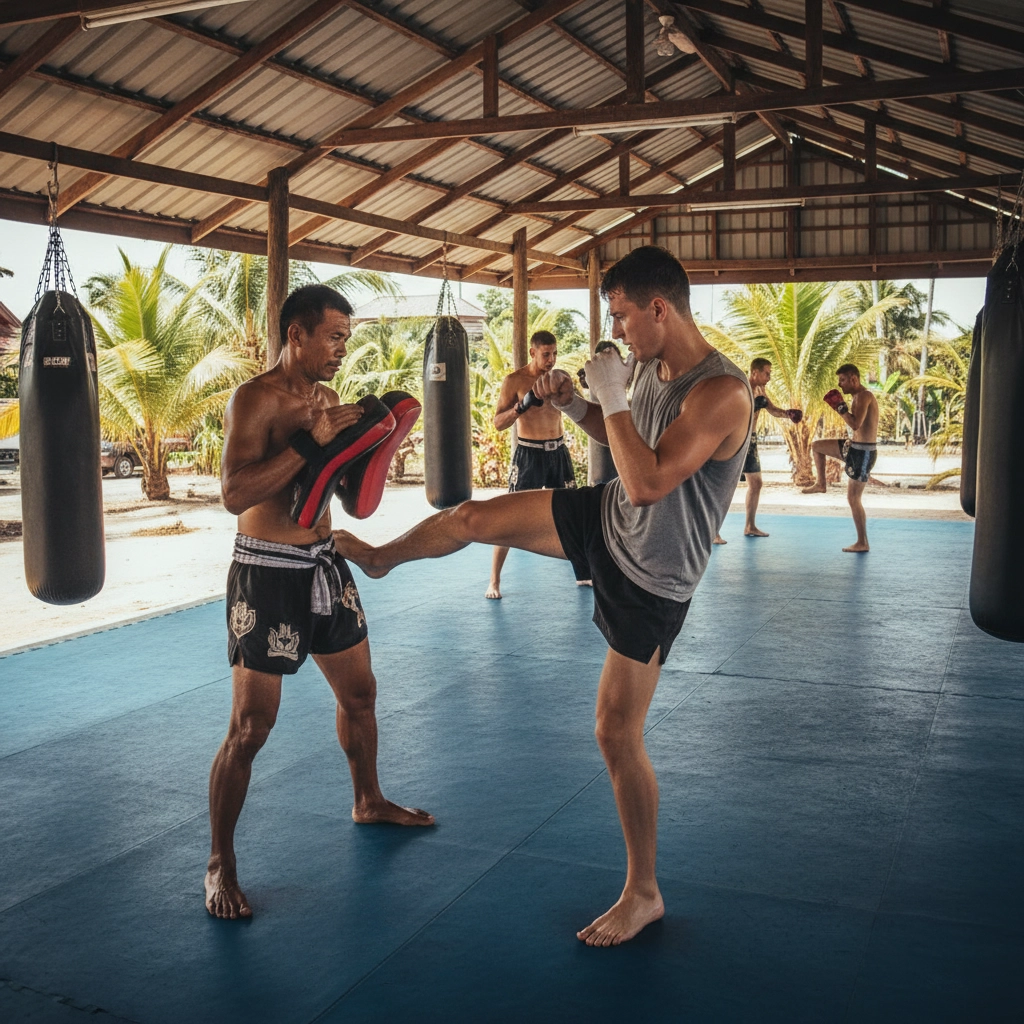
- Static teep against a pad: practice planting the supporting foot, extending the hip, and pushing through the ball of the foot.
- Walking-teep drill: move forward and back with a teep to re-establish range after each step.
- Knee-on-bag: hold a clinch on a heavy bag and drive straight knees using hip thrusts; focus on maintaining balance and posture.
These fundamentals and drills create a reliable baseline for your striking. In the next section, you’ll learn how to stack these strikes into progressive combinations, add defensive transitions, and scale intensity for sparring-ready practice.

Progressive combinations: building complexity without losing fundamentals
Start combining only what you can already execute cleanly. The goal is to stack strikes so each one sets up the next while preserving balance, guard, and range.
Progression blueprint:
– Phase 1 — Slow sequencing: pick a 2–3 strike sequence (e.g., jab → cross → teep). Shadowbox the sequence for 3 rounds of 2 minutes at 50% speed, focusing on hip rotation, weight transfer, and hand retraction between strikes.
– Phase 2 — Light contact on the bag: perform 6 sets of 8–10 reps per sequence on the heavy bag. Emphasize the rhythm and footwork that re-establishes range after the teep.
– Phase 3 — Pad work with a partner: 4 rounds of 2 minutes, alternating leader/follower. The pad holder calls the sequence and adds realistic targets—this forces you to adjust timing and commitment.
– Phase 4 — Add complexity: insert the knee from the clinch after a teep (teep to create range, step-in clinch, one straight knee). Drill the transition slowly until it’s smooth.
Example beginner-to-intermediate combinations using only core strikes:
– Jab → Cross → Teep (range control + finish)
– Teep → Jab → Cross (disrupt rhythm with teep then close)
– Jab → Teep → Step-in Knee (off-balance opponent for clinch knee)
– Cross → Teep → Clinch Knee (rear power then re-establish distance, then clinch)
Drill tips:
– Keep the guard between strikes; rehearse the habit of snapping the jab back to cheek level before throwing the cross.
– Use the teep as both an offensive and reset tool—practice it deliberately as a finish and as a spacing reset to re-attack.
– Record short video clips of your pad rounds to check posture, guard, and hip rotation. Small technical leaks become obvious on playback.
Integrating defense and transitions: make strikes resilient under pressure
A combination is only useful if you can land it while avoiding counters. Train defensive transitions immediately after or during your strikes.
Practical drills:
– Strike-then-evade: After each 1–2–teep combo, perform a slip to the outside or a step-back. Do 3-minute rounds focusing on one defensive move until it’s automatic.
– Parry-to-counter drill: Partner throws a slow punch; parry and respond with jab → cross → teep. Repeat 10 reps each side, increasing speed as you maintain accuracy.
– Teep-check-then-enter: Have your partner throw a light teep; practice checking or catching it (hands on hips to block if necessary), then return a cross and step-in knee. This simulates realistic exchanges and builds timing for clinch entries.
Clinching transitions:
– From hitting the teep, immediately close distance and establish a light double-collar clinch on a pad holder. Drill 6 sets of 6 knees focusing on posture and hip thrust rather than arm strength.
Scaling intensity: a simple progression to sparring readiness
Follow an intensity roadmap instead of jumping straight into hard sparring.
Intensity levels:
– Technical rounds (50–60%): 3–5 rounds, 2–3 minutes. Focus on flawless mechanics and situational repetition.
– Controlled contact (70–80%): 4–6 rounds, 3 minutes. Partners agree to limit power; emphasize timing, counters, and combinations under light resistance.
– Situational sparring (80–90%): short, high-focus rounds (1–2 minutes) from specific positions (teep-distance, clinch). Use 6–8 rounds per session with full protective gear.
– Full sparring (90–100%): only after multiple sessions at lower intensities and with a coach’s sign-off.
Weekly plan sample for 8–12 weeks:
– 2 technical sessions, 1 controlled contact session, 1 situational sparring session. Gradually convert a controlled session into situational, then one into full sparring as skills and confidence improve.
Safety and feedback:
– Always wear mouthguard, groin guard, and appropriate gloves for contact work.
– Debrief briefly after rounds—note one thing to fix next time (range, guard, or hip turn). Incremental corrections compound faster than sporadic hard sparring.
Track small, specific goals: one technical fix per week, a video of a pad round every two weeks, and a steady increase in intensity only when mechanics hold up. Log sessions and prioritize smart recovery—sleep, mobility work, and light technical days keep your progress consistent without burning out.

Putting practice into habit
Building dependable strikes is as much about routine as it is about technique. Commit to deliberate, repeatable drills, check your form on video, and keep a short debrief after each session: one win and one thing to correct. Use the intensity roadmap to protect your body and preserve learning—push power only once technique is reliable.
Make feedback immediate and specific. Ask training partners or your coach to call out one small adjustment (guard height, hip rotation, or retraction speed) rather than several corrections at once. Consistency plus targeted feedback compounds fastest.
For structured drill libraries and programmed progressions you can adapt to your schedule, see Evolve MMA training resources.
Frequently Asked Questions
How often should I practice the basic strikes as a beginner?
A practical starting point is 3–4 training sessions per week: two technical-focused sessions (technique, shadowboxing, light bag work) and one to two sessions that include controlled contact or pad work. Allow at least one full rest or active-recovery day. Quality of repetitions matters far more than quantity—short, focused rounds with clear goals accelerate learning.
When should I start sparring after drilling these strikes?
Begin sparring only after you can perform the basic strikes and transitions consistently at technical intensity. Follow the intensity progression in the article: technical rounds → controlled contact → situational sparring. Only move to full sparring after repeated success at lower intensities and with a coach’s clearance; always use appropriate protective gear when increasing contact.
What’s the easiest way to measure improvement in these drills?
Use simple, repeatable metrics: record a standard 2-minute pad or bag round every 2–4 weeks and compare posture, hip rotation, guard recovery, and successful clinch entries. Log session objectives (e.g., “snap jab back to cheek” or “3 clean teeps per set”) and mark completion. Small, objective wins provide clear direction for the next training cycle.
Recommended Posts