Mastering the Basics: Why Muay Thai Clinch Techniques Matter
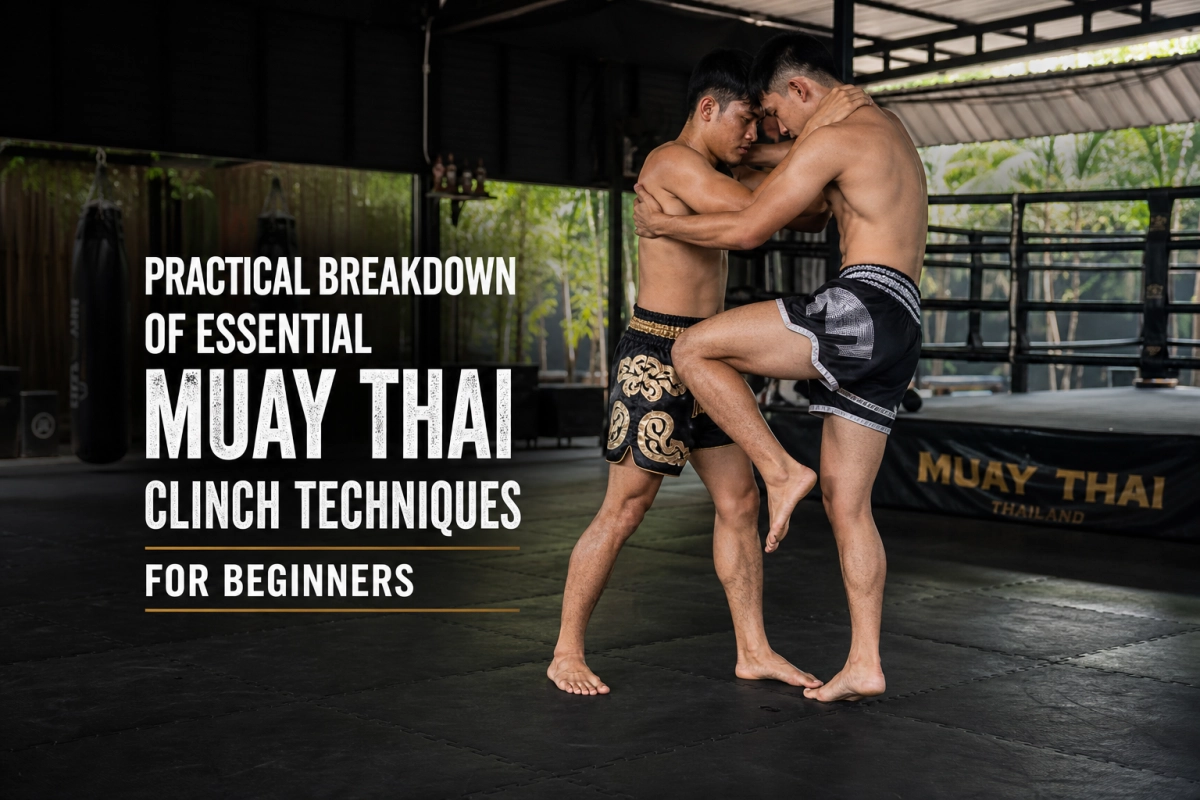
The Muay Thai clinch is a core aspect of the art of eight limbs, used to control an opponent, create knees, off-balance, and set up throws. For beginners, learning clinch techniques builds balance, neck and core strength, and fight IQ while complementing strikes like the teep and roundhouse. Because Muay Thai allows prolonged clinch work and knees, understanding fundamentals prevents bad habits and reduces injury risk.
Core Clinch Principles and Correct Body Position
Before specific holds, focus on four universal principles: posture, base, head position, and grip economy. These make transitions cleaner and reduce exposure to counters.
- Posture: Neutral spine, chin tucked, hips engaged—don’t collapse forward.
- Base: Staggered stance, knees bent, weight ready to move laterally and change levels.
- Head position: Use your forehead/temple on the opponent to control balance and direction.
- Grip economy: Prefer compact grips (frames, collars) to save energy and maintain control.
Train these with wall-supported drills, partner shadow clinches, and slow, controlled entries before adding resistance.
Primary Hold: Double Collar Tie (Thai Plum) — Purpose and Setup
The double collar tie or Thai plum controls the head and neck to free knees, short elbows, and off-balances. It’s a high-percentage position for striking and initiating simple throws or sweeps.
Correct stance and body position
From a neutral Muay Thai stance, step inside punching range, hand-fight to the back of the head or behind the ears, lock your hands, and press your forehead into the opponent for leverage. Keep hips engaged and elbows tight.
Step-by-step execution
- Enter with a short step and a teep or jab to create space.
- Hand-fight and slide both hands high to hook behind the head.
- Clamp hands together (one palm over the other or fingers clasped), elbows close to your chest.
- Drop hips slightly, drive your forehead in, pull down with the hands and push hips up to generate knee power.
- Adjust feet to circle or step off-line; knees should come from the hips.
Common beginner mistakes and defensive counters
Typical errors: over-reaching, collapsing the spine, or relying on neck strength instead of hip drive. These allow arm-overs, guillotines, or hip throws.
- Keep elbows tight and wrists aligned—don’t flail hands.
- If an opponent frames and slips an arm over your shoulder, re-establish head position and step the other way.
- Always keep a hand ready to frame incoming elbows or pummel back inside.
Progressive partner and solo drills
Begin solo with hip-drive knee reps and neck isometrics. Progress to cooperative drills: static clinch holds, controlled knee exchanges, and timed pummeling. Only add live clinch sparring when both partners demonstrate safe posture and control, and use protective gear for early resistance work.
Over-Under Clinch — Control, Pummeling, and Creating Angles
The over-under (one arm underhooked, one overhooked) is a transitional control to create angles, secure an underhook, and set up off-balances. It’s useful when the Thai plum isn’t available or the opponent keeps high hands.
Correct stance and body position
Chest-to-chest, staggered bent-knee base. Sink the underhook deep under the armpit with elbow tight; the overhook should frame across the biceps. Use forehead/temple pressure and hip rotation to create movement rather than pulling with the neck.
Step-by-step execution
- Pummel: short, explosive entries to swim your arm under their arm while threading the other arm over their biceps.
- Sink the underhook so your forearm reaches the ribs/diaphragm for leverage.
- Close the elbow to your body and rotate toward the underhook while stepping your lead foot outside their foot to create angle.
- Pin their head with yours and drive the hip to off-balance; maintain the overhook to prevent spins.
- Re-pummel as needed to retain inside control or transition to a double collar tie.
Common mistakes and defensive counters
- Keeping the underhook shallow or extending the arm loses leverage—keep it tight.
- Relying on arm strength instead of hip rotation invites whizzers and spins.
- If the opponent steps to your underhook side for a snap-down or hip throw, post on the overhook side, re-angle, or transition.
Progressive partner and solo drills
Solo: shadow pummels and wall isometrics. Partner: cooperative pummeling rounds (10–20s), then underhook-entry sparring where one partner maintains the underhook and the other escapes. Add light knees only after control is reliable. Coaches should supervise to reduce risky throws and neck torsion.
Beginner Sweeps and Off-Balances — Simple Foot Reaps and Hip Twists
Sweeps let you finish clinch exchanges without relying only on knees—creating space, scoring, or setting up follow-ups. Beginners should focus on low-risk moves: inside foot reaps, small hip twists, and ankle picks.
Correct stance and body position
Keep a low, stable base with weight slightly back on the rear foot when initiating reaps. Close the chest to the opponent to control direction and use hips to execute the sweep. Knees should be soft to absorb counters.
Step-by-step execution (two basic options)
- Inside foot reap: secure a collar tie or underhook, step your outside foot across and slightly behind their inside foot, reap the ankle with the instep while twisting hips and pulling the upper body opposite the reap.
- Hip twist/ankle pick: with an underhook, step outside to create angle, cup the back of the knee or ankle, pull the upper body down while lifting/pushing the leg to trip the weight-bearing foot.
Common mistakes and defensive counters
- Reaping too high or lifting straight up fails—reap low and use hip torque. Over-committing forward exposes you to backsteps or sprawls.
- Opponents may widen their base or counter-trip. If they sprawl, disengage and circle; if they counter-throw, post and re-establish posture.
Progressive partner and solo drills
Solo: footwork, hip-turn repetitions, and shadow reaps. Partner: timed cooperative drills at reduced speed, progressing to resisted entries and light live clinch with sweep attempts. Practice controlled falls and always protect the head during takedowns.
Progression and Practice Guidelines for Beginners
Weekly progression framework
Build skill gradually with 2–4 focused clinch sessions weekly, mixing solo technical work, cooperative partner drills, and occasional light resistance sparring as posture and control improve.
- Weeks 1–2: Solo posture work, neck isometrics, hip-drive knee reps, and shadow pummeling. Low-intensity partner drills: static clinch holds and controlled entries.
- Weeks 3–4: Add pummeling rounds, basic underhook/overhook transitions, and slow inside-foot reaps.
- Weeks 5–8: Integrate light clinch sparring with gear, progressive resistance for sweeps, and timed knee exchanges. Begin situational clinch sparring.
- Beyond 8 weeks: Increase intensity carefully, add escapes and counters under moderate resistance, and refine timing for competition scenarios.
Training habits and partner etiquette
- Communicate intent and tap/stop signals; agree on intensity levels before drills.
- Prioritize controlled falls and teach safe breakfalls for sweep practice.
- Rotate partners to experience different body shapes and clinch styles. Record short clips (with consent) to review technique.
Sparring readiness and safety checklist
- Be comfortable with Thai plum and underhook, controlled knees, and basic frames before live clinch sparring.
- Use mouthguard, groin protection, and appropriate headgear if strikes are included. Mats are recommended for sweep practice.
- Coach or experienced partner present to supervise takedowns and unsafe scrambles.
- Warm up thoroughly; scale back if neck or shoulder soreness persists.
Final Notes on Clinch Training
Clinch work rewards patience, consistency, and respect—for technique, for training partners, and for the small, steady improvements that compound over time. Focus on habits: posture, base, and efficient grips. Train progressively, stay mindful of safety, and prioritize learning over winning early scrambles. With disciplined practice and good coaching, the clinch becomes less about brute force and more about timing, balance, and control—skills that transfer directly to both fights and everyday resilience.