
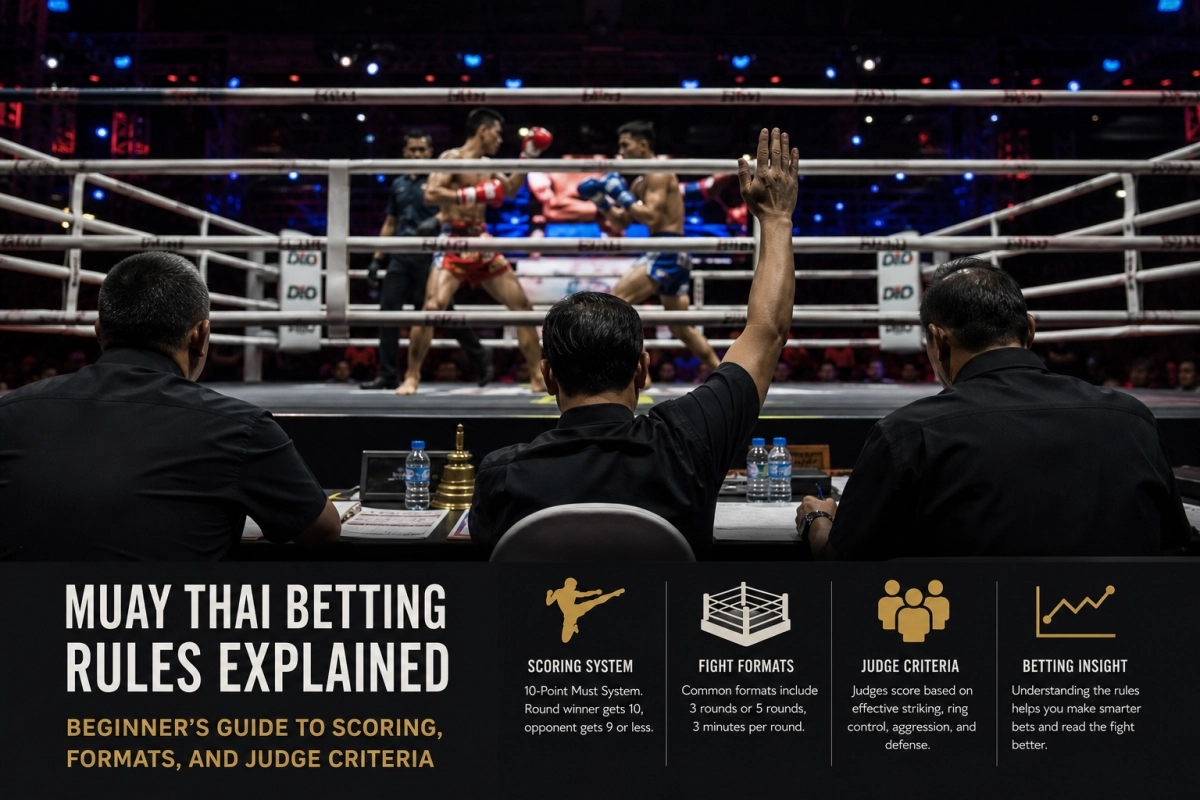
Muay Thai betting rules: what beginners should know before wagering
This guide explains Muay Thai betting rules in clear, beginner-focused terms so newcomers understand how the sport’s unique fight formats and judging criteria affect common bet types. Muay Thai (the “art of eight limbs”) uses punches, kicks, knees and elbows along with clinch work—elements that change how fights are scored and how bets play out. Readers should learn basic terminology (teep, clinch, roundhouse kick, checking, pad work, wai kru, ram muay) and match structure before placing wagers.
How Muay Thai fight formats and ring rules shape betting choices
Understanding the bout format is essential for betting. Typical professional Muay Thai fights are 3 to 5 rounds, usually three minutes per round with one-minute breaks; youth or amateur shows often use shorter rounds. Some promotions follow international 10-point-must judging, while traditional Thai stadiums use nuanced criteria that can emphasize different factors.
- Round length and number: Shorter fights can favor explosive starters; longer five-round bouts reward stamina and late-round strategy.
- Allowed techniques: Elbows and extended clinch time increase knockout and damage potential—this affects method-of-victory and prop bets.
- Ring size and gloves: Smaller rings and heavier gloves can lead to more close-quarters exchanges and clinch fighting, shifting odds toward fighters strong in the clinch.
Practical tip: check the event rules before betting—stadium-specific rules (Thai stadium vs international promotion) materially change outcomes and therefore odds.
Scoring and judging: what officials look for and why it matters to bettors
Judges evaluate Muay Thai on more than just strikes landed. While systems vary, common judging priorities include clean, effective strikes, visible damage, ring control, balance, and dominance in the clinch and on the ropes. In traditional Thai scoring, high-impact kicks and techniques that unbalance an opponent often carry more weight than single punches.
Key scoring factors that influence bets:
- Effective strikes and damage: Clean, powerful kicks and knees typically score higher than light punches; fighters known for damaging leg kicks can sway method and round bets.
- Clinch control and knees: Dominance in the clinch shows control—important in decisions and for bettors considering fighters who win by points rather than knockouts.
- Timing and round weighting: Some stadium judges favor the later rounds (the “last round effect”), meaning fighters who finish strong may catch decisions even if early rounds looked even.
- Technique and balance: Judges reward proper technique—e.g., a clean teep (front push kick) that disrupts rhythm or a roundhouse kick that lands with clear effect.
How this affects early betting strategy
Because judges may value kicks and clinch control over sheer punch volume, bettors should adjust expectations: a fighter with superior kick technique or clinch experience may be undervalued by those who focus only on knockout power. Recognizing these nuances helps when considering moneyline, method-of-victory, or round bets.
Next, the guide will explain each common bet type (moneyline, method, round, props, and in-play) and map specific Muay Thai rules and scoring tendencies to practical wagering strategies.
Moneyline and method-of-victory bets: reading the lines through Muay Thai lenses
Moneyline bets are the simplest: pick the winner. But in Muay Thai, the moneyline should be read with an eye toward scoring philosophy and a fighter’s stylistic edge. A striker who lands heavy low kicks and knees may be favored in Thai-style scoring even if a punch-heavy opponent appears more aggressive on volume. Conversely, a known knockout finisher will shorten the price for bettors expecting an early finish.
- Method-of-victory markets (decision, KO/TKO, disqualification) matter because Muay Thai has high clinch and elbow usage; elbows and knees increase TKO/KO chances compared with pure western boxing. If a bout allows elbows and longer clinch time, expect higher KO/TKO probabilities.
- How judges score affects decision odds: fighters who win rounds by controlling the clinch and landing heavy kicks can win on points even when they’re not visibly dominant in punch volume—so “decision” prices can be influenced by each fighter’s scoring strengths.
- Practical tip: compare different books and marketplaces. Some sportsbooks release separate lines for “decision only” or “win inside distance”; use those to gauge how the market values a fighter’s finishing ability versus point-scoring skill.
Round bets and prop bets: timing, pace, and the clinch transform probabilities
Round and prop markets (over/under rounds, exact-round, round-by-round winners, first knockdown) hinge on tempo and endurance. Shorter scheduled fights (three rounds) are far more likely to produce early aggression and quick finishes; five-round fights reward tactical pacing and late-round dominance.
- Round totals: If a matchup features two aggressive starters, the “under 2.5 rounds” may be attractive. If one fighter is a slow starter who wins late rounds, the “over” or later-round props gain value thanks to the last-round effect.
- Exact round and first-round KO: These pay well but require reading styles. Fighters who rely on clinch control and accumulation rarely produce very early KOs; those with heavy elbow or head-kick records are better candidates for quick finishes.
- Other props to watch: total strikes, most clinch points (if available), and round-by-round moneylines—these can be used to hedge or construct combos if you’ve identified how a fight is likely to unfold tactically.
In-play betting: momentum, damage, and referee signals that move markets
Live betting in Muay Thai is uniquely reactive to visible damage, ring control, and corner/doctor involvement. Because judges value damage and effective techniques, a landed clean knee or a swelling eye can change live odds faster than in other combat sports.
- Watch the clinch: prolonged control without visible damage might still sway judges later, but it’s less likely to prompt an immediate live-market price move than a flash knockdown or deep cut.
- Referee and corner behavior: if a corner is particularly active between rounds (shouting, frantic work), that can signal a fighter is hurt and shift KO/TKO probabilities. Similarly, a lenient or strict referee style (does he break the clinch quickly?) influences whether a fighter who excels in the clinch will find success—adjust live bets accordingly.
- Smart live strategies: use in-play to exploit overreactions—if a fighter takes an early leg kick but shows no effect, lines may overcorrect. Conversely, visible cuts or balance issues justify heavier weighting toward stoppage markets.
Legal, ethical and responsible-gambling considerations
Before placing wagers, make sure gambling on Muay Thai is legal where you live and that any sportsbook you use is properly licensed and regulated. Smaller or unsanctioned events carry higher risks of irregularities; exercise extra caution with markets tied to regional shows where oversight may be limited.
- Know the rules and eligibility: confirm age limits, geographic restrictions, and whether particular events are permitted in your jurisdiction.
- Avoid conflicts of interest: do not bet on fights where you or someone close to you has inside knowledge, involvement, or a financial stake in a competitor or promotion.
- Be alert to corruption risks: suspicious line movements, inconsistent officiating, or opaque promotion practices are red flags—steer clear of markets that feel unreliable.
- Keep accurate records: track bets, stakes, and outcomes for personal budgeting and tax-reporting obligations that may apply in your country.
- Responsible-gambling practices: set a bankroll, establish unit sizes (commonly 1–2% per bet), use deposit and time limits, don’t chase losses, and avoid betting under the influence of alcohol or strong emotions.
- Seek help if needed: if gambling is causing stress, financial harm, or relationship issues, pause betting and consult local resources or support services.
Final guidance for newcomers
Treat Muay Thai betting as a skill you develop over time, not a shortcut to quick gains. Start small, prioritize learning—watch full fights, study how judges score, and observe how rule differences affect outcomes—then let disciplined bankroll management guide your decisions. Use in-play markets sparingly until you’re comfortable reading momentum and damage in real time.
- Bet with patience: small, consistent, informed wagers beat big, impulsive bets.
- Keep improving: review your bets, learn from mistakes, and refine how you factor scoring and clinch dynamics into lines.
- Respect the sport and the fighters: wager for entertainment and testing your analysis, not to prove anything.
When you combine respect for the rules, a clear understanding of Muay Thai’s judging and fight formats, and responsible staking, you’ll make smarter, safer bets—and enjoy the sport more as you go.
