What you should know before learning Muay Thai strikes
Before you practice punches, kicks, elbows, and knees, it helps to understand what Muay Thai asks of your body and mind. You’ll rely on balance, hip rotation, timing, and simple mechanics more than brute strength. Building these foundations reduces injury risk and makes each technique cleaner and more effective.
As a beginner, your goal is to develop reliable habits: a stable stance, efficient weight transfer, relaxed shoulders, and basic defensive awareness. These habits become the framework that lets you learn individual strikes without compensating with poor posture or inefficient motion.
Fundamental principles that improve every strike
Stance and balance: the starting point for control
Your stance determines how well you can generate power and recover after striking. Stand with your feet about shoulder-width apart, knees slightly bent, and weight balanced so you can move in any direction. Keep your hands up to protect the head and your chin tucked slightly to reduce exposure.
- Lead foot points forward; rear foot turned out slightly for drive.
- Distribute weight roughly 50/50 at rest; shift it smoothly when attacking or defending.
- Keep your center of gravity low and your core engaged to maintain balance during strikes.
Relaxation, breathing, and timing
Tension wastes energy and slows you down. Learn to stay relaxed in your shoulders and jaw, tightening only at the moment of impact. Breathe naturally and exhale sharply when you strike; a controlled exhale helps stabilize your core and focus your force. Timing — knowing when to strike, not just how — separates a practiced beginner from someone who is merely hitting pads.
Hip rotation and weight transfer for power
Power in Muay Thai rarely comes from the arm or leg alone. It comes from rotating your hips and driving through your feet. For punches, rotate your hips and pivot your rear foot. For kicks and knees, thrust your hips into the movement and transfer weight from the supporting leg to the striking limb. Practicing this coordination without full force will help you internalize the mechanics safely.
Simple safety steps and warm-up habits to adopt now
Warming up and protecting yourself are non-negotiable. Start every session with light cardio (jump rope, jogging in place) and dynamic mobility for hips, shoulders, and knees. Use wraps and gloves for pad work, and wear shin guards for low kicks while learning. Focus on controlled, repetitive practice rather than knocking out every technique with maximum force.
- 5–10 minutes light cardio to raise heart rate
- Dynamic stretches for hips, hamstrings, shoulders
- Progress from shadowboxing to pad work with a partner or coach
With these foundations in place, you’ll be ready to break down the core strikes — jab, cross, hook, teep, roundhouse, knee, and elbow — and learn how to perform and drill each one safely in the next section.
Straight punches and hooks: jab, cross, and hook
Begin with the simplest punch mechanics and build speed and coordination before chasing power. The jab (lead hand) is a fast, snapping tool for range-finding and disrupting an opponent; the cross (rear hand) generates power through hip rotation and a rear-foot pivot; the hook is a short, rotational punch that targets the side of the head or body.
Key technical points:
- Jab: push off the lead foot, extend the arm straight, rotate the lead shoulder up to protect the chin, retract quickly.
- Cross: drive the hips forward, pivot the rear foot so the heel turns out, extend the rear arm with the elbow slightly down to keep a compact line.
- Hook: rotate the torso and pivot the lead foot; keep the elbow at roughly shoulder height for head hooks or lower for body hooks; strike with the first two knuckles.
Drills to practice:
- Shadowbox focusing on weight transfer and hand speed — jab-cross combinations, keeping the non-striking hand guarding the chin.
- Heavy bag work: 3 rounds of jab-cross rhythm, then add single hooks to the body and head to mix planes.
- Pad drills with a partner: jab to set up the cross; hook as a counter to a missed jab.
Common beginner mistakes to watch for:
- Overreaching on the jab and losing balance.
- Rotating hips without pivoting the rear foot (reduces power and risks ankle strain).
- Dropping the non-striking hand; leave it up to protect the head.
Teep and roundhouse: the push kick and the shin kick
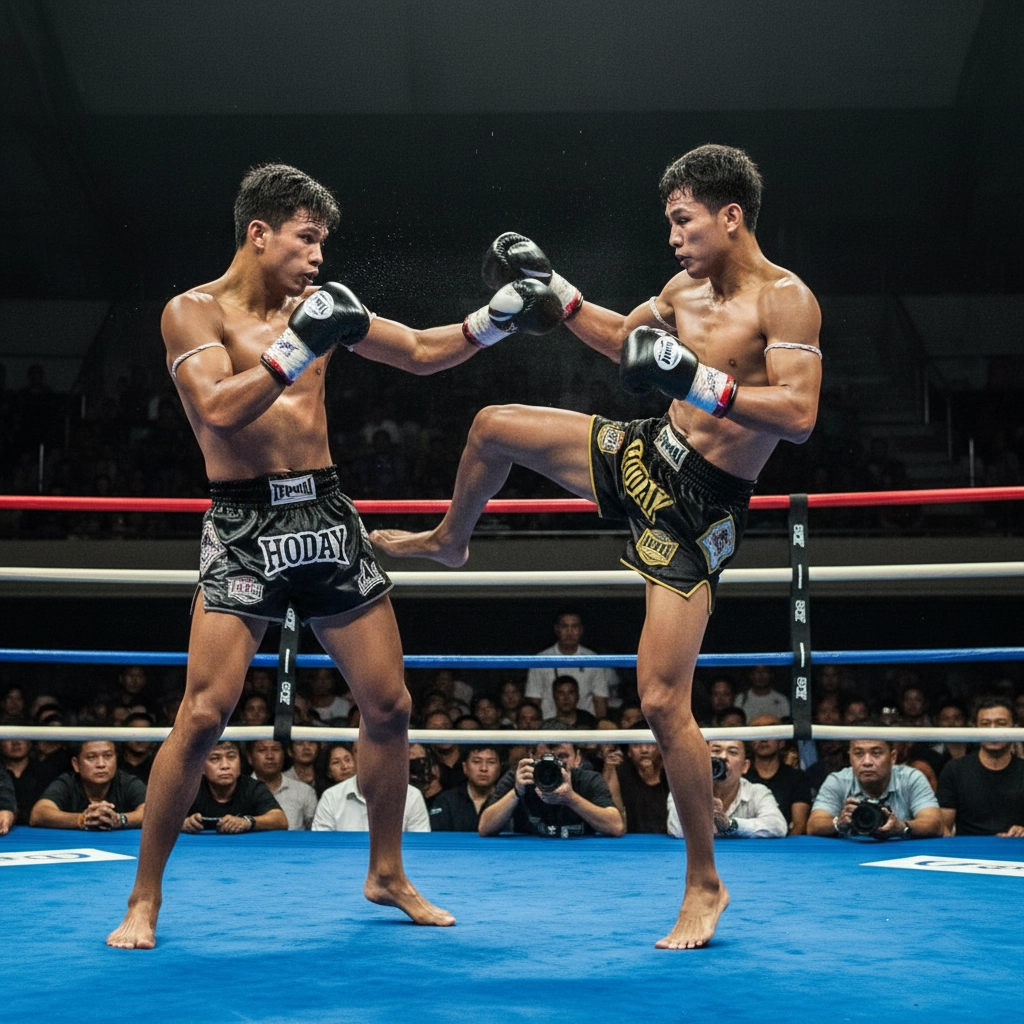
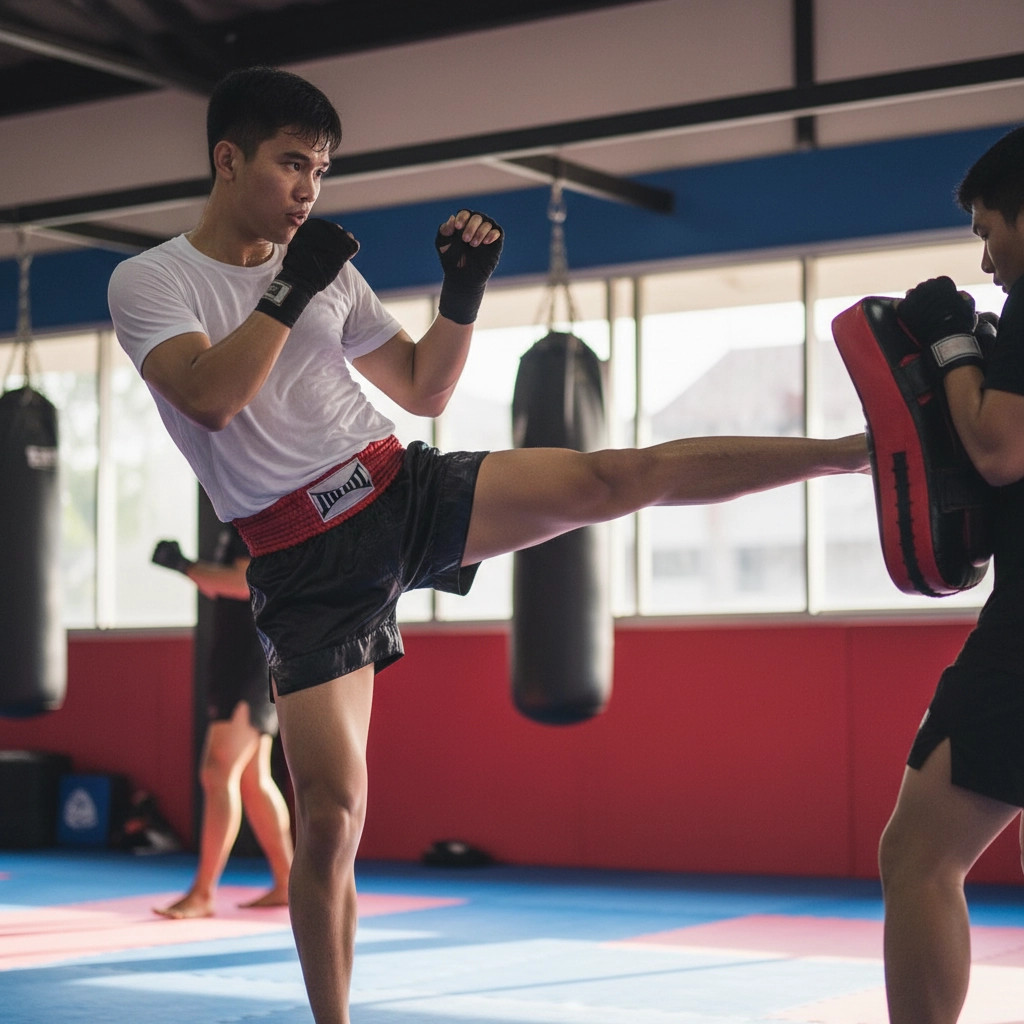
The teep (push kick) and roundhouse are foundational lower-body strikes in Muay Thai. The teep functions like a hand — it manages distance, off-balances opponents, and can set up other strikes. The roundhouse is the primary power kick, delivered with the shin and driven by the hips.
Execution cues:
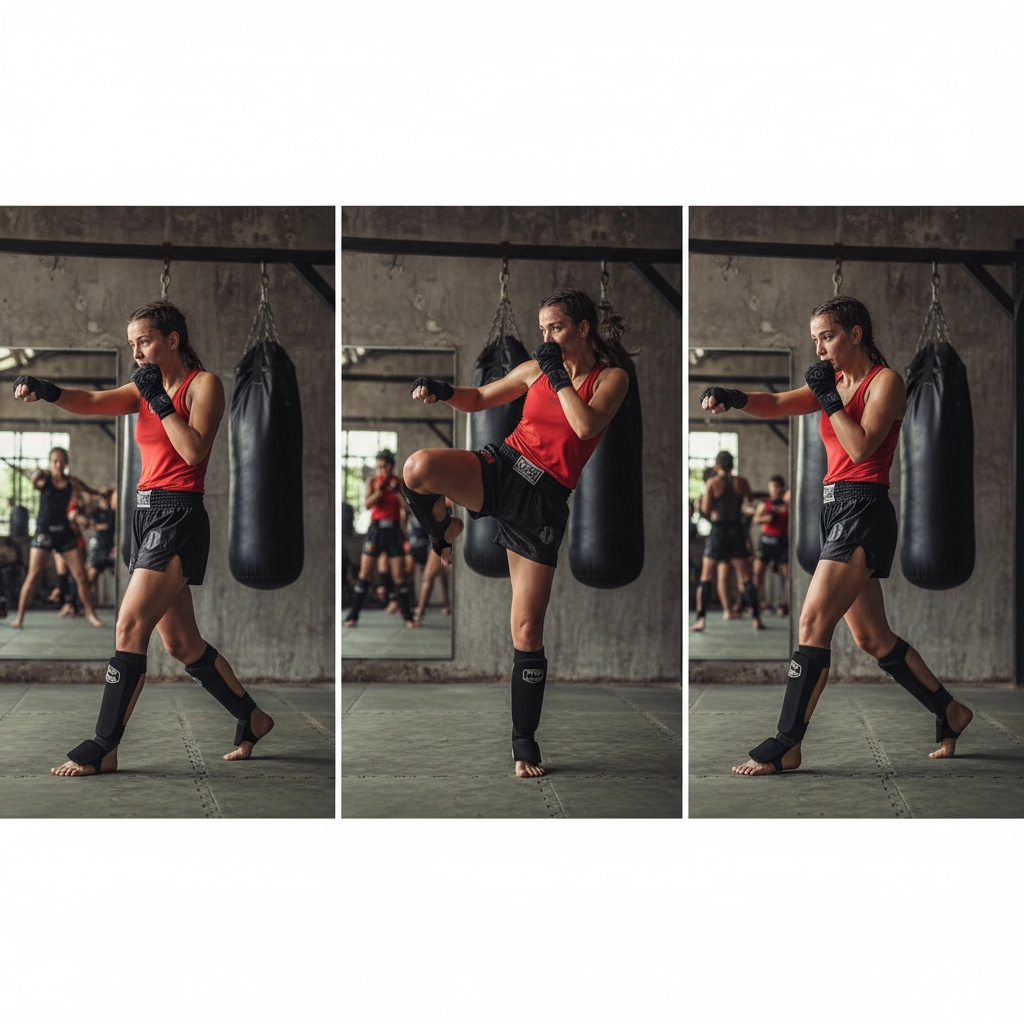
- Teep: lift the knee, snap the foot straight forward, extend the hips, and retract quickly. Aim with the ball of the foot to the midsection or thigh depending on range.
- Roundhouse: chamber the knee, rotate the hips explosively, pivot the supporting foot, and strike with the lower shin. Keep the guard up and the posture upright through impact.
Progression and drills:
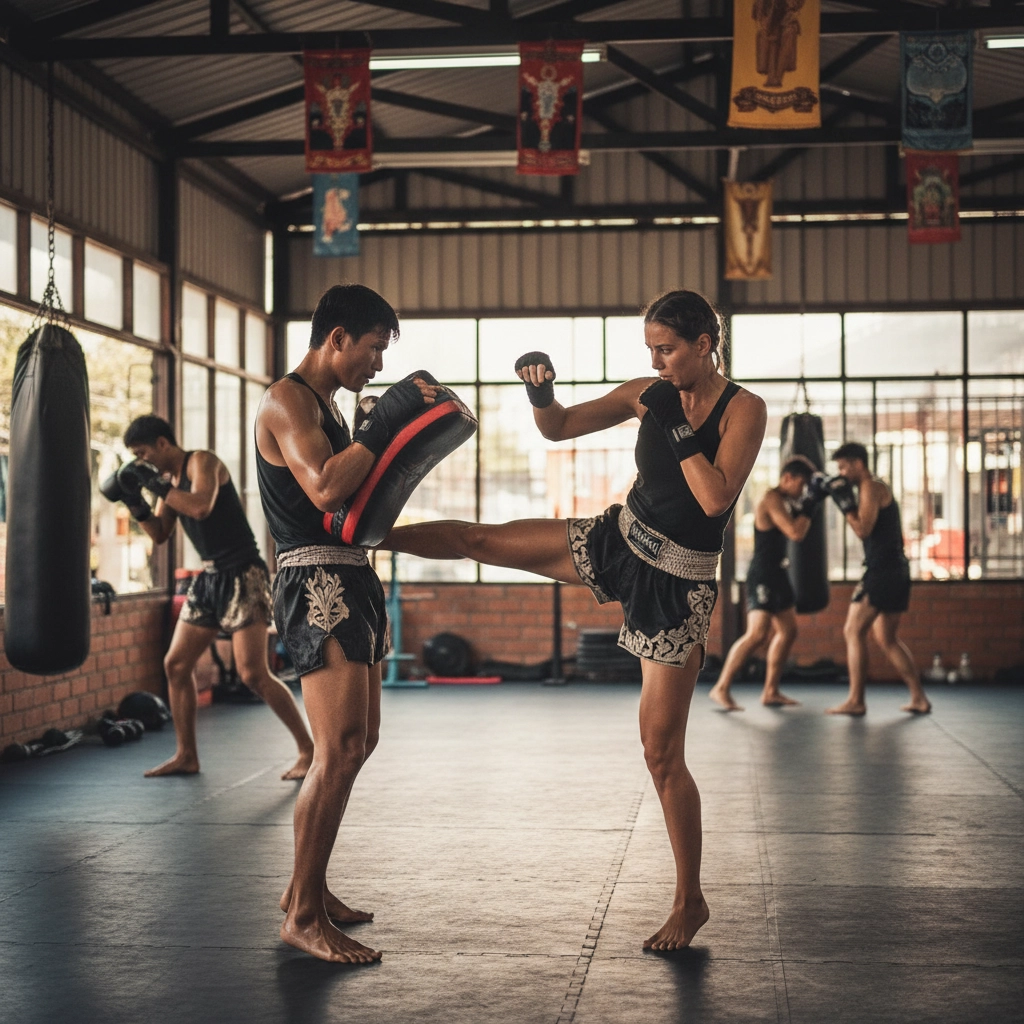
- Start teeps in shadowboxing to train extension and balance; then practice controlled teeps on a partner’s pad or the heavy bag.
- For roundhouses, drill slowly on a heavy bag to condition the shin and perfect the hip rotation. Gradually increase speed and power.
- Partner pad work: use teep to push the pad, then immediately follow with a roundhouse to develop flow and timing.
Safety notes: condition your shins progressively, use shin guards during partner work, and avoid kicking with a floppy ankle — point and lock the foot for the teep, and dorsiflex the ankle when appropriate for certain low kicks.
Knees and elbows: close-range tools and how to train them
Knees and elbows are short-range, high-impact weapons. Knees are driven by the hips and often delivered from the clinch, while elbows are compact, sharp strikes used at very close distance to cut or stun.
Fundamentals and drills:
- Knees: thrust the hips forward while pulling the opponent’s head or body down to create space. Practice straight knees on pads, then progress to clinch drills where you posture up and drive knees to the body.
- Elbows: practice short, controlled “horizontal” and “downward” elbows on Thai pads and focus mitts. Keep movements tight and rotate the shoulders to add snap.
Beginner cautions:
- Start light with elbows — they cut easily and can cause injuries in sparring.
- Learn clinch posture before forceful knee strikes to protect your neck and lower back.
- Always wear appropriate protective gear (headgear, gloves, shin guards) for partner drills and increase intensity gradually.
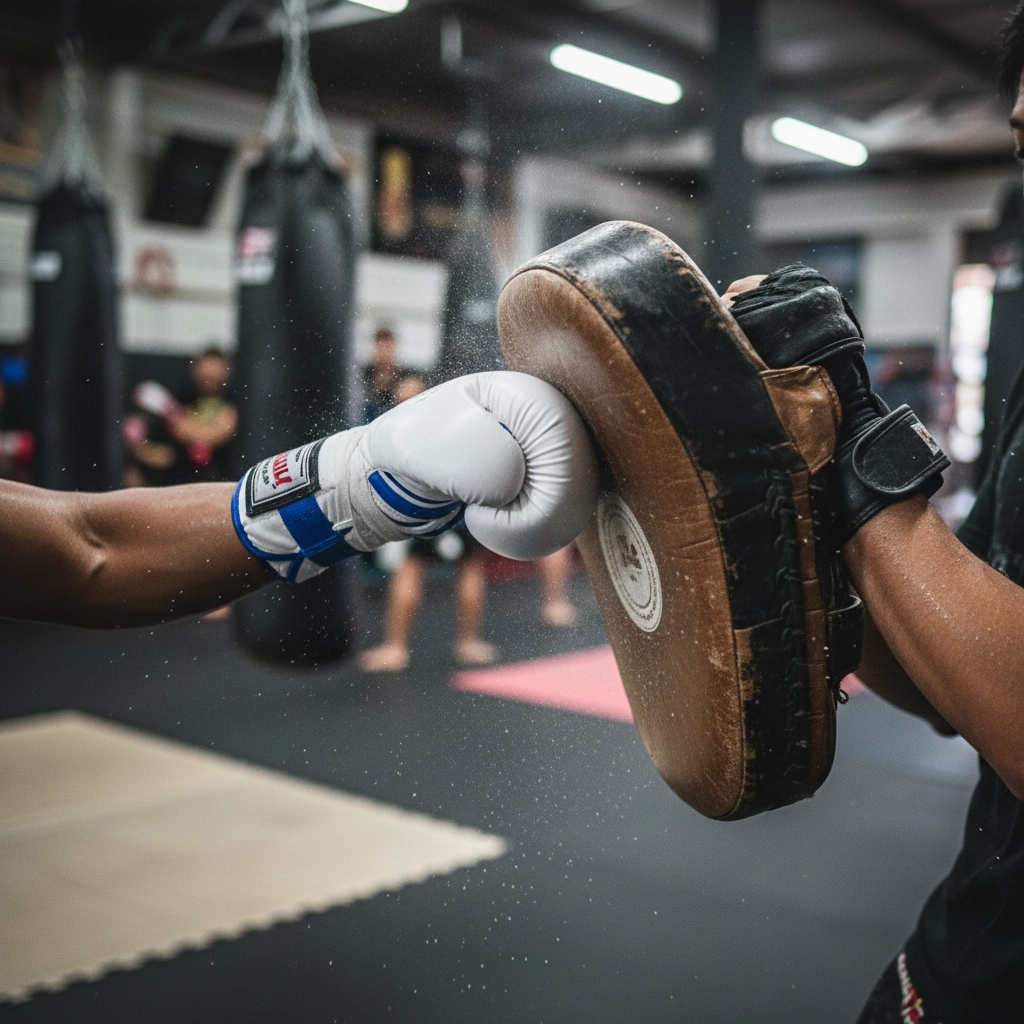
Combine these tools in simple combinations (teep to the thigh, step in for a knee; jab-cross to create the angle for an elbow) to make your practice practical and effective.
Moving forward with your training
Learning Muay Thai is a long game: prioritize steady progress, injury prevention, and consistent habits over short bursts of intensity. Set small, measurable goals (cleaner jab mechanics, 30 minutes of shadowboxing three times a week, controlled clinch drills) and celebrate improvements that come from repetition and good coaching. Rest, recovery, and mobility work are as important as technique practice — they keep you on the mat consistently.
Find a qualified coach or training partner who emphasizes fundamentals and safety. Use protective gear during partner work, gradually increase intensity, and treat sparring as a learning tool rather than a contest. Supplement gym time with conditioning, flexibility, and mobility exercises to support your striking, and track your sessions so you can identify what to focus on next.
When in doubt, return to basics: stance, balance, relaxation, and hip rotation. For additional structured guidance and event or federation resources, check reputable organizations such as IFMA.
Frequently Asked Questions
How often should a beginner practice Muay Thai strikes?
Aim for 2–4 focused technical sessions per week plus light conditioning on alternate days. Early sessions should emphasize technique, balance, and low-intensity pad or bag work rather than full-power strikes. Consistency matters more than daily high-intensity training; allow rest days to recover.
How can I safely condition my shins and elbows?
Progress slowly: start with controlled strikes on a heavy bag and use shin guards and elbow pads during partner drills. Gradually increase contact over months, not weeks, and include shin-strengthening exercises (calf raises, controlled hopping). Always treat early conditioning sessions as adaptation, not opportunities to power through pain.
When is it appropriate to start sparring?
Begin sparring only after you have reliable fundamentals: stable stance, solid guard, basic punch-kick mechanics, and controlled clinch posture. Start with light, technical sparring under coach supervision, focus on timing and defense, and increase intensity only as your skill and comfort grow. Use protective gear and clear communication with partners about level and intent.
Recommended Posts