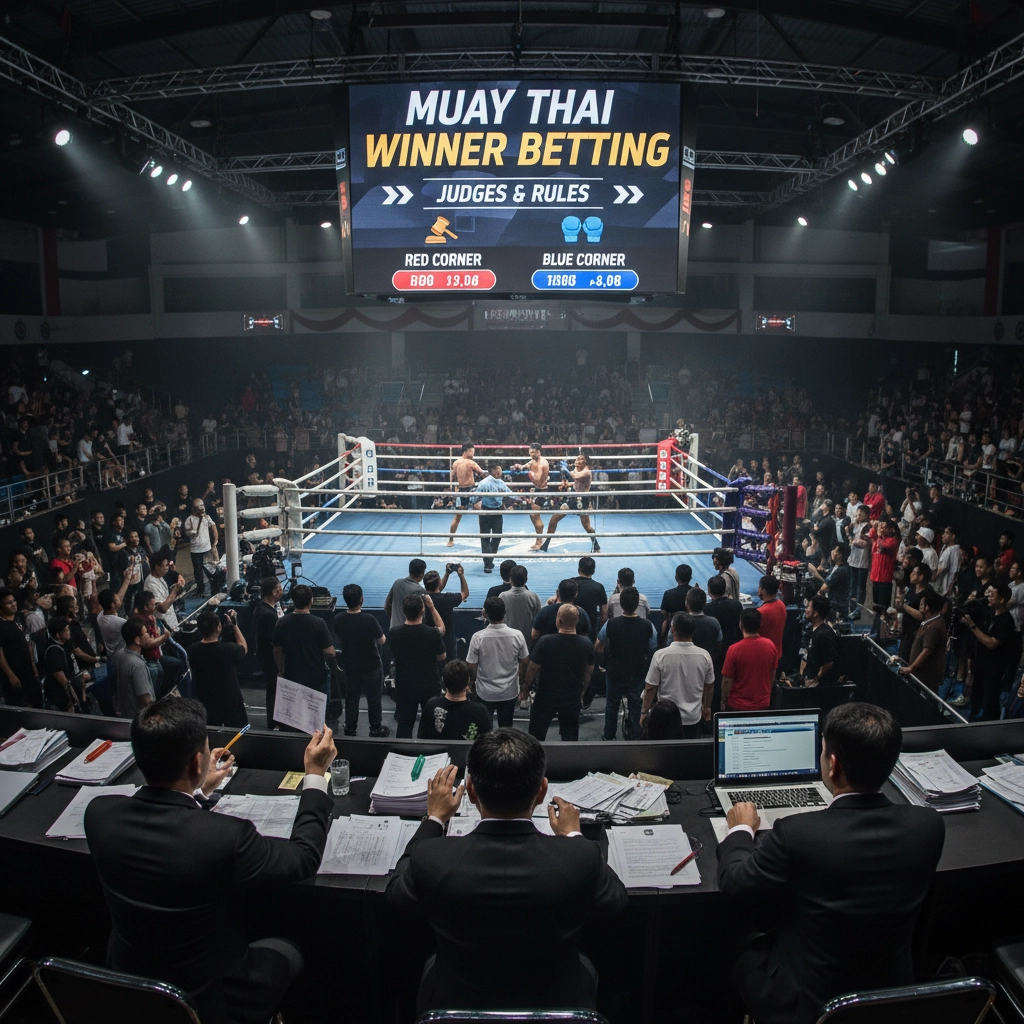

How winner bets in Muay Thai differ from other combat sports
When you bet on a Muay Thai fight, you’re wagering on one of a few specific outcomes rather than a continuous statistical event. Because Muay Thai allows strikes with fists, elbows, knees and shins, finishing methods and fouls can affect how a bookmaker settles a wager. You should understand that winner betting is generally straightforward — selecting the fighter you think will win — but the details of how wins are recorded (KO, TKO, decision, DQ, no contest) determine whether your wager stands, is voided, or is paid differently.
Common winner markets you’ll encounter
Bookmakers offer several markets that center on which fighter wins. Each market has slightly different rules and payout structures, so you’ll want to pick the one that matches your risk tolerance and knowledge of the matchup.
Moneyline (Straight-up winner)
- What it is: You pick which fighter will win the bout, by any legal means within the scheduled rounds.
- How it’s settled: A win by KO, TKO, knockout via strikes, or a judges’ decision normally pays. If the fight is declared a no contest, bets are typically voided and stakes returned.
Win inside the distance / To win by stoppage
- What it is: You predict the fighter will stop the opponent (KO/TKO) before the final bell.
- How it’s settled: Stops due to referee TKO, doctor stoppage, or corner retirement usually count. A victory on judges’ scorecards does not. Some books require the fight to pass a minimum round threshold for certain props—check the market rules.
Win by decision
- What it is: You back a fighter to win on the judges’ scorecards after all scheduled rounds.
- How it’s settled: A majority, split, or unanimous decision in favor of your selection pays. If the fight ends early (doctor stoppage, KO), the bet is lost. Rules vary for technical decisions (when a stoppage occurs from an accidental foul after a set number of rounds).
How different outcomes and fouls affect bet settlement
You must pay attention to how bookmakers treat disqualifications, no contests, and technical decisions:
- Disqualification (DQ): If your chosen fighter wins because the opponent is disqualified for an illegal blow, most sportsbooks will pay winning bets. If your pick is disqualified, you lose.
- No contest: When a bout is declared a no contest (often due to an accidental foul early in the fight), most moneyline and prop bets are voided and stakes are returned.
- Technical decision: If a fight goes to the scorecards because of an accidental foul after a minimum number of rounds, sportsbooks usually settle bets to the fighter awarded the technical decision; always verify the minimum-round rule for your book.
Understanding these markets and common settlement rules will help you choose the right wagers and avoid surprises when an unusual outcome occurs. In the next section, you’ll learn how to read odds across these markets and evaluate value when comparing lines between bookmakers.
Reading odds and converting them to implied probability
To evaluate value across winner markets you must be comfortable translating odds into implied probability. The cleanest method is to convert any format to decimal odds, then take the reciprocal to get implied probability.
- Convert to decimal: For decimal odds the number is already usable (e.g., 2.50). For American odds: if positive (e.g., +200) decimal = (american/100) + 1; if negative (e.g., -150) decimal = (100/|american|) + 1.
- Implied probability: probability = 1 / decimal. So decimal 2.50 → 1/2.50 = 0.40 (40%).
Bookmakers add a margin (vig), which makes the sum of implied probabilities exceed 100%. To estimate the “fair” probabilities, normalize the implied probabilities by dividing each implied probability by the total sum. That gives you a vig-adjusted baseline for comparing against your own view of each fighter’s chances. Always check the specific market rules: some books display prices differently or apply minimum-round clauses that affect how a market is settled and therefore its effective probability.
Finding value and comparing lines between bookmakers
Value exists when your assessed probability for an outcome exceeds the bookmaker’s implied (vig-adjusted) probability. Practically, that means line shopping — having accounts with multiple sportsbooks or using an odds-aggregation tool to compare markets in real time.
- Shop early and late: Opening lines can be softer; late money or sharp action may move prices. If you have an edge from better research, lock it in; if you’re reacting to new info (injuries, weight misses), later lines might be more accurate.
- Use exchanges and promos: Betting exchanges sometimes offer better effective odds because the platform charge is lower than retail vig. Welcome bonuses and enhanced odds can create short-term value, but read settlement rules—promos may exclude certain outcomes.
- Monitor market movement: If several books trim the same side, implied probability increased; that can indicate new information or professional activity. Don’t follow blindly—understand why the line moved before altering your view.
Bet sizing and managing variance in winner markets
Winner markets in Muay Thai can be volatile—stoppages are common, props are binary, and upsets happen. Manage this with disciplined staking and a clear bankroll plan.
- Flat stakes: A simple, low-risk approach is to risk a fixed percentage of your bankroll per bet (1–3% is common). This minimizes ruin risk and keeps variance manageable.
- Unit sizing for different markets: Treat decision/stoppage markets differently — stoppage bets are higher variance, so consider smaller units than on the straight moneyline.
- Fractional Kelly for long-term edge: If you quantify your edge, a fractional Kelly can optimize growth while capping volatility. If you don’t have precise probabilities, avoid aggressive sizing and stick to flat or proportional stakes.
- Hedging and in-play: Live betting lets you hedge when the fight turns, but fees and latency reduce effectiveness. Use live hedges sparingly and only when they improve your expected outcome.
Putting the rules into practice
Winning consistently in Muay Thai winner markets comes down to disciplined process more than luck: convert odds to probabilities, identify edges, size bets to survive variance, and keep records so you can learn from outcomes. Treat each market on its own merits (straight moneyline, stoppage, or prop) and adjust unit size to reflect the differing variance and liquidity.
- Keep a simple checklist before staking: checked odds across books, estimated fair probability, stake within unit plan, and noted any market-specific settlement rules.
- Review results periodically and refine your probability assessments rather than chasing short-term variance.
- If gambling ever feels like a problem, consult support resources such as GambleAware and set strict deposit and time limits on accounts.
Frequently Asked Questions
How do I adjust implied probabilities for the bookmaker’s margin (vig)?
Convert all prices to decimal odds, take the reciprocal of each to get implied probabilities, sum them, then divide each implied probability by that sum. The result is the vig-adjusted probability distribution you can compare to your own assessed chances.
Should I bet the same unit on a moneyline and a stoppage market for the same fight?
No—stoppage markets generally have higher variance and lower predictability. Use smaller units for stoppage or prop bets than for straight moneyline bets, unless you have a quantified edge and an appropriate staking strategy (e.g., fractional Kelly).
When is line shopping most valuable for Muay Thai bets?
Line shopping is useful any time prices differ significantly between books, but it’s especially valuable early (to catch soft opening lines) and just before a fight (to exploit slow-moving books). Use an odds aggregator or multiple accounts to lock the best available price before placing a bet.
Recommended Posts