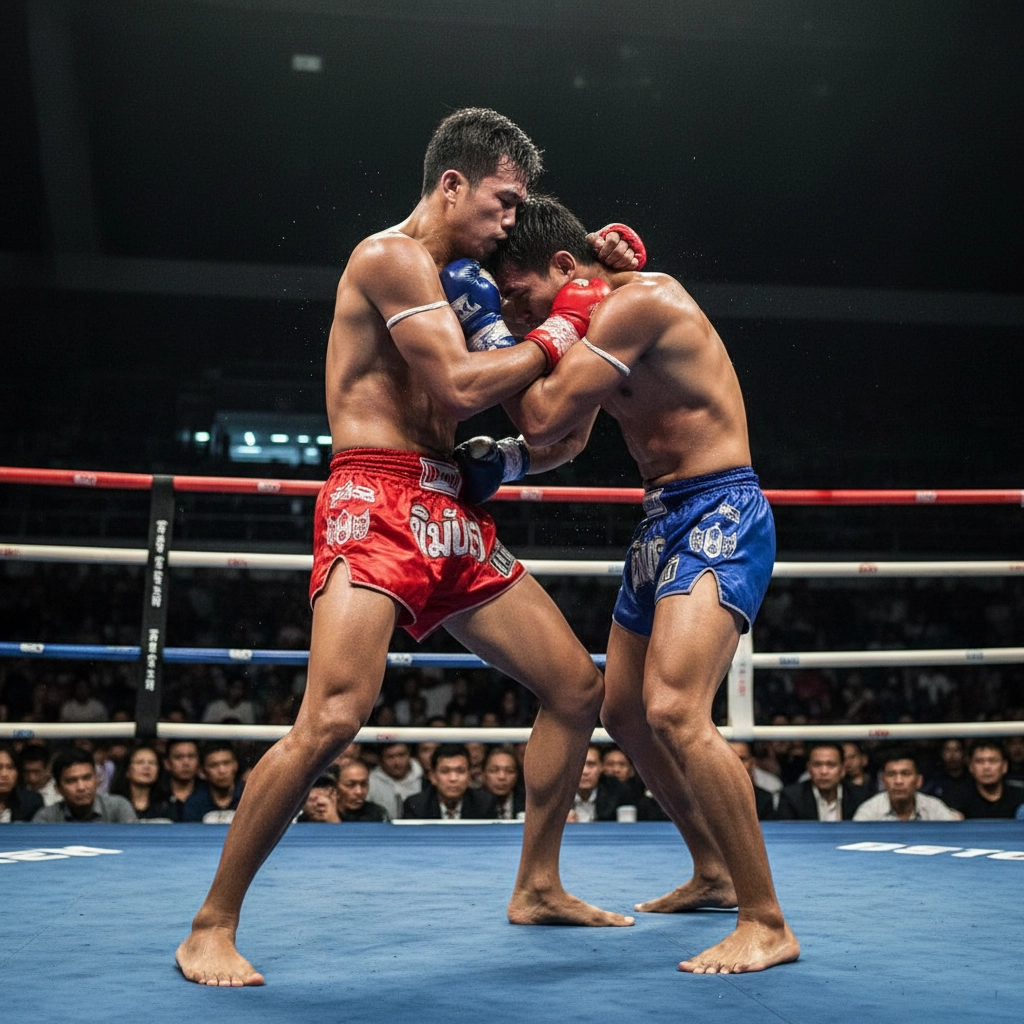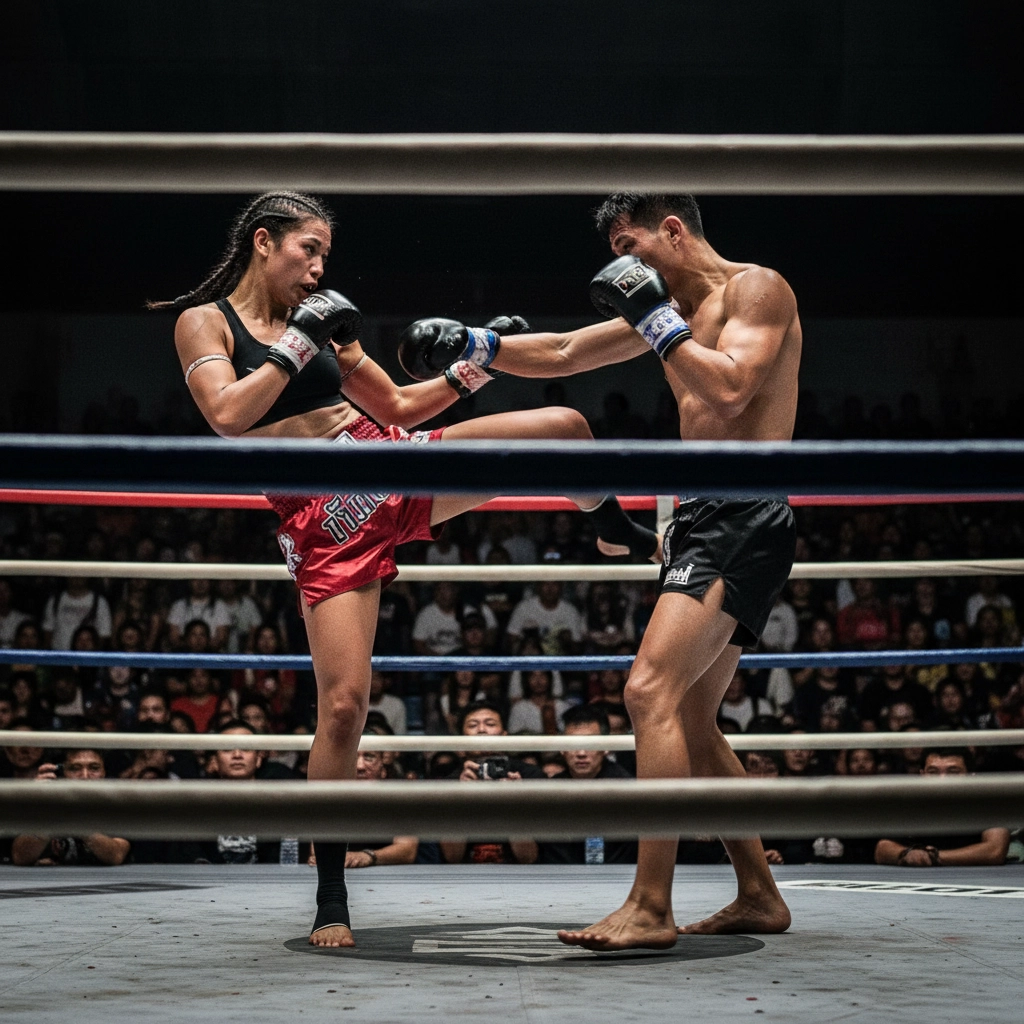
Avoidance is the foundation of elite Muay Thai defense, emphasizing distance control, head movement, and precise timing to minimize damage while generating high-value counterattacks. Champions combine measured footwork, effective clinching to neutralize strikes, and disciplined recovery to maintain pressure and survivability throughout a fight.
Types of Defensive Strategies
Champions mix angle creation, timing, and contact management: elite fighters use lateral pivots and sidesteps to negate power shots, the clinch to smother kicks, and precise parries to turn defense into counters. Coaches at top Thai camps schedule footwork and drill sessions 3-5 times weekly to ingrain reaction patterns, while selective guard choices reduce head-kick exposure and body damage through forearm shielding and elbow framing.
- Footwork
- Clinch
- Guard
- Parry
- Counters
| Strategy | Application / Example |
|---|---|
| Angle & Movement | Lateral pivots and 45° cuts to avoid opponent’s power line and create counter openings. |
| Clinch Control | Short-range holds to stop kicks, earn breaks, and land knees – staples for middle-to-heavyweight Thai fighters. |
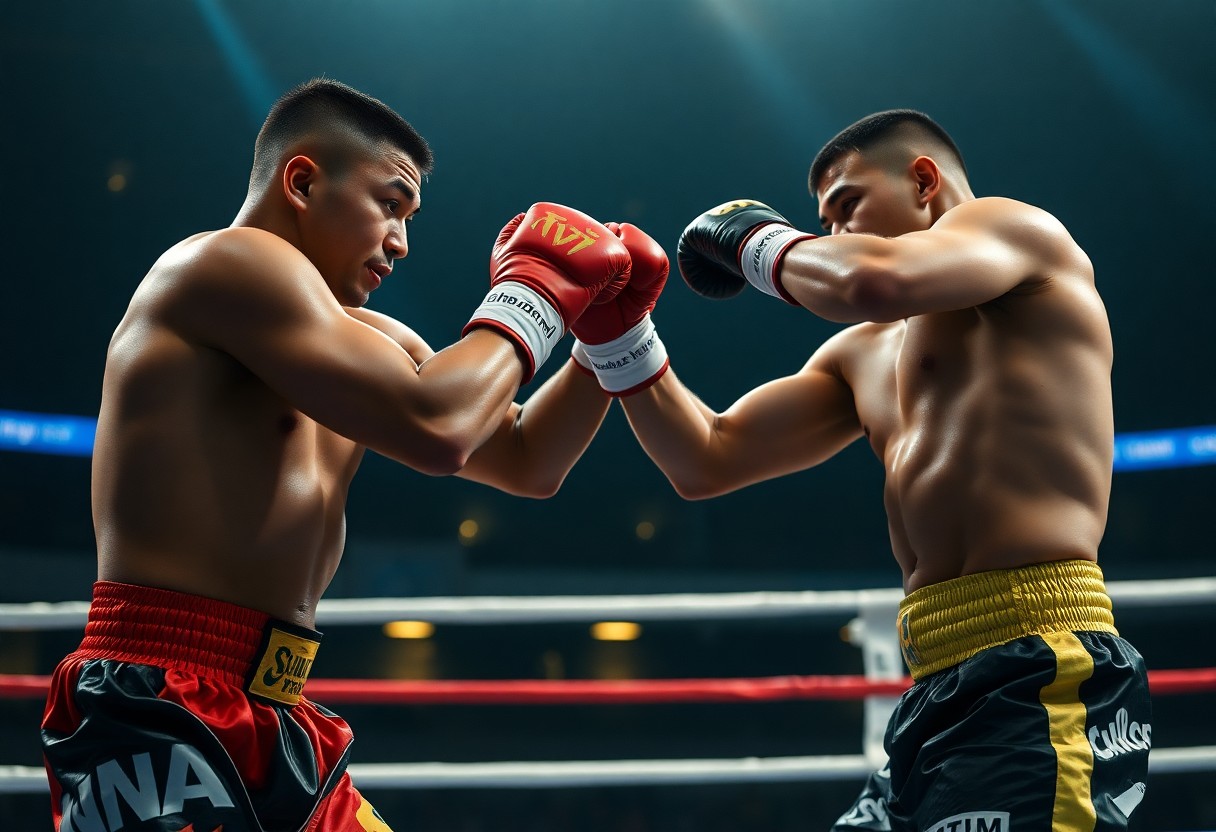
| High/Low Guard | Forearms protect head while elbows shield the ribs; alternation prevents predictable counters. |
| Parry & Redirect | Soft hand deflections redirect force; used by technicians to immediately launch counters. |
Footwork Techniques
Saenchai-style lateral pivots, step-slide sequences, and switch-step drills build defensive mobility; practicing 30-60 minutes per session improves distance control and reduces strike contact. Fighters train reactive footwork with partner feints and cone drills to close or open ranges within 0.5-1.5 seconds, letting them evade power shots while creating counter angles that lead directly into knees, teeps, or short elbows. Footwork changes the geometry of every exchange.
Guard Positions
High, half, and cross guards each manage different threats: the high guard absorbs head kicks, the half-guard deflects body shots, and the cross-forearm blocks neutralize hooks; champions switch guards mid-round to mask intentions and protect against accumulated damage. Proper elbow tuck and chin-down positioning reduce knockout risk and stabilize posture under repeated strikes. Guard choice often dictates whether exchanges stay long or go to the clinch.
On technical detail, align the lead elbow at a 45° angle to deflect hooks while keeping the rear hand tight to the jaw; train the “check-and-reset” drill-block, immediate counter-teep, then re-establish guard-for 3 sets of 5-minute rounds to ingrain timing. Also practice partner-driven head-kick drills at 50-70% speed to test guard resilience and condition forearms; elite camps pair these with clinch transitions to ensure seamless defense-to-offense chains.
Assume that integrating movement, guard variation, parries, and clinch work develops a defensive system that reduces absorbed strikes and creates consistent counter opportunities.
Essential Tips for Effective Defense
Adopt a compact guard, active footwork, and angled exits to deny clear targets; elite fighters mix shoulder rolls, catch-and-counter, and clinch resets to absorb damage. Drill partner-led 3-minute rounds emphasizing lateral movement and rapid resets so you can close the distance without exposing the chin. Assume that every exchange can be turned into a scoring counter by prioritizing balance, pocket awareness, and a tight defense.
- Guard – keep hands high, elbows tight
- Distance – control range with feints and steps
- Timing – practice counters off specific setups
- Clinch – use to neutralize power shots
Anticipate Opponent’s Moves
Study patterns over sparring rounds; fighters often telegraph a low kick with hip rotation or a cross by a slight shoulder dip. Train by mapping 5-10 common sequences and rehearsing counters to each, watching eyes, shoulders, and the lead foot. Saenchai and Samart exploited repetition with minimal movement, so sharpening a ~0.2-0.3s visual reaction window and using targeted feints boosts your timing for clean counters.
Maintain Composure Under Pressure
Control breathing and jaw tension during exchanges; a relaxed mouth and steady inhale-exhale pattern reduce wasted motion and improve recovery between strikes. Adopt short, measured resets-three seconds to reorganize guard and footwork after a flurry-and keep visual focus on the opponent’s torso to avoid being baited into wild responses, preserving a calm, effective defense.
Increase resilience with specific drills: three 3-minute rounds of controlled sparring followed by a 60-second high-intensity burst simulate late-round fatigue and force composure. Use cue-based training (coach claps or whistle) to trigger breathing resets, practice keeping hands up during heart-rate spikes, and review sparring video to identify moments where panic led to exposed targets so you can replace them with disciplined responses.
Step-by-Step Guide to Defensive Drills
| Drill | Execution & Benefit |
|---|---|
| Pad Randomization | Partner throws unpredictable 1-4 strike combos for 3×3-min rounds; trains timing and distance control. |
| Reaction Ball | 30-60s bursts of rebound catches and light parries; improves reflexes and hand-eye speed. |
| Slip-and-Counter | Partner feed jabs; perform 5 slips then immediate counter for 4 sets of 10; engrains inside exits and counters. |
| Shadowboxing w/ Bands | 10-15 min focusing on head movement against light resistance; builds muscle memory for slips and pivots. |
| Heavy Bag Countering | 3×3-min rounds: absorb a strike, move off line, return with a single counter to simulate ring pressure. |
Partner Drills for Reaction Time
Use randomized pad sequences where the coach calls 1-4 strikes without telegraphing; perform 3 rounds of 3 minutes with 30s rest, then switch roles. Include a reaction-ball set of 30-60 seconds and timed slip drills (4 sets of 10 slips). These drills force fighters to read cues, shorten decision times, and condition the body to respond to realistic unpredictability, improving split-second defensive choices under fatigue.
Solo Drills for Muscle Memory
Shadowbox 10-15 minutes focusing on specific sequences (slip+counter, pivot+teep), then do 3×3-minute heavy-bag rounds where every strike is followed by an immediate defensive move. Add band-resisted head movement for 3x60s sets to reinforce motor patterns. Repetition-aiming for 200-400 targeted reps per session-turns technical responses into automatic reactions under pressure.
Progress by starting slow (50% speed) for technique, then increase to fight tempo over 4-6 weeks; use video to spot repetition flaws and a metronome to keep cadence at 60-90 beats/min for timing drills. Combine mirror shadowing (10 min), bag counter rounds (3×3 min), and band slips (3x60s) to achieve a compact session that yields measurable gains in consistency and retention of defensive mechanics.
Key Factors Influencing Defense
Top-level fighters tune specific variables to reduce damage: timing drills compress reaction windows to ~0.2-0.3s, mapped distance zones dictate when to step, clinch or counter, and disciplined footwork and angles prevent linear exchanges. Coaches use measurable benchmarks-distance markers, metronome pacing, and filmed sparring-to track progress. Perceiving subtle shoulder dips, fakes and rhythm changes creates the split-second advantage that turns defense into scoring opportunities.
- Timing
- Distance
- Footwork
- Angles
- Conditioning
- Perception
- Clinch control
- Guard mechanics
Timing and Distance
Elite defenders measure safe ranges-approximately 1-2 m for teeps and long kicks, 0.5-1 m for short hooks and clinch entries-and train to operate inside those zones. Counter-timing drills (partner feint-response, metronome-triggered slips) and distance-marked shadowboxing create repeatable responses; Saenchai-style counters rely on a 0.2-0.3s exploit window. Missing timing against short-range attacks like knees or close hooks often leads to the most dangerous exchanges.
Physical Conditioning
Strength work focuses on neck, hips and core to absorb and redirect force: structured sessions include neck isometrics, rotational med-ball throws, deadlift variants and plyometrics performed 3-5 sessions/week; interval sparring and 30-60s sprint sets raise anaerobic resilience. Progressive load and deliberate recovery lower vulnerability to repetitive impacts and speed fatigue, improving defensive consistency during late rounds.
Practical templates used by champions combine neuromuscular and structural drills: neck isometrics (4 directions × 3×10-15s holds), med-ball rotational throws (3×8-12), kettlebell swings (3×15) and heavy sled pushes (5×20-30m) for force transfer. Supplement with Tabata-style conditioning (20s on/10s off ×8) for fight-paced gas tank work and 6-8×100m sprints for sprint endurance. Monitor load-increase volume by ≤10% weekly-and add mobility sessions to preserve hip rotation and guard recovery, since a weakened core or neck markedly raises risk during sustained exchanges.
Pros and Cons of Various Strategies
Assessing each defensive style exposes clear trade-offs fighters must manage; elite camps often allocate 30-40% of training to drill defense and counterplay. Some approaches like angling minimize direct contact and enable counters, while compact guards reduce damage at the cost of sightlines. Successful champions blend methods-for example Saenchai’s mobility with clinch specialists’ close-range control-to offset individual weaknesses.
| Pros | Cons |
|---|---|
| High Guard: Absorbs hooks and straights; effective in tight exchanges and against heavy punchers. | High Guard: Limits peripheral vision; danger: vulnerable to uppercuts and well-timed head kicks. |
| Low Guard: Improves counters, sight lines, and mobility; aids quick teep-to-counter sequences. | Low Guard: Exposes chin to overhands and looping strikes; danger: susceptible to knockouts if misread. |
| Shoulder Roll: Deflects power punches and sets up counters; useful vs straight-line attacks. | Shoulder Roll: Poor vs kicks/knees; risky when pressured into the clinch or cornered. |
| Parry & Counter: Redirects force and creates immediate openings; high reward in timed exchanges. | Parry & Counter: Timing-dependent; danger: leaves you exposed if mis-timed or against multi-strike flurries. |
| Angling/Footwork: Negates linear attacks and conserves energy by ending exchanges quickly (used by Saenchai). | Angling/Footwork: Requires space and cardio; opponents who cut angles well can trap mobile fighters. |
| Clinch: Neutralizes strikes, controls knees/elbows, and scores on close-range mechanics (favored by clinch specialists). | Clinch: High energy cost; can expose you to elbows or off-balance counters if control is lost. |
| Check/Block Kicks: Protects legs and redirects damage; effective in preserving mobility over a fight. | Check/Block Kicks: Timing and balance dependent; repeated misses open the lead leg to damage. |
| Teep/Push Kick (defensive): Controls range, disrupts rhythm, and prevents forward pressure. | Teep/Push Kick: Predictable teeps can be caught or countered; danger: invites clinch if read. |
High vs. Low Guard Techniques
High guard excels at reducing clean head shots and is ideal in close-range brawls, while low guard promotes faster counters and better vision for kicks and feints; champions often alternate-using a high block against straight punches then dropping slightly to bait counters-because a static choice leaves weaknesses, notably the increased knockout risk when the chin is exposed.
Mobility vs. Stability in Defense
Mobility prioritizes angle creation and evasion, letting fighters like Saenchai avoid 1-2 attacks and score off-balance counters; stability focuses on weight distribution and checks to absorb strikes safely, favored by clinch and counter specialists who trade movement for control and a higher percentage of successful counters.
Expanding on that balance: mobile defenders rely on lateral pivots, 45-90 degree angles, and short sprints to turn offense into counters, but they can be cornered. Stable defenders use compact stance, hip alignment, and active shin checks to withstand assaults; drills that mix 3-5 second mobility bursts with sustained static blocking rounds replicate fight tempo and teach when to switch between both modes.
Common Mistakes in Defense
Even top fighters fall into repeatable traps: overextending punches, dropping the guard after a flurry, and failing to control distance. These errors create clear windows for counters-a telegraphed roundhouse invites a check kick, and a forward-lunging 1-2 can be met with a knee or clinch. Fighters who correct one or two of these tendencies often see measurable drops in absorbed strikes per round.
Overcommitting to Offense
Throwing with maximal commitment-full weight on the lead leg or reaching the arm-turns offense into vulnerability; a committed teep or spinning elbow leaves the core and chin exposed. Champions counter this by finishing combinations with active guard and one- or two-step exits, turning a potential knockout swing into a 0.2-0.4s window to reset or counter.
Neglecting Footwork
Standing flat-footed or moving only forward surrenders ring position and angle creation, allowing opponents to cut off the ring and trap you on the ropes. Elite practitioners like Saenchai use small lateral pivots and switch-steps to convert defense into offense, avoiding clinches and minimizing clean targets.
Fixing footwork starts with specificity: drill five-minute lateral-step sets, cone pivots at 45-degree angles, and three-round rounds where you may only advance after a successful pivot. Emphasize constant lateral movement, quick weight shifts, and maintaining 1-2 step buffers-these habits reduce being cornered and increase opportunities for high-percentage counters.
Summing up
So elite Muay Thai fighters prioritize posture, range management, precise timing, footwork, and layered guards, integrating feints, counters, and clinch escapes to deflect and dissipate strikes while creating offensive openings; disciplined conditioning and situational awareness make defense proactive rather than passive, enabling sustained performance and reduced injury over long careers.
FAQ
Q: What fundamental defensive habits do top Muay Thai champions use to avoid damage?
A: Top champions develop layered habits: a tight guard with active hands, constant head movement, and a stance that allows quick weight shifts. They control distance so opponents must overcommit to reach striking range, use subtle feints to probe reactions, and keep posture that reduces exposure to knees and elbows. Defense is integrated with offense-parries and blocks are timed to create immediate counters, while checks and low kicks are used to neutralize leg attacks. Regular drilling of reactions, controlled sparring to test timing, and conditioning of neck, core, and shins reduce the chance of absorbing heavy shots.
Q: How do footwork and angle management minimize incoming strikes?
A: Precise footwork buys space and changes the line of attack. Champions use small, fast steps, pivots, and lateral movement rather than retreating in a straight line, which prevents being trapped against the ropes. Cutting angles after an opponent commits creates openings for counters and reduces the target area for incoming strikes. Weight distribution is kept light on the balls of the feet to enable rapid direction changes, while stance switching and step-ins are timed to interrupt rhythm. Ring positioning-using center control or smartly backing up to a corner when advantageous-lets fighters dictate exchanges and avoid prolonged damage.
Q: In what ways does the clinch serve as a defensive strategy, and how is it used to avoid taking damage?
A: The clinch serves as both a defensive shield and an offensive platform. Proper clinch control locks an opponent’s arms and head, limiting their ability to generate powerful strikes and forcing shorter, less damaging attacks. Champions use frames, pummeling, and head position to break posture, neutralize knees, and create space to escape or strike. The clinch also fatigues opponents, reducing their striking effectiveness. Exiting the clinch is done with timed strikes or off-balancing maneuvers to avoid being countered. Drills focus on balance, hip control, and timing to ensure the clinch reduces incoming damage rather than escalating close-range exchanges.
Recommended Posts