
Powerful offense in Muay Thai depends on honing timing, maximizing power, and sharpening precision; this guide breaks down drills, setups, and counters to produce devastating strikes, exploit openings, and maintain defensive control so you can land high-impact attacks safely and effectively.
Types of Attacks in Muay Thai
| Teeps (Push Kicks) | Disrupt distance, target chest or hips to set up combinations and control range. |
| Roundhouse Kicks | Power strikes to ribs, liver, or head; timed off a pivot for maximum force. |
| Elbows | Short-range, cut-inducing weapons used in close exchanges and clinch breakoffs. |
| Knees (Clinch) | Delivered from plumb or clinch control; target thighs, ribs, and solar plexus. |
| Punches | Used to set up angles and openings; combinations (1-2-3) increase precision. |
- Timing
- Power
- Precision
- Clinch
- Striking
Striking Techniques
Mixing a measured jab-cross with a delayed roundhouse creates openings; elite fighters land 2-4 effective strikes per exchange by varying rhythm and angle. Use hip rotation for added power, target the liver to disrupt breathing, and employ feints to distort opponent timing-Buakaw-style counters often come from a single well-timed kick after drawing a guard.
Clinch Combats
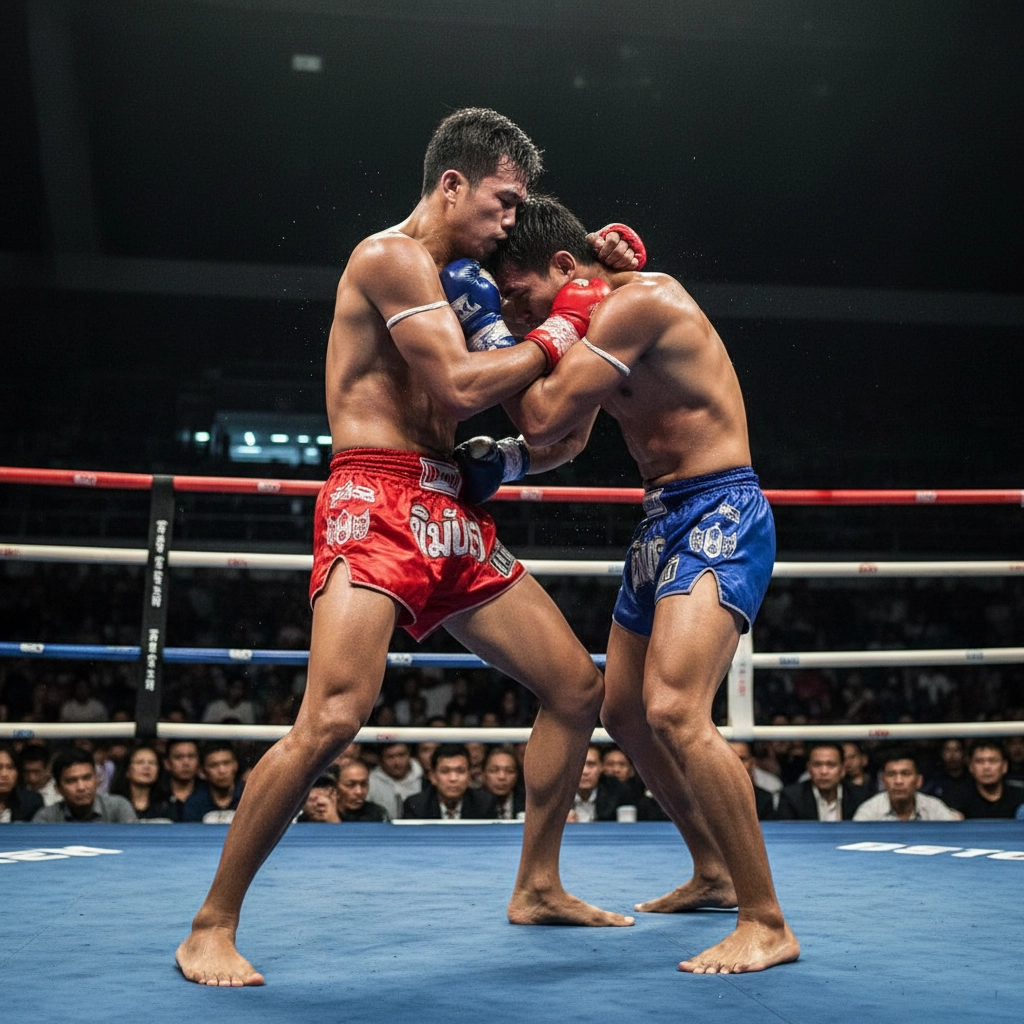
Dominant clinch starts with solid head control and posture collapse; securing the plumb lets you deliver repeated knees and set up elbow short strikes while neutralizing opponent punches. Top stadium fighters convert clinch entries into 2-6 scoring knees per sequence and use sweeps to score and off-balance foes.
Effective clinch work combines anatomy and leverage: control the occiput, squeeze the shoulder to limit escapes, and drive knees to the thigh and ribs to sap movement-Nong-O’s clinch shows how incremental damage and position wins rounds. Train specific drills: 30-second clinch rounds focusing on entries, 3x per session, plus partner resistance to simulate escapes. After isolating posture, pull the head down and deliver two tight knees while stepping to the opponent’s weak side.
Timing Strategies
Shift timing by altering tempo mid-combination, using feints to create 100-300 ms windows for counters. Drill with a metronome at 60-90 BPM and alternate bursts of 1-3 strikes followed by a 0.2-0.3s pause to force opponents off rhythm. Sparring rounds with planned tempo changes teach you to exploit openings; elite fighters often vary cadence every 3-5 exchanges to break a steady guard.
Understanding Rhythm
Internalize rhythm by syncing strikes to breath and a beat: inhale on approach, exhale on impact to stabilize power. Use 3-5 strike combinations and count beats aloud or run 30-60s focused tempo drills to build consistency. Over time this reduces timing variance by about 0.1-0.2s, turning marginal openings into reliable counter windows during later rounds.
Anticipating Opponent Moves
Read micro-movements-weight shift, hip coil, shoulder drop and eye line-to anticipate attacks. A rear hip coil or a 20-40° shoulder turn frequently appears 150-250 ms before a strike; stepping off-line and firing a counter inside that window converts telegraphing into scoring or fight-ending opportunities. Prioritize drills that force recognition under pressure.
Train anticipation with structured drills: partner throws randomized sets (e.g., 10 sets of 5 strikes at variable timing) while you block and counter, aiming to react within 250 ms and record hit-rate. Coaches report read-rate gains of 30-50% after ~1,000 targeted repetitions; supplement with slow-motion video review and clinch-entry practice to punish predictable teeps and hip-load telegraphs.
Power Generation
Generating knockout-level force comes from synchronized motion: hips, legs, and shoulders must connect in a single whip-like sequence. Drive begins with a planted rear foot and explosive hip rotation, transferring momentum through a braced core to the strike; even a 10-20% increase in hip turn can markedly raise impact. Timing the rotation to meet the opponent’s frame maximizes energy delivery.
Importance of Stance
Stance width and weight spread determine leverage and safety-wider than shoulder-width increases torque but slows recovery. Adopt roughly a 60/40 weight distribution toward the rear when loading a power shot, bend knees to use the legs as pistons, and angle the lead foot to open hips; these adjustments speed hip snap and reduce telegraphing.
Utilizing Core Strength
Strong rotational core is the conduit for force; train with medicine-ball throws, cable woodchops, and anti-rotation planks to build explosive transfer. Aim for 2-3 sessions weekly, 3 sets of 8-12 explosive reps for throws, and hold planks 45-90 seconds to stabilise; this reduces energy leakage between hips and shoulders during strikes.
On technique, emphasize diagonal bracing-drive the external oblique on the strike side while the opposite glute fires-to channel torque into the limb. Progressive overload matters: increase ball weight or cable resistance every 2-4 weeks to convert gym power into sharper, more consistent in-ring impact.
Precision in Techniques
Fine-tuned targeting converts force into fight-ending strikes: hitting a 2-3 cm window at the temple or a 5-6 cm zone on the liver produces far more effect than wild power. Coaches note hip rotation can add ~20-30% more power when aligned with precise contact. Use spatial cues-1-2 cm adjustments in clinch range or a 45° elbow angle-to exploit openings, conserve energy, and increase stoppage probability.
Targeting Key Areas
Prioritize the most vulnerable points: the temple (neuro-disruption), the liver (systemic shock), collarbone and the inner thigh above the knee (10-15 cm from patella) to collapse base. Aim hooks slightly behind the eye-line (≈2-3 cm) and diagonally at the rib junctions (≈45°) for maximum mechanical advantage. Drill with taped circles matching intended windows to ingrain precision under fatigue.
Accuracy in Delivery
Small timing and angle shifts decide outcomes-landing within 50-100 ms of an opening vastly improves connect-rate. Use mitt work with 1-2 cm targets and shadowbox at 30% reduced tempo to perfect trajectory. Subtle foot pivots creating 5-10° angles open the temple or jaw, while synchronized hip-leg-arm sequencing turns intent into on-target impact.
Drill specificity accelerates gains: run 4 x 3-minute rounds focused on one window (temple or liver), employ slow‑motion video to correct 2-4 mm misses, and add light partner resistance at ~60% intensity. Set a measurable goal-maintain a >60% hit ratio in drills-and progress speed over 6-8 weeks; objective metrics prove improved accuracy, not just harder swings.
Tips for Successful Engagement
Exploit timing and distance to enter with purpose, then commit with measured power and surgical precision.
- Train 3-5 strike combinations mixing punches, kicks, elbows and knees
- Use angled footwork and timed feints to open defenses
- Control the clinch to break posture and create finishing strikes
Any engagement should favor high-quality, well-timed attacks over volume without control.
Practicing Combinations
Shadowbox 10 minutes focusing on rhythm, then hit the heavy bag for 3-5 rounds of 3 minutes to develop power and endurance; pad sessions should simulate counters and transitions-e.g., jab-cross, low kick, knee-repeated in sets of 6-10 to engrain timing and precision so combinations become automatic at fight tempo.
Drilling with Partners
Start partner drills at slow speed to polish mechanics, progress to 50-75% intensity for reaction work, then occasional full-speed exchanges; emphasize controlled entries, catching kicks, and counter sequences to refine distance management and the clinch transitions while minimizing injury risk from uncontrolled contact.
Structure partner sessions with specific progressions: 5 minutes technical flow (no power), 3 rounds of situational sparring (2 minutes each) from defined positions-e.g., defending a teep then countering with a sweep-then finish with one controlled full-speed round; this model accelerates decision-making under realistic fatigue and teaches which timing and combination choices consistently produce openings.
Factors Influencing Attack Success
Micro-timing, range control and setup sequence determine whether a technique lands; elite exchanges often resolve in windows under 300 ms, demanding split-second reads and compact mechanics. Power generation depends on hip torque and kinetic linking, with peak impulse delivered in roughly 0.1-0.2 seconds, so sequencing and weight transfer matter more than raw strength. Tactical feints, angle changes and recovery positioning create openings fighters convert in practice rounds of 3-5 minutes. Assume that a 200-300 ms reaction window can decide an exchange.
- Timing
- Power
- Precision
- Distance
- Conditioning
- Feints & Strategy
Physical Conditioning
Athletes structure sessions to match round demands: long aerobic base work plus high-intensity anaerobic repeats (example: 10×30s sprints with 60s rest) and 3-5 rounds of fight-pace bag and pad work to simulate fatigue. Strength emphasis targets hip rotation, unilateral leg power and neck stability to absorb and deliver force, while plyometrics and medicine-ball throws improve strike velocity. Proper recovery, hydration and weight management sustain output and reduce injury risk.
Mental Preparedness
Mental training blends visualization (10-15 minutes daily), controlled exposure via situational sparring (2-3 high-intensity sessions weekly) and breathing protocols to keep heart rate and decision speed steady under pressure. Tactical rehearsal-cue-based drills for counters and feints-sharpens pattern recognition; sustained focus under fatigue separates opportunistic fighters from reactive ones.
More detail: integrate pressure drills that mimic the last minute of a round-start with predictable sequences, then add variable cues (partner changes tempo or guard) to force real-time adaptation; use heart-rate feedback to target coping thresholds and practice 2-5 minute box-breathing between rounds to lower arousal. Emphasize decision-making under fatigue with repeated situational reps so tactical choices become reflexive, and track progress with sparring metrics like successful counters per 10 exchanges.
Pros and Cons of Different Approaches
| Aggressive pressure | Pros: high strike volume, controls center and pace (often 50-80 strikes/round); Cons: drains energy, vulnerable to sharp counters and timing traps. |
| Counter-striking | Pros: efficient damage, higher accuracy and KO potential off mistakes; Cons: lower output (15-35 strikes/round), depends on defensive reflexes and opponent errors. |
| Clinch-heavy | Pros: dominates close range, scores knees and controls (effective in rounds 2-5); Cons: taxes cardio, risks elbows and positional fouls when against expert elbowers. |
| Kick-heavy (teeps/leg kicks) | Pros: controls distance, reduces opponent mobility over 2-4 rounds, wears down base; Cons: slower setup, can be checked or countered by quick entries. |
| Technical boxing | Pros: explosive combinations and head movement create knockouts; Cons: can be out-kicked or kneeed in close range unless integrated with teeps/clinch. |
| Feint-based/deceptive | Pros: opens predictable defenses, increases clean shots landed; Cons: overfeinting telegraphs intentions and invites counters if timing fails. |
| Stance switching/southpaw | Pros: creates unconventional angles and timing advantages; Cons: foot-position battles and exposure to lead-leg attacks if mismanaged. |
| Defensive shell/counter-shell | Pros: minimizes incoming damage, capitalizes on opponent overcommitment; Cons: can look passive to judges and limits offensive scoring opportunities. |
| Body-first strategy | Pros: accumulates damage, reduces opponent output after repeated shots; Cons: requires many successful entries to be decisive, less immediate flash. |
| Brawling/wild aggression | Pros: can end fights quickly via KO; Cons: high damage taken, poor sustainability over multiple fights or rounds. |
Offensive vs. Defensive Strategies
Offensive systems prioritize constant pressure and high output-fighters may throw 40-80 strikes per round to dominate judges and force finishes-while defensive systems emphasize evasion, counters and energy conservation, often yielding higher strike accuracy but fewer attempts; blending both, such as timed pressure punctuated by tight defense, tends to outperform pure extremes in championship-level Muay Thai.
Short-term vs. Long-term Gains
Short-term tactics chase immediate finishes-headshots, sudden clinch bursts or aggressive flurries-whereas long-term methods focus on attrition: repeated leg kicks, body work and positional control that degrade opponents over 2-4 rounds; combining a quick-finish mindset with progressive damage planning gives the best odds of both early KO and sustained success.
More detail: trainers often periodize fight plans-targeting a quick finish when film shows an opponent’s specific weakness, but defaulting to long-term wear when facing durable, evasive fighters; for example, systematic calf and thigh damage across rounds lowers opponent strike output by observable margins and increases late-round KO probability, while overcommitting for instant KOs raises concussion and recovery risk across a career.
FAQ
Q: How do timing, power, and precision work together to make an attack effective in Muay Thai?
A: Timing creates the window when an opponent is off-balance, exposing a target; power is generated by correct biomechanics-weight transfer, hip rotation, foot pivot and relaxed-to-tight acceleration; precision places that power on a small, vulnerable area (chin, liver, solar plexus, temple, collarbone). When combined, a well-timed strike lands with maximal force on a high-value target, ending or turning the exchange in your favor. Missing any one element reduces effectiveness: perfect timing and power with poor precision wastes energy, and precise hits without power often won’t change the fight instead of setting up follow-ups or counters.
Q: What drills best develop timing, power, and precision without sacrificing one for the others?
A: Use paired drills that isolate each element then combine them: 1) Timing-double-end bag, reaction mitts, partner rhythm drills (countdown releases, light-triggered openings) and slow-motion sparring to read cues; 2) Power-heavy bag work focusing on hip snap, weight transfer and breathing, plyometrics (jump squats, medicine-ball slams) and resistance training for core/hip drive; 3) Precision-targeted mitt rounds, aiming for small pads, spot-only heavy-bag reps and shadowboxing to specific targets. Integrate by alternating rounds that emphasize one element, then do mixed rounds (pad rounds with timed openings and target mandates). Film drills and measure impact/placement so technique adjustments are concrete, not guesswork.
Q: How do I apply timing, power, and precision during sparring or a fight when opponents are unpredictable and fatigue sets in?
A: Simplify under pressure: use economy of motion and high-percentage setups (teep or jab to set range, then a single power-driven strike to a predefined target). Conserve energy by shortening your strikes and relying on hips and stance to generate force rather than big telegraphed swings. Practice situational sparring that simulates fatigue-later-round rounds, shortened rest, controlled clinch exchanges-to train decision thresholds; employ feints and rhythm changes to create timing windows you can exploit even when tired. Maintain breathing, keep guard tight, and prioritize clean, well-timed single strikes or short combinations over prolonged flurries to maximize effect.
Recommended Posts