
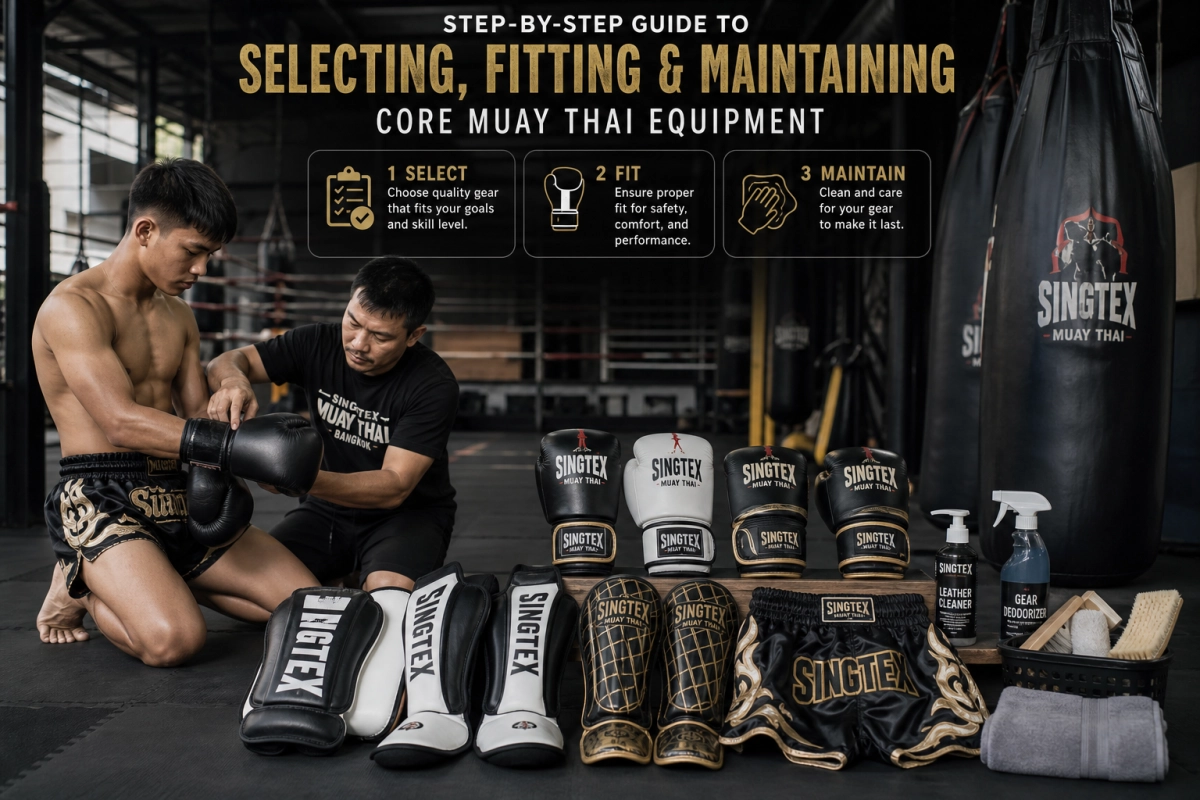
Choosing and fitting essential Muay Thai equipment for safe, effective training
Muay Thai equipment choices influence safety, technique development, and comfort for beginners, amateur fighters, and regular gym-goers. This guide explains core items — starting with gloves and hand wraps — and gives stage-based recommendations so readers can progress responsibly through training, pad work, and sparring while respecting Muay Thai’s traditions and practical needs.
Key selection principles for Muay Thai equipment
Before selecting gear, prioritize fit, protection, durability, and intended use. Muay Thai is the “art of eight limbs” — punches, kicks, elbows, and knees — so equipment must protect hands, shins, head and groin while allowing mobility for techniques like the teep (front push kick), roundhouse kick, and clinch (close-range grappling and knee work).
Understand training contexts: pad work means the coach or partner uses focus mitts or Thai pads to develop timing and power; checking refers to lifting the shin to block kicks. Each context has different gear requirements, from lighter bag gloves to bulkier sparring gloves.
Gloves and hand wraps: selecting, fitting, and maintenance
Gloves protect a fighter’s hands, wrists, and the training partner or coach during bag work, pad work, and sparring. Hand wraps stabilize the wrist and knuckles; proper wrapping reduces wrist sprains and protects small bones in the hand.
Choose gloves based on activity (heavy bag, pad work, or sparring), hand size, and experience level. Hand wraps come in cotton or Mexican-style (elastic) fabrics; length and tightness matter for protection and comfort.
Stage-based glove and wrap recommendations
Different training stages call for different glove weights and wrap lengths. Below are practical picks for each stage.
- Beginners (first 3–6 months): 14–16 oz gloves for general classes to prioritize partner safety and technique. 180–200cm cotton wraps for small to average hands.
- Amateur competitors: 12–16 oz gloves depending on weight class and competition rules; reserve stiffer, competition-style gloves (12 oz) for fights. 200cm Mexican-style wraps for firmer wrist support.
- Gym-goers / regular trainees: 14–16 oz for sparring and classes, 12–14 oz lighter gloves for heavy bag and power work. Keep both wrap types on hand for variety.
Fitting and wrapping: step-by-step
Proper fitting and wrapping are simple but essential actions performed before every session to prevent injuries and improve performance.
- Try gloves on: fingers should reach but not bunch at the knuckles; wrist closure (Velcro or lace) must allow firm wrist support without cutting circulation.
- Wrap systematically: start at the wrist, circle the thumb, wrap across knuckles 3–4 times, then secure wrist support and tuck the end. Ensure the wrap is snug, not constrictive.
- Test movement: make a full fist and extend the wrist; there should be no painful pressure and the glove should feel stable.
Maintenance tips for longevity
Good maintenance extends gear life and keeps the gym environment hygienic. Air gloves and wraps after use, hand-wash wraps weekly, and condition leather gloves occasionally with a suitable leather balm.
- Dry gloves open and upright; avoid direct heat which cracks leather.
- Rotate pairs if training frequently to let padding recover.
- Replace wraps when elastic fades or cotton frays; replace gloves when padding compresses or seams split.
Next, the guide will cover shin guards, mouthguards, shorts, groin protection, and bag/pad gear with fitting guidance and stage-based recommendations for safe progression.
Shin guards: protecting checks, kicks, and clinch contact
Shin guards must balance protection with mobility. Muay Thai requires both hard impacts (checking kicks) and repeated strikes during pad/bag work; choose guards that shield the shin and instep while allowing knee movement for clinching and throws.
Selection tips
- Material: leather or synthetic for durability; foam density matters — firmer foam absorbs heavy checks better, softer foam is more comfortable for light pad work.
- Coverage: full-length guards cover shin and instep; ¾-length cover the shin only and are lighter for conditioning. Full-length are preferred for sparring and beginners.
- Attachment: Velcro straps or sleeve-style. Straps allow a tighter fit and easier adjustment, sleeves give a cleaner fit but can slide on sweaty legs.
Stage-based shin guard recommendations
- Beginners: Full-length guards with firm foam and secure straps to protect shins while learning checking technique and for partner safety in drills.
- Amateur competitors: Use competition-legal guards for sanctioned events; keep a separate, thicker training pair for sparring to protect both you and opponents.
- Gym-goers / regular trainees: Own two pairs — one thicker for sparring, one lighter sleeve or ¾-length for high-rep pad work and conditioning days.
Fitting and care
- Try them on with the shorts you train in; guards should sit just below the knee and cover the instep without pinching the ankle.
- Secure straps snugly; test by performing a few kicks and checks to ensure they don’t rotate.
- After training, air-dry and wipe with a mild disinfectant spray; replace when foam no longer springs back or straps lose elasticity.
Mouthguards and groin protection: fit, material, and stage advice
Dental and groin protection are non-negotiable. A properly fitted mouthguard prevents dental fractures and concussions from jaw impact; a groin guard shields against accidental low strikes during sparring and clinch work.
Mouthguard selection and fitting
- Types: stock (least protective), boil-and-bite (customizable, good balance of fit and cost), custom-made (best fit and protection, made by a dentist).
- Fit test: breath and speak while wearing — should stay in place without constant biting. Boil-and-bite must be molded carefully following instructions.
- Stage picks: beginners can start with a quality boil-and-bite; amateurs and competitors should invest in a custom guard for maximal protection and comfort.
Groin guard selection and fitting
- For men: cup with jockstrap or compression shorts with integrated cup. Ensure the cup sits snugly over the pubic bone without shifting during movement.
- For women: pelvic protectors or compression shorts with a contoured protector. Comfort and full coverage of the labial area are essential.
- Stage-based advice: beginners should use a simple, well-fitted cup; competitive athletes should use higher-grade, anatomically shaped cups or custom protectors for heavy sparring and fights.
Shorts and bag/pad gear: mobility, durability, and pairing gear to training goals
Shorts must allow full range of motion for kicks, knees, and clinch movement. Bag and pad gear (Thai pads, kick shields, heavy bags) should be selected by the gym, but individual choices like weighted ankle wraps or conditioning gloves can complement personal goals.
Shorts: fit and fabric
- Cut: traditional short cut with wide leg openings and split hems for unrestricted roundhouse and teep motion.
- Material: satin or polyester blends that are light, quick-drying, and durable; reinforced waistbands for secure fit.
- Stage picks: beginners can choose affordable, comfortable shorts; competitors may prefer tailored or custom shorts that fit competition regulations and personal style.
Bag and pad gear considerations for trainees
- Heavy bag gloves: slightly firmer 12–14 oz options for power work; pair with wraps that offer extra wrist support.
- Conditioning aids: ankle weights, weighted vests, and resistance bands can be introduced gradually for gym-goers focusing on strength, but avoid during technical sparring sessions.
- Gym etiquette: always use appropriate protective gear on pads and bags to avoid injuring partners or damaging equipment; dry hands and gear before switching between pad partners.
Care and selection for pads, bags, and personal conditioning aids
Whether the gear is owned by the gym or by you, proper selection and upkeep preserve performance and safety. Choose bags and pads with durable outer material and adequate density for your intended work, and treat conditioning aids as supplementary tools used under coach guidance.
- Match pad density to training: firmer Thai pads for powerful strikes, softer pads for drill repetitions and beginners.
- Inspect stitching, straps, and hang points before each session; report or remove damaged items to prevent injury.
- Wipe pads and bag surfaces after use, air-dry in a ventilated area, and rotate heavy bags if used frequently so filling and seams settle evenly.
- Use personal conditioning aids (ankle weights, resistance bands) sparingly and under supervision; they should never replace technical practice with pads and partners.
Training sustainably: invest in safety, consistency, and respect
Good equipment choices are only one part of steady progress. Invest in fit, maintenance, and habit: keep gear clean, replace what’s worn, and lean on your coach’s guidance. Prioritize partner safety and gradual increases in intensity over quick upgrades in weight or toughness.
- Make routine equipment checks and hygiene a part of every session—your gear is a training partner too.
- Progress equipment upgrades with your skills and training frequency, not with ego; heavier or stiffer gear is for specific purposes, not default use.
- Stay curious and ask experienced training partners or coaches when unsure—proper fit and usage are often easier to learn hands-on than from specs alone.
- Respect tradition and the training environment: clean gear, follow gym rules, and protect teammates during pad work and sparring.
With consistent attention to fit, protection, and care, your equipment will support safer, more effective Muay Thai training for years to come. Keep learning, keep checking your gear, and train responsibly.
