Match your approach to your strengths and the opponent in front of you
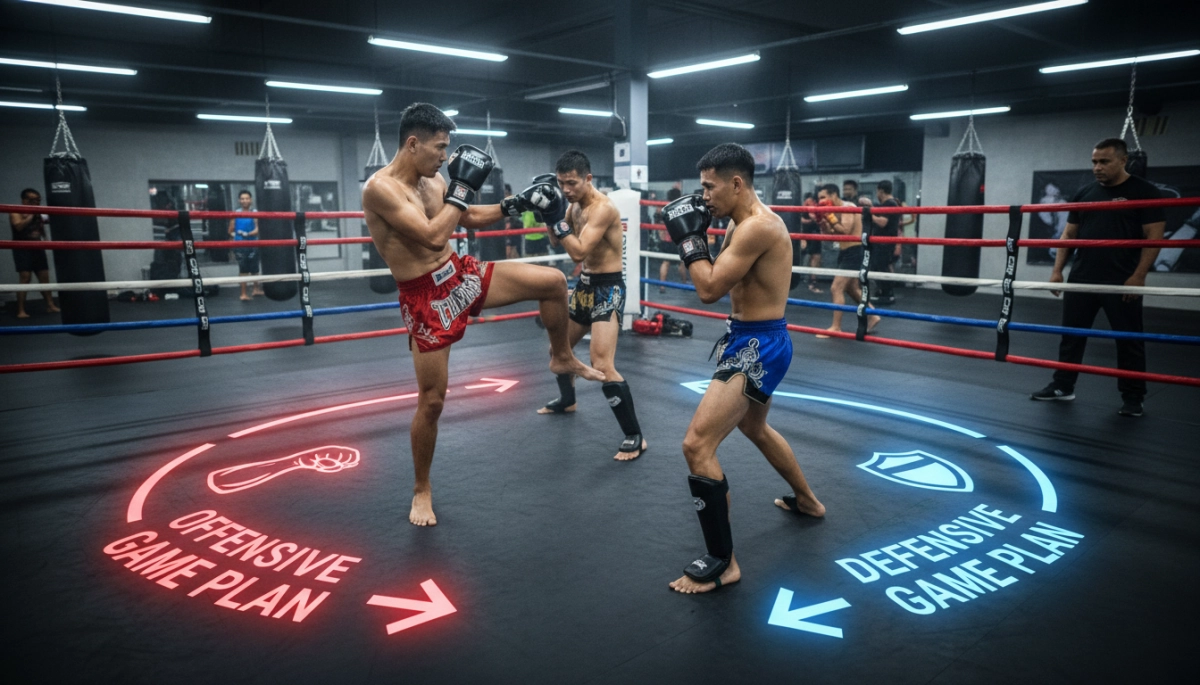
Before you step into the ring, you need a clear way of thinking about the fight. You should base your game plan on three factors: your physical attributes (speed, power, cardio), your technical strengths (kicks, clinch, footwork), and the opponent’s tendencies (aggressive, counter-fighter, slow starter). When you identify those elements, you can choose whether to pursue a pressure-heavy offense, a counter-driven strategy, or a control-and-clinch approach.
Ask yourself simple, tactical questions while preparing: What range gives you the best tools? Where is your opponent weakest? How will you handle fatigue or an early knockdown? Your answers will shape how you allocate energy across rounds and which techniques you rehearse most in sparring.
Core offensive and defensive tools every fighter should master
Offensive fundamentals: create problems for your opponent
Your offense should be a set of repeatable solutions that exploit the opponent’s range and timing. Focus on a small number of high-percentage actions you can execute under pressure rather than a long list of flashy moves.
- Jab and push-kick cadence: Use the jab to measure and disrupt rhythm; combine with a teep (push-kick) to control distance and set up heavier weapons.
- Low kick package: Target the thigh with single and check hooks to reduce mobility and open up high strikes later.
- Combination sequencing: Practice 2–3 strike chains (e.g., jab–teep–cross or low kick–cross–elbow) that flow naturally from your stance and footwork.
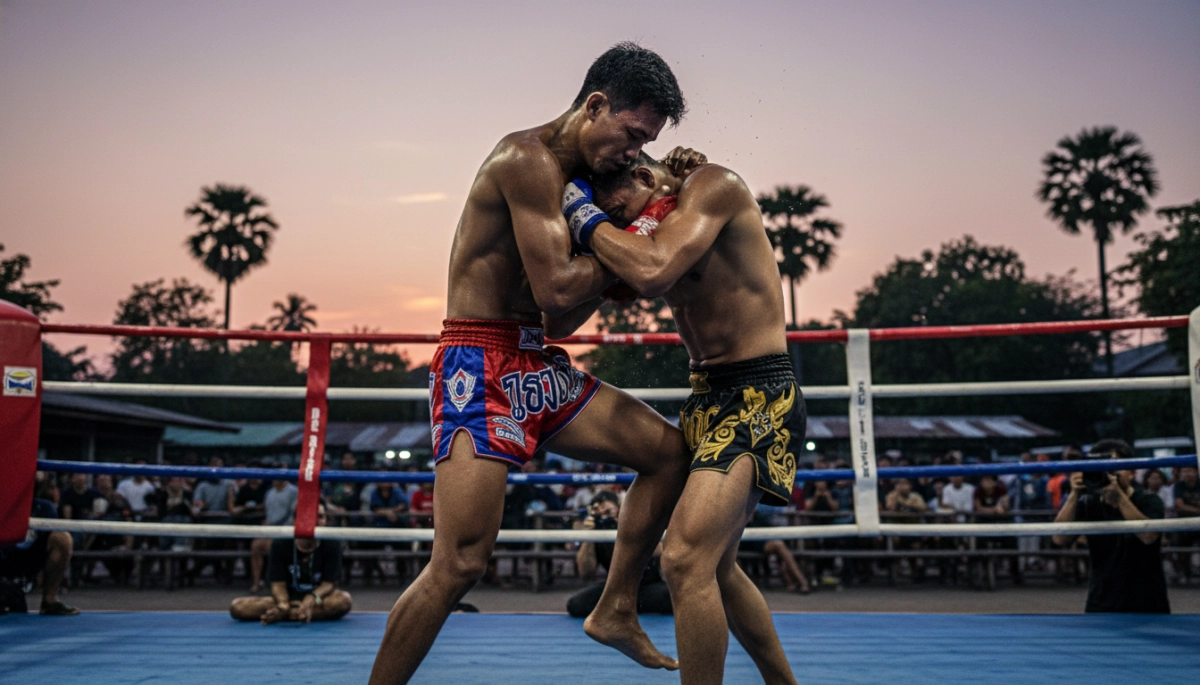
- Clinch initiation: If you rely on knees, drill clean entries to clinch from kicks or a frame so you don’t lose position when you close the gap.
- Finish management: Know when to escalate power versus when to maintain control and score rounds—particularly important in five-round fights.
Defensive fundamentals: reduce risk and create counter opportunities
Defense in Muay Thai isn’t just about surviving; it’s about turning defense into offense. Prioritize low-risk, high-reward defensive habits that you can rely on when the exchange heats up.
- Head movement and guard discipline: Use small slips and tight blocks to avoid big shots without exposing yourself to kicks or knees.
- Distance management: Master the teep and angled footwork to force opponents to reset, giving you time to counter or reset your own attack.
- Check and counter low kicks: Learn to check quickly and respond with a punch or push-kick to punish predictable kicking habits.
- Clinching defense: Practice hand positioning and hip control to prevent the opponent from dominating the clinch and landing knees.
- Energy-aware defense: When tired, tighten your guard and rely on lateral movement rather than expanding your offense—conservation is a defensive tool.
With these foundational choices and tools drilled into your muscle memory, you’ll be ready to construct clear offensive plans and stout defensive reactions; next, you’ll learn how to combine these fundamentals into round-by-round tactics, targeted drills, and in-fight adjustments to execute your chosen game plan effectively.
Round-by-round tactics: structure your plan from bell to bell
Think of each round as a chapter with a purpose. Your pre-fight analysis should tell you what you want to achieve in rounds 1–3 versus rounds 4–5, but have flexible milestones: secure range, sap legs, control clinch, or finish. Here’s a simple, adaptable framework you can tailor to your strengths and the opponent’s tendencies.
- Round 1 — Probe and establish: Use the jab, teep, and light low kicks to map timing and reaction. Prioritize information-gathering over heavy commitment; note how the opponent reacts to feints, how they reset after kicks, and whether they counter immediately or wait.
- Rounds 2–3 — Implement and escalate: Convert the information into patterns. If the opponent opens to the body after a low kick, increase leg work and add a kick–elbow chain. If they overcommit on counters, set traps with feinted teeps into straight punches. Manage cardio by alternating high-output 30–60 second bursts with controlled periods of distance management.
- Rounds 4–5 — Force clarity: Depending on score and condition, either press for a finish or protect a lead. If ahead, rely on safe scoring actions (clean teeps, jabs, clinch control). If behind, increase volume and risk: more combinations, upstairs kicks, and clinch work to create scoring opportunities.
Within each round, build mini-cycles: 1–2 minutes of probing and range control, followed by a 20–45 second computed offensive spike where you deploy your highest-percentage combinations. Between cycles, reset with movement and breathing to avoid wasted energy.
Targeted drills to ingrain the game plan
Drills should recreate decision points from your round structure so your responses become automatic under fatigue. Prioritize quality over quantity: drill the scenarios most likely to occur in your upcoming bout.
- Pattern-conditioning rounds: Five 3-minute rounds where each round’s goal mimics fight phases (round 1 info-gathering, rounds 2–3 escalation, rounds 4–5 pressure). Keep intensity realistic; the focus is execution under progressive fatigue.
- Constraint sparring: Limit targets or techniques to force specific solutions—e.g., “no punches” rounds to sharpen kicks and teep control, or “no low kicks” to practice defending and countering differently.
- Sequence repetition on pads: Drill your 2–3 go-to combos to muscle memory, then add a counter response so the sequence becomes a small fight plan (jab–teep–cross then check the low kick and return a cross).
- Clinching scenarios: Start from neutral clinch entries and practice breaking posture, hip control, and disposals; add situational rounds where one partner can only defend to simulate fatigue-heavy clinch dominance.
- Video + notes loop: Record sparring, annotate moments you failed to implement the plan, then re-drill those exact moments until corrected.
In-fight adjustment checklist: fast reads that change tactics
Make quick, prioritized reads and have one clear counter for each. Use this mental checklist between rounds or during pauses to pivot effectively.
- Opponent’s early round energy — slow starter? Push early. Fast starter? slow the pace.
- Response to teep/jab — do they reset or counter? If they reset, increase feints; if they counter, set counters of your own.
- Leg status — are low kicks effective? If yes, amplify; if not, change target (body/head) or add inside leg kicks.
- Clinching success — are you winning knees? Continue. Losing position? Tighten hand placement or disengage to strike at range.
- Cardio and cuts — adjust output to conserve a lead or force finishes when the opponent visibly tires.
Train these reads until they’re almost reflexive: when you can diagnose and switch tactics in a 30-second corner check, your game plan stops being a script and becomes a living strategy.
From plan to performance
Making a game plan is only half the work; the other half is making it automatic. Prioritize consistent, focused practice that forces the exact decisions and fatigue states you expect in the ring. Use sparring, pad rounds, and constrained drills to test single adjustments so you can trust those changes when the bell rings.
Lean on short feedback loops: record sessions, review with a coach, and correct one or two recurring issues at a time. Keep your tactical palette small and reliable—fewer, well-executed tools beat a long list of half-trained options when pressure rises.
Finally, treat each fight as an experiment. Enter with a clear objective, iterate between rounds, and afterward catalog what worked and what didn’t. For more drills and tactical breakdowns you can incorporate into training, visit Muay Thai Scholar.
Key Takeaways
- Build a game plan off your strengths, rehearse a small set of high-percentage tools, and match those to your opponent’s tendencies.
- Structure rounds into probing, escalating, and finishing phases, and train those exact scenarios under fatigue.
- Make fast reads between rounds and drill a single, clear adjustment so you can pivot confidently during a fight.