What you should understand before placing a Muay Thai winner bet
You’re likely drawn to Muay Thai winner betting because it’s straightforward: you pick which fighter wins. Before you place a stake, though, you should understand the different markets, typical bet types, and the regulatory risks that can affect your wager. Betting options commonly include straight winner (moneyline), method-of-victory (KO, TKO, decision), and prop bets (round of victory, point spread in some promotions). Each market has different odds and sometimes different legal treatments depending on where you live and whether you use an on-site or online bookmaker.
Another key point is the distinction between regulated and unregulated operators. If you use a licensed bookmaker in your jurisdiction, you’ll benefit from consumer protections like dispute resolution and responsible gambling safeguards. Unlicensed offshore sites may offer attractive odds but carry greater legal and financial risk: you may have limited recourse if a payout is withheld, and some payment providers block transactions to unregulated sportsbooks.
Practical checks to do before you bet
- Confirm the bookmaker holds a valid gambling license in your country or region.
- Verify legal betting age and identification requirements where you live.
- Check whether combat sports betting is explicitly permitted or restricted by local law.
- Review withdrawal and deposit rules, particularly for cross-border or cryptocurrency payments.
- Look for clear rules about fight result disputes, e.g., no-contest rulings or disqualifications.
How national rules can change whether you can legally bet on Muay Thai
Legal frameworks for sports betting vary widely. You should expect three broad models: a tightly regulated public monopoly or state-licensed market, a liberal licensed private market, and jurisdictions where most commercial sports betting is prohibited. Your rights and responsibilities depend on which model applies where you reside or where the bookmaker is licensed.
Examples of different national approaches
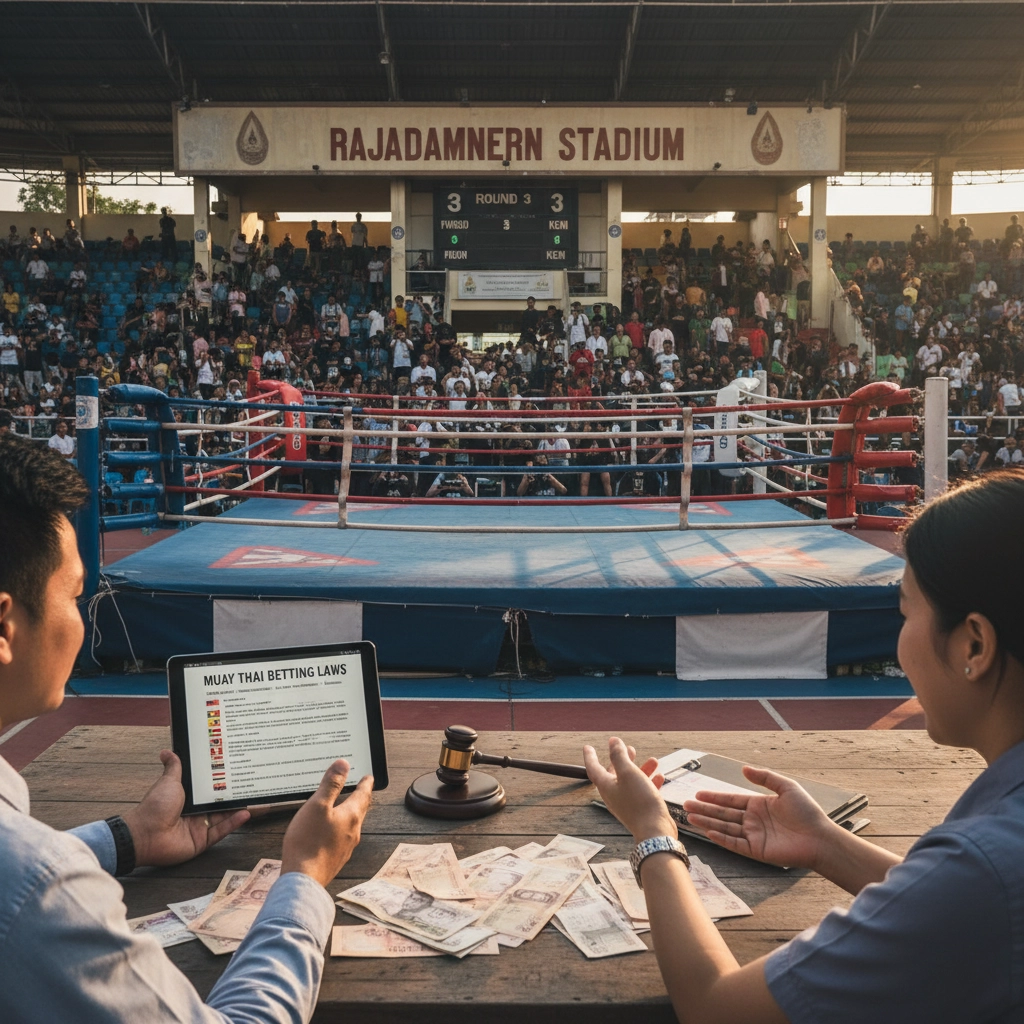
- Thailand: Muay Thai is the national sport, but most commercial sports betting is illegal domestically. Informal wagering remains common at events, and online betting is largely constrained; you should not assume legal protection if you bet through an unlicensed operator.
- United Kingdom: The UK has a mature licensing regime. If you use a UK-licensed operator you benefit from robust protections and clear rules about markets, payouts, and advertising.
- United States: Rules vary by state since the 2018 federal change. Some states allow sports betting (and licensed online sportsbooks) while others still prohibit it; you must follow the law of the state where you are physically located when you place the bet.
- Australia: Sports betting is legal and regulated, but in-play betting and credit betting rules are strictly controlled; you’ll find licensed operators that cover Muay Thai markets.
- Japan: Gambling laws are restrictive; commercial sports betting is limited to certain public sports, so private Muay Thai wagering is mostly unavailable through legal channels.
Because rules are detailed and often change, you should always check the local gambling regulator and the terms of any bookmaker before you commit funds. In the next section, you’ll get a country-by-country breakdown with precise legal rules, licensing examples, and step-by-step guidance on how to place a compliant Muay Thai winner bet where it’s permitted.
Country-by-country legal breakdown and practical examples
Below are practical summaries of how a handful of key jurisdictions treat Muay Thai and other combat-sports winner betting, with licensing examples and what to watch for locally. This is not exhaustive; always verify current rules with the regulator named.
– United Kingdom: The UK Gambling Commission (UKGC) governs remote and retail sports betting. Licensed operators must show market rules, fair pricing, and a clear complaints process. If you bet with a UKGC-licensed bookie you get consumer protection, age verification, and ability to escalate unresolved disputes to the independent Adjudicator for Gambling. Before wagering check that the operator’s UK license number is displayed and that Muay Thai markets are listed in the firm’s sports rules.
– United States: Regulation is state-based since 2018. States such as New Jersey and Nevada permit regulated online and retail sports wagering (Nevada also has long-standing in-person rules). You must be physically present in a state that permits sports betting to use its online books — geolocation and IP checks are enforced. Confirm the state regulator (e.g., New Jersey Division of Gaming Enforcement, Nevada Gaming Control Board) and the sportsbook’s state license. Some states still prohibit commercial sports betting completely; betting across state lines or via offshore sites can carry legal and financial risks.
– Thailand: While Muay Thai is culturally central, most commercial sports betting remains illegal under Thai law. Informal event-side wagering persists but lacks legal protection. Do not rely on offshore operators to provide legal cover if you are in Thailand: transaction blocking and criminal enforcement are possible. If you’re outside Thailand and wish to bet on Thai fights, use a licensed operator in your own jurisdiction.
– Australia: Sports betting is legal and regulated at state/territory level; major licensed operators operate under state/territory approvals and must comply with strict consumer protections (age verification, responsible gambling measures, record-keeping). In-play and credit betting are tightly controlled; confirm whether the operator offers in-play Muay Thai markets and what restrictions apply.
– Japan and other restrictive jurisdictions: Japan restricts private commercial sports betting to a few publicly sanctioned sports. In many countries with similarly tight regimes, legal Muay Thai wagering via licensed channels will be unavailable. Using offshore sites or VPNs to bypass local prohibition is risky and often breaches both local law and bookmaker terms.
Step-by-step: placing a compliant Muay Thai winner bet
1. Confirm legality where you are located: check your national or state gambling regulator website for current rules on combat-sport betting.
2. Choose a licensed operator: verify the operator’s license number and regulator (UKGC, state regulator in the US, relevant state/territory regulator in Australia, etc.).
3. Verify your account and age: complete ID checks required by the operator for KYC and anti-money-laundering compliance.
4. Fund your account through approved payment methods available in your jurisdiction (bank transfer, card, regulated e-wallets). Avoid offshore payment routes if they contravene local rules.
5. Read the market rules: confirm how the book defines a Muay Thai “winner” (e.g., no-contest handling, disqualification, timing rules) and whether in-play betting is allowed.
6. Place the bet while physically located in a jurisdiction that permits the wager — do not use VPNs to spoof location.
7. Keep records: save bet confirmations, market rules, and transaction receipts in case of disputes.
8. Know the dispute route: if the operator refuses payout, escalate through the operator’s complaints process, then to the licensing regulator or an independent adjudicator where available.
Staying compliant and responsible as rules evolve
Gambling laws and sportsbook rules change frequently. If you wager on Muay Thai, treat compliance as ongoing: monitor your local regulator’s notices, review any operator updates, and keep clear records of bets and market rules. Prioritize licensed operators, use approved payment methods, and never attempt to conceal your location with VPNs or similar tools. When in doubt, contact the regulator listed on the sportsbook’s license page for guidance — for example, many bettors and operators refer to the UK Gambling Commission for standards and dispute procedures.
Frequently Asked Questions
Can I use offshore sportsbooks to bet on Muay Thai if betting is restricted where I live?
Using offshore sportsbooks when local law prohibits sports betting can expose you to legal and financial risk, including blocked transactions and lack of consumer protections. It’s safer to wait until betting is legal in your jurisdiction or to use operators licensed where you are physically located.
How do sportsbooks typically handle a Muay Thai match declared a no-contest or overturned result?
Resolution of no-contests, disqualifications, or overturned decisions depends on the bookmaker’s market rules. Some books void affected bets, others apply official result dates or governing-body rulings. Always read the specific market rules before placing a bet and save those rules for any subsequent dispute.
What’s the quickest way to verify a sportsbook’s license and complaint route?
Check the bookmaker’s website for a visible license number and the name of its regulator, then verify the license on the regulator’s public register. Also review the operator’s published complaints procedure and escalation path to the regulator or an independent adjudicator if available.
Recommended Posts