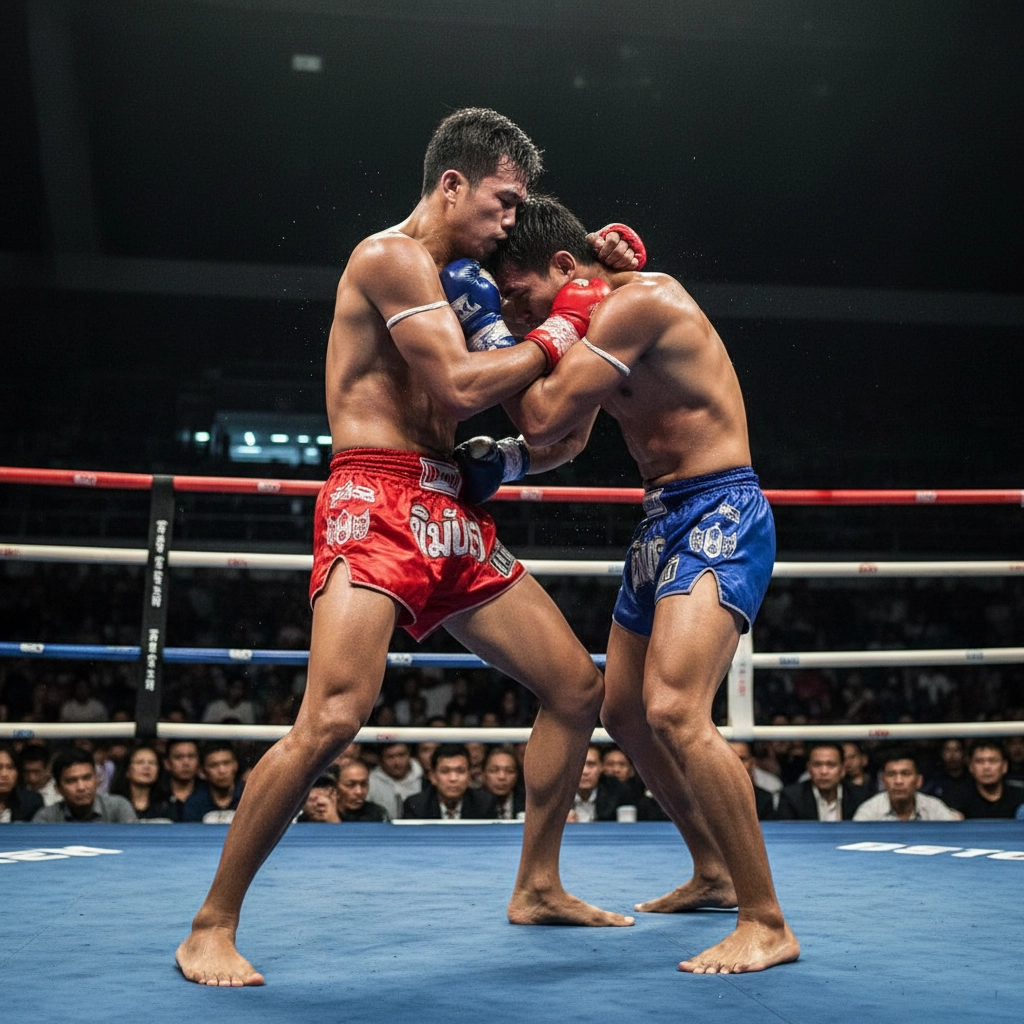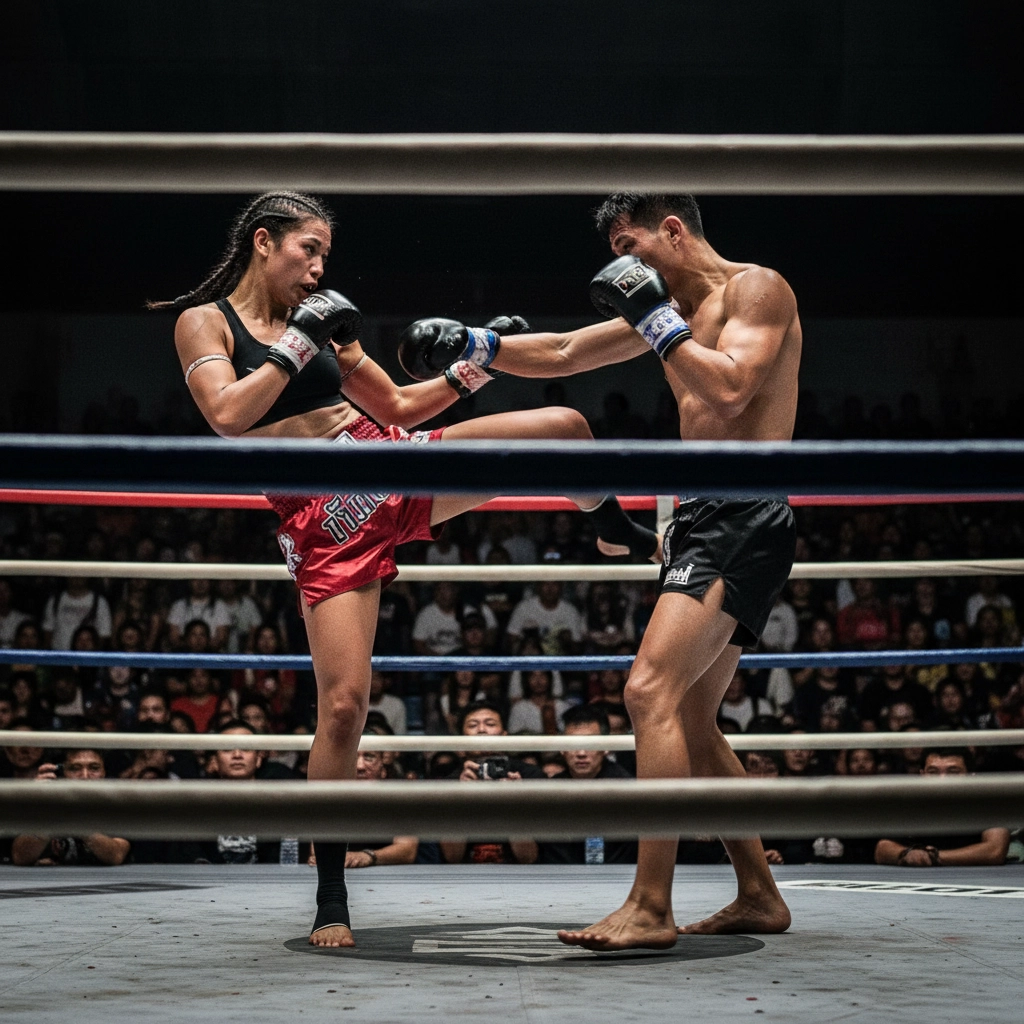
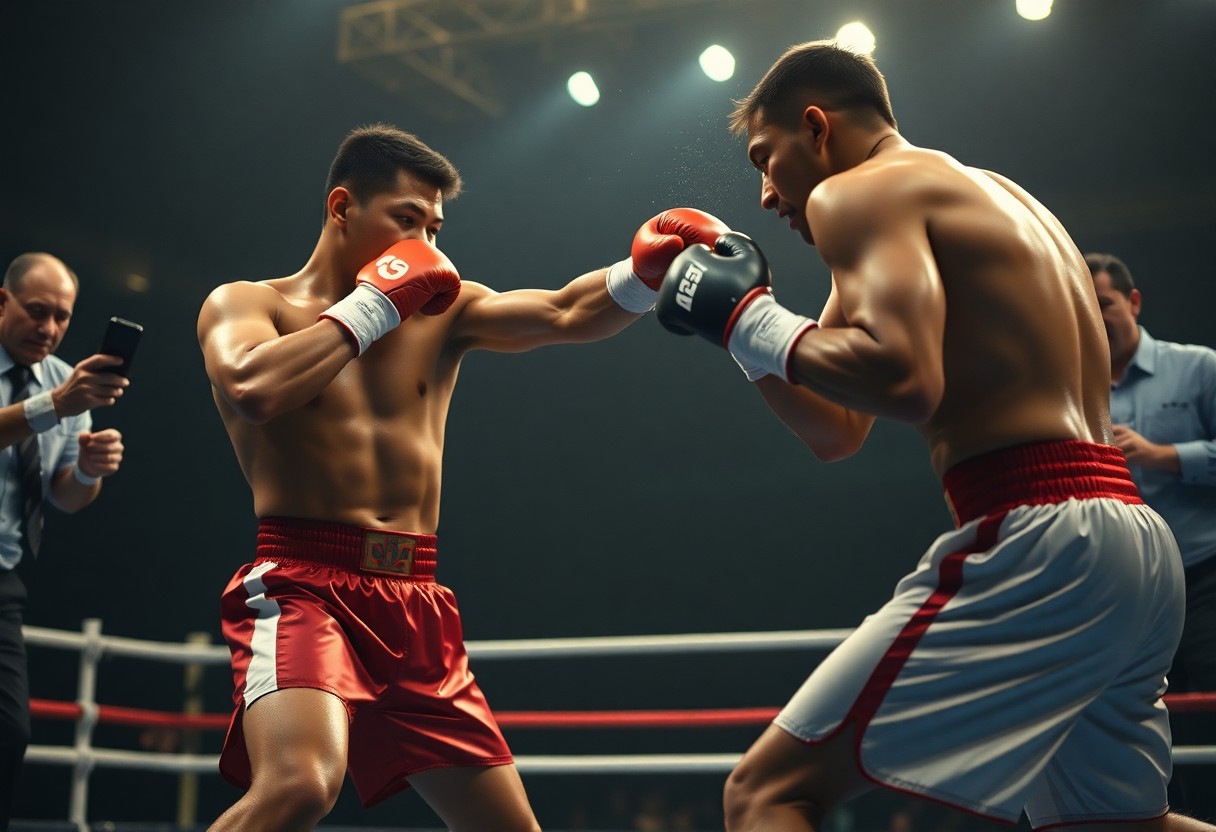
There’s a psychological architecture behind effective offense in Muay Thai: mastering control of the pace and calibrated pressure to unsettle opponents, using timing and rhythm to open windows while minimizing the danger of overcommitting and being countered, and sequencing strikes to create exploitable openings that convert into dominance, conditioning both body and mind for sustained aggression and tactical confidence.
Types of Attacks in Muay Thai
Strikes split into clear categories: long-range teep and kicks to manage distance, mid-range punches and low kicks to break base, close-range elbows for cuts and stagger, and the clinch for knees and sweeps. Coaches analyze when to switch between pressure and tempo to force errors; elite fighters mix 8-15 combination sequences per round to keep opponents reactive.
| Attack | Purpose / Effect |
|---|---|
| Teep (push kick) | Maintain range, interrupt rhythm, off-balance opponent |
| Roundhouse kick | Deliver high power to body/head; accumulates damage to leg or torso |
| Elbow | Create cuts, stop forward momentum, high fight-ending potential |
| Knee (clinch) | Target ribs/head in clinch, sap cardio, control posture |
| Low kick / sweep | Damage lead leg, reduce mobility, score balance shifts |
- pressure
- tempo
- range
- timing
- clinch
Striking Techniques
Start combinations with a jab or teep to probe, then land a heavy roundhouse or low kick; pro fighters often string 4-8 strikes per exchange. Integrate feints and level-changes-jab to the face then low kick to the thigh-to break a guard. Mixing elbow traps into close combinations increases stoppage probability and forces opponents to widen their guard, creating headshot openings.
Clinch Strategies
Pummel for inside control, use the neck tie to isolate an arm, then deliver knees to the ribs and thighs; successful clinch specialists land an average of 3-6 knees per dominant clinch exchange. Timing hip turns and off-balances turns control into scoring opportunities, while short, repeated clinch entries sap cardio and shift judges’ perception toward dominance.
Hand placement decides outcomes: a deep double-collar tie neutralizes an opponent’s posture, while an underhook chain limits their escape and sets up sweeps or knees; typical high-level drills emphasize 20-30 seconds of sustained clinch pressure to simulate fight fatigue. Perceiving weight distribution changes and frame weaknesses lets you time the snap-down, the lateral sweep, or the decisive knee exactly when the opponent tries to recover.
Factors Influencing Attack Psychology
Attack choices depend on stacked variables: a fighter’s mental state, physical conditioning, opponent tendencies, and the fight’s tempo. For example, increasing output by ~30% while closing distance often forces a clinch or defensive collapse in amateur bouts. Coaches use round markers (first 90 seconds, last minute) to shift pressure strategies. Small reads-like a dropped elbow-change risk calculus instantly. Recognizing how these elements interact mid-fight lets you control pace, force reactions, and maintain sustained pressure.
- Mental state (confidence, arousal)
- Conditioning (stamina, recovery)
- Opponent behavior (tendencies, adjustments)
- Distance & timing (range control, counters)
- Fight context (round, score, damage)
Fighter’s Mental State
A controlled arousal level sharpens reaction time and feint execution; anxiety narrows vision and raises reaction latency. Practical drills-3×3-minute pressure rounds with 30s active recovery-train calm aggression and decision speed. Elite fighters use breathing cues between exchanges to reset; a simple 2-3 deep breaths can lower heart rate by measurable beats and restore strategy under stress. Maintain confidence through incremental successes to sustain effective offensive pressure.
Opponent’s Behavior
Reading opponent patterns-their preferred counters, guard drops, and retreat rate-determines whether to escalate pressure or bait counters. If an opponent retreats 60% of the time, long-range kicks and feints open scoring; if they surge forward, short-range elbows and clinch entries punish aggression. Use cumulative rounds of observation (first two minutes) to build a responsive attack plan and exploit repeated habits.
Drill-based examples help: track 10 exchanges to quantify tendencies, then adjust output by 20-40% on the next rotation to test reactions. For instance, when a southpaw constantly circles left to avoid teeps, commit to straight right kicks and step-through knees; when a fighter drops the right hand after jabs, target the exposed temple with timed kicks. Prioritize exploiting repetitive patterns while avoiding overcommitment to a single tactic.
Tips for Controlling the Pace
Alternate bursts of aggression with short recovery windows-apply pressure for 10-20 seconds then retreat 5-10 seconds to reset opponents’ patterns. Use high-volume flurries to force defensive errors, mix long-range feints to break rhythm, and clinch selectively to grind tempo. Prioritize controlling the pace by reading breath and weight shifts. Thou should impose decisions through distance and timing.
- Distance control
- Tempo variation
- Feints & setups
- Clinch pressure
Timing and Rhythm
Exploit human reaction windows-visual reaction averages ~200-250 ms-by varying attack intervals; shifting your rhythm every 15-30 seconds or after 3-6 exchanges keeps opponents off balance. Integrate syncopated strikes (off-beat kicks at 100-200 ms offsets) and sporadic pauses to create openings, and track patterns with a 30-60 second round plan to force predictable counters.
Body Language Awareness
Scan for body language tells-weight shifts, head tilt, exhalation changes and hand drops often precede committed strikes by 0.15-0.25s; read these micro-signals to time counters and close distance when opponents telegraph heavy shots. Hide your own tells by controlling breathing and stance.
Drill body-language reading with video and partner work: review 30-60 fps footage to spot 0.1-0.2s pre-strike cues, run 5-10 minute spar segments focusing solely on reads, and practice exaggeration drills where partners amplify tells so you learn to exploit them under pressure. Emphasize neutral breathing, compact guard, and deliberate weight placement to deny opponents exploitable cues; use slow-motion replay to catalogue 5-10 recurring tells per opponent and build a counter-plan around the most obvious telegraphing habits.
Step-by-Step Guide to Maintaining Pressure
Step-by-Step Actions
| Action | How / Why (specifics) |
|---|---|
| Establish range | Use the lead teep every 6-8 seconds to measure distance; follow with a jab to set a 2-3 strike combo and force the opponent to react. |
| Control tempo | Apply pressure in 8-12 second bursts (2-4 combinations) then reset for 3-5 seconds to avoid gas tank depletion and bait counters. |
| Mix targets | Alternate head, body, and low kicks – e.g., head jab, body cross, rear low kick – to create openings; land a low kick on 2 of 5 engagements to break stance. |
| Feints & timing | Feint on 1 in 3 attacks to move the opponent’s guard; step-in within 0.4-0.6s after a successful feint to capitalize. |
| Clinching | After closing from 3-4 strikes, initiate the clinch; aim for 2-5 knees per clinch before resetting to maintain pressure without overcommitting. |
| Protect & reset | Keep head off center and use lateral steps; if countered, retreat 1-2 steps and re-initiate with a teep to prevent being caught by a strong counterpunch. |
First Steps to Establish Control
Begin by closing distance with a measured lead teep and immediate jab-cross; work at 60-70% intensity for the first minute to test reactions. Pair two quick punches with a rear low kick to force weight shifts, then press forward with a short burst of 2-4 strikes. Favor a head-body sequence to open defenses and avoid overcommitting on single, telegraphed attacks.
Adapting Based on Opponent’s Response
If they retreat, increase low kicks and teeps to punish movement; if they counter, switch to feints and step-ins, using feints on 1 in 3 attempts to create timing. When opponents clinch, respond with short inside elbows or break to the outside and reset distance for another pressure cycle.
Against a counter-heavy striker, prioritize angled entries and lead-body shots to draw counters, then trap with a rear low kick: for example, jab-body-cross then low kick on the third strike. Versus a retreater, target the lead leg every other exchange to limit mobility (aim for landings on 20-40% of low kicks). Maintain bursts of pressure-8-12 seconds-followed by 3-5 second resets to manage energy and reduce exposure; avoid lunging on wild entries, since overcommitment opens you to powerful counters.
Pros and Cons of Aggressive vs. Tactical Approaches
| Aggressive | Tactical |
|---|---|
| High pressure that forces errors and controls tempo | Point accumulation through precision and timing |
| Higher chance of causing visible damage or knockdown | Lower physical wear, preserves energy across rounds |
| Can overwhelm less experienced opponents quickly | Harder to score vs. fighters who negate distance |
| Consumes more cardiovascular output over a 3‑minute round | Requires superior timing and positional discipline |
| Creates openings for clinch and knees | Greater reliance on feints and counters |
| More predictable patterns for counters | Can fail to dent opponents who absorb pressure |
| Favored by judges when damage is visible | Favored by judges for cleaner, technical scoring |
| Training emphasizes volume, power and forward angles | Training emphasizes timing, balance and lateral movement |
| Higher acute injury and fatigue risk | Requires higher fight IQ and adaptability |
| Psychological pressure can force opponent mistakes | Slower pace can allow opponent to dictate exchanges |
Benefits of Aggressive Engagement
Sustained forward pressure often forces opponents into reactive habits; high‑output fighters can throw 50-100 strikes per 3‑minute round, breaking rhythm and creating clinch opportunities where knees score heavily. Examples like Buakaw’s early career show how volume plus power converts rounds into decisive wins, and judges tend to reward visible damage and ring control when pressure is applied effectively.
Risks of Overcommitting
Overcommitting opens the guard and leaves you exposed to counters, sweeps and clinch traps, while accelerating fatigue-after a burst-heavy round a fighter can drop output sharply in rounds two and three, losing both pace and scoring edge. Excess aggression also increases acute injury risk from counter-elbows or well-timed teeps.
When commitment is unchecked, opponents exploit predictable angles: a missed overhand or pushed kick creates a clear path for a counter knee or sweep that can change a 10‑9 round. In stadium judging a single clean counter or knockdown often outweighs volume; therefore coaches drill situational returns, recovery positioning and punch‑kick checks to mitigate the most dangerous openings that overcommitment produces.
To wrap up
So mastery of attack psychology in Muay Thai means imposing rhythm, varying intensity, sequencing strikes, and reading opponents to force decisions and exploit openings; disciplined tempo control and calibrated pressure turn physical skills into strategic dominance, enabling fighters to dictate exchanges and conserve energy while breaking their opponent’s structure and will.
FAQ
Q: How does controlling pace and pressure change an opponent’s decision-making during a Muay Thai fight?
A: Controlling pace compresses an opponent’s time to think and expands your window for executing planned actions. Sustained high tempo forces faster, more reactive choices that increase mistake likelihood and create openings for counters and clinch entries. Alternating pressure-surges of aggression followed by brief resets-disrupts their rhythm, induces fatigue, and erodes confidence. Watch for slowed reactions, lower hands, and wider stances as signs your pressure is effective; if the opponent begins overcommitting, exploit that with angled counters or timed sweeps.
Q: What mental skills and training methods build the ability to sustain pressure and control tempo across rounds?
A: Develop breath control, emotional regulation, and micro-goal focus. Breathing drills (paced nasal breathing between exchanges) reduce spike anxiety and preserve clarity. Use visualization to rehearse maintaining pace under fatigue and simulate rounds mentally. Train with interval sparring that alternates controlled pressure rounds and active recovery to build pacing instincts. Progressive resistance drills-partner increases effort each round-teach composure under increasing stress. Set tactical checkpoints (e.g., secure three successful clinch entries in round two) to simplify in-fight choices and maintain strategic focus.
Q: How do you apply effective pressure without opening yourself to counters or losing stamina?
A: Apply pressure through smart structure, not constant flurries. Start with range control (jab, low kick) to pin the opponent, then layer feints and rhythm changes to mask intent. Use short, economical combinations that end with a safe exit-step off the angle or clinch to reset. Mix tempo: attack in bursts of 10-20 seconds, then circle and breathe to avoid anaerobic collapse. Defend while pressuring: keep chin down, hands high, and counter-check incoming strikes. Drill partner scenarios where you must maintain forward pressure while defending set counterattacks so timing and recovery become automatic.
Recommended Posts