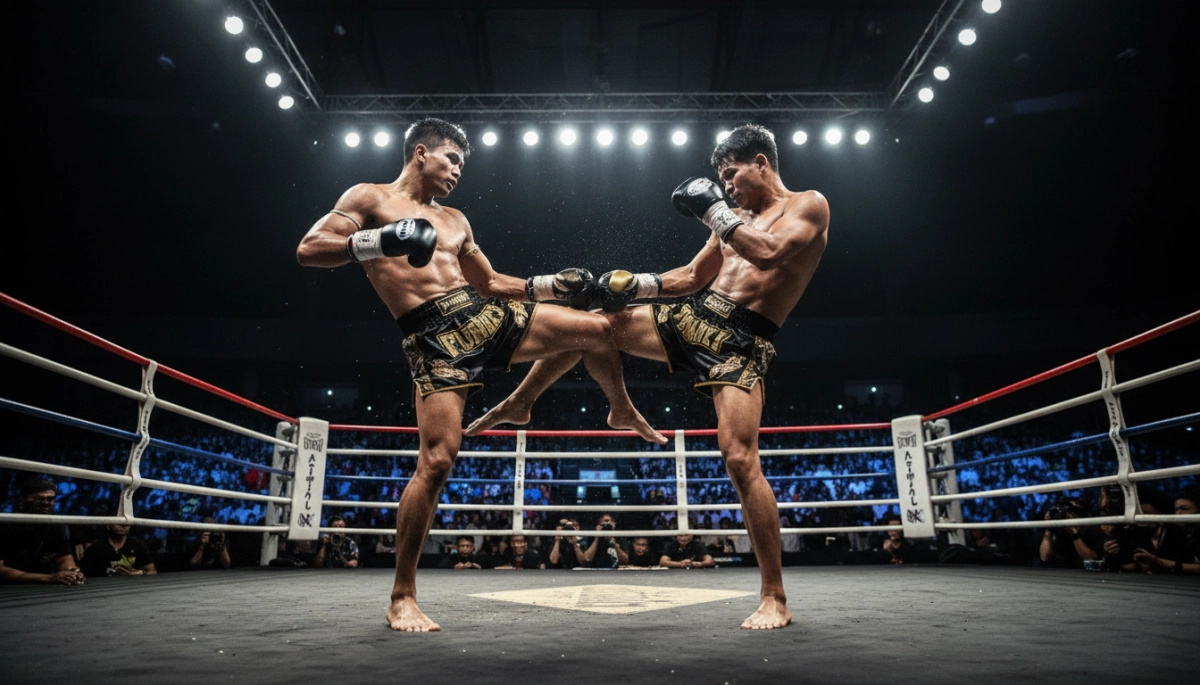
How professional Muay Thai fights reveal the makings of a champion
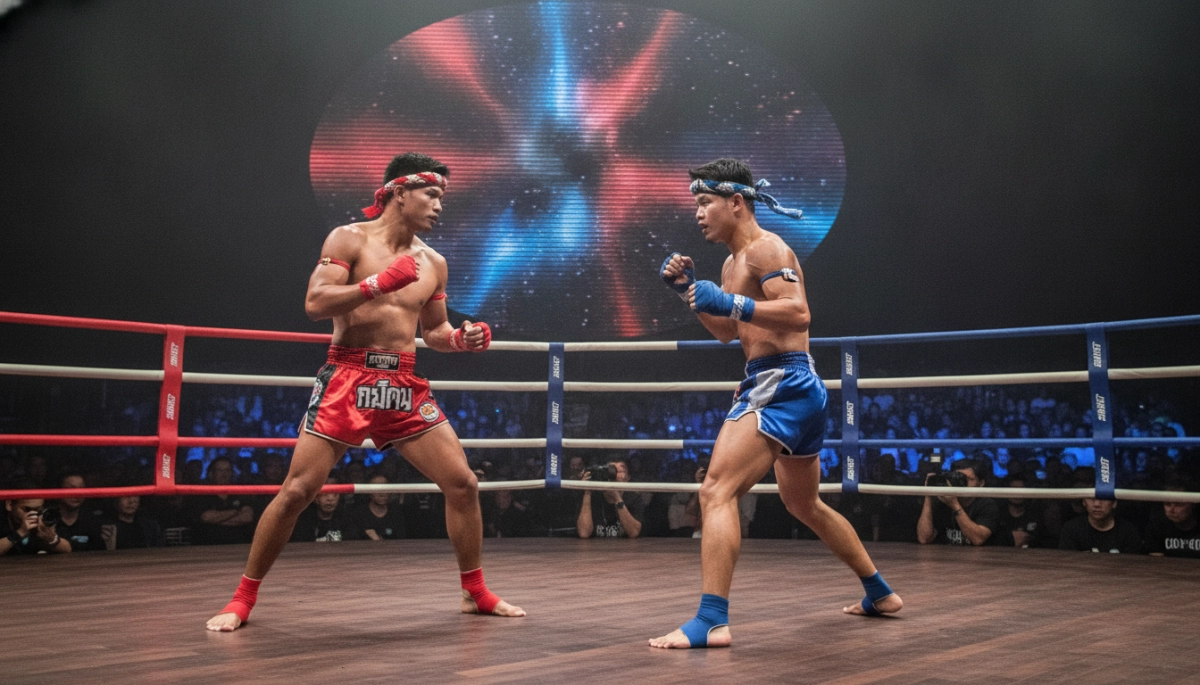
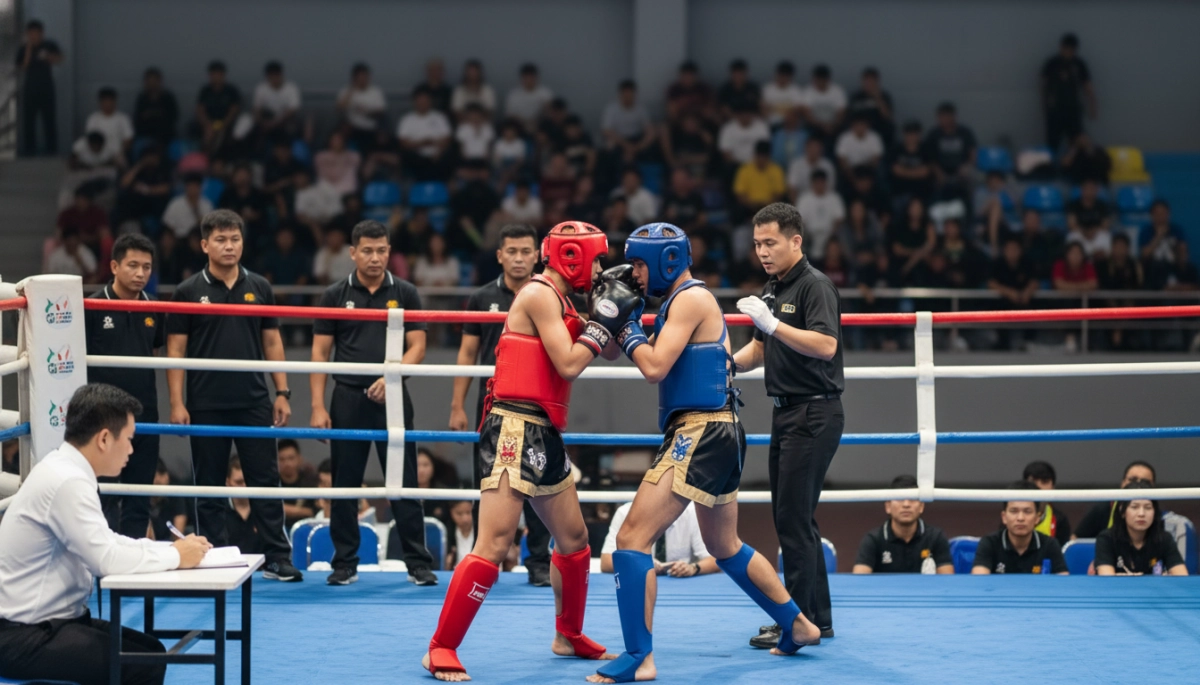
When you watch a high-level Muay Thai bout, you’re seeing more than striking and clinch exchanges — you’re watching a culmination of years of discipline, tactical clarity, and physical preparation. Champions don’t emerge by luck; they combine measurable attributes with fight-day decisions that consistently give them the edge. In this first part, you’ll examine the foundational elements that separate elite fighters from the rest: conditioning, technical fluency, and structured preparation.
How your conditioning and physical profile determine durability and pace
At the professional level, conditioning is non-negotiable. You need aerobic capacity to maintain workrate across five-round fights, anaerobic power for short explosive flurries, and muscular endurance for extended clinch battles. Physical qualities that consistently appear in champions include:
- Cardiovascular endurance that supports sustained pressure without dramatic performance drops late in rounds.
- Explosive power for strikes and takedown-style trips that change momentum quickly.
- Flexibility and balance, allowing you to throw high kicks, recover from counters, and sustain clinch positioning.
- Weight management that keeps you strong and hydrated on fight night rather than drained by extreme cuts.
Training routines you adopt should reflect these goals: interval runs and aerobic base work, heavy bag and pad cycles for power and repetition, strength sessions for stability, and specific sparring to replicate fight fatigue. You can measure progress—VO2 benchmarks, repeated sprint performance, and recovery heart rate—to track your conditioning objectively.
Why technical mastery and ring IQ create repeatable success
Technical skill in Muay Thai is more than a catalogue of kicks, punches, knees, and elbows. It’s the ability to chain techniques, control distance, and read an opponent’s rhythm. When you watch champions, you’ll notice a few consistent behaviors:
- Efficient fundamentals: clean footwork, consistent guard, and economical striking that conserves energy.
- Clinching expertise: dominant clinch positioning, hip control, and the timely release for strikes or sweeps.
- Timing and anticipation: using feints, rhythm changes, and counters to force errors rather than relying solely on volume.
- Adaptability: switching strategies mid-fight when an opponent neutralizes your initial game plan.
Developing ring IQ means drilling scenarios, studying opponents, and reviewing your own fight footage critically. Coaches who emphasize pattern recognition and decision-making speed accelerate this process; you should seek training partners who push a variety of styles so you can adjust quickly under pressure.
With conditioning and technical systems in place, the next critical layer is strategy — the fight plan, camp structure, and the psychological edge you’ll bring into the ring. In the following section, you’ll explore how preparation and mindset shape championship-level performances.
How a fight camp is built: specificity, peaking, and contingency plans
A championship-ready camp is not a series of generic sessions; it’s a phased, opponent-specific program designed to peak your physical and tactical systems simultaneously. After assessing your baseline (strengths, weaknesses, and any injury considerations), a smart camp typically moves through three overlapping phases: accumulation, sharpening, and peaking.
– Accumulation (6–8 weeks out): build volume and technical variety. This is where you reinforce fundamentals, raise work capacity, and install the core aspects of your game plan. Heavy pad cycles, progressive sparring density, and strength maintenance are prioritized here rather than maximal lifting loads or all-out sparring.
– Sharpening (3–5 weeks out): focus narrows. Sparring becomes more tactical—shorter rounds at fight intensity against partners mimicking the opponent’s style. Technical flaws are trimmed, and timing drills replace broad-volume work. Nutrition becomes tightly managed to stabilise weight without performance loss.
– Peaking/taper (final 7–10 days): reduce volume, preserve intensity, and optimize recovery. Sessions are crisp and short; sleep, mobility, and mental rehearsal take a front seat as the body converts training into performance readiness.
Contingency planning is the unsung part of elite camps. Have prepared alternatives for three likely scenarios: opponent’s pressure, evasive counter-fighting, or unexpected clinch-heavy tactics. Create situational sparring sessions and pre-plan two adjustments you’ll make mid-fight (e.g., switch guard to negate a southpaw’s lead elbow; employ level changes to neutralize high knees). Finally, track objective markers—session RPE, morning heart-rate variability, weight trends, and sparring output—so you can identify overtraining early and adjust load to ensure you arrive fresh and sharp.
Psychological resilience: managing momentum, pressure, and the unexpected
Physical preparation means very little without the mental tools to execute under duress. Champions cultivate a psychological skill set that turns pressure into focus and momentum swings into tactical opportunities.
– Arousal control: practice breathing routines, short mindfulness cues, or pump-up rituals so you can down-regulate panic and up-regulate aggression when needed. Test these in high-pressure sparring, not just in theory.
– Scenario rehearsal: simulate adversity in training—start rounds down on points, have partners push an aggressive pace, or create time-pressure drills. The goal is to make emotional responses habitual and predictable under stress.
– Simple decision frameworks: reduce cognitive load with prioritized rules (e.g., “If stepped in, clinch and control; if opponent circles, cut angle and counterkick”). Clear heuristics help when complex problem-solving is impossible mid-fight.
– Handling momentum: learn to delay gratification and avoid chasing every exchange. Champions use breathing between rounds to reset, analyze small windows of opportunity, and make one or two targeted changes rather than flurry adjustments that waste energy.
Resistance to pressure also comes from confidence grounded in preparation. The more specific and measurable your camp work, the easier it is to trust your body and choices when adrenaline spikes.
Team dynamics and corner strategy that win late rounds
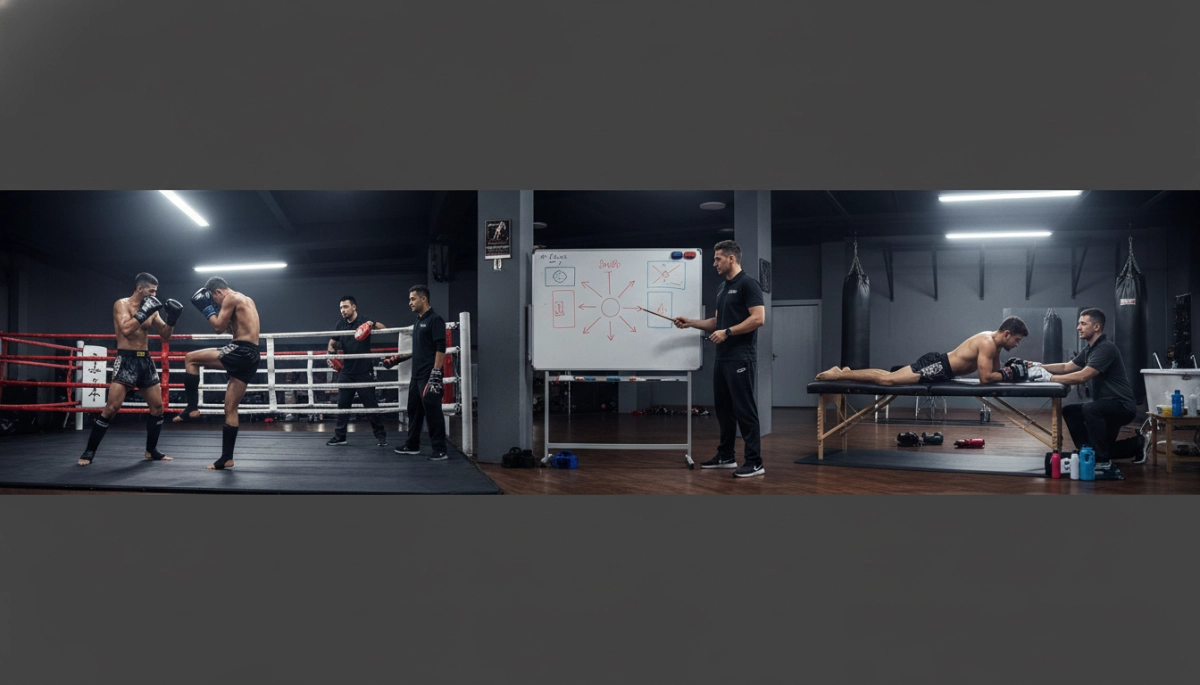
A fighter is only as effective as the team that ensures they enter the ring sharp and leave ready. The corner’s role transcends technical instruction; it manages physiology, morale, and tactical clarity.
– Clear roles: define who handles what—head coach for strategy, assistant for specific technique reminders, cutman for swelling and bleeding, and a nutrition/strength advisor for recovery guidance.
– Controlled messaging: avoid overloading fighters between rounds. Deliver one actionable adjustment, a composure cue, and an encouragement line. Short, consistent language preserves focus.
– Real-time scouting: seconds should monitor the opponent’s fatigue patterns and advise on timing for pressure or clinch entries. Good corners notice small shifts (e.g., decreased hip rotation or slower recovery) that signal when to push.
– Aftercare planning: immediate post-fight protocols for injury, rehydration, and mental processing are vital to protect a champion’s career longevity and learning cycle.
When camp specificity, psychological tools, and a cohesive corner come together, you see fighters who not only survive five rounds but control them. Those are the operational differences that, repeatedly applied, separate contenders from champions.
From preparation to performance
Becoming a champion in Muay Thai is less an event and more a continuous practice: the daily choices about training specificity, the small psychological routines you rehearse, and the quality of the team that manages you. On fight night those elements don’t coalesce because of a single moment of inspiration; they coalesce because they were intentionally built, tested, and adjusted over time. Maintain measurable standards, rehearse adversity, and keep your tactical toolbox simple enough to deploy under pressure.
For rules, event calendars, and further competitive guidance, consult official resources like IFMA competition resources to stay aligned with current standards and opportunities to test your skills.
Key Takeaways
- Championship performance comes from aligned conditioning, technical clarity, and situational strategy practiced under realistic stress.
- Structured, opponent-specific camps with contingency plans and objective monitoring reduce uncertainty on fight night.
- Psychological routines and a concise corner strategy convert preparation into reliable in-ring decisions.
Recommended Posts