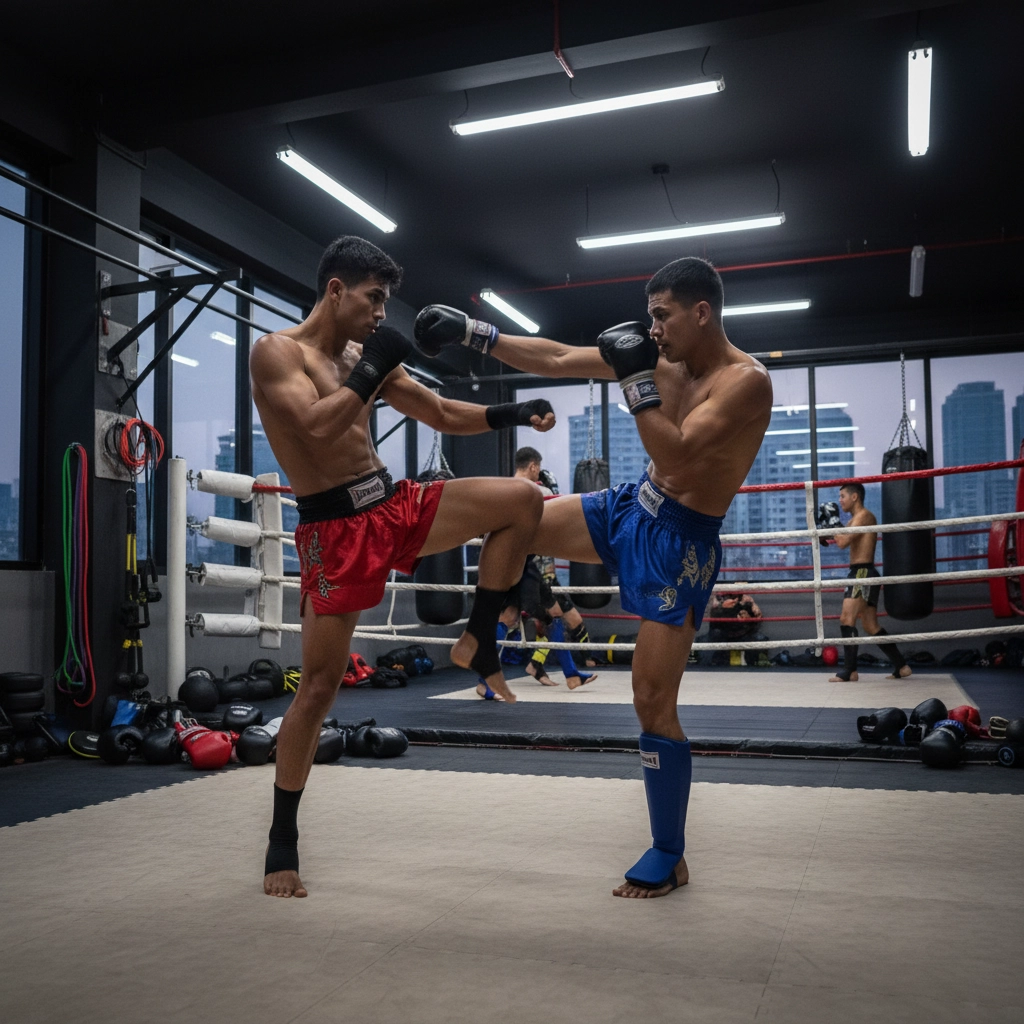
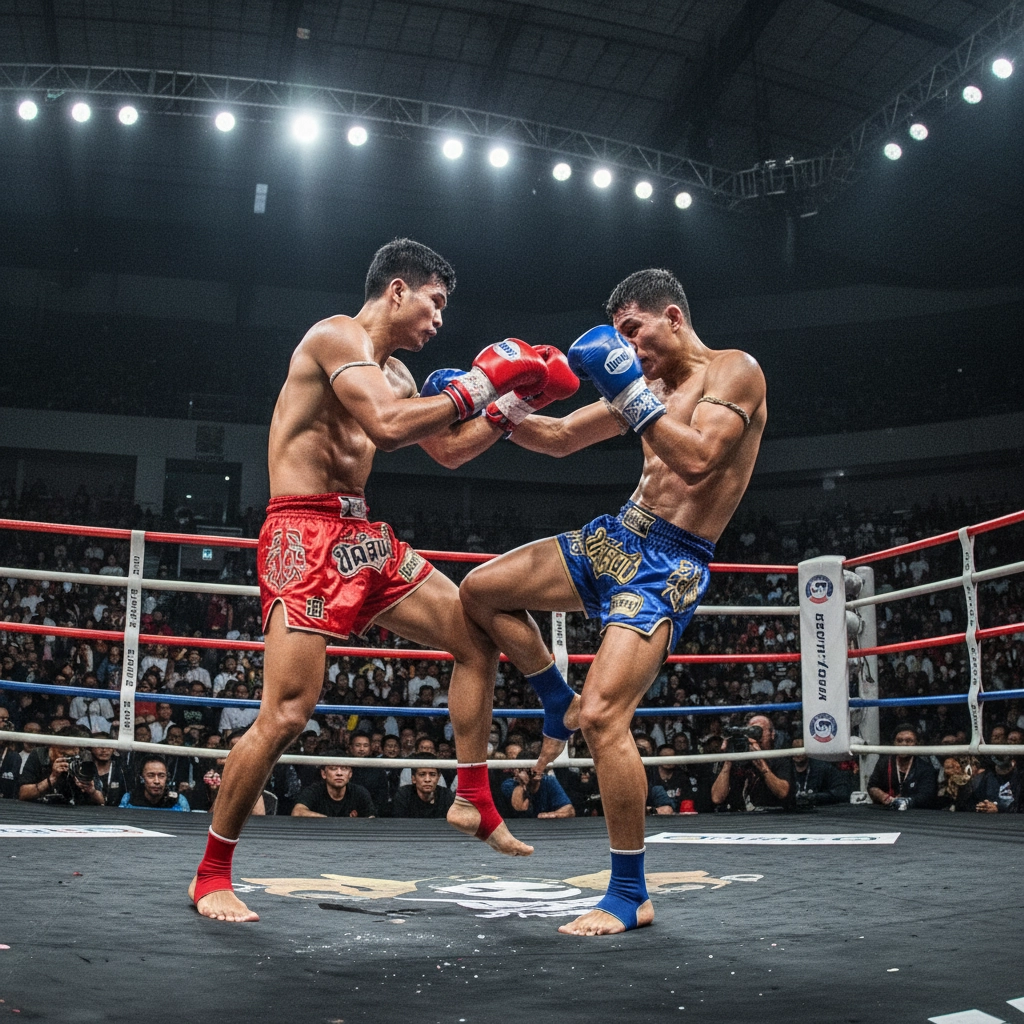
Why forcing openings in a tight Muay Thai guard changes the fight
You can be technically superb, but if you cannot create or exploit openings, your offense fizzles. In Muay Thai, a rigid guard absorbs blows and stifles momentum. When you understand how to break that guard, you shift the fight from a clinic of defense into an opportunity to score, damage, and control pace. This section explains the tactical value of combinations designed specifically to disrupt cover, force reactions, and open lanes for high-value strikes.
What you should expect when you target the guard
- You will provoke predictable reactions (snap-downs, stiff arms, counter-jabs) that you can bait and capitalize on.
- You can create lateral or vertical openings by altering rhythm, changing levels, or combining strikes that attack multiple planes.
- You may sacrifice economy on single strikes to gain position and accumulate damage with follow-ups.
Core principles that make advanced combos effective against a compact defense
Before adding complexity, internalize a few principles that ensure your combinations are more than flashy sequences. Apply these consistently and you’ll find your combos break guards more reliably.
1. Timing and rhythm manipulation
Change tempo to unsettle a stationary guard. Use a jab or low kick to set a rhythm, then suddenly delay or accelerate the next strike. The gap you create by disturbing timing is the entry point for elbows, knees, or straight punches.
2. Attack on multiple planes
Strike high, then immediately alter to low, or combine lateral strikes (hooks/teeps) with vertical ones (knees/elbows). A guard that defends only the head or torso becomes vulnerable when you force it to split attention across levels.
3. Use of feints and committed probes
Light feints elicit guard shifts. Committed probes—short, sharp strikes like a half-buried teep or light overhand—test structure without committing all energy. The goal is to force a defensive posture that opens the opposite side.
4. Angle creation and off-center movement
You don’t need to outpower a guard; you need to change the line of attack. Step offline after a punch or use a pivot to convert straight attacks into diagonal ones that bypass the forearm shield.
Drills and setups to prime your opponent’s guard for advanced combinations
Train these simple, repeatable patterns so your muscle memory can execute under pressure. Start slow and add speed once the mechanics are reliable.
- Rhythm ladder: jab, low kick, pause, jab—vary the pause length to trigger defensive adjustments.
- Plane-switch drill: straight punch to the head, immediately slide to a teep to the midsection, then follow with a lead elbow.
- Angle step repetitions: throw a cross, pivot 30–45 degrees, and deliver a rear roundhouse to the exposed side.
With these principles and drills embedded, you’ll be ready to learn specific advanced combinations that use timing, feints, and angle change to pry open even the tightest defense — next, you’ll get step-by-step combos with timing cues and countermeasures.

Three high–low sequences to pry apart a forearm shield
These sequences exploit a defender who walls up the head with rigid forearms. Each combo forces a choice: protect the head and leave the body, or protect the body and expose the head.
1) Jab — low kick — delayed cross to the chin
– Setup: Throw a sharp jab to establish a rhythm. Immediately throw a low kick to the lead thigh; the defender reflexively drops hands or stiffens.
– Timing cue: Pause 0.15–0.25s after the low kick—this micro-delay tempts the guard to settle back on the legs.
– Finish: Blast a full rear cross to the chin on the rebound. If the guard keeps hands high, the cross connects under the forearm; if the guard drops, it lands clean on the temple.
– Countermeasures: If the opponent counters with a teep, step off-line slightly and re-engage with an outside low kick to their planted lead.
2) Teep to the body — lead hook upstairs — rear elbow
– Setup: Use the teep to push and measure distance. A tight guard will often brace midline.
– Timing cue: Immediately after the teep’s recoil, snap a compact lead hook to the temple area—don’t over-commit.
– Finish: If the guard tightens back, drive a short rear elbow through the opening created by the hook’s arc.
– Drill: Partner pad rounds with the sequence at 50–70% power; increase to full power once rhythm is solid.
3) Double jab — inside low kick — lead uppercut to the jaw
– Setup: Two jabs force vertical attention. The inside low kick forces a hip turn that opens the chin.
– Timing cue: Throw the uppercut as the low-kicked leg returns—this synchrony makes the chin drop into the punch.
– Finish: Follow with a straight rear when the opponent attempts to retighten the guard.
Practice notes: Start these chains slowly, emphasizing the pause between strikes. Use focus mitts and a cooperative partner to ingrain the timing before adding power and feints.
Compact in–and–out combos to crack the chin and ribs
These combos emphasize short entries and exits—ideal against opponents who lean into a dense shield.
1) Slip-jab — rear body shot — quick cross upstairs
– Setup: Slip outside a jab to create a small lane. Deliver a tight rear body shot into the ribs, then spring the cross to the head.
– Timing cue: The body shot should be a committed probe—not full power—intended to make the defender lower their elbows. The cross follows within 0.2s.
– Countermeasures: If the opponent counters with a hook during your step back, clinch briefly and reset distance.
2) Shotgun teep (light) — fast rear leg check — rear roundhouse to exposed side
– Setup: A light teep draws the guard forward. Use a swift rear leg check as a rhythm breaker, then rotate for a rear roundhouse to the now-exposed flank.
– Drill: Perform 5 reps, focusing on minimal telegraphing and immediate retraction of the kicking leg.

Elbow-to-knee chains for clinch-ready opponents
When a defender prefers close, compact protection, turn the fight inward.
Combo: Lead elbow — step inside — rear knee — switch elbow
– Setup: Close distance with a sharp lead elbow to the temple to force a head snap. Step inside the opponent’s arms as they react.
– Timing cue: Drive the rear knee immediately as you secure partial clinch control—this compresses their centerline. Finish by switching hips and delivering a short elbow to the temple or sternum.
– Clinch follow-ups: If you secure double collar ties, use a quick off-balancing knee series (1–2 knees) then push out to reset.
Train these chains in partner clinch drills and on the heavy bag to develop the short-range explosiveness required to make elbows and knees effective against tight guards.
Putting pressure into practice
Turn the concepts and sequences above into habits rather than one-off plays. Drill slowly to build timing, then layer in speed, power, and realistic resistance. Use pads and controlled sparring to test whether your probes, feints, and angle changes actually force a reaction; if they don’t, repeat the drill until they do. Prioritize safety—elbows and knees require tight control early in training—and always work with a coach or experienced partner when moving these combos toward live application. For additional drills and technique breakdowns, consult a reputable reference like Muay Thai fundamentals.
Frequently Asked Questions
How should I phase reps between slow technical work and fast power work for these combos?
Start all new combos at walking speed to lock in mechanics, then progress to 50–70% intensity for timing and rhythm work. Only after those layers are consistent should you add full power or live resistance. A typical progression per session: 10 minutes slow repetition, 10–15 minutes mitt/bag at medium tempo, and 5–10 minutes of controlled sparring focusing on the specific sequences.
What’s the safest way to practice elbow and knee chains against a resisting partner?
Use controlled contact and clear communication. Begin with padded mitts and the heavy bag to develop range and short mechanics. When transitioning to partner drills, agree on intensity, wear elbow pads if available, and restrict target areas to non-acute zones (no full headshots in early stages). Gradually increase intensity only when both partners demonstrate reliable control and timing.
How do I adapt these combinations to an opponent who constantly switches stances or circles a lot?
Prioritize angle creation and feints: use teeps and jabs to halt or gauge movement, then pivot the follow-up to the new line. When stances switch, favor straight-line attacks (teep, straight cross) and short elbows that require minimal reorientation. Drills that include partner movement and stance-switching will help you maintain timing when the opponent is not static.
Recommended Posts