
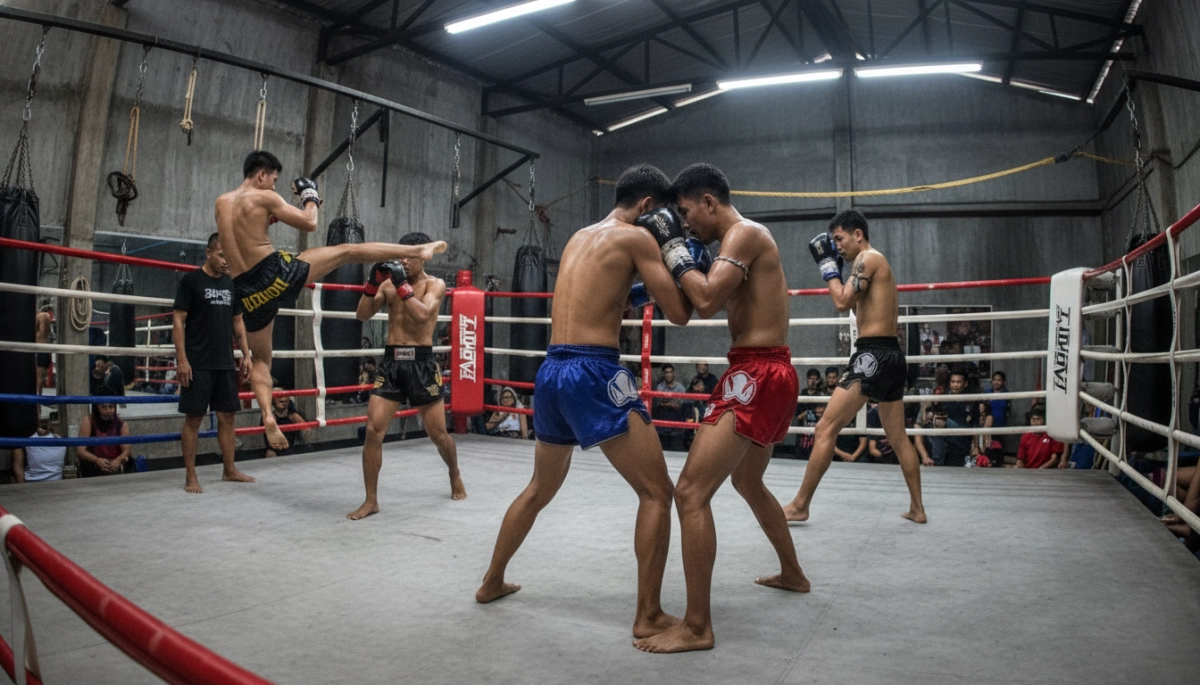
How strategy separates pro-level Muay Thai from casual sparring
You can train powerful strikes and iron conditioning, but at the professional level strategy determines who controls the ring. Professionals turn technique into a coherent plan: they choose when to close distance, which weapons to prioritize, and how to force opponents into mistakes. Understanding these strategic layers helps you see fights more clearly and apply purposeful training to improve your results.
In real matches, a successful strategy does several things at once: it maximizes your strengths, minimizes your vulnerabilities, and manipulates your opponent’s tempo and decision-making. Below are the foundational concepts you’ll encounter in elite Muay Thai tactics and how they translate into simple, repeatable actions inside the ropes.
Core tactical pillars: distance, timing, and clinch control
You should view strategy as a framework built on three interlocking pillars. Each pillar affects the others, so you train them together rather than in isolation.
- Distance management — Controlling range is the most visible strategic element. You’ll use footwork, teeps (push kicks), and feints to maintain the range where your best strikes are effective while limiting your opponent’s preferred weapons.
- Timing and rhythm — Professionals create and break rhythm to land clean shots. You learn to anticipate when your opponent will counter, to interrupt their cadence with sudden bursts, and to capitalize on transitions (e.g., when they reset after a kick).
- Clinch and close-range dominance — The clinch is where Muay Thai becomes a chess match of balance, off-balancing, knees, and short elbows. You’ll practice entries, pummels, and exits that convert close range into scoring opportunities without exposing yourself to sweeps or counters.
Practical drills to link pillars into fight actions
To make these pillars part of your fight IQ, you’ll work on chained drills rather than isolated reps. Examples include:
- Range-control rounds: alternate maintaining outside range with teeps and stepping in for three strikes when the opponent overcommits.
- Rhythm disruption sets: use light feints and sudden combinations to force your partner into predictable counters that you can exploit.
- Clinching sequences: practice entering the clinch from a kick, applying a two-knee combination, and exiting to your preferred stance without losing position.
When you practice with these purposeful sequences, strategy stops being theoretical and becomes an instinctive part of your fight decision-making. You’ll also learn to read opponents quickly — spotting telltale cues like posture, breathing, and weight distribution that reveal their next move.
This foundation prepares you to build specific fight plans for different opponent types; next, you’ll explore offensive systems, defensive counters, and round-by-round tactics that pros use to impose their will throughout a match.
Offensive systems pros use to impose their preferred fight style
Professional fighters rarely rely on one punch-then-kick pattern; they construct offensive systems — integrated chains of strikes and movements — that repeatedly force opponents into the same defensive reactions. The goal is not to land a single spectacular blow but to create predictable responses you can exploit.
Common systems and how to train them:
- Pressure system (close, punish, repeat) — Forward fighters use a mix of teeps to the body, midline elbows, and thigh kicks to sap mobility, then step through with combinations when the opponent’s base collapses. Drill: three-round partner pressure work where the aggressor must maintain chest-to-chest range for 30 seconds, landing at least one knee/elbow combo per exchange while the defender practices escapes and counters.
- Counter system (bait, absorb, reply) — Counter-strikers shape their offense around a single inviting weapon: a low-commitment teep, a heavy check, or a visible wind-up. Drill: pad rounds where the holder alternates light feints with heavy strikes; the counter-striker practices precise timed replies (e.g., catch the kick and return with a cross + low kick).
- Switching and angle system — Fighters who switch stance or constantly angle off turn linear sequences into open shots. Drill: shadowboxing with forced stance switches every 8–10 seconds, ending each switch with a specific two- to three-strike pattern to ingrain new sightlines and counters.
Each system contains built-in transitions: from outside to clinch, from teep control to body shot combos, from check-counter to high-kick setups. Train these transitions under pressure so your decision tree becomes automatic in the ring.
Defensive counters and minimizing costly risks
Defense at the pro level is proactive. Instead of only blocking, pros create counters that punish the opponent for taking risks. Key defensive-counter sequences and drills:
- Catch-and-return — Catch a teep or low kick and immediately reply with a cross or low kick. Drill: partner throws alternating teeps and low kicks; defender practices catching/absorbing and firing exact counters within one second.
- Parry-to-entry — Use a parry to open a guard and immediately step in with a short elbow or knee. Drill: light mitt rounds focused on timing — parry one-hand, step off the line, and fire a two-strike finishing sequence.
- Elbow traps and counter-clinch — When opponents turtle behind a guard, elbows and short inside trips become high-value. Drill: clinch-only rounds where one fighter focuses on framing and trapping the near arm while the other practices defending sweeps and returning with short strikes.
Risk management rules pros obey: don’t overcommit after a big strike, reset stance before launching high-percentage counters, and use single, sharp responses rather than long flurries that drain energy. Train situational sparring rounds where the only objective is to defend cleanly and score one decisive counter per exchange — this conditions patience and precision.
Round-by-round blueprints: how pros win five-round fights
Pro fights are won in sequences across rounds, not just single exchanges. Fighters tailor tactics to the scoring system and their strengths:
- Rounds 1–2: reconnaissance and range control — Use teeps, low kicks, and measured combinations to test timing and reveal tendencies. Objective: score with crisp, visible strikes and avoid unnecessary risks.
- Rounds 3–4: increase pressure or extract openings — If you’ve read the opponent, push tempo or switch to a counter-attack plan. For pressure fighters, start cutting off the ring and increasing clinch time; for counters, bait predictable reactions and punish them consistently.
- Round 5: consolidation or explosive finish — If ahead on points, control tempo, avoid big exchanges, and secure clinch dominance. If behind, escalate output with high-value strikes (elbows, knees) and targeted combinations aimed at score-changing damage.
Train round simulations with scoring feedback: run five-round sparring where every round has an assigned objective (score, clinch, damage) and review footage to adjust the blueprint. This trains not just techniques but the decision-making that wins fights.
Applying strategy in daily training
Turn the frameworks you’ve learned into habits by designing weekly sessions with clear strategic goals. Mix technical drills, partner sequences, and objective-driven sparring (e.g., “win this round with teeps and counters” or “control the clinch for 60 seconds”). Record or get coached feedback after these sessions so you can refine which systems work best for your style and which transitions still need work.
- Start each week with a short technical block (timing, distance, clinch entries).
- Mid-week, run sequence drills that chain offense and defense under pressure.
- End with objective sparring and video review to close the loop between practice and performance.
Putting strategy into action
Strategy becomes decisive when it’s practiced deliberately and adjusted honestly. Keep your objectives simple, measure them in sparring and fights, and lean on experienced coaches when a tactical change is required. For more structured guidance and competition rules, check official resources like IFMA resources to align training with pro standards.
Key Takeaways
- Three pillars—distance, timing, clinch—form the backbone of professional Muay Thai strategy and should be trained together.
- Build offensive and defensive systems, then drill transitions and objective sparring so decisions become instinctive under pressure.
- Train round-by-round with clear objectives, review performance, and adapt tactics based on what scoring and footage reveal.