How 21st-century gear is shaping your Muay Thai training
Muay Thai has always balanced tradition with practical evolution. As a fighter or coach in the 21st century, you now choose between time-honored techniques and equipment enhanced by contemporary materials and design. Modern gear isn’t just about looks; it changes how you train, how often you can recover, and how safely you can push intensity. You benefit from lighter but tougher materials, better shock absorption, and designs that prioritize anatomical fit—so your training stays productive without compromising longevity.
Beyond physical benefits, today’s gear ecosystem includes tools that record and analyze performance. Early adoption of better gloves, shin guards, and wraps sets the foundation for integrating wearable sensors and app-driven feedback later on. Understanding the role of each baseline item will help you select compatible equipment when you begin using tech-enabled solutions.
Essential modernized protective and training equipment
Gloves: balance protection, weight, and wrist support
Your gloves are the interface between power and protection. Modern gloves use layered foams, multi-density padding, and improved wrist closures. When you choose gloves, consider:
- Weight for purpose: 12–14 oz for pads/sparring, 16 oz or more for heavy sparring depending on your weight class.
- Padding distribution: more padding over knuckles and a slightly firmer thumb support to reduce hyperextension.
- Closure type: hook-and-loop for convenience in training, lace-up for a tighter, competition-style fit when needed.
- Materials: synthetic leather for durability and cleaning ease; genuine leather for break-in feel if you prefer longevity and breathability.
Shin guards and ankle protection: modern comfort and safety
Shin guards today are contoured and use gel inserts or layered FOAM to disperse impact. You should look for guards that follow your shin’s anatomy to prevent slipping during checks and round kicks. Key selection points:
- Coverage: full-calf designs offer more protection; low-profile options improve mobility for clinch work.
- Closure and fit: secure straps or elastic sleeves that maintain position without cutting circulation.
- Material technology: moisture-wicking liners and antimicrobial treatments to reduce odor and skin irritation.
Hand wraps, ankle supports, and mitts: small items with big impact
Never underestimate wraps and supports. Modern elastic or hybrid wraps stabilize joints better than old-style cotton wraps when applied correctly. Focus mitts and Thai pads use layered foams to reduce fatigue for the pad holder and offer clearer feedback for the striker. When you choose these items, think about durability, ease of cleaning, and whether they accept sensor attachments if you plan to integrate tech later.
With these foundational choices made, you’re ready to explore how wearable sensors, smart equipment, and training apps can quantify technique and accelerate progress—topics we’ll examine next to help you marry physical gear with performance technology.
Wearable sensors and instrumented striking gear: quantifying what used to be subjective
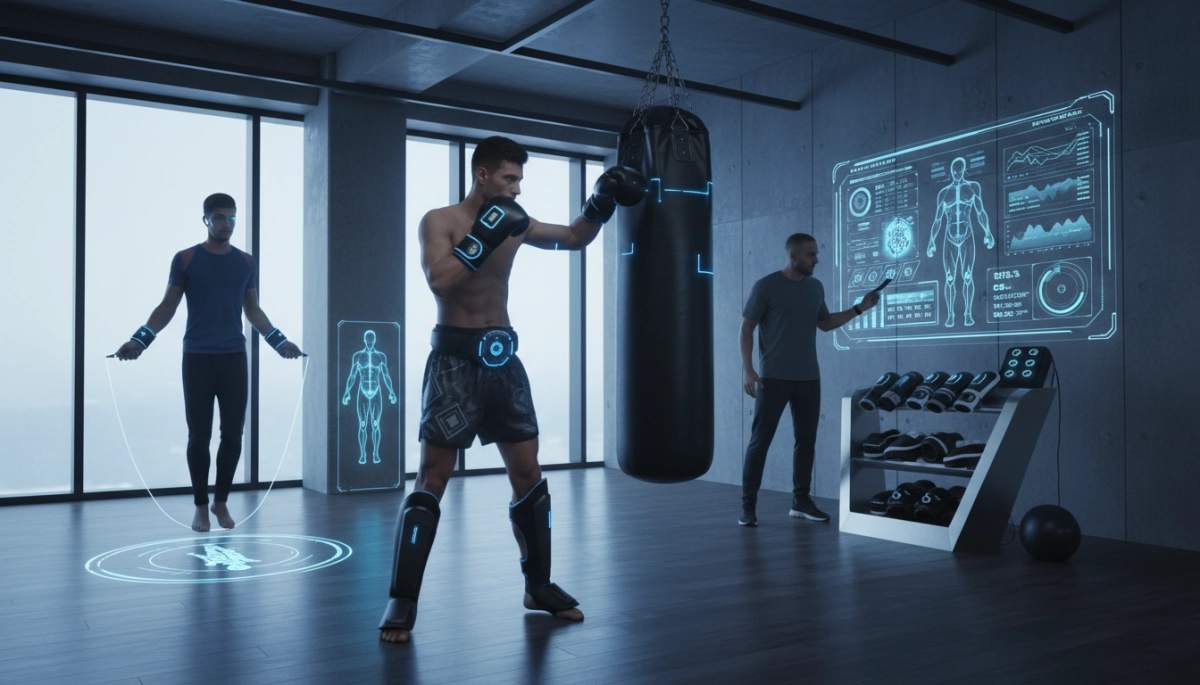
Sensors have moved beyond novelty into practical training tools. Accelerometers, gyroscopes, force sensors, and pressure mats now fit into gloves, shin guards, heavy bags, and even ankle wraps to give objective measures of speed, force, strike type, and impact location. These systems let you track otherwise invisible trends—dominant side bias, drop-off in power during late rounds, or improvements in strike velocity after technical tweaks.
- What they measure: peak force, impulse, strike velocity, contact duration, strike classification (kick, elbow, punch), and movement metrics (acceleration, rotation).
- Selection tips: prefer devices with high sampling rates (hundreds of Hz), clear calibration procedures, rugged housings (IP rating for sweat/resilience), and replaceable batteries or long battery life for full sessions.
- Placement matters: sensors in gloves capture punching dynamics better; shin-mounted sensors are essential for kick impact data. Avoid relying on a single device to represent whole-body output.
- Practical cautions: raw numbers aren’t a replacement for video. Use sensor data to flag patterns and then verify technique through slow-motion review or coach observation.
For coaches, instrumented pads and smart heavy bags are particularly useful because they provide immediate feedback on power distribution, strike accuracy, and work rate. Look for systems that allow session tagging (drills, rounds, sparring) so you can separate technical training from intensity work in the analytics later.
Training apps and data platforms: turning sensor output into actionable coaching
Hardware without software is just hardware. Modern training platforms pair sensors with apps that visualize trends, run session comparisons, and generate drill recommendations. A good app translates velocity and force curves into coaching cues—e.g., “increase hip rotation on rear kicks” or “reduce telegraphing before hooks.”
- Key features to seek: multi-device sync, coach dashboards, drill libraries, automated video-tagging, and exportable reports for long-term periodization.
- Useful metrics: strike count per round, average and peak force, tempo (strikes per minute), power asymmetry between sides, and fatigue indices (decline in power over rounds).
- Integration workflow: sync sensors after class, review a heatmap of strikes, assign focused drills for the next session, and monitor subsequent sessions for improvement.
- Data hygiene and privacy: choose platforms with secure cloud storage, clear data ownership policies, and the ability to export or delete athlete data when needed.
Remote coaching features are another advantage—athletes can upload sessions for coach review, making technical adjustments more frequent and evidence-based even when training apart.
Recovery tech and load management: sustaining intensity across a training calendar
Modern fighters pair performance tracking with recovery tools to increase training density without breaking down. Recovery tech ranges from percussive massage devices and pneumatic compression boots to targeted cold therapy and sleep/HRV trackers that inform daily readiness.
- When to use what: percussive therapy for acute muscle soreness and mobility prep; pneumatic compression for post-heavy sessions to speed metabolite clearance; targeted cryotherapy for inflammation management after hard sparring blocks.
- Monitoring readiness: wearable sleep and HRV trackers help you correlate training load and recovery—use them to modify intensity on low-readiness days rather than pushing through and risking injury.
- Selection pointers: choose clinically backed devices with adjustable settings and manufacturer guidance; prioritize comfort and ease of use so you actually adhere to recovery protocols.
Combining load metrics from sensors with recovery data creates a closed-loop system: the numbers tell you how hard you worked, recovery tools help you bounce back, and the platform tells you when it’s safe to push intensity again. Use that loop deliberately—periodize hard blocks and deloads based on evidence, not guesswork.
A practical path to integration
Start small and iterate. Pick one piece of modern gear or a single sensor system, use it consistently for several weeks to establish a baseline, and involve your coach in interpreting the results. Keep calibration, hygiene, and secure data handling part of the routine so tech adds value without becoming a distraction. For accessible, research-backed overviews of wearables and sports technology, see NIH PubMed Central.
The Modern Fighter’s Edge
Modern materials and connected tools are tools—not replacements—for disciplined training. Use them deliberately: let data inform targeted adjustments, let recovery tech protect availability, and let better-designed protective gear extend your career. Experiment, measure, consult your coach, and keep technique and fight IQ at the center of every decision.
Key Takeaways
- Choose modern gear that prioritizes fit, protection, and compatibility with sensor systems to build a reliable data foundation.
- Integrate one technology at a time, use apps and coach review to turn metrics into targeted drills, and verify with video/observation.
- Pair load monitoring with recovery tools and readiness metrics to periodize training and reduce injury risk.