
Master the rhythm: why counterattacks, feints, and ring control decide Muay Thai bouts
Winning in Muay Thai is rarely just about who throws the most strikes. You win by controlling moments—forcing reactions, punishing mistakes, and shaping where the fight happens. When you learn to time counterattacks, employ purposeful feints, and begin to impose ring control, you convert defense into offense and turn small advantages into rounds. This section gives you the foundations you must build before layering complex combos and clinch work.
Reading openings and executing effective counterattacks
Timing, distance, and shot selection
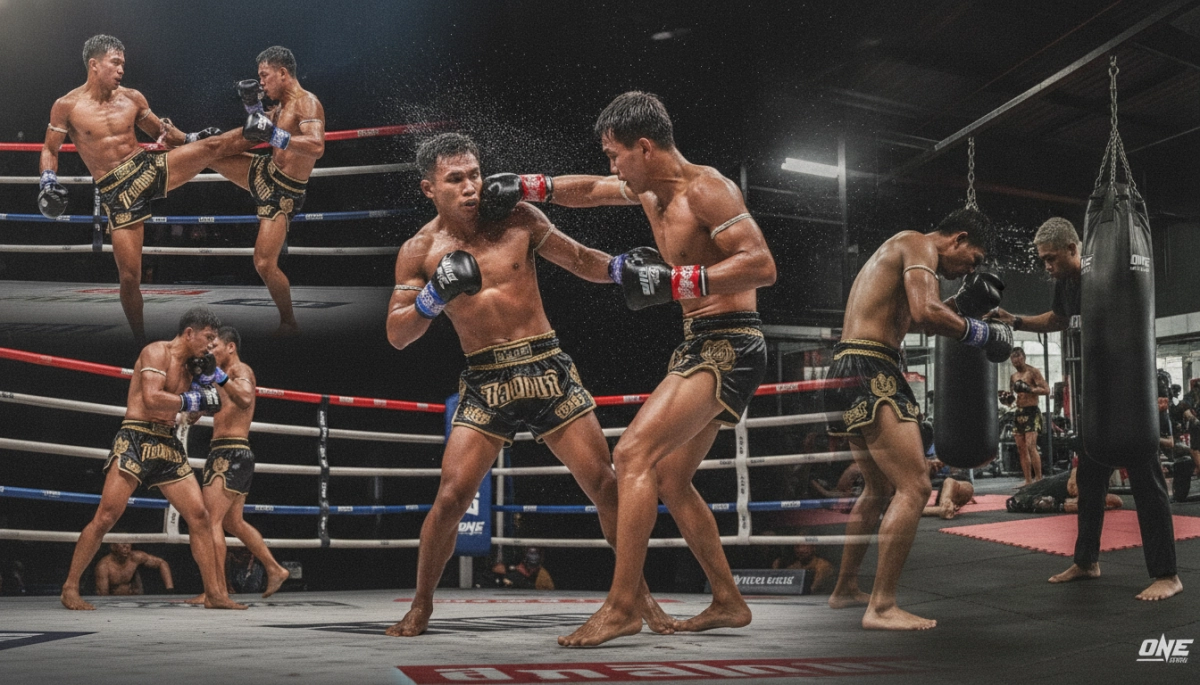
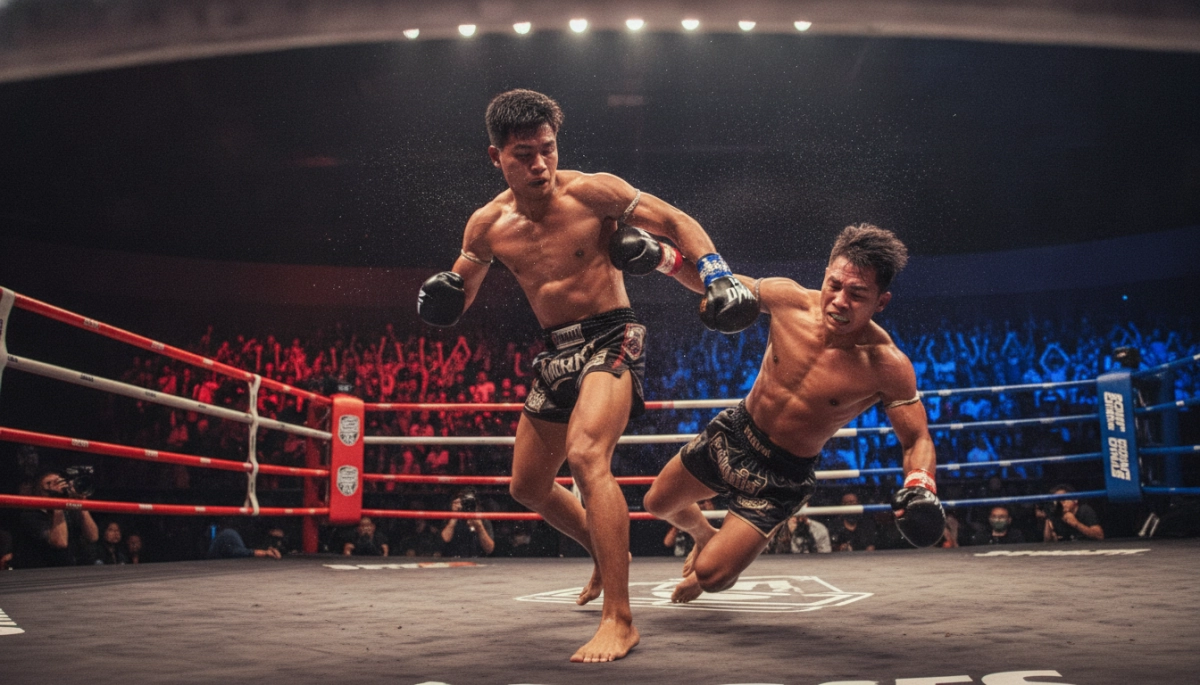
Counterattacking in Muay Thai depends on three simple variables: where your opponent is (distance), when they commit (timing), and what they throw (shot selection). You must train to see patterns—does your opponent drop their lead hand after a kick? Do they lean forward after a teep? Once you recognize tendencies, you can choose the right counter: a straight punch to a dropped guard, a low kick to a retreating lead leg, or an immediate elbow when the chin comes forward.
- Distance control: Maintain a range where you can strike immediately after their attack but are safe from follow-ups. Small step-offs and pivots are more reliable than backing straight up.
- Timing drills: Practice with a partner using predictable attacks, then progress to random sequences. Develop reflexes to intercept or return fire within the 250–600 ms window where counters are most effective.
- Compact counters: Favor quick, low-commitment strikes that exploit openings—jab-cross, teep to the body after a forward step, or a short left hook to the body following a missed kick.
Remember: the best counter is often the simplest. Overcommitting leaves you vulnerable to counters of your own; instead, use deception and economy to make your counters both safe and damaging.
Using feints and setups to force mistakes
Feints you can start using today
Feints are the tools that create the openings counters exploit. A feint is not a trick for its own sake—you want a measurable reaction: a blink of the chin, a weight shift, an early guard drop. Layering small, believable feints conditions opponents to flinch and then opens larger attacks.
- Hand feint: A short jab motion to draw a chin tuck or parry, then follow with a teep or low kick.
- Foot/step feint: A slight step forward or rear to elicit a teep or kick, then punish the committed limb with a check and counter low kick.
- Rhythm change: Mix fast and slow sequences so your opponent times poorly; a sudden tempo shift is an excellent setup for clinch entries or elbows.
Drill feint-to-counter sequences slowly at first, then increase speed and resistance. Train your eyes to pick up micro-reactions—those are the cues that tell you a feint worked.
Next, you’ll apply these principles to control the geometry of the ring, learn angle creation, and convert small positional advantages into sustained dominance over your opponent.
Cutting the ring: how to limit escape and force exchanges
Ring control isn’t just about standing in the centre—it’s about removing safe options for your opponent so they must fight where you want. If you can limit their exits and pressure them to move predictably, your counters and feints become far more potent. The goal is to turn the ring into a funnel that pushes them into your preferred range and angles.
- Trap with tempo: Use measured pressure—two or three probing strikes (jab, teep, low kick) then a sharper forward step. The probes check their reactions; the forward step narrows the aisle to the ropes.
- Control the lead foot: If you can step outside their lead foot, their escape is lateral or backward only. Outside-foot control opens diagonal counters (rear elbow, switch kick) and makes clinch entries cleaner.
- Use pacing: Mix bursts of aggression with short reset phases. When you accelerate, they are likelier to retreat squarely into a corner; when you reset, you close the door by taking the centre again.
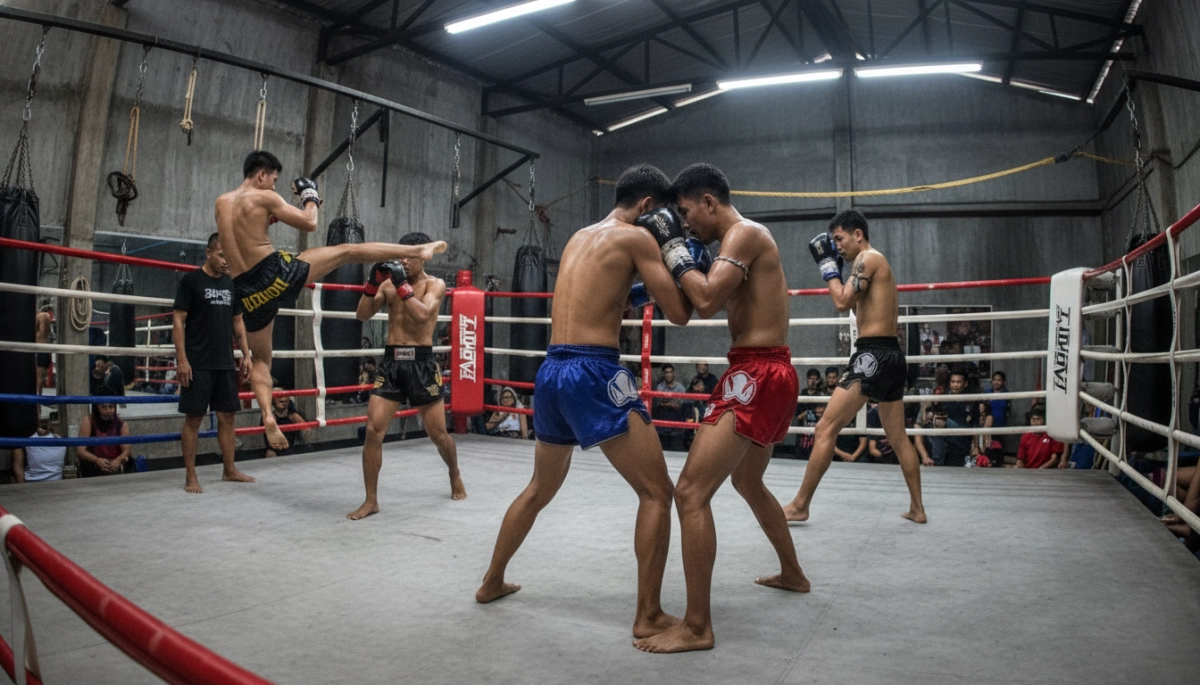
Drills: Have a partner start on the centre mark and practice funneling them to a target corner using only teeps and lateral steps; follow with a finishing sequence (jab-cross, inside low kick, clinch). Another drill: three-cone ring simulation—force your partner through the cones with controlled pressure, then practice cutting off their preferred escape lane.
Angle creation: step-pivots, triangulation, and finishing sequences
Once an opponent’s movement is constrained, angles become your most valuable currency. Small pivots and diagonal steps convert a neutral strike into a dominant one, exposing flanks and reducing their ability to retaliate. Angle work lets you land big shots without overcommitting.
- Step-pivot combo: Jab to draw the guard, step 45 degrees off your lead foot, and throw a roundhouse or rear elbow to the exposed side. The pivot reduces incoming threats and adds torque to your strike.
- Triangulation: Use a three-step pattern (forward, lateral, forward) to create fresh attack lines. This is especially effective against fighters who circle in the same direction—triangulation forces them to reset or face strikes from new axes.
- Counter-angle chains: After a blocked counter (e.g., teep checked), immediately angle-step outside the opponent’s base and follow with a low kick to the supporting leg or a knee to the body. Chain the actions so each step creates the next opening.
Drills: Shadowbox with a focus on one pivot every two breaths; add a pad-holder who moves predictably to practice triangulation entries. Partner drill—one person throws a single attack, the other practices a single counter plus angle step, repeating until the reaction is automatic.
Using ring control to set up clinch dominance and cornering strategies
The clinch is the natural endgame of effective ring control. If your pressure and angle work have pushed an opponent to the ropes, you can convert that positional advantage into a clinch where knees and short elbows decide rounds. Don’t wait for desperation—create the clinch through smart setups.
- Frame-to-clinch: Use a stiff-arm teep or forearm frame to break distance and immediately step in with a collar-and-elbow tie. Establish head position first—this dictates knee range and balance control.
- Trap-and-knee: Once pinned, tie up an arm and pin the opposite elbow to the body with your forearm; this isolates the torso for repeated knees and short elbows without giving space for counters.
- Corner finishing: If you drive an opponent to the ropes, push the head down slightly and control posture; from there, short knees, elbows, and a switch to a sweep can finish the exchange or secure a dominant position as the bell nears.
Drills: Clinch entries from the teep—partner resists, you practice framing and slipping in. Corner work: start with both fighters in the centre, one’s task is to force the other into the ropes using legal strikes only; the crusher must then convert to a clinch within three seconds of contact.
Integrative drills to tie everything together
To make counterattacks, feints, and ring control automatic, practice them in connected sequences rather than in isolation. The drills below bridge timing, deception, and spatial control so the transitions between probing, cutting off, and finishing become second nature.
Progressive partner circuit
- Round 1 — Footwork and distance only: one partner moves, the other uses teeps and lateral cuts to funnel; switch roles after 2 minutes.
- Round 2 — Feint-to-counter: add one believable hand or step feint; the defender must show a micro-reaction and the attacker follows with a compact counter (jab, low kick, or teep).
- Round 3 — Angle and clinch entry: after a successful counter, the attacker must immediately pivot 45 degrees and either finish with a strike or step in for a frame-to-clinch entry.
- Round 4 — Controlled sparring with objectives: set a goal (two clean counters, one clinch conversion, or three successful ring-cuts) and work with light contact to prioritize technique over power.
Train with purpose
Progress is measured in small, deliberate improvements: cleaner timing, sharper feints, better foot placement. Keep sessions focused—choose one element (timing, feints, or ring control) per session and layer the others as supporting skills. When you spar, give yourself specific tasks so you practice solutions, not just exchanges. Prioritize safety, use progressive contact, and seek feedback from coaches and training partners. For structured drills and coaching resources, see Muay Thai training resources.
Key Takeaways
- Counterattacks succeed on timing and simplicity—use compact strikes and read micro-reactions.
- Feints are setups, not tricks—layer believable motions to create measurable reactions you can punish.
- Ring control and angle creation convert small positional edges into clinch opportunities and fight-ending sequences.
Recommended Posts