Learn the Core Muay Thai Kicks: Fundamentals Every Beginner Should Master
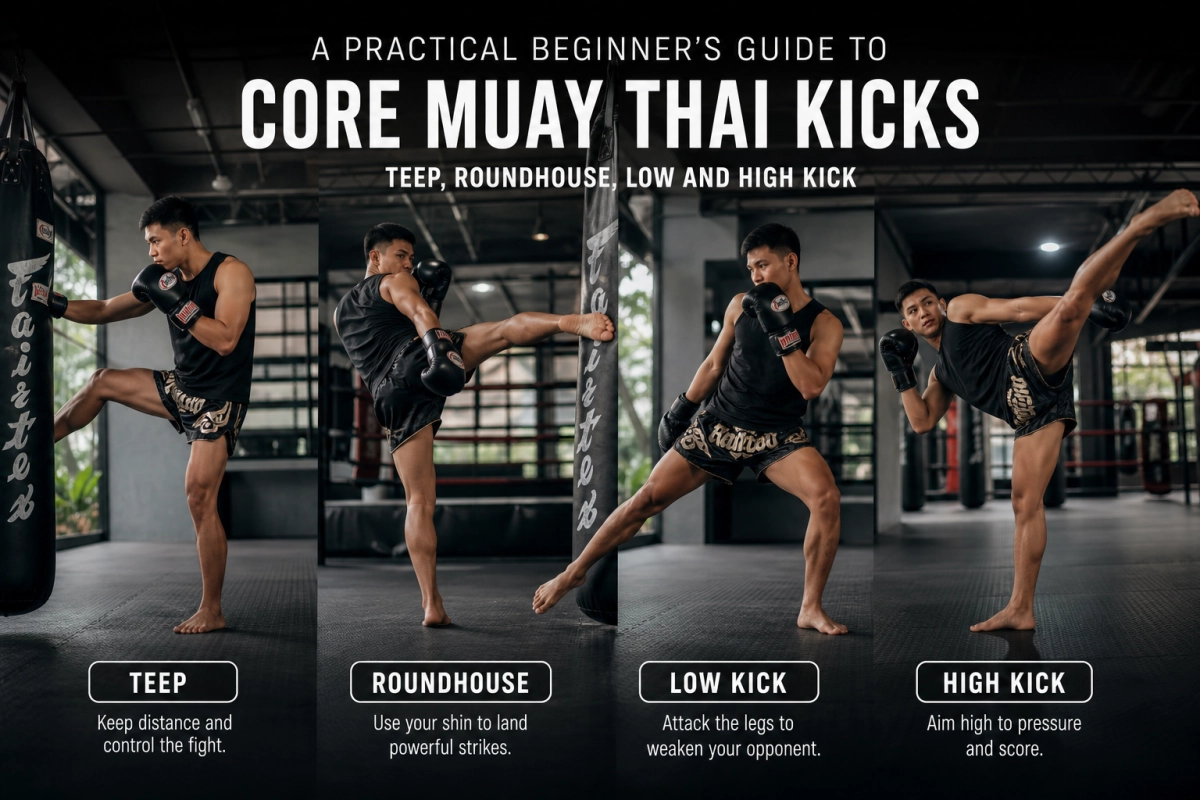
Muay Thai kicks are essential tools in the art of eight limbs — a traditional Thai striking system using punches, elbows, knees, and kicks. This guide introduces beginners to the core kicks used in Muay Thai: the teep (push kick), the roundhouse (turning kick), the low kick, and the high kick. It emphasizes practical purpose, stance, step-by-step execution, defensive awareness, simple drills, and safety so newcomers build reliable technique before adding power or speed.
Why the basics matter: stance, weight distribution, and safe progressions
A reliable stance and correct weight distribution underpin every kick. Prioritize balance, posture, and guard over flashy speed. Fundamentals reduce injury risk and develop mechanics for combinations, clinch work, and pad rounds.
- Neutral stance: feet shoulder-width, hands high, chin tucked.
- Weight: roughly 60/40 on the rear foot when relaxed; shift as you load kicks.
- Hip mechanics: rotation and hip snap create power; avoid overreaching or leaning back.
- Recovery: exhale on impact and reset guard quickly.
Teep (push kick): purpose, stance, execution, common mistakes, drills and safety
The teep is a control and setup tool — used to manage distance, off-balance opponents, and create openings. It emphasizes structure and timing more than rotational power. Deliver with the ball of the foot or heel, pushing straight out from the hip.
Step-by-step teep execution
Practice these condensed steps to build a controlled teep.
- Start in stance: hands high, weight slightly rearward.
- Chamber by lifting the knee straight toward the target while keeping the support foot stable.
- Drive the hip forward and extend the leg, pushing through the ball or heel of the foot.
- Retract quickly, return to guard, and maintain visual on the opponent.
Common beginner errors and defensive considerations
- Leaning back or dropping hands — compromises balance and invites counters.
- Pushing with toes instead of ball/heel — risks foot injury.
- Defensively, anticipate catches, low kicks, or step-ins to the clinch; always be ready to recover and counter.
Beginner drills, conditioning, and safety tips for the teep
- Solo: shadow-teep rounds focusing on chamber and retraction (short intervals).
- Partner: light pad-teep to practice target placement and push-through.
- Drills: teep then step-back to practice defensive recovery.
- Conditioning: calf raises, single-leg balance, and hip mobility; warm ankles and hips before work.
Roundhouse (turning kick): purpose, stance, execution, and drills
The roundhouse is Muay Thai’s main power kick — used against body, legs, or head. Beginners learn coordinated hip rotation, a committed support-foot pivot, and controlled follow-through. Strike with the lower shin for durability and impact.
Step-by-step execution
- Slightly step with front foot if needed to close distance, then rotate on the ball of the supporting foot.
- Chamber the knee across the body while turning hips and shoulders together.
- Snap the hip through so the lower shin meets the target; pull toes back and keep hands up.
- Retract the leg and return to a balanced guard-ready stance.
Common errors and defensive points
- Not pivoting the support foot — reduces power and risks knee strain.
- Throwing the leg without hip rotation — telegraphs and weakens the kick.
- Dropping the guard or looking down — opens you to counters; expect checks and counter-punches and return quickly.
Partner and solo drills, conditioning, and safety
- Solo: shadow-roundhouses with focus on pivot and chamber; slow reps to engrain mechanics.
- Bag: alternate power shin strikes with technical light rounds for speed/accuracy.
- Partner: controlled Thai-pad rounds (8–10 kicks per leg) with rhythm and angle adjustments.
- Conditioning: calf raises, single-leg balance, hip-rotation bands, and core anti-rotation drills; progress shin contact gradually.
Low kick vs high kick: mechanics, practice drills, and an 8‑week progression to build power and accuracy
Low and high kicks use the same rotational mechanics but differ in target, chamber height, and mobility. Low kicks are quicker with a shorter chamber and strong hip twist aimed at the thigh or calf. High kicks require flexibility, balance, and a higher chamber, with more torso and hip drive.
Execution notes, errors, and drills
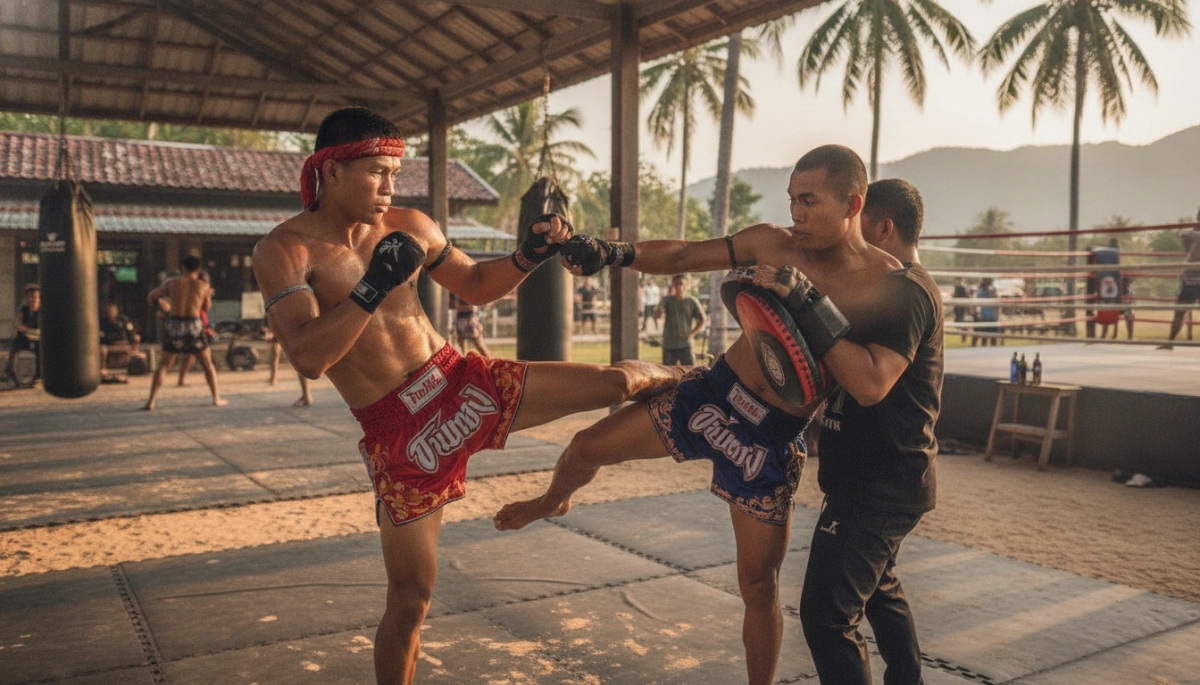
- Low kick: step slightly across the opponent’s front foot, pivot, snap the shin into the thigh; keep chin down and hands up. Common errors: overkicking and failing to pivot.
- High kick: chamber high, lean the torso back slightly, drive the hip upward while guarding; common errors include telegraphing and insufficient flexibility.
- Partner drills: low-kick pad circuits and check-and-counter practice. High-kick progression: raise the pad gradually, start slow and controlled.
- Solo drills: leg swings, bag range work, and mobility routines; add plyometrics for explosiveness.
8‑week progression (3 sessions/week suggested)
- Weeks 1–2: Fundamentals — mobility warm-up; technical shadow rounds; light pad/bag kicks; balance and core work.
- Weeks 3–4: Power introduction — increase impact on bag/pads, pivot drills, and strength work (single-leg RDLs, banded hips).
- Weeks 5–6: Speed and accuracy — timed bursts, target-specific pad drills, plyometrics; begin light controlled sparring.
- Weeks 7–8: Integration — combine kicks into 3–5 strike combos, full pad rounds emphasizing accuracy under fatigue, and active recovery.
Progress gradually, prioritize technique over power, and allow recovery between intense kick sessions.
Advanced integration and safe progressions
Partner drills for timing, counters, and checks
Controlled resistance develops timing and realistic reactions. Keep intensity moderate and communicate with your partner.
- Flow catch-and-return: partner lightly teeps; kicker practices retraction and balance recovery.
- Check-and-counter ladder: alternate low kicks and checks, returning counters immediately; start slow, increase pace.
- Timed role swaps: short rounds where one partner focuses on offense (mix teep/roundhouse/low) and the other on defense and counters.
Progressive shin conditioning (safe approach)
Condition shins gradually and avoid hard surfaces early. Use pain-free progression and prioritize recovery.
- Weeks 1–2: light contact on a soft bag, focus on consistent lower-shin contact.
- Weeks 3–5: increase impact on a heavy bag, gently roll shins before sessions, add a few harder strikes after technique work.
- Weeks 6+: controlled clinch-and-kick drills and slow increases in repetitions; monitor soreness and recover with rest, ice, and mobility.
Incorporating kicks into combinations and sparring safely
Drill short, repeatable combinations and enforce safety rules in sparring to build usable skills without unnecessary risk.
- Start with two- or three-strike combos (e.g., jab-cross-teep, jab-low kick-cross) on pads and shadow to engrain timing.
- Light technical sparring: controlled contact, prioritize positioning and quick returns over knockout power.
- Record pad work and sparring to analyze foot placement, pivot, and guard recovery; small corrections compound into big improvements.
Ongoing conditioning and recovery
Consistency in strength, mobility, and recovery supports technical progress and reduces injury risk.
- Strength: single-leg deadlifts, hip thrusts, and loaded step-ups to support kicking power and balance.
- Mobility: daily hip openers, dynamic hamstring work, and ankle mobility drills.
- Recovery: sleep, hydration, foam rolling for calves and quads, and scheduled light weeks after intense phases.
Bringing it all together
Progress in Muay Thai kicks is a patient, practical process: consistent technical practice, progressive loading, and mindful recovery. Seek feedback, train with partners who prioritize control, and make small, measurable goals—accuracy, pivot quality, or one clean teep under pressure are meaningful milestones. Above all, respect the learning curve and stay curious: the fundamentals you build now will serve every future combination, clinch, and training session.
Recommended Posts