How amateur Muay Thai rules shape your first competition experience
When you step into the ring for an amateur Muay Thai match, the rule set determines everything from what strikes you can use to how judges award rounds and how referees protect both fighters. You should approach rules as a safety framework and a tactical map: they protect health, create fairness across weight classes and skill levels, and reward the techniques that define Muay Thai. Different organizations (for example, national federations and international bodies such as IFMA) publish detailed regulations, but many core principles remain consistent across competitions.
Essential bout structure and what you must expect in the ring
Understanding the basic structure of an amateur bout helps you prepare your conditioning, strategy, and corner instructions. Typical elements include:
- Round length and number: Amateur matches commonly run 3 rounds of 2–3 minutes each with 1-minute rest intervals. Some youth or novice categories have shorter rounds.
- Weight classes: Competitors are matched by strict weight divisions. You will weigh in before the event, and missing weight often disqualifies or moves you to a different class.
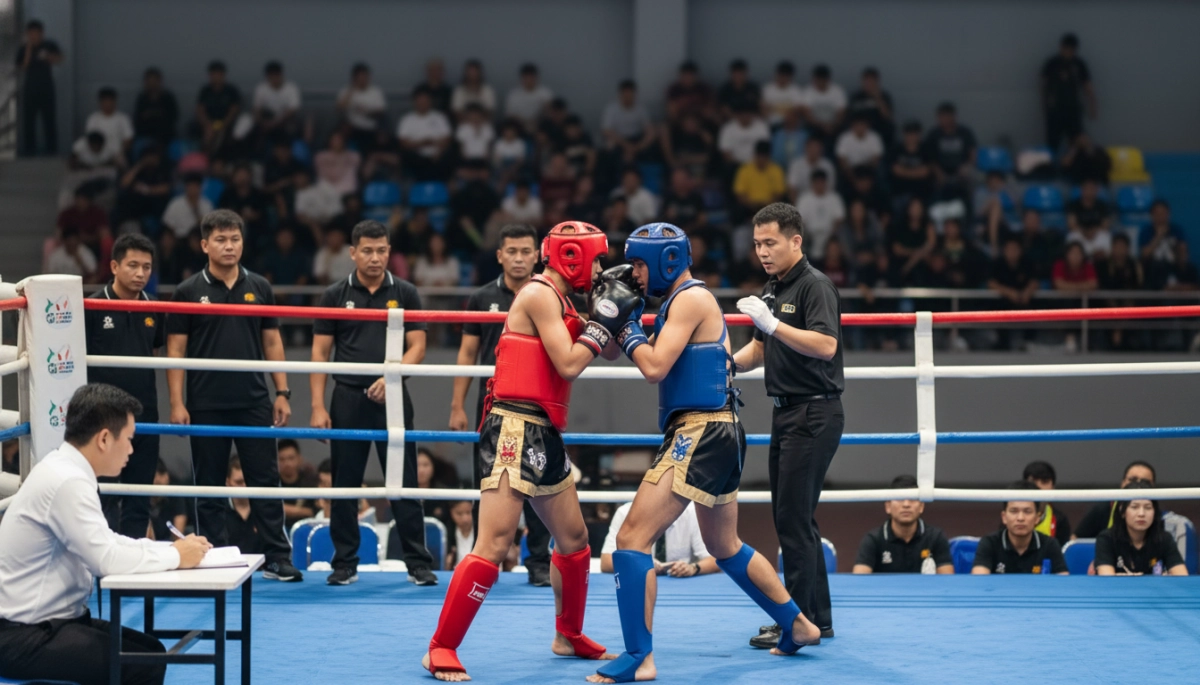
- Match officials: A referee controls the action inside the ring while a panel of judges (often 3 to 5) scores rounds from ringside. A ringside physician may be present to assess injuries.
- Protective gear: Mandatory equipment often includes approved gloves, mouthguard, groin protector, and sometimes headgear and shin guards depending on the sanctioning body and age group.
Which techniques score and which ones can cost you the match
Your effective use of allowable techniques determines both your scoring and your safety. Familiarize yourself with the following principles:
- Legal techniques: Punches, kicks, and knees are the backbone of Muay Thai and are generally permitted in amateur competition. Clinch work is usually allowed but may be limited by time or by how aggressively throws are executed.
- Elbows and restrictions: Some amateur rule sets restrict elbow strikes or limit their use to reduce cuts. Always check event-specific rules before you fight.
- Scoring focus: Judges prioritize clean, effective strikes that demonstrate impact, balance, and ring control. A strike that visibly affects an opponent scores higher than a flurry that lands with no effect.
- Common fouls: Strikes to the back of the head, throat, groin, and spine, headbutting, biting, and unsporting behavior are universally prohibited and can lead to warnings, point deductions, or disqualification.
With this foundation—bout format, officials, protective equipment, and the basic do’s and don’ts—you can begin tailoring training and match tactics to the amateur rule environment. In the next section, you’ll get practical guidance on equipment specifications, weigh-in procedures, and how referees enforce fouls during a bout.
Equipment specifications and pre-fight checks
Amateur organizers prioritize standardized equipment to reduce injury risk and ensure fairness. Before the event you should confirm the exact list of approved gear from the event bulletin, but common requirements and inspection practices include:
- Gloves: Approved glove weight and brand are specified by the sanctioning body. Amateur contests often mandate heavier gloves or specific models to limit hand and head impact. Gloves are inspected for condition, proper stitching, and intact padding.
- Shin guards and headgear: Many amateur divisions require shin guards and, for youth or novice categories, headgear. Even when headgear is optional for older amateurs, organizers may still restrict or approve particular types.
- Hand wraps and tape: Handwraps must be a regulated length and applied in plain cloth or approved tape—no hardened inserts or foreign materials. Officials usually inspect wraps before you enter the ring.
- Mouthguard and groin protection: A fitted mouthguard and a hard-shell groin protector (for men) are typically mandatory. Female athletes may be required to wear chest protection depending on the division.
- Uniform and branding: Shorts and attire should meet modesty and logo rules. Some federations prohibit advertising that conflicts with sponsors.
Arrive at equipment check early so officials can resolve any problems. If gear fails inspection you’ll either be allowed to borrow approved equipment, purchase replacements on-site, or in worst-case be removed from the card. Routine pre-fight checks are not punitive — they exist to protect you and your opponent.
Weigh-ins, weight management and hydration policies
Weigh-in procedures differ across competitions and are one of the most consequential administrative elements for fighters. Understand these common formats and how they affect your preparation:
- Timing: Weigh-ins are usually held the day before the event, though some tournaments use same-day weigh-ins. Know which applies to you; same-day weigh-ins discourage extreme weight cutting and require a more conservative approach.
- Make-weight rules: You must meet the contracted weight class within the tolerance allowed (often zero tolerance for top-level amateur events). Failing to make weight can lead to fines, re-weigh opportunities, moving to a catchweight bout, or removal from competition.
- Hydration testing: To deter dangerous dehydration, some organizers require urine specific gravity or other hydration checks. Failing a hydration test can block your participation even if you made weight.
- Consequences and rehydration: If permitted to re-weigh, you’ll usually have a short window to make adjustments. Follow safe rehydration protocols: electrolyte solutions, small frequent meals, and monitored fluid replacement rather than extreme rapid refeeding.
Plan your weight strategy with a coach and a physician or nutritionist. At the amateur level, long-term health and consistent performance outweigh the short-term gains of drastic weight cuts.
Referee enforcement, fouls and medical stoppages
Referees and ringside physicians actively manage the balance between letting the contest unfold and protecting fighters. Their enforcement follows a clear progression so competitors know the immediate consequences of rule breaches:
- On-the-spot interventions: For minor infractions the referee will issue a verbal warning. Repeated or more serious fouls typically result in point deductions recorded by the judges and announced to corners.
- Immediate disqualification: Deliberate or dangerous acts—such as intentional strikes to the throat or back of the head, biting, or repeated unsportsmanlike conduct—can prompt an immediate disqualification.
- Accidental fouls and scoring: If an accidental foul causes stoppage, outcome depends on when it occurs. Early stoppages may be declared no-contest; later stoppages are often resolved by judges’ scorecards up to that point (technical decision). Event rules specify cut-off rounds and procedures.
- Medical stoppage authority: The ringside physician can halt a fight for cuts, concussive symptoms, or other injuries. If a doctor stops the bout for a fight-ending injury caused by a legal strike, the opponent wins; if the injury stems from an illegal strike the outcome depends on whether the foul was intentional or accidental.
- Post-fight consequences: Suspensions following a knockout, mandatory medical clearances, and disciplinary hearings for fouls are common. Respecting officials and competing within the rules helps you avoid administrative penalties that affect your future fights.
Learning these enforcement patterns helps you adapt mid-fight: avoid tactics that draw warnings, recognize when a referee is strict on clinching or throws, and understand when an injury will terminate the contest. That clarity improves both your safety and your competitive poise.
Final preparations and mindset
Stepping into your first amateur Muay Thai match is as much about preparation and respect as it is about technique. Approach the event with a coach-guided plan, confirm the exact rules and equipment list for your card, and use officials and the medical team as resources rather than obstacles. Keep focus on controlled execution, learn from each bout, and maintain sportsmanship regardless of the result. Before your fight day, review the published rulebook for your sanctioning body — for example, IFMA competition rules — and reach out to organizers if anything is unclear.
Key Takeaways
- Know the event-specific rule set and train to those limits rather than generic assumptions.
- Prioritize safety: use approved gear, follow weigh-in/hydration guidance, and respect referees and medical staff.
- Treat your first bouts as learning opportunities—focus on disciplined execution, coaching feedback, and sportsmanship.
Recommended Posts