Why traditional Muay Thai gives you a practical fighting foundation
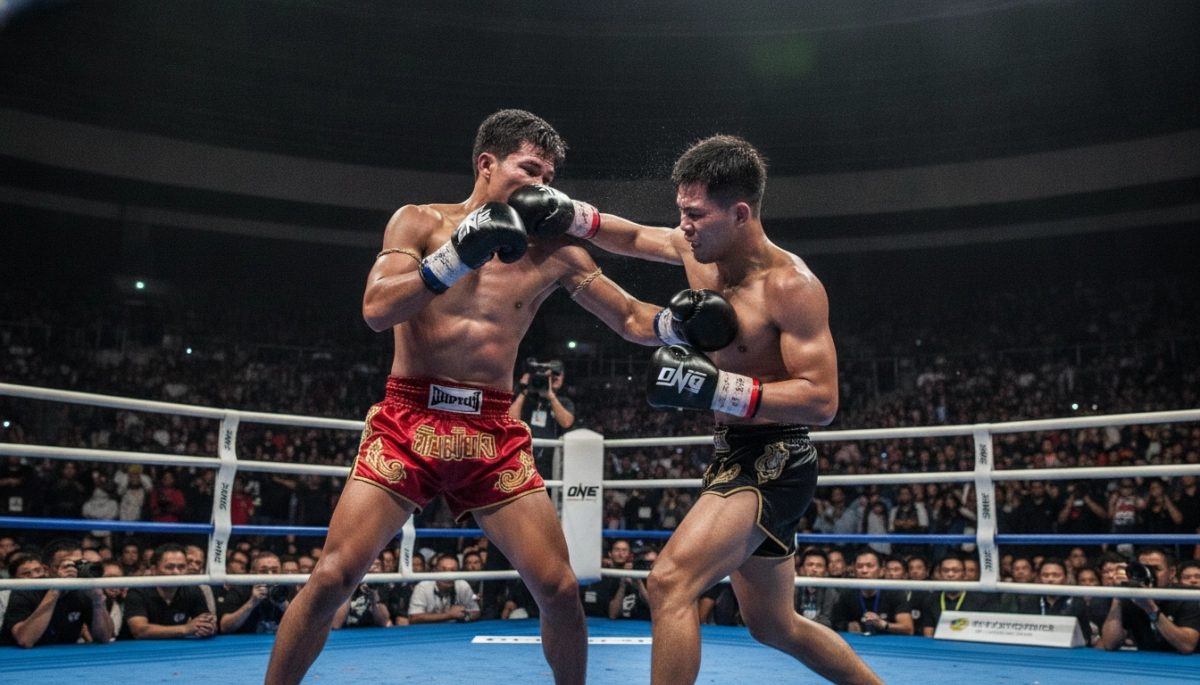
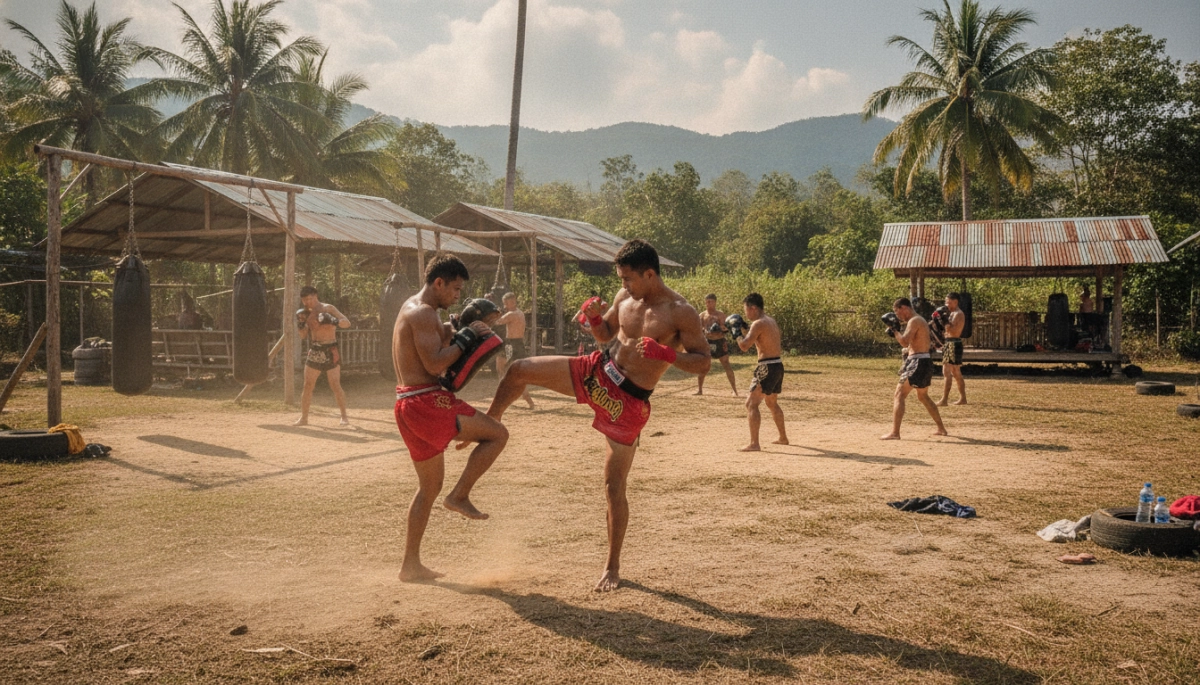
You’re starting a discipline that’s been refined over centuries. Traditional Muay Thai emphasizes efficient, powerful strikes, clinch control, and conditioning that translate directly to real-world sparring and competition. By learning the classical techniques first, you develop timing, balance, and awareness that modern variations often overlook. This section explains what makes the tradition valuable and how it shapes the way you train.
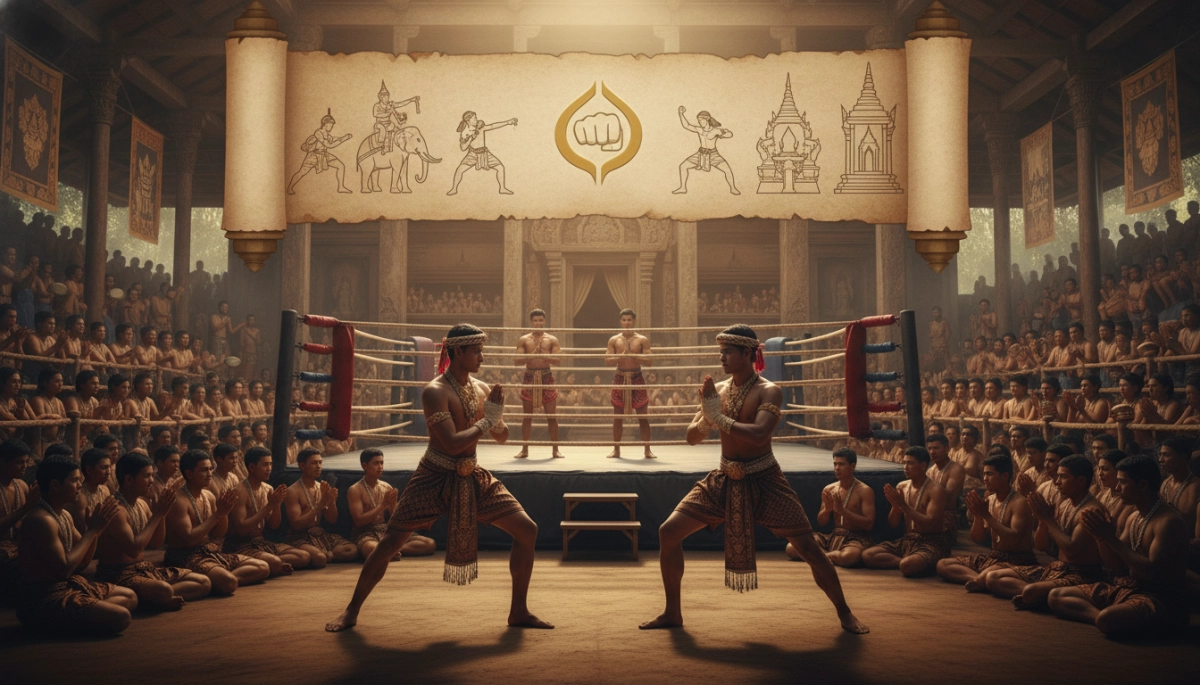
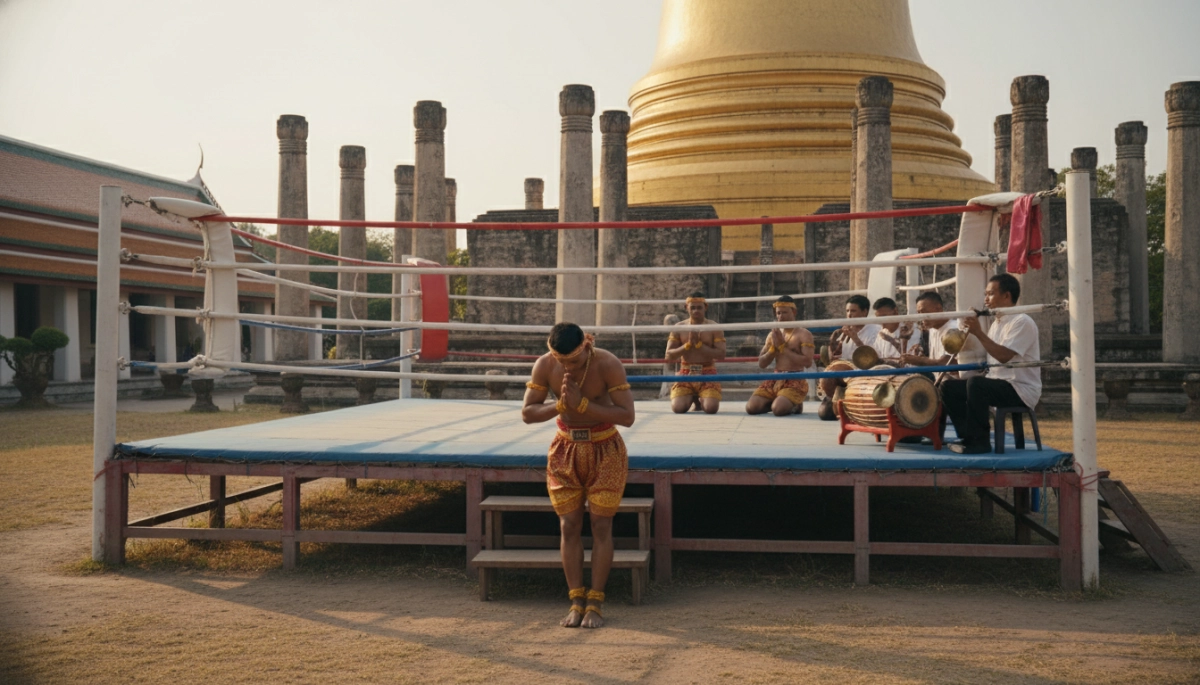
Traditional training places equal weight on technique and ritual: the Wai Khru (pre-fight salute) and ring etiquette reinforce focus and mental preparation, while the techniques themselves are repetitive and deliberate so you internalize correct mechanics. For you as a beginner, this means practicing the basics until movement becomes instinctive.
Getting your base right: stance, footwork, and guard
Stance fundamentals — stability with mobility
Your stance is the blueprint for everything you do in Muay Thai. A traditional stance gives you balance for delivering and absorbing strikes while allowing quick movement. Keep your hips squared but relaxed, weight distributed approximately 60/40 on your rear leg for power generation, and knees slightly bent for shock absorption. You should feel ready to pivot or step rather than locked in place.
- Feet placement: Lead foot pointing slightly inward, rear foot at a 45-degree angle to enable pivots.
- Knee bend: Soft knees to lower your center of gravity and improve reaction time.
- Chin and shoulders: Tuck your chin slightly and raise the lead shoulder to protect your jaw from straight shots.
Footwork drills to build balance and angles
Footwork in traditional Muay Thai focuses on efficient movement and creating striking angles rather than flashy circling. Start with these basic drills until they feel natural:
- Step-and-slide: move by leading with the front foot and sliding the rear foot to maintain stance width.
- Pivot drills: practice pivoting on your lead foot to change angles after throws or round kicks.
- Advance-retreat combos: combine a step forward with an immediate retreat to train timing and distancing.
Guard positioning — protect while you prepare to attack
Traditional Muay Thai guard blends hand, elbow, and shoulder defense. Your hands should be high enough to protect the face, with the rear hand slightly behind to counter or parry. Use the lead hand to measure distance and parry jabs; bring your elbows in when defending body shots. Learn to shift your guard dynamically — dropping a hand to check a low kick or tucking an elbow to block a body roundhouse.
Work these elements in shadowboxing and light pad work before introducing full-contact drills. That builds muscle memory in low-risk conditions and helps you focus on mechanics rather than impact. Next, you’ll move into the first core striking techniques — the straight punch, the teep, and the basic roundhouse — with step-by-step cues and practice drills.
Primary strikes: the straight punch, teep, and roundhouse — mechanics and drills
These three strikes form the backbone of traditional Muay Thai. Mastering their mechanics and basic drills gives you options at different ranges: the straight punch for closing and countering, the teep for distance control, and the roundhouse for power from the hip.
Straight punch (jab/cross)
- Mechanics: rotate the hips and shoulders while extending the arm straight towards the target; snap the fist back quickly to guard. Lead-hand jab is a probe and disruptor; rear-hand cross is the power shot driven by the rear leg.
- Common errors: telegraphing with the shoulder, overextending and losing balance, not snapping the retraction.
- Beginner drills: 3x rounds of 2 minutes shadowboxing focusing only on jab-cross rhythm; pad drill — 10 slow, precise jab-cross at half power, then 10 at full power, focusing on hip snap and recovery.
Teep (push kick)
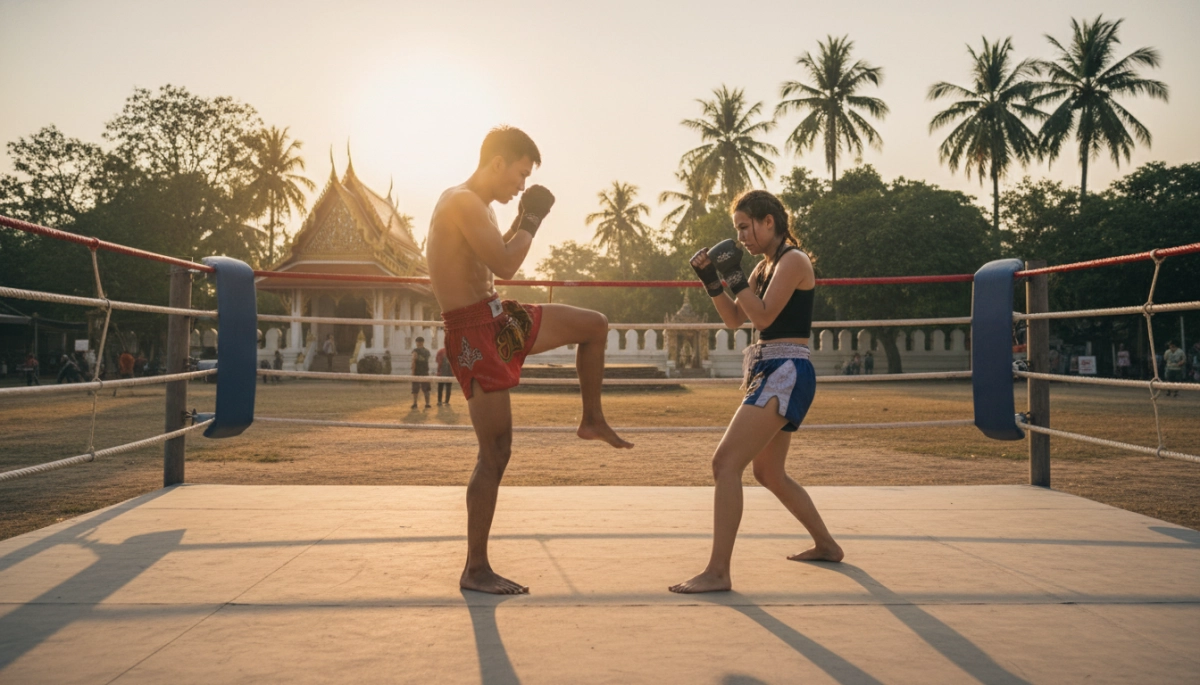
- Mechanics: chamber the knee, extend the leg with the ball of the foot or heel pushing out, keep the supporting foot rooted and the guard up. Use the hips to generate force and reach rather than brute leg strength.
- Use: maintain distance, off-balance opponents, set up combinations.
- Drills: wall teep for balance — 3 sets of 10 reps per leg slowly, then pad teep — push the partner back with a measured push kick; partner returns to stance to work recovery timing.
Roundhouse (basic checked round kick)
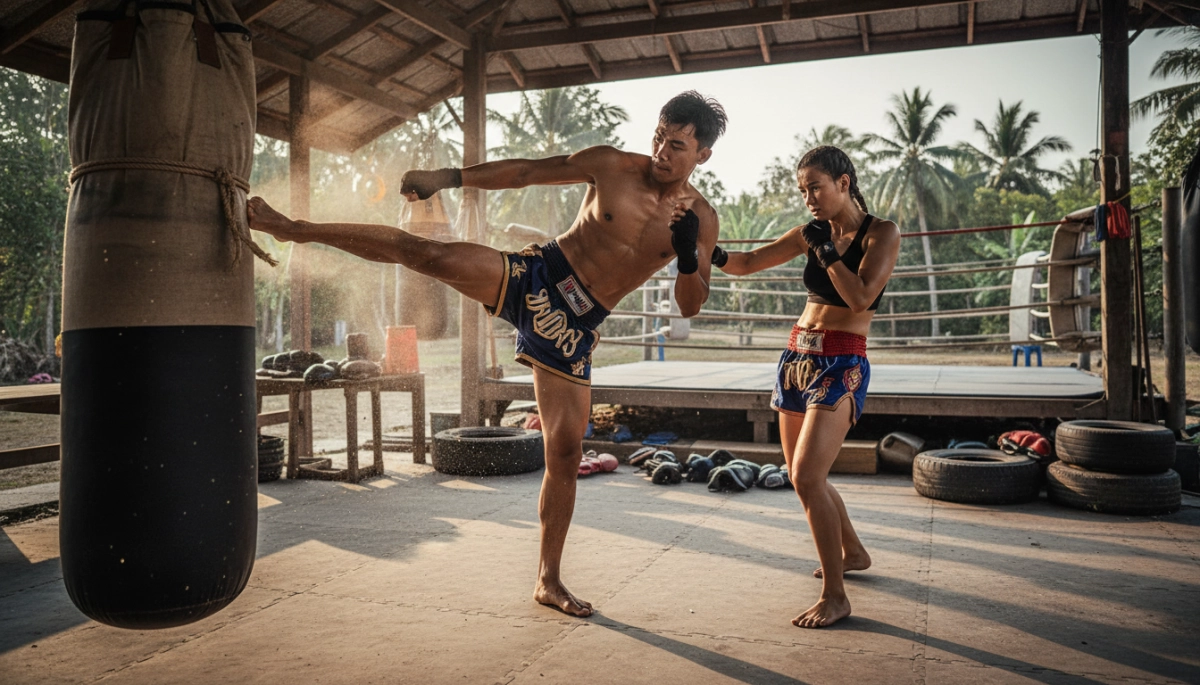
- Mechanics: pivot on the supporting foot, rotate the hips, chamber the knee, and extend the shin through the target; land back in stance immediately.
- Common errors: not pivoting (loses power), dropping the guard, telegraphing the kick by shifting weight too early.
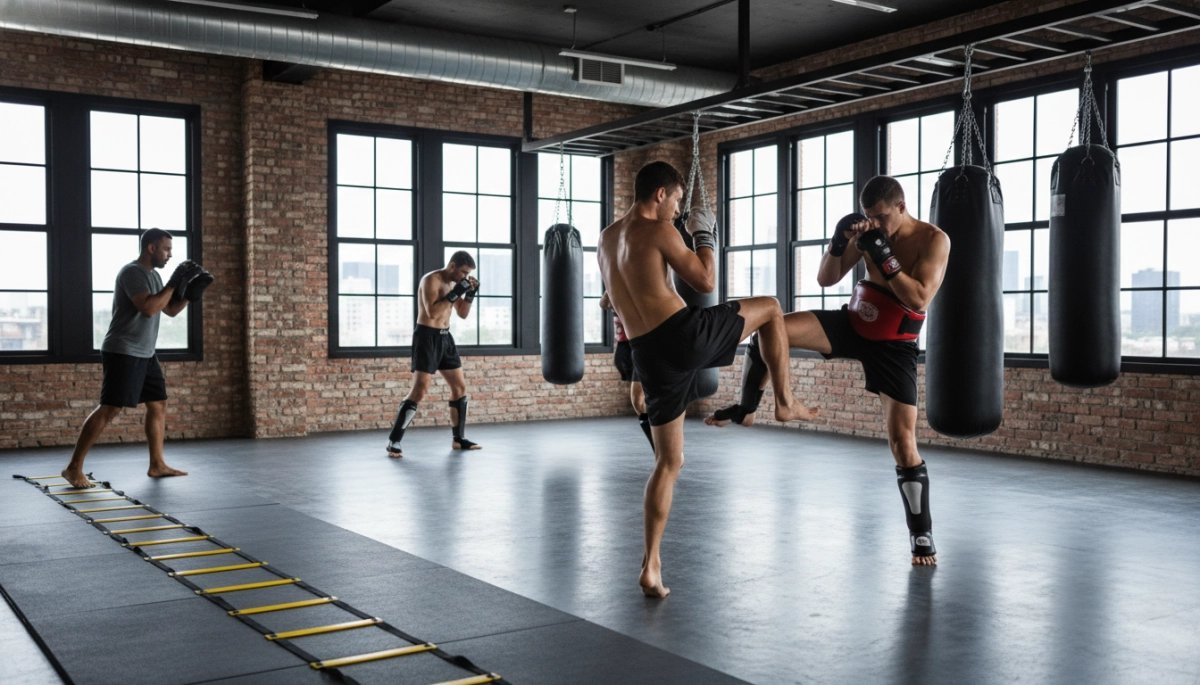
- Drills: repetition on heavy bag — start slow for technique, 3 rounds of 2 minutes; pad combinations — pair a teep or jab to set distance, then a roundhouse.
Practice each strike in isolation until the movement is clean, then layer them into short combinations (jab-teep, teep-roundhouse, jab-cross-roundhouse). Keep repetitions controlled — quality over quantity — and gradually increase speed and power.
Knee and elbow basics: short-range tools for finishing and control
Knees and elbows are signature to Muay Thai’s close-quarters effectiveness. Traditional training emphasizes placement, timing, and protecting yourself while you throw these short-range weapons.
- Knee strikes: execute from the clinch and from a single-leg or step-in. Drive from the hips, keep posture upright, and pull the opponent into your knee. Drills: clinch-to-knee rounds with a partner on the pads (30–60 seconds per round), and knee-on-bag reps focusing on hip thrust.
- Elbows: use short, sharp angles (horizontal, uppercut, downward). Keep your chin tucked and lead with the elbow tip, using shoulder rotation—not full arm extension. Drills: focus mitts for short-range elbows, 3 sets of 10 per variation, and shadowboxing with elbow emphasis.
- Defense: learn to frame and control the clinch to avoid elbows; practice turning the head and using the forearm shield when closing distance.
Introduce knees and elbows gradually in controlled pad sessions before applying them in sparring — they’re effective but high risk for cuts and injury if practiced carelessly.
Integrating techniques: partner drills, pad work, and safe sparring progression
Once you can perform strikes individually, integration is key. Traditional Muay Thai builds combinations, timing, and resilience through progressive live training.
- Partner drills: timed exchanges (30–60 seconds) where one partner initiates simple combos (jab-teep, cross-roundhouse) and the other defends and returns controlled counters. Rotate roles every round.
- Pad routines: structured sequences from your coach: start slow (focus on accuracy), increase tempo (power and fluidity), and finish with situational drills (corner pressure, recovery after takedowns).
- Sparring progression: begin with light technical sparring emphasizing distance and timing; move to moderate intensity focusing on applying combinations and clinch entries; reserve full-contact rounds for experienced trainees under coach supervision.
Track progress by recording which combinations feel natural, which entries still break your balance, and what defensive adjustments you need. Regular feedback from a coach keeps your traditional technique crisp as you increase intensity.
Moving forward: practice, respect, resilience
As you leave the basics behind and keep training, prioritize steady, focused practice over shortcuts. Traditional Muay Thai is as much about discipline and respect as it is about strikes — approach each session with a learning mindset, listen to your coach, and protect your body so you can train consistently. When doubts arise, return to simple drills and the fundamentals: that reset will carry you farther than chasing complex techniques too soon.
Practical next steps
- Find a qualified instructor or gym that values technique, safety, and proper progression.
- Keep a training log: note drills, combinations that feel natural, and specific areas for improvement.
- Practice ritual and etiquette (like the Wai Khru) to maintain mental focus and respect for the art.
For context about Muay Thai’s roots and cultural traditions, explore resources such as Muay Thai history and culture to deepen your appreciation and inform your practice.
Key Takeaways
- Master the fundamentals—stance, footwork, and guard—before layering advanced techniques.
- Progress gradually: isolated drills → pad work → controlled sparring → higher intensity.
- Train consistently with respect for tradition, safety, and guidance from experienced coaches.
Recommended Posts